AU research team awarded $4.4 million American Heart Association grant

Jun 25, 2025

5 min

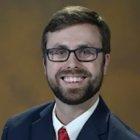
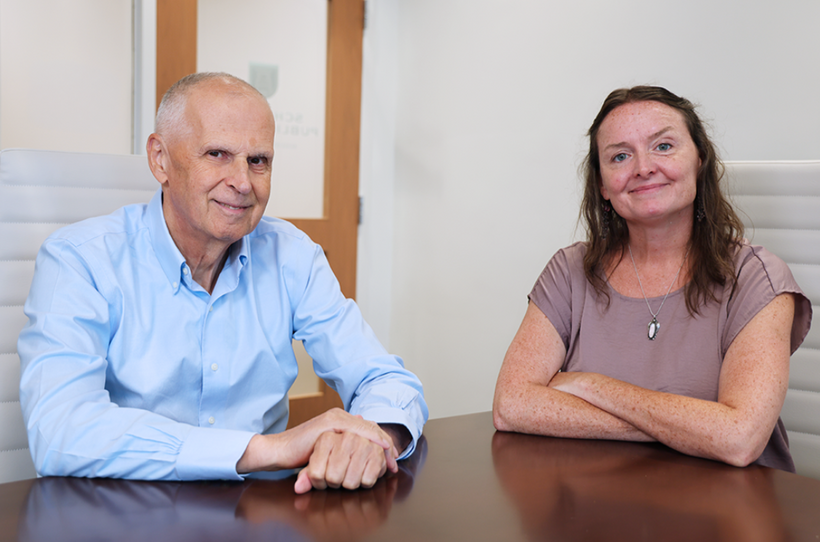
Jennifer Sullivan, PhDMarlo Vernon, PhD

A research team at Augusta University, led by Jennifer C. Sullivan, PhD, has secured a $4.4 million grant from the American Heart Association to study the risk factors for cardiovascular and kidney diseases and how they impact women.


Sullivan’s research center, “Disruptions in cardiorenal free fatty acid metabolism in Cardiovascular Kidney Metabolic Syndrome,” is part of a larger $15 million project titled “Strategically Focused Research Network on Cardiovascular Kidney Metabolic Syndrome: Heterogeneity in Women.” The overarching AHA project is aimed at learning why women may be more likely to develop cardiovascular and kidney diseases due to certain unique risk factors and life stages. Research teams from Massachusetts General Hospital and The Ohio State University were also chosen.


“I think this is a huge step for Augusta University as we continue to distinguish ourselves and the research that we have here focused on the health of women,” said Sullivan, dean of The Graduate School. “This grant is particularly impactful as we look to advance and improve the health of women, not just in Georgia, but for the entire country.”


According to the Healthy Georgia Report, produced by AU’s School of Public Health, Georgia has the 23rd highest rate of obesity in the United States. Among the women living in the state, 38.3% of them, as well as 37.5% of people living in rural areas, suffer from obesity.


“It’s great that we are able to represent the state of Georgia because our state has such a high prevalence for obesity rates,” said Sullivan, who is the director of AU’s SCORE project “Improving awareness of women with hypertension: ROAR (Rural, Obese, At Risk).” “It’s important for us to understand that different populations have distinct needs. You can’t talk about a one-size-fits-all approach to health. This is really about trying to understand how different groups are impacted.”


Each center is comprised of three teams, as well as a training component and an area partner. Together, they will explore obesity’s lifetime impact on CKM syndrome through three projects.


CKM syndrome is a clinical term that describes the combined health effects of heart disease, kidney disease, diabetes and obesity, which puts people at high risk for heart attack, stroke and heart failure. According to the American Heart Association’s 2025 Heart Disease and Stroke Statistics, about 1 in 3 U.S. adults has at least three components of CKM syndrome, which include high blood pressure, abnormal cholesterol, high blood glucose (sugar), impaired kidney function and excess body weight.


The first project is led by Daria Ilatovskaya, PhD, and Justine Abais-Battad, PhD, and will look at aging and Western diet-induced CKMS mechanisms in obesity. Ilatovskaya is an associate professor and the graduate program director for the Doctor of Philosophy in Physiology program, and Abais-Battad is an assistant professor in the Department of Physiology with the Medical College of Georgia at Augusta University.


The second component, led by Jessica Faulkner, PhD, an assistant professor in MCG’s Physiology department, will study obesity-associated mechanisms of CKMS in pregnancy.


The third project, led by Stephen Coughlin, PhD, with Marlo Vernon, PhD, is looking at CKMS epidemiology, associations with obesity, CVD/CKD. Coughlin is the program director for the Master of Science in Epidemiology and professor of epidemiology in the School of Public Health’s Department of Biostatistics, Data Science, and Epidemiology, while Vernon is an associate professor with MCG’s Georgia Prevention Institute and SPH’s Department of Community and Behavioral Health Sciences.


Additionally, the team will talk to women and health care providers from a variety of backgrounds and experiences to assess current knowledge and interest levels in heart health and use that information to develop programs that may help treat and prevent disease.


There is also a training director, Alison Kriegel, PhD, a professor in the Department of Physiology, and a core director, Guido Verbeck, PhD, chair and professor of the Department of Chemistry and Biochemistry in the College of Science and Mathematics.


“We have a strong blend of clinical epidemiology and basic science, as well as a training component, which we will fill with post-doctoral fellows,” Sullivan said. “Dr. Ilatovskaya, Dr. Faulkner, Dr. Abais-Battad and Dr. Vernon are all a part of our ROAR grant, and, while this isn’t directly related to that program, it allowed us to demonstrate how we are already well positioned to work together to amplify our ability and increase awareness about the importance of the health of women.”


The team has over 50 collaborative papers and has secured more than $13 million in collaborative funding to advance the health of women. They also all have experience training fellows and students to continue to expand their reach.


“We already have a lot of the infrastructure in place for this kind of cross-disciplinary project, so we leaned very heavily into our connections and the expertise we have here at Augusta University. It’s set up very similar to our ROAR program, so this is something that was really organic in nature,” Sullivan said.


The American Heart Association has invested almost $300 million to establish 18 Strategically Focused Research Networks, each aimed at addressing a key strategic issue identified by the association’s volunteer Board of Directors. Prior networks have been studying a wide variety of important topics including, but not limited to, prevention, hypertension, the health of women, heart failure, obesity, vascular disease, atrial fibrillation, arrhythmias/sudden cardiac death, cardiometabolic health/type 2 diabetes, health technology, cardio-oncology, the biological impact of chronic psychosocial stress and the role of inflammation in cardiovascular health.


Each network centers around scientific knowledge and knowledge gaps, prevention, diagnosis and treatment of the key research topic. Three to six research centers make up each network, bringing together investigators with expertise in basic, clinical and population/behavioral health science to find new ways to diagnose, treat and prevent heart disease and stroke.


Funding scientific research and discovery through initiatives like these awards is a cornerstone of the century-old American Heart Association’s lifesaving mission. The association has now funded more than $5.9 billion in cardiovascular, cerebrovascular and brain health research since 1949, making it the single largest non-government supporter of heart and brain health research in the United States. New knowledge resulting from this funding continues to save lives and directly impact millions of people in every corner of the U.S. and around the world.


Looking to know more about the amazing research happening at Augusta?


To connect with Dr. Sullivan, simply click on her icon to arrange an interview today.


Connect with:
Jennifer Sullivan, PhD

Jennifer Sullivan, PhD

Dean of The Graduate School

Jennifer Sullivan, PhD, is an internationally recognized expert of sex differences in cardiovascular physiology and pathophysiology.

HypertensionCardiovascular PhysiologyPathophysiology Higher Education Administration
Marlo Vernon, PhD

Marlo Vernon, PhD

Associate Professor, Department of Community and Behavioral Health Sciences, School of Public Health

Skilled in Program Evaluation, Grant Writing, Program Development, Public Health Research and Data Analysis.

Physical ActivityChildhood ObesityProgram DevelopmentProgram EvaluationPublic Health Research
Powered by

You might also like...

Check out some other posts from Augusta University

When Science Can't Be Repeated: Tackling a Crisis in Research featured image

3 min

When Science Can't Be Repeated: Tackling a Crisis in Research

Science depends on a simple but critical principle: Research findings should be reliable enough that other researchers can reproduce them. But what happens when they can't? Biomedical research is confronting what has become known as the “reproducibility crisis,” with major scientific journals estimating that more than 80% of published biomedical research is negatively affected by defects that can make findings non-reproducible or unusable. Now, researchers at Augusta University are taking a closer look at why research goes wrong – and, more importantly, whether those problems can be prevented before findings are published. Backed by a new $2.5 million R01 grant from the National Institutes of Health, researchers in Augusta University's School of Public Health will identify common research defects and develop strategies to help scientists avoid them. The project is led by E. Andrew Balas, MD, PhD, a professor in the Department of Health Management, Economics, and Policy who has spent more than a decade studying the research process itself. “Research quality is not only a matter of detecting errors after they occur. The critical question is, how can we understand the conditions that produce research defects and develop effective ways to prevent them before they compromise scientific results?”  E. Andrew Balas, MD, PhD The consequences extend well beyond the laboratory. Unreliable findings can influence patient care, waste research funding and send other scientists down paths built on results that were never dependable. They can also contribute to something increasingly important for the scientific community: declining public trust. The Augusta University team plans to create a database of common research defects and examine which stages of the research process are particularly vulnerable. Researchers also envision a tool that could eventually allow scientists to enter information about their methodology and identify potential problems before completing and publishing their work. Wendy Burnett, PhD, an assistant professor in the School of Public Health and co-investigator on the study, summed up the stakes: “Years of work and substantial funding may be invested in studies based on results that were never dependable.”  Wendy Burnett, PhD The interdisciplinary project will also examine the human side of the problem, gathering perspectives from researchers, peer reviewers and journal editors to better understand why research defects happen and what may prevent people from recognizing or addressing them. Ultimately, the research asks a question that goes to the heart of modern science: How can we make research more trustworthy before mistakes become part of the scientific record? After the project is complete, Balas and his team hope the results will ultimately impact science and society in many significant ways. “Research has made wonders in our lives – we have life-saving drugs, we have a lifestyle that is healthier than ever before and so forth. If research could produce more valuable, useful, trustworthy, reproducible results, then we will all be better, and it should also increase public trust in research.” For media covering scientific integrity, biomedical research, public trust in science, research funding, peer review or the reproducibility crisis, this work offers a timely look at how the scientific community can improve not only what it discovers, but how those discoveries are made.

Cybersecurity Meets AI: Preparing the Next Generation for a New Kind of Digital Workforce featured image

3 min

Cybersecurity Meets AI: Preparing the Next Generation for a New Kind of Digital Workforce

Cybersecurity and artificial intelligence are rapidly becoming interconnected – creating new opportunities, new vulnerabilities and a growing need for professionals who understand both. At Augusta University, a new $2 million grant from the National Science Foundation will help prepare the next generation of professionals to work at that intersection. The School of Computer and Cyber Sciences received the award through the NSF’s Artificial Intelligence and Cybersecurity Education Innovation and Scholarship for Service Program. The funding will support Augusta University Government-Ready Experts in Resilient CyberAI, or AUGER CyberAI. Michael Nowatkowski, PhD, professor and director of Augusta University’s Cyber Institute and head of Cyber Programs of Study, is the project’s principal investigator. The program reflects a fundamental shift in cybersecurity education. AI can be used as a tool to strengthen cybersecurity, but AI technologies themselves must also be secured. Augusta University is responding by integrating more AI into its cybersecurity curriculum, rather than treating the two disciplines as entirely separate fields. Participating undergraduate, master’s and doctoral students will take at least four cybersecurity courses and two artificial intelligence courses. Students can receive up to three years of funding covering tuition and fees, along with annual stipends of $27,000 for undergraduate students and $37,000 for graduate students. In return, graduates will put those skills to work in public service, with participants required to work for a federal executive branch agency for the same number of years they receive funding. If federal employment is unavailable, the obligation can be fulfilled through state or local government employment. “As cybersecurity and artificial intelligence become more interconnected, we have a responsibility to prepare students with the knowledge and experience needed to meet the evolving needs of the workforce.” – Alex Schwarzmann, PhD Schwarzmann, dean of Augusta University’s School of Computer and Cyber Sciences, says AUGER CyberAI will allow the university to invest in students while mentoring a new generation of professionals prepared to serve the nation. The first cohort will begin in fall 2026, with approximately seven students expected in the inaugural group and another seven anticipated in 2027. Experts on Cybersecurity, AI and the Workforce Michael Nowatkowski is a leading cybersecurity expert whose areas of expertise include defensive cyber operations, cyber operations education, control system security, medical device security and information assurance. He can provide insight into how AI is changing cybersecurity, the skills future cyber professionals will require and how universities can prepare students for an evolving threat environment. View his profile Alex Schwarzmann is a nationally recognized expert in computer science, cybersecurity and distributed systems. His research has been supported by numerous grants from the National Science Foundation and other agencies, and he can provide perspective on computer science education, the changing technology workforce and the growing intersection between AI and cybersecurity.  View his profile For journalists covering artificial intelligence, cybersecurity, cyber threats, technology education, workforce development, government cybersecurity or the future of the technology workforce, Nowatkowski and Schwarzmann can provide expert analysis and perspective. If you’re interested in speaking with Michael Nowatkowski, PhD, or Alex Schwarzmann, PhD, about cybersecurity, artificial intelligence and preparing the next generation of cyber professionals, click on their profiles below.

Beyond the Cadaver: How Virtual Anatomy Is Changing the Way Future Nurse Anesthetists Learn featured image

2 min

Beyond the Cadaver: How Virtual Anatomy Is Changing the Way Future Nurse Anesthetists Learn

For generations, learning human anatomy has meant textbooks, models and traditional cadaver labs. At Augusta University, future nurse anesthetists are also learning with technology that puts a digitized human cadaver at their fingertips. The College of Nursing's Nursing Anesthesia Program is using Anatomage Tables, advanced anatomy systems that allow students to explore the human body digitally and in significant detail. Augusta University's program is the first Certified Registered Nurse Anesthetist program in the nation to have two Anatomage Tables. According to the university, fewer than 10% of programs have access to even one. Michael Wilson, DNAP, assistant professor at Augusta University, regularly teaches with the technology and has played an important role in expanding its use within the program. For students preparing to work in anesthesia, being able to clearly visualize anatomy has direct relevance to their education. The tables can clearly display the nervous system, for example, helping students learn about nerve blocks that are critical to regional anesthesia. “There’s no guesswork with the table.” – Michael Wilson, DNAP Wilson says the technology also allows him to ask students much more detailed anatomy questions than would be possible using a traditional cadaver. Students can book independent lab time with the tables, giving them an opportunity to control the technology themselves and use it for additional study and practice. The technology is already becoming part of how students are assessed. Wilson administered the program's first lab practical using an Anatomage Table, an experience he described as a “huge success and landmark for the university.” Bringing Technology Into Health Sciences Education Wilson combines a background in anatomy and physiology with an interest in technology, using that experience to integrate Anatomage into nursing anesthesia education and explore its potential use with Adult Gerontology Acute Care Nurse Practitioner students. The technology builds on NAP’s legacy of innovation and excellence. Established in 1994, it was among Georgia’s first public programs, is now among the five largest in the nation and has been nationally recognized by U.S. News & World Report as a top graduate program.

View all posts