
Expert Insights: Navigating Tariffs in a Time of Global Disruption

Featuring experts from J.S. Held: Peter Davis, Timothy Gillihan, Andrea Korney, and Robert Strahle

Jul 10, 2025

1 min

Andrea KorneyPeter S. Davis, CPA, ABV, CFF, CIRA, CTP, CFE

As global headlines swirl with shifting tariff regulations, U.S. businesses are navigating uncertain waters. With new trade actions impacting industries from automotive to renewable energy, the ripple effects are being felt across supply chains, labor markets, and even insurance models.


In this conversation, J.S. Held experts Peter Davis, Timothy Gillihan, Andrea Korney, and Robert Strahle unpack how tariffs are shaping decision-making across industries and where organizations can spot opportunities amid the volatility.


Highlights:


• Industries most likely to experience tariff impacts

• Potential disruptions in manufacturing processes

• Supply chain and quality concerns

• Expected changes coming in the insurance, reinsurance, and construction markets

• The importance of strategic tariff engineering

• Guidance for dealing with uncertainty and a rapidly changing business environment


Looking to connect with Peter Davis and Andrea Korney? Click on their profile cards to arrange an interview or get deeper insights.


For any other media inquiries - contact :


Kristi L. Stathis, J.S. Held

+1 786 833 4864

Kristi.Stathis@JSHeld.com


Connect with:
Andrea Korney

Andrea Korney

Vice President of Sustainability

Department of Energy Ambassador | Sustainability Thought Leader | Carbon Management Consultant | Energy & Mining Speaker

Social & Environmental Sustainability / ESGEnvironmental Risk & ComplianceOil & Gas, Renewable EnergyMiningSupply Chain Management
Peter S. Davis, CPA, ABV, CFF, CIRA, CTP, CFE

Peter S. Davis, CPA, ABV, CFF, CIRA, CTP, CFE

Senior Managing Director

Turnaround Restructuring Expert | Court Appointed Equity Receiver | Experienced Litigation Support | Asset Recovery and Fraud Professional

Forensic AccountingFraud InvestigationsReceivershipsRestructuring & TurnaroundBankruptcy Advisory

You might also like...

Check out some other posts from J.S. Held LLC

2 min

Crosscurrents: Global Sustainability Divides & ESG Compliance, Litigation Risks, and Corporate Responsibility

As sustainability moves from niche topic to boardroom central, companies face an increasingly complex global environment of regulatory divergence, disclosure demands and reputational risk. A recent article by J.S. Held's John Peiserich examines how multinational firms can respond effectively to the “crosscurrents” of ESG compliance, litigation exposure and evolving definitions of corporate responsibility. John Peiserich specializes in environmental risk and compliance. With over 30 years of experience, John provides consulting and expert services for heavy industry and law firms throughout the country with a focus on Oil & Gas, Energy, and Public Utilities, including serving as an expert witness in arbitration proceedings and in state and federal courts. View his profile here Key Insights: Sustainability now touches every major business function — environmental, social, and governance — and must be embedded in strategy rather than treated as an add-on. Regulatory landscapes are diverging: while the U.S. federal approach remains fragmented, individual states like California are moving ahead with mandatory climate and emissions-related corporate disclosures. In contrast, the European Union’s Green Deal and related frameworks promote a more unified regulatory model, creating operational tension for multinational corporations. Litigation and disclosure risk are increasing, with “greenwashing” (overstating sustainability achievements) and “greenhushing” (avoiding or under-reporting ESG performance) emerging as major board-level concerns. Effective risk management now requires scalable data systems, transparent communication, strong governance, and agility to adapt across multiple regulatory regimes. Why this matters: The widening divide between jurisdictions — and intensifying scrutiny of corporate sustainability claims — means ESG compliance can no longer be treated as a checkbox exercise. Organizations that fail to anticipate regulatory expectations or align ESG strategy with business goals risk legal exposure, reputational harm, and missed opportunities for value creation. Strategic Insights for Corporate Leadership on Sustainability Boards and executives must adjust their mindset, seeing sustainability not as a burden but as a catalyst for growth and differentiation. Proactive investment in research, development, and stakeholder engagement will help organizations seize new opportunities and maintain credibility in a fast-changing world. Documentation and transparency are vital defenses against legal challenges, while ongoing monitoring of policy and market trends ensures adaptability. Ultimately, the most successful companies will treat sustainability as an essential tenet of strategy—aligning profit, purpose, and governance to secure their position in the global marketplace. Navigating the crosscurrents of sustainability requires courage, judgment, and a commitment to continuous learning. By embracing these principles, corporations can build a future that is not only profitable but also just, resilient, and worthy of the trust placed in them by shareholders and society alike. Looking to know more or connect with John Peiserich about this important topic? Simply click on his icon now to arrange an interview today.

1 min

Unlocking Liquidity Through Fine Art Appraisal and Lending

As financial markets shift, fine art collectors and investors are discovering new ways to unlock liquidity without parting with prized works. Art-backed loans, supported by professional appraisal, allow owners to access capital while maintaining ownership and display rights. This article explores how lenders and borrowers alike can benefit from these arrangements—when supported by rigorous appraisal standards and careful risk management. What’s covered: • The role of USPAP-compliant appraisal in fine art lending • How fair market value differs from insurance replacement value • Loan-to-Value (LTV) ratios and best practices in structuring art-backed loans • Key borrower responsibilities: insurance, storage, and title maintenance • Risk considerations for lenders, including authenticity, liquidity, and due diligence Connect with the Experts Amanda McConaha Senior Fine Art Appraiser Expert in Post-War, Contemporary, and Emerging Fine Art valuations, specializing in collateral loans and insurance appraisals. amanda.mcconaha@jsheld.com Michael Alexander Senior Vice President, Economic Damages & Valuations Brings deep expertise in valuation methodologies, forensic investigations, and financial analysis. michael.alexander@jsheld.com Dalton Campbell Consultant, Economic Damages & Valuations Provides financial and economic analysis with a focus on valuation, estate law, and all stages of pre-litigation and litigation support. dalton.campbell@jsheld.com For any media inquiries, contact : Kristi L. Stathis, J.S. Held +1 786 833 4864 Kristi.Stathis@JSHeld.com.

2 min

The Growing Importance of the Chief Intellectual Property Officer: A Strategic Imperative for the Knowledge Economy

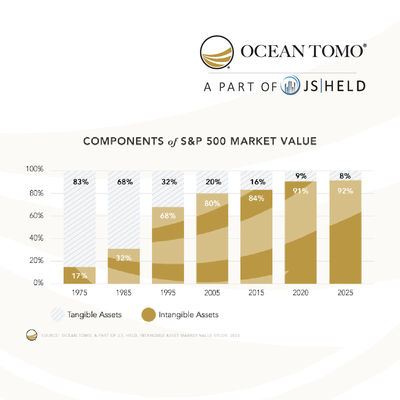
Intangible assets now make up more than 90% of S&P 500 market value — yet many organizations still lack a dedicated executive role to manage them strategically. This is where the Chief Intellectual Property Officer (CIPO) comes in. In this expert-backed piece, J.S. Held's Chief Intellectual Property Officer James E. Malackowski, CPA, CLP, and his colleague David Ngo unpack the economic forces shaping this role, the skills CIPOs bring to the table, and why forward-thinking companies are making IP leadership a boardroom priority. What you’ll learn: • The economic forces driving the rise of CIPO leadership • How CIPOs bridge legal, technical, and commercial priorities to unlock value • The growing relevance of CIPOs in consulting, insurance, and AI-driven industries • Practical strategies for integrating IP leadership into portfolio and risk management • Why the next decade will define the CIPO’s role in corporate success With deep expertise in IP strategy, valuation, and litigation, Malackowski and Ngo offer a clear, compelling case for elevating IP leadership to the C-suite. Looking to connect with the experts? Click on their profiles to arrange an interview or gain deeper insights into intellectual property strategy, risk, and valuation. James E. Malackowski, CPA, CLP Chief Intellectual Property Officer, J.S. Held | Co-founder and Senior Managing Director, Ocean Tomo Global leader in intellectual property valuation, strategic advisory, and expert testimony. Recognized among IAM’s “World’s Leading IP Strategists” and a pioneer in IP exchange models. David Ngo Senior Analyst, Intellectual Property Disputes Financial Expert Testimony, Ocean Tomo, a part of J.S. Held Specialist in quantifying economic damages in IP disputes and valuing intangible assets, with expertise in applying economic and financial analysis to complex litigation. For any other media inquiries, contact : Kristi L. Stathis, J.S. Held +1 786 833 4864 Kristi.Stathis@JSHeld.com.

View all posts