

How well-meaning parents sink their child's chances of college admission

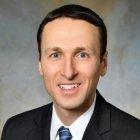
Robert Alexander, dean of enrollment management at the University of Rochester, advises parents to let their child lead.

Sep 23, 2025

2 min

Robert Alexander

"What's the number one parent behavior that will hurt a child's chance of admission?" 


The question was posed to Robert Alexander, the University of Rochester vice provost and dean of enrollment management, on the podcast "College Knowledge." He was quick to answer.


"Parents needs to be empowering the student and not driving the conversation" when it comes to choosing a college and engaging with college admissions professionals, Alexander replied.


He explained that too many parents have a narrow view of what they deem as "acceptable" institutions of higher education for their child. They come by it honestly, he said, with most of their knowledge derived from their own college searches and dreams a generation ago. 


They tend to home in on 20 or 30 schools when, in reality, the universe of quality colleges and universities has expanded exponentially since the days these parents were considering where to study, Alexander said.


"Widening that lends and thinking beyond the 20 or 30 schools they know a lot about or think they know a lot about or see a lot of bumper stickers for, that's really important," Alexander said. "There are many more really great institutions and what's important is not your child getting into 'the best college' that they can, but instead their child finding the best fit at one or maybe a range of different institutions."


Alexander is an expert in undergraduate admissions and enrollment management who speaks on the subjects to national audiences and whose work has been published in national publications.


Click his profile to reach him.


Connect with:
Robert Alexander

Robert Alexander

Vice Provost & University Dean for Enrollment Management

Alexander is an expert in undergraduate admissions, enrollment management, and curricular design.

Undergraduate AdmissionsTest optional admissionsCollege AdmissionsAdmissionsHigher Education Affordability

You might also like...

Check out some other posts from University of Rochester

2 min

Decoding Crypto

As interest in cryptocurrencies move from the fringes to mainstream conversation and public policy debate, Derek Mohr, clinical associate professor of finance at the Simon Business School at the University of Rochester, offers a clear-eyed voice on the subject. Mohr specializes in financial innovation and digital assets, and he’s been in demand with reporters looking to understand the economics behind everything from “Bitcoin-powered” home heaters to gas stations offering discounts for crypto purchases. His message? Not everything that markets itself as a breakthrough actually adds up. For instance, some companies have pitched devices that promise to heat a home using excess energy generated from bitcoin mining. Mohr recently told CNBC the idea might sound clever, but that its practicality collapses under basic financial and engineering realities. “The bitcoin heat devices I have seen appear to be simple space heaters that use your own electricity to heat the room . . . which is not an efficient way to heat a house,” Mohr said. “Yes, bitcoin mining generates a lot of heat, but the only way to get that to your house is to use your own electricity.” Bitcoin mining, he explained, has become so specialized that home computers have virtually zero chance of earning a mining reward. Industrial mining farms operate on custom-built chips far more powerful than any consumer device. In other words, consumers who think they’re heating their homes and earning crypto are, in reality, just paying for electricity and getting no real mining benefit. A pragmatic voice in a volatile space Mohr’s research and commentary help explain not just what is happening in the crypto world, but why it matters for consumers, businesses, and regulators. Whether evaluating the economics of mining or the viability of crypto payments, he brings a steady, analytical perspective to a domain dominated by hype and fast-moving news cycles. For journalists covering cryptocurrency, fintech, and the future of financial transactions, Mohr is available for interviews on digital payments, bitcoin mining economics, crypto regulation, and emerging trends in financial technologies. Top contact him, reach out to University of Rochester media relations liaison David Andreatta at david.andreatta@rochester.edu.

2 min

The Meaning Behind Hanukkah Meals

As families around the world prepare to celebrate Hanukkah, University of Rochester professor Nora Rubel can expound on the deeper stories behind the holiday’s foods, rituals, and evolving traditions. Rubel, a scholar of Jewish studies and chair of the Department of Religion and Classics, specializes in how Jewish identity is expressed through everyday practices and food. For instance, her work explores how dishes like latkes and sufganiyot (fried jelly donuts) carry meanings beyond the kitchen. “Food is one of the most powerful ways communities tell their stories,” Rubel says. “During Hanukkah, the foods we make and share help us remember the past, celebrate resilience, and connect with one another.” Hanukkah runs from Dec. 14 through Dec. 22 this year. Oil at the Heart of Hanukkah: Why Fried Foods Matter Many people recognize the holiday through its signature fried foods. But Rubel notes that these traditions developed over centuries and vary widely across cultures. • Ashkenazi Jews typically serve potato latkes. • Sephardic and Mizrahi communities prepare sufganiyot, bimuelos, zalabiya, and other fried sweets. • Some families incorporate dairy dishes, drawing on medieval interpretations of the Hanukkah story. What unites these foods, Rubel explains, is the symbolism of oil, which commemorates the miracle at the heart of the Hanukkah story. Many Ways to Celebrate Rubel emphasizes that Hanukkah is not a monolithic holiday. Its rituals, from lighting the menorah to singing blessings and exchanging gifts, vary across communities and generations. Some families add new traditions such as: • Hosting “latke tasting” gatherings • Experimenting with global Jewish recipes • Incorporating social justice themes into nightly candle-lighting • Sharing stories of family immigration and heritage “Hanukkah is a living tradition,” Rubel says. “It continues to evolve, and food is one of the ways people reinterpret what the holiday means for them today.” A Resource for Understanding Jewish Life Rubel’s broader scholarship focuses on American Jewish life, cultural memory, and how religious identities are shaped in the home as much as in the synagogue. She is a go-to resource for journalists covering holiday practices, regional Jewish cuisines, and the meaning behind rituals that shape the season, and is featured in “Family Recipe: Jewish American Style,” a new documentary now airing on PBS stations across the United States. Rubel is available for interviews throughout the Hanukkah period and beyond, and can speak to how traditions differ in Jewish communities around the world, the evolution of Hanukkah in American culture, and contemporary interpretations of rituals and identity. Click on Rubel's profile to connect with her.

2 min

Taking the Reins of Holiday Stress

Ho-ho-ho and a bottle of Tums? From feeding a crowd to juggling travel and schedules and managing finances during a challenging economic time, the holidays can feel like a pressure cooker. But University of Rochester psychologist Jeremy Jamieson, one of the country’s leading researchers on stress, says the pressures of the season of giving (and giving and giving and giving some more) can be mitigated by mentally reframing the stress we feel. In other words, what matters is how we interpret our stress. Jamieson’s Social Stress Lab studies a technique called "stress reappraisal": the practice of reframing stress responses as helpful rather than harmful. According to researchers, people can learn to treat their signs of stress — the racing heart, the sweaty palms, the mental sense of urgency — as tools that prepare them to meet a challenge rather than a sign that they’re falling apart. “Stress reappraisal isn’t about calming down or shutting stress off,” Jamieson says. “It’s about changing the meaning of your stress response. If you view the demands as something you can handle, your body shifts into a challenge state, which is a more adaptive, productive kind of stress.” The research behind this approach has grown considerably. In one of Jamieson’s studies, published in Journal of Experimental Psychology: General, the Social Stress Lab trained community college students to reinterpret stress as a resource. The results were striking: students experienced less anxiety, performed better on exams, procrastinated less, were more likely to stay enrolled, and approached academic challenges with healthier physiological responses. Newer findings from the lab also suggest that stress reframing can support people facing workplace pressures, caregiving responsibilities, and major life transitions. In short, stress isn’t the enemy of our well-being during the holidays. The real culprit is believing stress is dangerous. Jamieson is available for interviews and can explain how people can use stress reappraisal strategies to navigate holiday pressures — and other high-demand moments — with more confidence, better health, and better outcomes. Click on his profile to connect with him.

View all posts