

Generative AI may help turn consumers into active collaborators and creators, study finds

Nov 10, 2025

3 min

Yang FengYuan Sun


In the advertising world, generative AI is transforming the way brands connect with consumers, turning audiences from passive viewers into active creators who can shape and personalize campaign content.


A recent study in the International Journal of Advertising, conducted by researchers at the University of Florida’s College of Journalism and Communications, determined that by letting people use AI tools to create images that fit a brand’s style, companies can invite customers to take part in their campaigns. This hands-on approach makes consumers feel more empowered, which can lead to more positive feelings about the brand and a higher likelihood of buying its products.


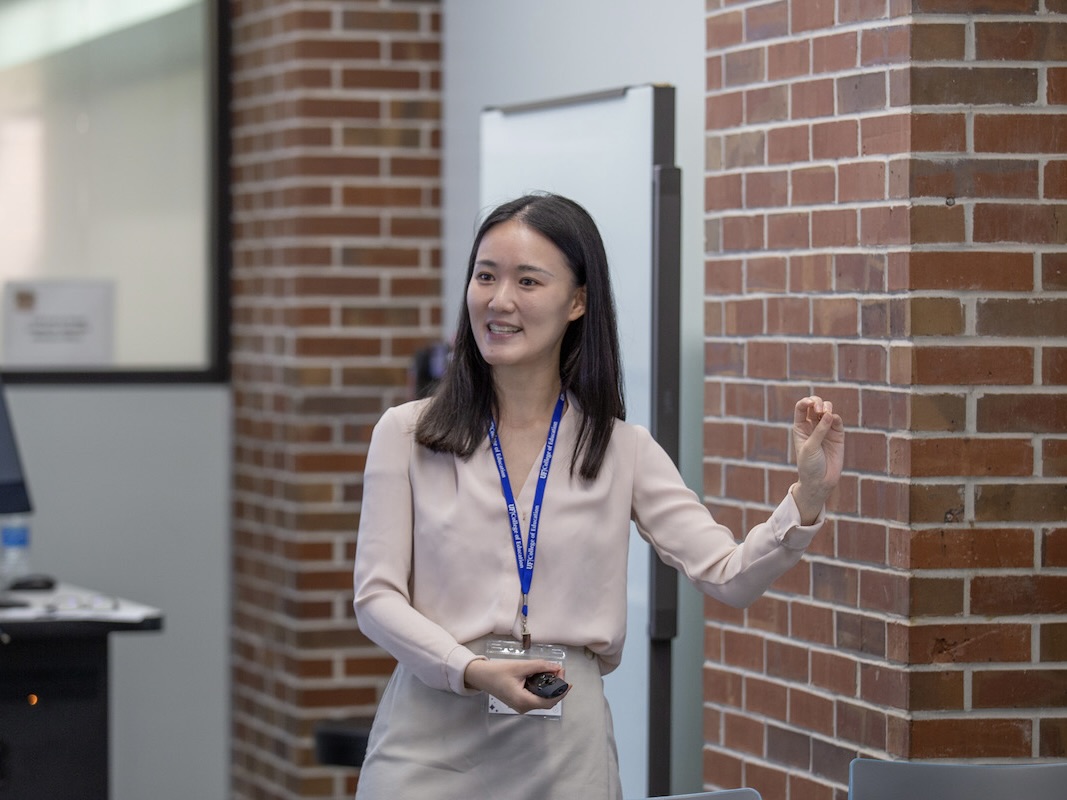
“I came across the Coca-Cola and Heinz campaigns and was amazed by how AI can be used to transform and empower consumers,” said Yang Feng, Ph.D., an associate professor in artificial intelligence in the UF Department of Advertising, who co-conducted the study with assistant professor Yuan Sun, Ph.D. “This inspired me to reach out to Yuan to explore a potential collaboration.”


The project began in 2023 following the success of Coca-Cola’s “Create Real Magic” campaign and Heinz’s “AI Ketchup” campaign, both of which allowed customers to engage directly with the brands using generative AI.


To test the effectiveness of these types of campaigns, Feng and Sun set up two surveys. The first was given to participants to evaluate their familiarity with generative AI tools and the ways participants used them. This survey illuminated three areas that users felt were enhanced by generative AI: collaboration, creation and communication, which Feng and Sun refer to as the 3C framework.


For the second survey, Feng and Sun mocked up a website for Harbor Haven Coffee, a fictional coffee brand committed to sustainability and ethical coffee bean sourcing.


“We wanted a company that resonated with as many people as possible,” Sun said. “One of the other goals of the first survey was to find what participants cared about most, which is how we came up with the brand’s eco-friendly mission.”


Along with the company’s description and mission statement, a generative AI tool was added to the homepage, encouraging participants to utilize it to produce images using prompts that fell within the brand’s guidelines. While participants were free to put whatever they wanted into the prompt box, each participant got back the same pre-generated image in order to reduce confounding factors. Participants were then asked a final round of questions to get a sense of how participating in this campaign made them feel.


Findings from the surveys showed that incorporating generative AI into advertising campaigns increased the chances of turning potential customers into empowered consumers, or individuals who actively participate in brand development rather than passively receive ad content. Feng and Sun found that the reasons behind this empowerment were tied to their 3C framework.


First, the collaborative nature of these campaigns fosters a sense of agency in the advertising process. Second, the reciprocal nature of human-generative AI communications boosts consumer confidence by making people feel more in control. Finally, directly engaging consumers and facilitating their creativity through AI builds stronger consumer relationships and reinforces positive brand associations.


“This sense of empowerment can be further strengthened with a user interface that facilitates seamless human-generative AI interaction, which is my specialty,” Sun said. “It should prioritize user-friendly features, clear instructions for prompting GenAI and intuitive navigation to enhance the user experience.”


However, among the benefits, the researchers also found a potential downside that could limit the success of these kinds of campaigns in the future.


“Once AI’s creation capacity surpasses a certain point, consumers may start to feel overwhelmed and no longer view the output as their own creation but rather as the work of the AI, which ultimately diminishes their sense of empowerment,” Feng said.


To this end, Feng intends to continue researching the 3C framework. Generative AI could play a big role in advertising going forward, and she hopes to explore its interpretive power in new contexts.

Connect with:
Yang Feng

Yang Feng

Associate Professor

Yang Feng's research focuses on the role of AI as an information delivery agent as well as a powerful research tool.

Consumer PsychologyAIArtificial IntelligenceAdvertising CampaignAdvertising Research and Strategy
Yuan Sun

Yuan Sun

Assistant Professor

Yuan Sun studies AI in strategic communication expert, focusing on user trust, digital health, and social media's psychological effects.

TrustMedia Psychology and Media EffectsGamingAIArtificial Intelligence
Powered by

You might also like...

Check out some other posts from University of Florida

Study finds most cancer patients exposed to misinformation; UF researchers pilot 'information prescription' featured image

3 min

Study finds most cancer patients exposed to misinformation; UF researchers pilot 'information prescription'

Ninety-three percent of patients with a new cancer diagnosis were exposed to at least one type of misinformation about cancer treatments, a UF Health Cancer Center study has found. Most patients encountered the misinformation — defined as unproven or disproven cancer treatments and myths or misconceptions — even when they weren’t looking for it. The findings have major implications for cancer treatment decision-making. Specifically, doctors should assume the patient has seen or heard misinformation. “Clinicians should assume when their patients are coming to them for a treatment discussion that they have been exposed to different types of information about cancer treatment, whether or not they went online and looked it up themselves,” said senior author Carma Bylund, Ph.D., a professor and associate chair of education in the UF Department of Health Outcomes and Biomedical Informatics. “One way or another, people are being exposed to a lot of misinformation.” Working with oncologists, Bylund and study first author Naomi Parker, Ph.D., an assistant scientist in the UF Department of Health Outcomes and Biomedical Informatics, are piloting an “information prescription” to steer patients to sources of evidence-based information like the American Cancer Society. The study paves the way for other similar strategies. Most notably, the study found the most common way patients were exposed to misinformation was second hand. “Your algorithms pick up on your diagnosis, your friends and family pick up on it, and then you’re on Facebook and you become exposed to this media,” Parker said. “You’re not necessarily seeking out if vitamin C may be a cure for cancer, but you start being fed that content.” And no, vitamin C does not cure cancer. Health misinformation can prevent people from getting treatment that has evidence behind it, negatively affect relationships between patients and physicians, and increase the risk of death, research has shown. People with cancer are particularly vulnerable to misinformation because of the anxiety and fear that comes with a serious diagnosis, not to mention the overwhelming amount of new information they have to suddenly absorb. While past research has studied misinformation by going directly to the source — for instance, studying what percentage of content on a platform like TikTok is nonsense — little research has looked at its prevalence or how it affects people. The team first developed a way to identify the percentage of cancer patients exposed to misinformation. UF researchers collaborated with Skyler Johnson, M.D., at Huntsman Cancer Institute, an internationally known researcher in the field. The survey questions were based on five categories of unproven or disproven cancer treatments — vitamins and minerals, herbs and supplements, special diets, mind-body interventions and miscellaneous treatments — and treatment misconceptions. The myths and misconceptions were adapted from National Cancer Institute materials and included statements like “Will eating sugar make my cancer worse?” The team surveyed 110 UF Health patients diagnosed with prostate, breast, colorectal or lung cancer within the past six months, a time when patients typically make initial treatment decisions. Most had heard of a potential cancer treatment beyond the standard of care, and most reported they had heard of at least one myth or misconception. The most common sources were close friends or family and websites, distant friends/associates or relatives, social media and news media. The findings mark a shift in misinformation research, with major implications for the doctor-patient relationship, said Bylund, a member of the Cancer Control and Population Sciences research program at the UF Health Cancer Center. “I still think media and the internet are the source and why misinformation can spread so rapidly, but it might come to a cancer patient interpersonally, from family or friends,” she said. Most patients rarely discussed the potential cancer treatments they had heard about with an oncologist, the study also found. Next, the researchers plan to survey a wider pool of patients, then study the outcomes of interventions designed to decrease misinformation exposure, like the information prescription.

New AI tool matches students with high-impact internships featured image

2 min

New AI tool matches students with high-impact internships

Finding the right internship can be an important step for students, but it’s not always clear which opportunities will lead to the strongest growth. To help solve that problem, University of Florida researchers have developed an AI-powered tool that helps students identify internships most likely to accelerate their technical and professional development. Unlike traditional recommendation engines, Pro-CaRE not only predicts which opportunities will lead to stronger outcomes, it also explains why each suggestion is a good fit. In testing data collected from the students, Pro-CaRE’s predictions proved highly accurate, accounting for more than 72% of the differences in learning gains among participants. While the pilot is being tested in engineering, the tool could be adopted for other disciplines. “Internships are one of the most critical parts of an engineering education, but students often struggle to know which experiences will actually help them grow,” said Jinnie Shin, assistant professor of research and evaluation methodology in the UF College of Education. “What makes Pro-CaRE unique is that it doesn’t just offer a list of options. It provides personalized recommendations backed by data and it tells students clearly why an opportunity is a good match for them.” Pro-CaRE creates matches by analyzing each student’s coursework, major, background and self-reported interest, confidence and self-efficacy in engineering skills. It then compares that profile with a carefully chosen set of similar peers to refine suggestions. The result is more precise guidance that adapts to students at different stages of their degree programs. “Students shouldn’t have to guess or hope that an internship will be worthwhile,” Shin said. “With Pro-CaRE, they can approach opportunities knowing they’re backed by evidence, whether the role is onsite, hybrid or remote and whether it’s at a startup or a Fortune 500 company.” The system is designed to work across a wide range of companies and contexts, giving students flexibility while ensuring their choices align with their personal and professional goals. Each recommendation comes with a clear “why this?” explanation, so students can make confident decisions and discuss options more effectively with advisors. Pro-CaRE was developed by a cross-disciplinary UF team combining expertise in education and engineering. Alongside Shin, the project’s co-principal investigators include Kent Crippen in the College of Education and Bruce Carroll in the Herbert Wertheim College of Engineering. The team is exploring external funding opportunities to expand the usage and test the efficacy on a larger scale. “Ultimately, our goal is to empower students to invest their time in experiences that will have the greatest impact,” Shin said. “Pro-CaRE bridges the gap between what students hope to gain and what internships can truly deliver.”

Using AI tools empowers and burdens users in online Q&A communities featured image

2 min

Using AI tools empowers and burdens users in online Q&A communities

Whether you’ve searched for cooking tips on Reddit, troubleshooted tech problems on community forums or asked questions on platforms like Quora, you’ve benefited from online help communities. These digital spaces rely on people across the world to contribute their knowledge for free, and have become an essential tool for solving problems and learning new skills. New research reveals that generative artificial intelligence tools like ChatGPT are creating a double-edge effect on users in these communities, simultaneously making them more helpful while potentially overwhelming them to the point of decreasing their responses. “On the positive side, AI helps users learn to write more organized and readable answers, leading to a noticeable increase in the number of responses,” explained Liangfei Qiu, Ph.D., study coauthor and PricewaterhouseCoopers Professor at the University of Florida Warrington College of Business. “However, when users rely too heavily on AI, the mental effort required to process and refine AI outputs can actually reduce participation. In other words, AI both empowers and burdens contributors: it enables more engagement and better readability, but too much reliance can slow people down.” The study examined Stack Overflow, one of the world’s largest question-and-answer coding platforms for computer programmers, to investigate the impact of generative AI on both the quality and quantity of user contributions. Qiu and his coauthor Guohou Shan of Northeastern University’s D’Amore-McKim School of Business measured the impact of AI on users’ number of answers generated per day, answer length and readability. Specifically, they found that users who used AI tools to generate their responses contributed almost 17% more answers per day compared to those who didn’t use AI. The answers generated with AI were both shorter by about 23% and easier to read. However, when people relied too heavily on AI tools, their participation decreased. Qiu and Shan noted that the additional cognitive burden associated with heavier AI usage negatively affected the impact on a user’s answer quality. For online help communities grappling with AI policies, this research provides valuable insight into how these policies can be updated in the current AI environment. While some communities, like Stack Overflow, have banned AI tools, this research suggests that a more nuanced approach could be a better solution. Instead of banning AI entirely, the researchers suggest striking a balance between allowing AI usage while promoting responsible and moderated use. This approach, they argue, would enable users to benefit from efficiency and learning opportunities, while not compromising quality content and user cognition. “For platform leaders, the takeaway is clear: AI can boost participation if thoughtfully integrated, but its cognitive demands must be managed to sustain long-term user contributions,” Qiu said.

View all posts