Have Yourself a Sustainable Christmas: Five Tips for a Greener Holiday

Baylor’s Office of Sustainability says thoughtful gift-giving, recyclable wrappings, local foods and smarter Christmas tree choices help us reconnect with simpler times

Dec 11, 2025

3 min


As the holiday season approaches, there are multiple ways that individuals and families can employ mindful practices – both meaningful and eco-friendly – that reduce waste and support local communities.


From reusable wrappings to sourcing meals locally and composting the leftovers to smarter Christmas tree choices, Baylor University’s Joshua King, Ph.D., professor of English and director of Environmental Humanities minor, and Gary Cocke, senior director of sustainability, offer five tips for embracing sustainability during the holidays to help us reconnect with simpler, more meaningful traditions.


Five Tips to Make Your Holidays Meaningful and Eco-friendly


1. Thoughtful gift giving: Choose long-lasting gifts or experiences that recipients will use and appreciate.


"Quality over quantity is always a good rule of thumb," Cocke said. “Giving gifts that are useful and durable is best – and if you think of what the recipient would actually be able to use, it is, by its very nature, a more thoughtful gift.”


He also encourages exploring and supporting local businesses and the local economy while shopping for unique presents.


King added that crafting a creative letter, poem or handmade gift “take us back to the gratitude that should be at the heart of our celebration.”


"Experiences can also be wonderful gifts – they often foster lasting memories and meaningful connections," Cocke added.


For those looking to give back, donating to a nonprofit organization that resonates with the recipient’s values is a thoughtful gesture.


2. Eco-friendly gift wrapping options


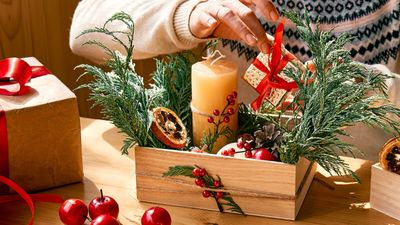
An easy way to reduce holiday waste is with intentional gift wrapping. "Choose recyclable paper wrapping over shiny, plastic-laden alternatives and reuse materials when possible," Cocke said.


King added that reusable options like fabric and premade bags can be stylish and sustainable.


Do-it-yourself wrapping paper can be a fun family activity. “Grab some plain paper and decorate with stamps and markers,” Cocke said. “Grandparents especially love the personal touch of kid-decorated paper."


3. Eat locally and compost

Another way to support local businesses is by “sourcing meals locally and making use of leftovers or composting what can’t be eaten,” King said. The Baylor Community Garden offers compost buckets for families to collect their food waste for composting.


4. Greener Christmas tree choices

When it comes to Christmas trees, the debate between real versus artificial trees comes down to longevity and disposal.


"Artificial trees can be the more sustainable option if used for at least 10 years," Cocke said. "However, real trees are a good choice if properly composted after use."


Cocke highlighted the importance of composting and local options for live tree recycling or mulching:


5. A sustainable future


“The holidays invite us to practice gratitude and to celebrate relationships we cherish, often by giving gifts, and at Christmas, Christians express gratitude for the ultimate gift: God’s pledge of love to creation through the incarnation, becoming one with us as a fellow creature,” King said.


“What better time for practicing a revolution of gratitude through gift-giving and celebrations that are light on the earth and that respect the many relationships by which we live?”


Cocke hopes that Baylor’s strategic initiatives and local partnerships will continue to foster sustainable practices, from increasing access to composting to raising awareness about holiday waste reduction.


"A little mindfulness can go a long way toward making the holidays more meaningful and sustainable," he said.


Looking to know more or arrange an interview? Simply contact: Shelby Cefaratti-Bertin today.

Powered by

You might also like...

Check out some other posts from Baylor University

1 min

Expert Perspective: Race and Representation Take Center Stage in Texas’ Democratic U.S. Senate Primary

As Texas Democrats head toward a competitive 2026 U.S. Senate primary, conversations about race and representation are playing a visible role in the campaign. In a recent Spectrum News segment, Baylor University political analyst Dr. Mia Moody discusses how racial identity, voter perceptions, and candidate messaging are influencing the dynamics of the race. Mia Moody, Ph.D., is a professor and former chair of the Department of Journalism, Public Relations, and New Media in the Baylor University College of Arts & Sciences. She is a nationally recognized expert on mass media and image repair, intersectionality, critical race theory, and the media framing of women and people of color. View her profile The story explores how candidates are navigating issues of representation within a diverse Democratic electorate, and how those discussions could impact turnout and coalition-building ahead of the primary. Watch the full report for expert insight into how race is shaping one of Texas’ most closely watched political contests. The full story is available below:

5 min

Tales of Christmas Past: Preserving Your Family History During the Holidays

During past family Christmas gatherings, many of us remember when older relatives regaled everyone with tales about their fascinating life stories, firsthand experiences as an eyewitness to history or simply sharing how favorite family traditions started. So how do you preserve those precious family memories during the holidays? Baylor University oral historians Stephen Sloan and Adrienne Cain Darough have recorded and preserved the oral history memoirs of thousands of individuals through their work with Baylor’s renowned Institute for Oral History, home of the national Oral History Association. Together, the historians share seven simple best practices to help family members begin oral history conversations that enrich recollections of the past and capture your family memories. “The holiday season brings about the opportunity to spend time with family members, especially those you may not be able to see on a frequent basis,” Cain Darough said. “This presents the perfect opportunity to conduct oral histories to capture the stories and experiences of your family and loved ones, to learn more about them, the history of your family, traditions that have been passed down from generation to generation and more.” Seven best practices for preserving your family’s oral history 1. Ask first! Make sure your family member wants their story to be documented or recorded. That is the first – and most important – question to ask, said Adrienne Cain Darough, M.L.S., assistant director and senior lecturer with the Institute for Oral History. Ask first. “Many oral historians have run into the spot where someone says, ‘Oh, my grandpa would be great for that topic,’ and you get there and it's, ‘Grandpa does not want to talk to you.’ So first, make sure they want their story recorded,” she said. 2. Determine the type of recording equipment you want to use. Decide if you want to record your interview with an audio recorder or use a video recording device. It all depends on your needs and comfort level with the technology. For family members who are unable to travel this holiday season, you can include them by capturing their stories using a remote recording platform like Zoom, which became a vital tool for oral historians when COVID struck in 2020. Helpful resources from Baylor’s Institute for Oral History include: How to choose the right digital recorder Oral History at a Distance webinar on the dynamics of conducting remote oral history interviews Remote Interviewing Resources guide (Oral History Association) 3. Research your family member’s life and their timeline to help you formulate your questions. Recording a family member’s oral history is more than just putting down a recorder in front of them and saying, “Talk.” If you’re recording an oral history over Christmas with a family member, are there specific things that you want to know that are related to the holiday? For example, what was Christmas morning like for them as a child? How did your favorite family traditions start? What is their favorite holiday dish? (Maybe they could even share the recipe. “You can finally learn why Nana’s banana pudding doesn’t even have bananas in it,” Cain Darough said.) “Doing your research to try to form those questions will help you get around the reluctance to talk sometimes,” Cain Darough added. “The favorite thing that I love to hear is, ‘Oh, I don't have much to say,’ or ‘I'm not that important.’ And then you sit down with them, and you listen to their stories, and your mind is just blown by the things that they've seen and experienced.” 4. Start with the basics: “Where are you from?” When Baylor oral historians conduct an interview, they generally begin with some life history of the subject, providing important context for historians. “Ask questions early on that are easy for them to answer: a little bit of the backstory, a little bit of where they're from, where they grew up,” said Stephen Sloan, Ph.D., director of the Institute for Oral History, executive director of Oral History Association and professor of history at Baylor. “I want to understand the lens through which they experienced events, and the only way I can do that is, who was this? What was formative in their life growing up? Who spoke into who they were? What did they learn? Where did they go? What did they do? Those are the sorts of things that I would be exploring early in the interview.” One of the questions Cain Darough enjoys asking is, “What did you want to be when you grew up?” “You want to give them something that's very easy and comfortable to talk about,” Cain Darough said. “What was your favorite subject in school, just to see if that was something that continued on in their life. If there's a certain hobby or something that you know that they're affiliated with, when did you learn about that? Tell me more. What's your interest with this? And then they'll get to talking.” 5. Ask open-ended questions – without making any assumptions. With oral history, it is important that you don’t go into the interview with a specific agenda or try to lead anyone to a certain conclusion. “We can do this very subtly by assuming information, but you can't assume anything about their experience with the topic,’” Sloan said. “If we assume information, it could be very far from how they encountered whatever event that may have been. Allow them to relate the ways in which they lived these experiences.” 6. Listen closely. Listening is an important facet of gathering oral history. But historians say you are not only listening for what they're saying, you're also listening for what they're not saying. “Are there things that are being skipped around?” Cain Darough said. “For example, sometimes when you're talking to veterans about their combat experience, it may be the first time that they're reliving or retelling these stories. They need time, and you just have to be prepared for that.” 7. Be patient. It might take your subject some time to warm up to the conversation. “If you're talking to someone who is 80, 90 or even 100, that's a lot of memories that they have to go through, so patience is important,” Cain Darough said. Looking to know more or arrange an interview? Simply click on Stephen's icon or contact: Shelby Cefaratti-Bertin today to connect with  Adrienne Cain Darough.

3 min

Reviving the Christmas Spirit: Forgotten Christmas Traditions to Reclaim the Christmas Season

Christmas is just around the corner and many families have already decorated their homes and started celebrating their Christmas traditions – but many stores have had their Christmas products out for months. This early bombardment of holiday advertisements and adornments often takes away from the excitement. So how do you recapture the true spirit of Christmas? Baylor University Honors College professor Michael Foley, Ph.D., who teaches in the Great Texts Program, has researched the history of common Christmas traditions and uncovered forgotten customs. “Christmas is indeed the most wonderful time of year, and that wonder is increased when we understand why we do the things we do,” Foley said. “Our delight in the season becomes greater when we appreciate the history and symbolism of the Christmas tree or why we kiss under the mistletoe.” Foley shares three practices to recapture the essence of Christmas and bring more joy to the season for your family. Enjoy the 12 Days of Christmas Historically, the season of Advent during the weeks leading up to Christmas was a period of joyful restraint and preparation. During the Twelve Days of Christmas, from Christmas Day on Dec. 25 to the Feast of the Epiphany on Jan. 6, people would celebrate a release with a continuous period of leisure and merriment. “Today, the Christmas season seems to start earlier and earlier each year. In the 20th century, the commercial season began the day after Thanksgiving, but now stores inundate the market with Christmas decorations much earlier,” Foley said. “The problem with this arrangement is that by the time Christmas finally comes, you’re tired of it. The older model has an organic build-up to the big day and then a great, 12-day release.” Returning to a slower-paced season full of cheerful spirits in the 12 days following Christmas is a way to recenter, refocus and reignite your Christmas spirit, Foley said. Capture the Joy of Incarnation It’s easy to get caught up in the festivities and pressure of the holiday, but it is also important to return to the reason behind Christmas, Foley said, and take time to understand the meaning behind what seem like meaningless customs. “The best traditions capture the fact that God became man in order to redeem us from our sins out of sheer love for us,” he said. Practices like caroling and gathering with family for food and drink are all acts of gratitude and joy that can remind us of God’s love. What may seem like typical holiday decorations, the holly wreath and the Christmas tree, are actually symbols of Christ bringing new life, Foley said. Embrace the Bizarre Today, Christmas is surrounded by a light, cheery feeling. But history tells us that there has always been a certain “dark side” of Christmas. “There is a reason why Ebenezer Scrooge was visited by three ghosts on Christmas Eve,” Foley said. “All of winter was the season of fiends, and they were not happy that the winter solstice around Christmas Day marked the beginning of the end of the long dark nights and that Jesus Christ was born and triumphed over evil.” Other traditions involve swapping places with someone such as a parent and child, abbots and novices, or men and women. “At one time, this custom of inverted social roles played an important role in gaining clarity and releasing tension in a hierarchical society,” Foley said. While this might seem useless, impractical, or even pointless today, it can still offer value to the Christmas joy. “These inversion customs are a giddy imitation of the ultimate inversion in all of history,” Foley said. “That Almighty God chose to become a little baby in a measly manger.” Although some forgotten customs might seem odd to us today, there can be a certain kind of wisdom behind them – a wisdom that leads us back to the true spirit of Christmas, Foley said. After all, even Ebenezer Scrooge was able to find joy in Christmas again. Michael Foley is a Professor of Patristics in the Honors College at Baylor University and the author of 17 books, including Why We Kiss under the Mistletoe: Christmas Traditions Explained. Looking to know more or arrange an interview? Simply contact: Shelby Cefaratti-Bertin today.

View all posts