You might also like...
Check out some other posts from University of Delaware

Blood clots have sidelined or ended the careers of several elite athletes, drawing attention to a potentially life-threatening condition. The University of Delaware's Sambeeta Das is part of a team that has developed tiny, magnetically guided robots that could offer a new approach to removing such blockages.
The list of athletes affected by blood clots includes NBA champion Chris Bosh, whose career ended after recurring clots; tennis great Serena Williams, who survived two life-threatening pulmonary embolisms; San Antonio Spurs center Victor Wembanyama, who was shut down in February 2025 when deep vein thrombosis was discovered in his right shoulder; and Philadelphia Eagles quarterback Jalen Hurts, whose recent diagnosis of blood clots in his lungs has drawn national attention.
In a published study, Das and her colleagues demonstrated that magnetic microrobots could mechanically break apart clusters of human liver cancer cells and clear them from narrow channels designed to model blood vessels.
The robots used mechanical forces rather than drugs or chemicals to disperse the clusters.
The research offers an early proof of concept for using microrobots to remove unwanted cellular material in confined spaces.
Das can discuss how the technology works, its potential application to blood-clot removal, the challenges of targeting blockages inside the body, and what further research is needed to explore its use in patients.
To contact Das and arrange an interview, visit her profile and click the “Contact” button. Reporters can also email MediaRelations@udel.edu.
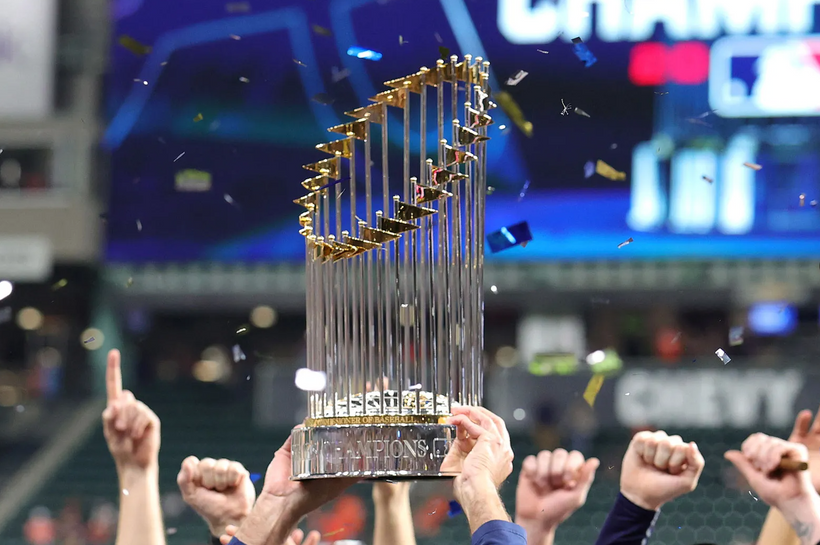
The ingredients that create a World Series team often mirrors how units achieve success in business. How did they get there? The University of Delaware's Kyle Emich says the answer goes beyond assembling a roster of star players.
Emich, a professor of management, says that how players combine their strengths, respond to opponents and create opportunities together can be just as important as individual talent. The same is true in business, where a collection of talented employees doesn’t automatically translate into a high-performing team, he said.
One example is the approach that the 2026 Milwaukee Brewers’ took during their postseason run. Rather than relying exclusively on home runs and individual star power, the team created opportunities through a combination of speed, patience at the plate, timely hitting and pressure on opposing defenses. A stolen base, a walk or a defensive mistake might seem like a small event on its own, but the effects can build as players’ actions interact.
These interactions matter, he says, because teams are not simply collections of individuals; their performance emerges from how people and their activities affect one another within a larger environment.
The same is true in business as well as baseball. Businesses may recruit exceptional employees or invest in promising technologies such as artificial intelligence, yet fail to realize their potential if their processes, team structures and working practices don’t support those strengths.
Emich can discuss: • Beyond Moneyball: What baseball’s emphasis on statistics and individual talent reveals about the limits of evaluating people in isolation.
• Building better teams: How coordination, complementary strengths and the interaction among team members contribute to performance.
• Strategy and competition: What baseball teams’ adjustments to opponents can teach business leaders about responding to competitors and changing conditions.
• Technology and the future of work: Why adopting artificial intelligence or other new technologies is not enough without considering how people, processes and technology work together.
To reach Emich directly and arrange an interview, visit his profile page and click on the "contact" button. Interested reporters can also send an email to MediaRelations@udel.edu.
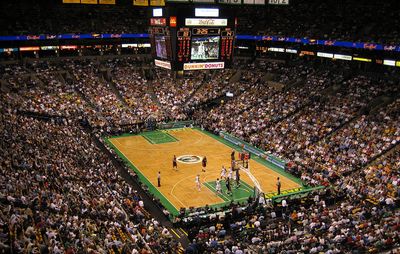
A new NBA season brings plenty of storylines, from star players in new uniforms to the debut of promising rookies. But for players recovering from Achilles tendon injuries, returning to the court is just the beginning, says the University of Delaware's Karin Grävare Silbernagel. Regaining strength, explosiveness and consistent performance can take longer to achieve, said Silbernagel, a professor of physical therapy who studies tendon injuries and rehabilitation, with a focus on Achilles tendon ruptures, ankle function and long-term physical performance.
Her research explores why recovery involves more than healing tissue or returning to competition. Strength, movement, tendon function and the ability to perform under the demands of sport all matter, she said.
In a recent study, Silbernagel and colleagues examined single-leg jumping in people about two years after an Achilles tendon rupture. They found that fatigue affected ankle power differently on the injured and uninjured sides, highlighting how an injury can influence movement and the way the body distributes physical demands even well into recovery.
Silbernagel can discuss:
• Why returning to the court does not necessarily mean an NBA player has regained full strength, explosiveness or durability.
• How clinicians assess recovery and readiness to return to sport after an Achilles tendon rupture.
• How rehabilitation, progressive loading and return-to-sport testing can help guide recovery.
• What research reveals about lingering changes in movement and function after tendon injuries.
• What Achilles injuries can mean for athletic performance over time.
Silbernagel leads the Delaware Tendon Research Group and consults with professional sports teams. Her research has helped inform clinical guidelines for treating tendon injuries.
To reach Silbernagel directly and arrange and interview, visit her profile and click on the "contact" button. Interested reporters can also send an email to MediaRelations@udel.edu.