Why Insomnia May Hold the Key to Treating Depression, According to MCG Research

Dec 24, 2025

2 min

Vaughn McCall, MD


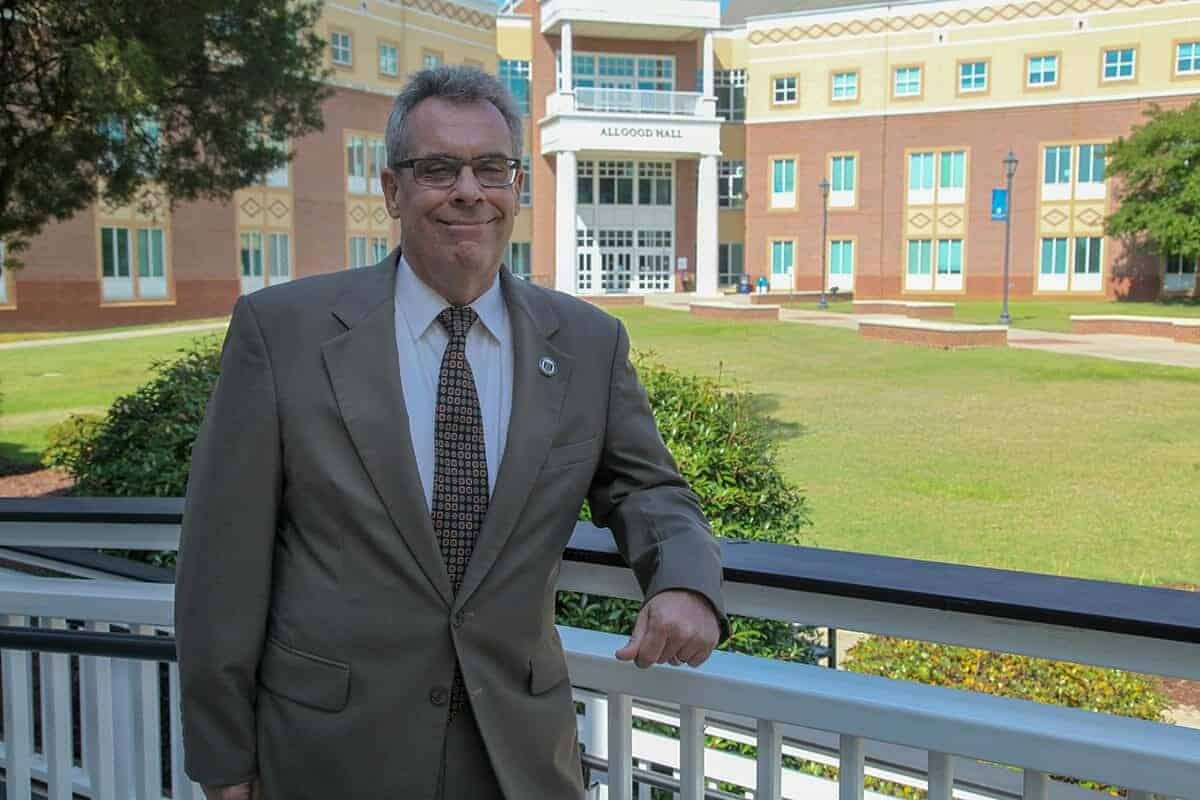
William Vaughn McCall, MD, professor emeritus in the Department of Psychiatry and Health Behavior at the Medical College of Georgia at Augusta University, is leading a new multi-year clinical trial aimed at addressing insomnia and depression together — two conditions that frequently occur side by side. The Assessing Improvements in Mood and Sleep (AIMS) Trial, funded by the National Institutes of Health, is exploring whether treating sleep problems through psychotherapy can also reduce lingering symptoms of depression, particularly in older adults.


McCall has served as professor and Case Distinguished Chairman of the Department of Psychiatry and Health Behavior at Augusta University since 2012. His research interests include depression, electroconvulsive therapy, quality of life, insomnia, and suicide. His research has been continuously funded by the National Institute of Mental Health since 1995, and he is the author of more than 400 publications, including more than 180 peer-reviewed journal articles.


View his profile


McCall’s work builds on decades of research examining how disrupted sleep contributes to mood disorders. While previous studies often focused on medication-based approaches, this trial takes a different direction by testing non-pharmacological therapies that target insomnia itself. The research team, which includes collaborators from multiple universities, is evaluating whether improving sleep quality can meaningfully lower depression symptoms for patients who remain symptomatic despite antidepressant treatment.


“Ultimately, the hope is to find other avenues to reduce the risk for depression and depression symptoms,” McCall says.


The trial is currently recruiting adults aged 55 and older who are experiencing both insomnia and depression, with options for both in-person and remote participation. For journalists covering mental health, aging, sleep science, or emerging clinical research, McCall is a key expert offering informed perspective on how sleep-focused interventions could reshape the future of depression treatment.


The full article 'New MCG trial targets insomnia and depression symptoms' is available below:


And if you're interested in talking with William Vaughn McCall, MD, simply click on his icon now  to arrange a time for an interview today.

Connect with:
Vaughn McCall, MD

Vaughn McCall, MD

Case Distinguished University Chairman for the Department of Psychiatry & Health Behavior, Executive Vice Dean for the Medical College of Georgia

Vaughn McCall focuses on depression, electroconvulsive therapy, quality of life, insomnia, and suicide.

SuicideQuality of LifeDepressionElectroconvulsive TherapyInsomnia
Powered by

You might also like...

Check out some other posts from Augusta University

3 min

AU scientists advance understanding of Nobel-winning immunology research

The 2025 Nobel Prize in Physiology or Medicine recognized the discovery of regulatory T cells, which are immune cells that maintain tolerance and prevent autoimmunity. At Augusta University, scientists have built upon that foundational work, uncovering how these cells function, fail and evolve across diseases like cancer and atherosclerosis. Regulatory T cells, or Tregs, are essential for controlling immune responses and preventing the body from attacking its own tissues. Early discoveries by Shimon Sakaguchi, MD, PhD, who identified the CD25 marker and later the transcription factor FoxP3, revealed how Tregs suppress immune activation. Sakaguchi, a distinguished professor at Osaka University in Japan, shared the Nobel Prize with Mary E. Brunkow, PhD, Princeton University, and Fred Ramsdell, PhD, University of California, Los Angeles. Sakaguchi once shared lab space with Nicholas Gascoigne, PhD, now a professor at AU’s Immunology Center of Georgia, where he studies T-cell signaling and differentiation — a connection that ties the global history of Treg research to the university’s ongoing expertise. Gascoigne’s research continues to illuminate how Tregs differentiate and signal, critical steps in ensuring immune tolerance to self. “Drs. Sakaguchi, Brunkow and Ramsdell have made enormous contributions to our understanding of how immunological tolerance works, so this prize is very well deserved,” Gascoigne said. “I was happy I could help Drs. Shimon and Noriko Sakaguchi when they needed lab space back in the early ‘90s. They were wonderful to work with.” At Augusta University, David Munn, MD, co-director of the Pediatric Immunotherapy Program of the Medical College of Georgia at Augusta University, made seminal discoveries showing that Tregs are not always stable. Munn’s team demonstrated that these cells could lose their suppressive identity and become “exTregs,” adopting pro-inflammatory characteristics under certain conditions. Munn also uncovered an entirely distinct tolerance mechanism through indoleamine 2,3-dioxygenase, a pathway independent of FoxP3 that regulates immune balance through tryptophan metabolism. “In particular, the work of Shimon Sakaguchi and Fred Ramsdell was profoundly influential on our early work, as we were just starting out to explore how the immune system is regulated in pediatric cancers,” Munn said. “The work of these Nobel laureates helped transform the scientific understanding of how the immune system responds — or fails to respond — in the setting of tumors.” Catherine “Lynn” Hedrick, PhD, co-director of the Immunology Center of Georgia, further expanded this understanding by showing that Tregs can convert into follicular helper T cells, offering new insight into how immune regulation can shift toward antibody production in chronic inflammatory diseases such as atherosclerosis. “Understanding how regulatory T cells can shift identities helps explain why the immune system sometimes loses balance in chronic disease,” Hedrick said. “By tracing how Tregs convert into other helper cells, we’re uncovering new therapeutic targets to restore immune harmony in conditions like atherosclerosis.” Building on these advances, Klaus Ley, MD, co-director of IMMCG, and his team have investigated how exTregs contribute to cardiovascular inflammation, identifying them in human tissues and clarifying their role in atherosclerosis. His lab also recently discovered human exTregs, providing the first direct evidence of these cells in people. Two postdoctoral fellows in Ley’s lab, Qingkang Lyu, PhD, and Smriti Parashar, PhD, continue this work, exploring how regulatory and ex-regulatory T cells influence chronic disease progression. Additionally, Dimitrios Moskofidis, MD, PhD, a professor based in the Georgia Cancer Center, contributed key early insights into immune tolerance and memory, defining how effector T cells persist or are deleted following infection. “Together, these discoveries place Augusta University and the Immunology Center of Georgia at the forefront of modern immunology, connecting molecular mechanisms of tolerance to real-world diseases and therapies,” Ley said. To connect with any of the experts or researchers in this article - simply contact AU's External Communications Team mediarelations@augusta.edu to arrange an interview today.

2 min

Fueling the Future of Cancer Immunotherapy: Gang Zhou’s Research Takes a Major Step Forward

Cancer immunotherapy has transformed how clinicians approach the treatment of certain blood cancers, but major limitations remain — especially when it comes to sustaining strong, long-lasting immune responses. Gang Zhou, PhD, a leading cancer immunologist at Augusta University’s Georgia Cancer Center and the Immunology Center of Georgia, is tackling these challenges head-on. Zhou’s work focuses on how T cells behave inside the body and how their performance can be enhanced to improve patient outcomes. His lab studies the forces that strengthen or weaken T cell responses, including their functional status, their ability to self-renew and the environmental pressures they face inside tumors. This deep understanding positions him as a key figure in the effort to advance next-generation immunotherapies. Recently, Zhou and his research team were awarded the first Ignite Grant from the Immunology Center of Georgia — a seed program designed to support bold, high-impact translational ideas. Their funded project aims to make CAR-T therapy more effective. CAR-T is a type of immunotherapy in which a patient’s own T cells are genetically modified to recognize and attack cancer cells. While this approach has revolutionized the treatment of certain blood cancers, it still faces obstacles such as limited cell persistence and reduced strength over time. “Our ultimate goal is to engineer T cells that not only survive longer but also remain highly functional, giving patients more durable protection against their disease.” Zhou’s team is addressing this issue by studying how a modified form of STAT5, a transcription factor that plays a key role in T cell survival and function, may help engineered T cells last longer and perform better. The ultimate goal is to create CAR-T therapies that maintain potency, withstand the harsh tumor microenvironment, and offer durable results for patients. The Ignite Grant recognizes not only the promise of this specific project, but also Zhou’s broader expertise in understanding how T cells can be guided, supported, and strengthened to fight cancer more effectively. His research contributes to a growing wave of scientific innovation aimed at improving immunotherapy outcomes for patients with both blood cancers and, potentially, solid tumors — an area where current treatments face significant barriers. As immunotherapy continues to evolve, the work led by Gang Zhou stands as a compelling example of how foundational science, translational research, and clinical ambition can work together to push the field forward. To connect with Dr. Gang Zhou - simply contact AU's External Communications Team mediarelations@augusta.edu to arrange an interview today.

3 min

MCG scientists investigate arthritis drug’s impact on Alzheimer’s disease

According to the Alzheimer’s Association, more than 7 million Americans are living with Alzheimer’s disease, and one in nine of those people is 65 or older. Although that number is expected to grow, researchers at the Medical College of Georgia at Augusta University are making progress on studies that could turn into life-saving treatments. Qin Wang, MD, PhD, professor in the Department of Neuroscience and Regenerative Medicine at MCG and Georgia Research Alliance Eminent Scholar in neuropharmacology, recently published a study titled “The PKCι‑β‑arrestin2 axis disrupts SORLA retrograde trafficking, driving its degradation and amyloid pathology in Alzheimer’s disease,” in Molecular Degeneration, a leading journal in neurodegeneration. In the study, Wang and her team explored how certain proteins and enzymes interact in the brains of Alzheimer’s patients. Key players include the SORL1 gene, the PKCι enzyme and proteins SORLA, β‑arrestin2 and amyloid. SORL1 encodes SORLA, which helps regulate amyloid. Amyloid can form plaque in the brain, contributing to Alzheimer’s. People with the disease often have lower SORLA levels, which amplifies plaque production. “The goal is to increase SORLA levels in patients with AD. If we can boost it up, that would be great,” Wang said. “But if you want to know how to boost it up, you have to know how it is degraded, so that’s what our work is about – we’re trying to understand how its stability is regulated.” Wang’s research team found that PKCι can add a phosphate group to SORLA, which helps SORLA interact with β‑arrestin2. The PKCι‑β‑arrestin2 axis leads to SORLA degradation, reducing its levels and allowing amyloid plaques to grow unchecked, thereby worsening the disease condition. They discovered this by using biochemical methods and a mass spectrometer managed by Wenbo Zhi, PhD, at the Proteomics and Mass Spectrometry core lab at AU. “We conducted biochemical studies and found that SORLA can be phosphorylated. We identified the phosphorylation site and the interacting enzymes,” Wang explained. “Using the mass spectrometer with PKCι, we saw increased phosphorylation of SORLA at certain sites. Preventing that could stop SORLA degradation.” That’s where a rheumatoid arthritis drug called auranofin comes into play. “While it is an arthritis drug, it can also inhibit the PKCι enzyme,” Wang explained. The team conducted tests using Alzheimer’s mouse models and human iPS cells developed into neurons. For the mouse models, they treated the mice with auranofin for eight weeks, resulting in decreased amyloid levels, reduced neuroinflammation and improved cognitive function. Similar results were seen in human cells with increased SORLA levels and decreased amyloid levels. “A good thing about this is, because this is an FDA-approved drug, it’s ready to be tested in Alzheimer’s patients,” Wang said. “People often worry about drug safety because of long-term use in chronic diseases like Alzheimer’s, but, in this case, existing safety data for chronic use gives a good starting point for testing in Alzheimer’s patients. “I hope a drug company can pick that up for a trial with Alzheimer’s patients because we are trying to translate our bench work all the way to the bedside for treatment,” she continued. The study wraps up a five-year National Institute on Aging grant, a collaborative effort between Wang’s lab and the Kai Jiao, MD, PhD, lab in AU’s Center of Biotechnology and Genomic Medicine. Wang’s team is also working on other grant-funded Alzheimer’s-related projects and hopes to continue making advancements toward finding a cure for this debilitating disease. “All of our projects share the goal of finding a better treatment,” Wang said. “Related to this project in particular, we want to know how the SORLA protein works in different types of brain cells, given the brain’s complexity. Then we can determine how to specifically target that protein to develop more effective therapies.” Qin Wang, MD, PhD, researches the neuropharmacology and signaling mechanisms underlying neurological and psychiatric disorders. If you're interested in learning more about her work or booking an interview,  simply click on her icon now to arrange a time to talk.

View all posts