
UF professor to expand proven disease-prediction dashboard to monitor Gulf threats

Dec 28, 2025

5 min

Antar Jutla


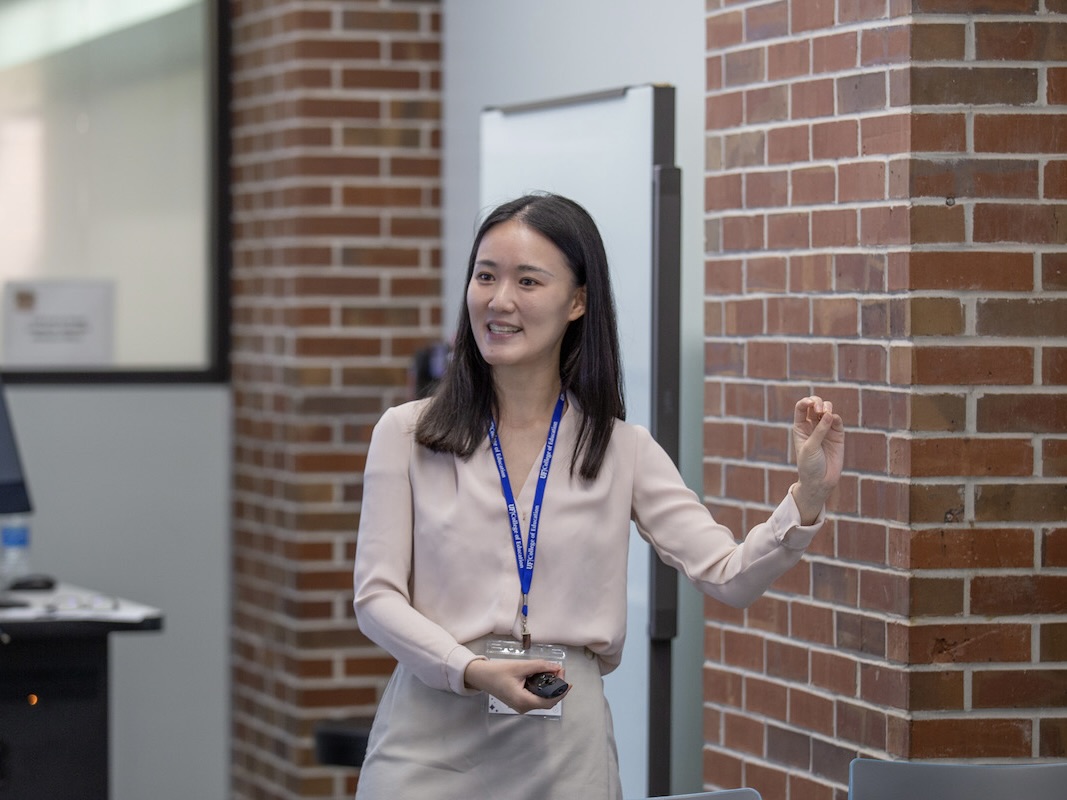
After deploying life-saving cholera-prediction systems in Africa and Asia, a University of Florida researcher is turning his attention to the pathogen-plagued waters off Florida’s Gulf Coast.


In the fight to end cholera deaths by 2030 – a goal set by the World Health Organization – UF researcher and professor Antar Jutla, Ph.D., has deployed his Cholera Risk Dashboard in about 20 countries, most recently in Kenya. Using NASA and NOAA satellite images and artificial intelligence algorithms, the dashboard is an interactive web interface that pinpoints areas ripe for thriving cholera bacteria.


It can predict cholera risk four weeks out, allowing early and proactive humanitarian efforts, medical preparation and health warnings. Cholera is a bacterial disease spread through contaminated food and water; it causes severe intestinal issues and can be fatal if untreated. The US Centers for Disease Control reports between 21,000 and 143,000 cholera deaths each year globally.


Make no mistake, the Cholera Risk Dashboard saves lives, existing users contend.


His team now wants to set up a similar pathogen-monitoring and disease-prediction system for pathogenic bacteria in the warm, pathogen-fertile waters of the Gulf of America.


“Its timeliness, its predictiveness and its ease of access to the right data is a game changer in responding to outbreaks and preventing potentially catastrophic occurrences.”  - Linet Kwamboka Nyang’au, a senior program manager for Global Partnership for Sustainable Development Data


Closer to home


Jutla is seeking funding to develop a pathogen-prediction model to identify dangerous bacteria in the Gulf to warn people – particularly rescue workers – to use protective gear or avoid contaminated areas. He envisions post-hurricane systems for the Gulf that will help the U.S. Navy/Coast Guard and other rescue workers make informed health decisions before entering the water.


And he wants UF to be at the forefront of this technology.


“If we have enough resources, I think within a year we should have a prototype ready for the Gulf,” said Jutla, an associate professor with UF’s Engineering School Sustainable Infrastructure and Environment. “We want to build that expertise here at UF for the entire Gulf of America.”


Jutla and his co-investigators have applied for a five-year, $4 million NOAA RESTORE grant to study pathogens known as vibrios off Florida’s West Coast and develop the Vibrio Warning System.


These vibrios in the Gulf can cause diarrhea, stomach cramps, nausea, vomiting, fever and chills. One alarming example is Vibrio vulnificus, commonly known as flesh-eating bacteria, a bacterium that often leads to amputations or death.


The Centers for Disease Control and Prevention (CDC) has reported increases in vibrio infections in the Gulf region, particularly from 2000 to 2018. The warm and ecologically sensitive Gulf waters provide a thriving habitat for harmful pathogens.


“The grant builds directly on the success of our cholera-prediction system," Jutla noted. "By integrating AI technologies into public health decision-making, we would not only lead the nation but also become self-reliant in understanding the movement of environmentally sensitive pathogens, positioning ourselves as global leaders.”


Learning from preparing early


Jutla’s dashboards are critical tools for global health and humanitarian officials, said Linet Kwamboka Nyang’au, a senior program manager for Global Partnership for Sustainable Development Data.


“Its timeliness, its predictiveness and its ease of access to the right data is a game changer in responding to outbreaks and preventing potentially catastrophic occurrences,” Kwamboka Nyang’au said.


Over the last few years, Jutla and several health/government leaders have been working to deploy the cholera-predictive dashboard.


“Our partnership with UF, the government of Kenya and others on the cholera dashboard is a life-saving mission for high-risk, extremely vulnerable populations in Africa. By predicting potential cholera outbreaks and coordinating multi-stakeholder interventions, we are enabling swift action and empowering local governments and communities to prevent crises before they unfold,” said Davis Adieno, senior director of programs for the Global Partnership for Sustainable Development Data.


The early warnings for waterborne pathogens also allows the United Nations time to issue early assistance to residents in the outbreak’s path, said Juan Chaves-Gonzalez, a program advisor with the United Nations’ Office for the Coordination of Humanitarian Affairs.


“There are several things we do with the money ahead of time. We provide hygiene kits. We repair and protect water sources. We start chlorination, we set up hand-washing stations, train and deploy rapid-response teams. At the community level, we try to inject funding to procure rapid-diagnostic tests,” he said.


“We identify those very, very specific barriers and put money in organizations’ hands in advance to remove those barriers.”


Eyes on the Gulf


In the United States, hurricanes stir up vibrios in the Gulf, posing a high risk of infection for humans in the water. There has been a nearly 200% increase in these cases over the last 20 years in the U.S., according to the CDC.


“After Hurricane Ian, we saw a very heavy presence of these vibrios in Sarasota Bay and the Charlotte Bay region. Not only that, but they were showing signs of antibiotic-resistance. Last year, we had one of the largest number of cases of vibriosis in the history of Florida,” Jutla said.


Samples from 2024 hurricanes Helene and Milton are being analyzed with AI and complex bioinformatics algorithms.


“If there is a risky operation by rescue personnel, not using personal protective equipment, then we would want them to know there is a significant concentration of these bacteria in the water,” Jutla said. “As an example, Navy divers operating in contaminated waters are at risk of infections from vibrios and other enteric pathogens, which can cause severe gastrointestinal and wound infections.”


Safety and economics


“Exposure to vibrios and other enteric pathogens,” Jutla added, “can disrupt economic activities, particularly in coastal regions that are dependent on tourism and fishing. And vibrios may be considered potential bioterrorism agents due to their ability to cause widespread illness and panic.”


In developing the Vibrio Warning System, Jutla noted, he and his team want to significantly enhance public health safety and preparedness along the Gulf Coast. By leveraging advanced AI technologies, satellite datasets and predictive modeling, they plan to mitigate the risks posed by environmentally sensitive pathogenic bacteria, ensuring timely interventions and safeguarding human health and economic activities.


“Hospital systems and healthcare providers in the Gulf region will have a tool for anticipatory decision making on where and when to anticipate illness from these environmentally sensitive vibrios, and issue a potential warning to the general public,” he said. “With the potential to become a leader in environmental pathogen prediction, UF stands at the forefront of this critical research, poised to make a lasting impact on local, regional, national and global health and safety.”
Connect with:
Antar Jutla

Antar Jutla

Associate Professor

Antar Jutla specializes in hydrology, water resources, remote sensing and public health, focusing on water- and vector-borne diseases.

VibriosInfectious PathogensWater QualityFlooding
Powered by

You might also like...

Check out some other posts from University of Florida

UF develops breakthrough magnet that could transform metal production featured image

3 min

UF develops breakthrough magnet that could transform metal production

Imagine if producing steel parts for agricultural equipment or even aluminum soda cans required only a fraction of the energy it does today. A University of Florida-led innovation may soon make this a reality. In a groundbreaking collaboration backed by a nearly $11 million federal grant, UF researchers have developed a first-of-its kind superconducting magnet that could advance metal production and position the United States as a global leader in alloy production.   “This revolutionary technology has the potential to substantially reduce the cost and energy use of heat treatments in the steel industry, and we are excited to help pave the way for its adoption in industry.” —Michael Tonks, Ph.D., UF’s interim chair of Materials Science and Engineering Funded by the U.S. Department of Energy’s Advanced Manufacturing Office, the project uses Induction-Coupled Thermomagnetic Processing, or ITMP, an advanced manufacturing method that integrates magnetic fields with high-temperature thermal processing. The national consortium of industry, academic and national laboratory partners is now led by Michael Tonks, Ph.D., UF’s interim chair of Materials Science and Engineering, who succeeded Michele Manuel, Ph.D., the project’s long-time leader. “This revolutionary technology has the potential to substantially reduce the cost and energy use of heat treatments in the steel industry, and we are excited to help pave the way for its adoption in industry,” said Tonks. It’s not just any piece of equipment; it’s a custom-built superconducting magnet with a unique ability to combine magnetic fields with high-temperature thermal processing. In partnership with the UF physics department, Oak Ridge National Laboratory, or ORNL, and six companies interested in the technology, the magnet and cylinder induction furnace now sit atop a 6-foot-high platform. The prototype, which costs more than $6 million to purchase and install, is capable of processing steel samples up to 5 inches in diameter making it a rare asset for academic research. Yang Yang, Ph.D., UF materials science research faculty member, estimated ITMP could reduce steel processing time by as much as 80 percent, cutting energy use and operational costs. “Thermomagnetic processing changes a material’s phase stability and kinetic properties, accelerating carbon diffusion in steel, said Yang. “Traditional furnaces cannot achieve these advanced material properties.” The system works by modifying the driving forces for important steel phase changes, which shortens heat treatment. “What normally takes eight hours can be done in just a few minutes.” Yang explained. “The magnetic field acts as an external driving force to make atoms diffuse faster.” Unlike conventional energy sources like electricity or natural gas, the ITMP process uses volumetric induction heating along with high-static magnetic fields to lower energy consumption. The project is still in a pilot phase and requires additional research and testing. At ORNL, researchers emphasized the rarity of UF’s prototype, citing its unprecedented combination of magnetic field strength and ability to process large samples and components. “This could significantly advance U.S. manufacturing and process efficiency for heat treatment of materials such as metal alloys of steel or aluminum,” said Michael Kesler, Ph.D., ORNL research scientist and lead collaborator. Kesler noted successful implementation of this technology could contribute to a reliable energy grid and more efficient industrial electrification. UF researchers contend it could also reduce carbon emissions, supporting cleaner, more sustainable manufacturing processes. The tall, two-level magnet now resides in the Powell Family Structures and Materials Laboratory on UF's East Campus. MSE plans to officially unveil it in December, inviting representatives from national labs, industry and academia. While Engineering students will have future opportunities to use it for research and experiential learning, UF researchers are optimistic about potential industry adoption for industrial manufacturing in the next five to 10 years. The award is part of a $187 million DOE initiative to strengthen competitiveness in U.S. manufacturing. If successful, the innovation could redefine how the world shapes the materials of tomorrow.

UF researchers aim to improve nutrition for cancer patients featured image

3 min

UF researchers aim to improve nutrition for cancer patients

A new study and first-of-its-kind food pharmacy at UF aim to help patients with cancer access and eat nutritious foods, giving them the best possible shot at a healthy future. As many as a third of cancer patients face food challenges, particularly in rural areas. Good nutrition can improve outcomes during and after treatment. With a grant from the Florida Department of Health, a team of researchers at the University of Florida Health Cancer Center and Sylvester Comprehensive Cancer Center will first assess the community’s nutritional needs. Then they’ll test the usefulness of a food-focused digital tool designed to connect patients to helpful resources. An on-site food pharmacy will help patients not only get the food they need to thrive but also provide tools for lasting change. “We’re taking a community-based approach to holistic cancer care,” said Dejana Braithwaite, Ph.D., associate director for population sciences at the UF Health Cancer Center. “Patients consistently express that nutrition is an important issue for them during cancer treatment. We want to address nutritional needs from treatment through survivorship with a sustainable intervention. ASCENT brings science and community together to make that a reality in Florida.” Braithwaite, a professor and division chief in the UF Department of Surgery, is leading the multi-institution study with Tracy Crane, Ph.D., R.D.N., director of lifestyle medicine, prevention and digital health and co-lead of the Cancer Control Program at Sylvester, part of the University of Miami Health System. Researchers from the UF colleges of Journalism, Medicine, and Public Health and Health Professions and UF/IFAS Extension are participating. The Florida Partnership for Adding Social Context to Address Cancer Survivorship Outcomes study, which the researchers have nicknamed ASCENT, will focus on those affected by the most prevalent cancers in Florida, including breast, lung, colorectal, prostate and blood cancers. “Cancer survivors who follow a healthy dietary pattern have a lower risk of recurrence and death,” said Cora Best, Ph.D., R.D.N., an assistant professor of nutritional sciences in the UF College of Agricultural and Life Sciences and study team member. “Some cancer therapies have long-term or late side effects that increase the risk for chronic conditions, like osteoporosis, which can be alleviated with good nutrition. That means a healthy diet during and after oncologic treatment can enhance lifespan and quality of life.” Researchers will start by conducting interviews with patients, providers and community-based organizations. They want to understand how to best use resources to meet the nutritional needs of those with cancer, such as food security and diet quality. “Community outreach and engagement with various groups is a cornerstone of the study,” said Francis Dalisay, Ph.D., an associate professor in the UF College of Journalism and Communications who helped develop the interview guides. The team will use the information to build a diet intervention with online surveys and patient navigator support, which they will test in a randomized clinical study at UF Health and Sylvester. Patient navigators will connect patients with resources like community programs or specialist referrals. The food pharmacy, located at the UF Clinical and Translational Sciences Metabolic Kitchen, will help cancer patients get healthy, whole nutrient-dense foods like high-protein items, fruits, vegetables and pantry staples. It will also provide workshops, personalized recipes and meal plans. Although the United States is a wealthy nation, food insecurity remains common, including in Florida, Best said. “The ASCENT study pairs evidence-based dietary guidance for cancer survivors with innovative strategies to overcome barriers like food insecurity,” she said. Ultimately, the study aims to empower patients so they can address lifestyle factors in their control, boosting their well-being. “I am hopeful this study will provide patients with appropriate resources to improve their overall nutrition, especially those who are malnourished,” said Paul Crispen, M.D., the Cancer Center’s associate director for clinical research and a study adviser.

New light-based chip boosts power efficiency of AI tasks 100 fold featured image

3 min

New light-based chip boosts power efficiency of AI tasks 100 fold

A team of engineers has developed a new kind of computer chip that uses light instead of electricity to perform one of the most power-intensive parts of artificial intelligence — image recognition and similar pattern-finding tasks. Using light dramatically cuts the power needed to perform these tasks, with efficiency 10 or even 100 times that of current chips performing the same calculations. Using this approach could help rein in the enormous demand for electricity that is straining power grids and enable higher performance AI models and systems. This machine learning task, called “convolution,” is at the heart of how AI systems process pictures, videos and even language. Convolution operations currently require large amounts of computing resources and time. These new chips, though, use lasers and microscopic lenses fabricated onto circuit boards to perform convolutions with far less power and at faster speeds. In tests, the new chip successfully classified handwritten digits with about 98% accuracy, on par with traditional chips “Performing a key machine learning computation at near zero energy is a leap forward for future AI systems,” said study leader Volker J. Sorger, Ph.D., the Rhines Endowed Professor in Semiconductor Photonics at the University of Florida. “This is critical to keep scaling up AI capabilities in years to come.” “This is the first time anyone has put this type of optical computation on a chip and applied it to an AI neural network,” said Hangbo Yang, Ph.D., a research associate professor in Sorger’s group at UF and co-author of the study. Sorger’s team collaborated with researchers at UF’s Florida Semiconductor Institute, the University of California, Los Angeles and George Washington University on study. The team published their findings, which were supported by the Office of Naval Research, Sept. 8 in the journal Advanced Photonics The prototype chip uses two sets of miniature Fresnel lenses using standard manufacturing processes. These two-dimensional versions of the same lenses found in lighthouses are just a fraction of the width of a human hair. Machine learning data, such as from an image or other pattern-recognition tasks, are converted into laser light on-chip and passed through the lenses. The results are then converted back into a digital signal to complete the AI task. This lens-based convolution system is not only more computationally efficient, but it also reduces the computing time. Using light instead of electricity has other benefits, too. Sorger’s group designed a chip that could use different colored lasers to process multiple data streams in parallel. “We can have multiple wavelengths, or colors, of light passing through the lens at the same time,” Yang said. “That’s a key advantage of photonics.” Chip manufacturers, such as industry leader NVIDIA, already incorporate optical elements into other parts of their AI systems, which could make the addition of convolution lenses more seamless. “In the near future, chip-based optics will become a key part of every AI chip we use daily,” said Sorger, who is also deputy director for strategic initiatives at the Florida Semiconductor Institute. “And optical AI computing is next.”

View all posts