Maduro is gone; expert details potential impact on the Caribbean

Jan 5, 2026

2 min

Kalim Shah


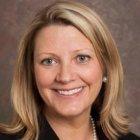
Globally, the ousting of Nicolás Maduro in Venezuela has been met with a mix of reactions and cautious optimism. The University of Delaware’s Kalim Shah can discuss how regime change will play across the Caribbean and the spillover effect that will ripple throughout the region – and the world – in the years and decades to come.


Shah, professor of energy and environmental policy and an expert on the island nations of the Caribbean, says that although public statements have been muted and restrained, there is a shared understanding.


“For small island states that have absorbed the effects of Venezuelan collapse for more than two decades, this moment represents the possible end of a long and destabilizing chapter,” Shah said.


Caribbean governments are not celebrating regime change, Shah said. Rather, they are responding to the prospect of reduced systemic risk. “A Venezuela that no longer exports large-scale displacement, opaque energy leverage and permissive criminal governance is objectively preferable for the region.”


Shah can discuss several aspects of Venezuela’s political history, how the nation has arrived where it is, where it might be headed and the impact this will have on the Caribbean as a whole. Those include:


• Venezuela’s political and economic deterioration during the Chávez–Maduro era and how that has translated directly into pressures felt across the Caribbean in the form of migration, fiscal exposure, security risks and regional uncertainty.


• How the nation’s institutional collapse coincided with deepening organized crime activity across the Caribbean basin. Data from the United Nations Office on Drugs and Crime consistently places the region within major cocaine trafficking corridors linking South America with North American and European markets. For Caribbean governments, this meant higher interdiction costs, increased exposure to transnational criminal networks and growing pressure on already limited security institutions.


• This moment invites a reassessment of China’s expanding footprint in the Caribbean, Shah says. He can discuss the ways in which Beijing has deepened its presence throughout the region.


Shah says that as this transition unfolds, five policy developments will determine whether the cautious optimism proves warranted:


• The impact on Venezuelan outward migration to the Caribbean.


• Whether Caribbean public systems receive durable support rather than short-term humanitarian fixes.


• Organized crime and drug trafficking pressures in the Caribbean basin.


• External security engagement in the Caribbean.


• Whether the region avoids a return to dependency-driven energy and infrastructure politics.


“For the Caribbean, hope today is not naïve. It is conditional. The Chávez–Maduro years imposed real costs on the region. Their end creates an opening…but only if policy follows through,” Shah said.


To contact Shah directly for interviews, visit his expert page and click on the "contact" button. Interested reporters can also send an email to mediarelations@udel.edu.

Connect with:
Kalim Shah

Kalim Shah

Associate Professor, Energy and Environmental Policy

Expert in public policy, governance and institutional analysis for sustainable development in small peripheral economies and jurisdictions.

Public PolicyEnvironment, Social, Governance (ESG)Institutional TransformationSmall Island Developing StatesEnergy Security and Transition
Powered by

You might also like...

Check out some other posts from University of Delaware

Post-earthquake crisis in Venezuela: University of Delaware experts available to discuss public health, infrastructure and relief featured image

1 min

Post-earthquake crisis in Venezuela: University of Delaware experts available to discuss public health, infrastructure and relief

Faculty from the University of Delaware’s renowned Disaster Research Center are available to comment on the back-to-back earthquakes in Venezuela. These experts can discuss critical infrastructure failures, public health threats, emergency logistics and community-led response efforts in the region. Available experts include: From what I’ve seen, it looks like the earthquake occurred on the boundary of the Caribbean and South American plate. A strike-slip fault similar to the San Andreas. There have been a lot of nonductile reinforced concrete frame building collapses. There may be an effect of soil given that a lot of the damage has been near the coast. Jennifer Horney (Professor of Epidemiology) Focus: Public health impacts, post-disaster waterborne/vector-borne disease outbreaks and the breakdown of healthcare delivery due to damaged roads and disrupted communication networks. Tricia Wachtendorf (Co-director, Disaster Research Center) Focus: Disaster response logistics, community improvisation, neighbors as first responders and how to donate effectively to maximize impact. Sarah DeYoung (Associate Professor, Sociology and Criminal Justice) Focus: Maternal and infant health/feeding in emergencies, pet and companion animal evacuations and community-level crisis decision-making. To contact these experts directly and arrange an interview, visit their ExpertFile page and click on the contact button. Interested reporters can also email MediaRelations@udel.edu.

Decoding epilepsy, one brainwave at a time featured image

3 min

Decoding epilepsy, one brainwave at a time

Epilepsy isn’t always easy to diagnose. Seizures often don't occur during routine brain-wave recordings, leaving doctors without the direct observation they need to make a clear diagnosis. In a proof-of-concept study in mice, University of Delaware researchers and collaborators showed that using artificial intelligence to detect early warning signs hidden in the brain's electrical rhythms can identify subtle EEG differences linked to a genetic form of epilepsy, even when no visible seizures occurred. The findings, published in the Journal of Neural Engineering, set the stage for the next phase of the research, which will test the method on EEGs from children being evaluated for epilepsy at Nemours Children's Health. A dictionary of brain waves Neurologists often use EEGs to help diagnose epilepsy, but routine recordings offer only about a 20-minute snapshot of brain activity. Without a seizure captured during that window, clinicians must look for far subtler clues that can be difficult to detect visually. That's where AI comes in. “Our machine-learning approach lets the algorithm learn the brain’s ‘language’ of waveforms, spotting subtle patterns humans might miss during manual review,” said Austin Brockmeier, assistant professor in electrical and computer engineering and computer and information sciences. Starting small with a mouse model When Brockmeier presented his computational neuroscience research at a seminar, he caught the attention of Amanda Hernan, an affiliated associate professor of psychological and brain sciences and biomedical engineering at UD and senior research scientist at Nemours Children’s Health. Hernan studies how variations in brain activity affect thinking and learning in children with epilepsy. The two decided to put machine learning to the test using EEGs from mice with epilepsy-causing variations in the TSC1 gene. The researchers used a panel of more than 40 mice, including animals with and without the gene variation, across three different genetic backgrounds, or strains. They extracted EEG segments from five days of recordings from each mouse for analysis. Because the EEG segments contained no seizure activity, the algorithm had to detect differences in the brain's baseline activity alone. It was able to distinguish between the mouse strains and to detect the TSC1 gene variation with high accuracy in two of the three strains. “These results show that EEG patterns contain measurable signals of neurological differences, even without visible seizures,” Hernan said. Taking it to the clinic Now, Brockmeier and Hernan will next apply their approach to EEG recordings from children being evaluated for epilepsy at Nemours Children's Health. Pediatric EEGs are shorter than the multi-day recordings used in the mouse study, and children present with many different types of epilepsy. But the researchers are optimistic. “The goal is to identify biomarkers that flag underlying changes in the brain’s electrical activity before seizures occur,” Hernan said. Earlier detection could lead to earlier treatment and less uncertainty for families. That uncertainty, Hernan said, takes a toll. “Seizures follow natural cycles, but without a way to know where you are in that cycle, the anticipation can be incredibly anxiety-provoking,” she explained. Better pattern recognition could also improve treatment decisions. For example, if a new medication is introduced during a natural lull in seizure activity, its benefits could be overestimated. Looking further ahead, the researchers envision a future where wearable EEG devices allow continuous, real-time monitoring for those with high risk of seizures. Similar approaches could eventually be applied to other neurological conditions, including autism and ADHD. "This is a step toward precision medicine," Brockmeier said. "Brain-wave typing could help identify which interventions will work best for a given patient." For families navigating the daily uncertainty of epilepsy, that kind of precision could make a huge difference. To speak with Brockmeier and Hernan, please reach out to mediarelations@udel.edu.

UD’s happiness expert appears on NPR's Hidden Brain to explain importance of a helping hand in a stressed-out America featured image

1 min

UD’s happiness expert appears on NPR's Hidden Brain to explain importance of a helping hand in a stressed-out America

Happiness isn’t just about chasing big, exciting moments. A lot of the science points to the smaller, everyday things that help people feel connected, calm and grounded. Simple habits like helping others when we see them struggling create a bigger impact than we often expect. University of Delaware's resident "happiness expert" Amit Kumar, a psychologist and assistant professor of marketing in UD's Lerner College of Business & Economics, appeared on NPR's Hidden Brain to discuss that very topic.  Kumar discusses why sometimes it feels like we can't help others and how we can surmount those fears to build strong connections and also feel a greater sense of happiness.  To speak with Kumar about this topic, click his profile. 

View all posts