Rethinking AI in the classroom: A literacy-first approach to generative technology

University of Delaware professor Rachel Karchmer-Klein offers a new approach for educators in this new age of AI.

Feb 18, 2026

3 min

As schools nationwide navigate the rapid rise of generative artificial intelligence, educators are searching for guidance that goes beyond fear, hype or quick fixes. Rachel Karchmer-Klein, associate professor of literacy education at the University of Delaware, is helping lead that conversation.


Her latest book, Putting AI to Work in Disciplinary Literacy: Shifting Mindsets and Guiding Classroom Instruction, offers research-based strategies for integrating AI into secondary classrooms without sacrificing critical thinking or deep learning. Here is how she is approaching the complex topic. 


Q: Your new book focuses on AI in disciplinary literacy. What is the central message?


Karchmer-Klein: Rather than positioning AI as a shortcut or replacement for student thinking, the book emphasizes a literacy-first approach that helps students critically evaluate, interrogate, and apply AI-generated information. This is important because schools and universities are grappling with rapid AI adoption, often without clear guidance grounded in learning theory, literacy research, or classroom practice.


Q: What inspired this research?


Karchmer-Klein: The book grew directly out of my work with preservice teachers, practicing educators, and school leaders who were asking practical but complex questions about AI: How do we use it responsibly? How do we prevent over-reliance? How do we teach students to question what AI produces? I also saw a gap between public conversations about AI which often focused on fear or efficiency and what teachers actually need: research-informed strategies that support deep learning. My long-standing research in digital literacies provided a natural foundation for addressing these questions.


Q: What are some of the key findings from your work?


Karchmer-Klein: AI is most effective when it is embedded within strong instructional design and disciplinary literacy practices, not treated as a stand-alone tool. The research and classroom examples illustrate that AI can support student learning when it is used to prompt reasoning, reveal misconceptions, provide feedback for revision, and encourage multiple perspectives. Another important development is the emphasis on teaching students to evaluate AI outputs critically by recognizing bias, inaccuracies, and limitations, rather than assuming correctness.


Q: How could this work impact schools, teacher education programs and the broader public?


Karchmer-Klein: For educators, this work provides concrete, evidence-based literacy strategies coupled with AI in ways that strengthen, not dilute, student thinking. For teacher education programs and school districts, it offers a research-based framework for professional development and policy conversations around AI use. More broadly, the work speaks to a public concern about how emerging technologies are shaping learning, helping to reframe AI as something that requires human judgment, ethical consideration, and strong literacy skills to use well.


ABOUT RACHEL KARCHMER-KLEIN


Rachel Karchmer-Klein is an associate professor in the School of Education at the University of Delaware where she teaches courses in literacy and educational technology at the undergraduate, graduate, and doctoral levels. She is a former elementary classroom teacher and reading specialist. Her research investigates relationships among literacy skills, digital tools, and teacher preparation, with particular emphasis on technology-infused instructional design.


To speak with Karchmer-Klein further about AI in literacy education, critical evaluation of AI-generated content and teacher preparation in the era of generative AI, reach out to MediaRelations@udel.edu

Powered by

You might also like...

Check out some other posts from University of Delaware

Inside the Italian art heist: Experts explain the global fight to protect cultural heritage featured image

2 min

Inside the Italian art heist: Experts explain the global fight to protect cultural heritage

A lightning-fast art heist in Italy has reignited global concerns about museum security and the protection of cultural heritage. As investigators search for stolen works by some of history’s most celebrated artists, University of Delaware experts are available to help journalists unpack the broader implications. Earlier this month, thieves executed a highly coordinated robbery at the Magnani-Rocca Foundation, stealing paintings by Pierre-Auguste Renoir, Paul Cézanne and Henri Matisse in a matter of minutes. Authorities say the operation was swift, targeted and likely premeditated – highlighting the evolving sophistication of art crime. The theft adds to a growing pattern of high-value art crimes across Europe, raising urgent questions about how institutions safeguard collections and what happens when culturally significant works disappear into illicit markets. UD experts are available to provide context, analysis and on-the-record commentary: Debra Hess Norris Chair, Department of Art Conservation A globally recognized leader in art conservation, Norris specializes in the protection, preservation and recovery of cultural heritage. She can speak to: How museums assess and mitigate security risks What happens after a major art theft The challenges of recovering stolen works in international markets How conservation science supports authentication and repatriation Jessica Horton Associate Professor of Art History Horton’s research examines global art histories and the movement of cultural objects across borders. She can discuss: Why stolen artworks matter beyond their monetary value Cultural ownership, repatriation and ethical considerations How art theft disrupts historical narratives and public access The broader cultural consequences of illicit art trafficking While headlines focus on the dramatic nature of art heists, the deeper story is about the fragility of cultural heritage – and the global effort required to protect it. To speak with Norris or Horton, email mediarelations@udel.edu.


Robotics help solve deep Sea Mysteries featured image

1 min

Robotics help solve deep Sea Mysteries

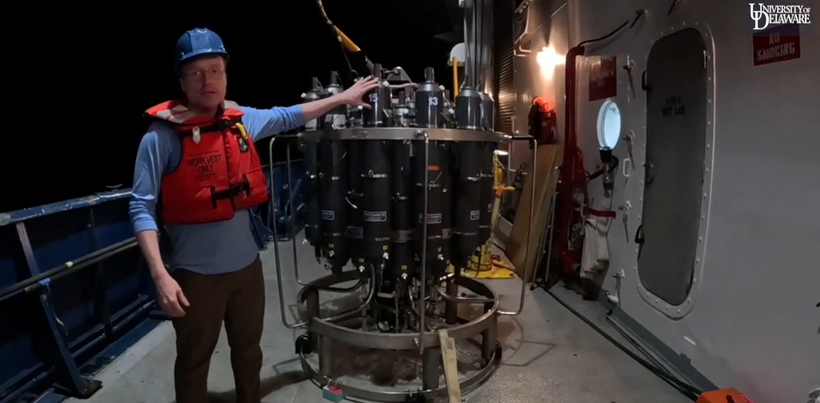
UD's College of Earth, Ocean and Environment uses robotics currently operated by the National Deep Submergence Facility (NDSF) to study the depths of the ocean. These expeditions ranged from the East Pacific Rise to the Mid-Atlantic Ridge. The vehicles include the Human Occupied Vehicle (HOV) Alvin, the Remotely Operated Vehicle (ROV) Jason and the Autonomous Underwater Vehicle (AUV) Sentry. What it is: A CTD (Conductivity, Temperature, Depth) instrument is a key oceanography tool that collects deep-water samples using remotely triggered Niskin bottles at specific depths. How it helps: These measurements help scientists understand ocean processes, including carbon cycling and life systems, which are essential to understanding Earth’s overall functioning. To find out more or to speak with speak associate professor Andrew Wozniak about this deep-sea technology, reach out to MediaRelations@udel.edu.

Delaware emerges as a test bed for the future of AI in health care featured image

2 min

Delaware emerges as a test bed for the future of AI in health care

Delaware is positioning itself as a “living lab” where academia, health systems and government collaborate to shape the future of artificial-intelligence-enabled health care.  The latest issue of the Delaware Journal of Public Health, guest edited by University of Delaware computer scientists Weisong Shi and Yixiang Deng, brings together 16 articles from researchers, clinicians, policymakers and industry leaders examining how AI and big data are reshaping health care. The issue, debuting this month, balances Delaware-specific topics with broader perspectives, highlighting three levels of impact: what Delaware can expect in the coming years, what other states can learn from Delaware’s approach and how UD research is advancing AI for health through collaborations. “At UD, we don’t work in isolation. We’re working closely with health care systems so that innovation happens together from the beginning,” says Shi, Alumni Distinguished Professor and Chair of UD’s Department of Computer and Information Sciences. Highlights from the issue include: The nation’s first nursing fellowship in robotics – ChristianaCare, Delaware’s largest health system, created an eight-month fellowship to train bedside nurses to conduct applied robotics research. Nurses who completed the program reported higher job satisfaction, improved well-being and greater professional confidence, suggesting programs like this may help retain the bedside workforce and reduce nationwide staffing shortages. Wheelchairs that navigate hospitals on their own – UD researchers developed a prototype autonomous wheelchair that combines onboard sensors and computing with software that interprets spoken directions from users, a step toward moving beyond systems that only work in controlled environments. To operate effectively in health care settings, the researchers say, wheelchairs must be able to navigate crowded hallways, interact with doors and elevators and recover safely when sensors or navigation systems fail. Smarter insulin dosing for type 1 diabetes – Researchers are developing computer models to predict blood sugar (glucose) trends and guide insulin delivery, but must address issues such as noisy data, reliable real-time prediction and the computational limits of wearable devices. A review by UD researchers and colleagues emphasizes the importance of interdisciplinary collaboration, standardized datasets, advances in computational infrastructure and clinical validation to turn these models into practical tools that improve patient care. To interview Shi about AI in health care and the new DJPH issue, click his profile or email MediaRelations@udel.edu. ABOUT WEISONG SHI Weisong Shi is an Alumni Distinguished Professor and Chair of the Department of Computer and Information Sciences at the University of Delaware. He leads the Connected and Autonomous Research Laboratory. He is an internationally renowned expert in edge computing, autonomous driving and connected health. His pioneering paper, “Edge Computing: Vision and Challenges,” has been cited over 10,000 times.

View all posts