April 1st is the one day we all expect to be fooled. Scammers are counting on the other 364

Apr 1, 2026

12 min

Sue Pimento

Breaking News: Free Cruise for All Retirees!


Congratulations!!!


If you are reading this, you have just been chosen for a luxury Caribbean cruise, a $5,000 shopping spree, and a lifetime supply of… well, something vaguely exciting.


All you need to do is: Click this link, enter your banking info, confirm your SIN, and maybe your childhood pet's name for good measure. Still reading?  Good. Because if that opening gave you even the tiniest thrill, the little flutter of wait, really? You've just experienced exactly what scammers are counting on.


APRIL FOOL'S!!!


And also: welcome to the world of phishing. Population: way too many of us.


Phishing vs. Fishing: A Retirement Skill You Didn't Know You Needed


There are two kinds of fishing in retirement.  One involves a dock, a thermos of good coffee, and no deadlines at all. The fish might or might not cooperate. That's fine. That's the whole point.


The other scenario involves someone trying to steal your identity by congratulating you on a cruise you never booked, a prize you never won, and a windfall that demands your banking details, your SIN, and, just for fun, the name of your first pet. (Buttons. It's always Buttons.)


Let's make sure you're fluent in the first kind and bulletproof against the second.


Fraud Doesn't Just Happen to Fools


Here's something important to say aloud before we proceed. Fraud isn't caused by people being careless, gullible, or old. It is orchestrated by professionals whose full-time job is to manipulate human behaviour under pressure. There is a clear difference between these two, and how we discuss fraud influences whether victims come forward or stay silent out of shame.


This issue is more significant than most realize. Canadians lost over $638 million to fraud in 2024, an increase from $578 million the previous year, according to the Canadian Anti-Fraud Centre. However, that figure only tells part of the story. The CAFC estimates that just 5 to 10 percent of total fraud losses are ever reported. Think about that for a moment. The number we see is already staggering, and the real total is almost certainly ten times higher.


Seniors make up a disproportionate share of those losses, especially in investment fraud, romance scams, and the grandparent scam. But here's the part the statistics don't show: fraud is improving at its craft. These aren't the poorly written emails of 2005. Today's scams are refined, patient, and psychologically targeted. They're designed to create urgency, confusion, and fear — aiming to override careful thinking precisely when it's needed most.


So let's talk about what that actually looks like.


A Very Personal Fraud Story That Will Stay With You


A family reached out to me recently, after reading one of my earlier posts on fraud and seniors. Their father had been the victim of a prolonged scam, one that unfolded over months and caused significant financial damage. They only found out after he passed away.


Three things about this story stopped me cold.


First, their father kept meticulous records. He journaled every interaction, every step, every decision. There was essentially a play-by-play account of how he became entangled and how difficult it became to find a way out.


Second, he was an intensely private person. Not a single family member knew any of it was happening while it was happening.


Third, he was a chartered professional accountant. Decades of financial training, discipline, and experience. Someone who understood numbers, risk, and how money moves better than most people ever will.


And still. Under the right conditions, with the right psychological pressure applied at the right moments, he was drawn in.


That is not a story about a foolish man. That is a story about how sophisticated fraud has become. And it is a story that is playing out in living rooms and email inboxes across this country every single day.


Why Seniors Are Targeted (And It's Not What You Think)


Scammers don't just go after older adults because they think we're naive. They go after us because we have assets. Savings. Home equity. Good credit. Pension income that actually shows up every month. We're not easy targets; we're valuable ones.


They also go after us because retirement can come with conditions that fraud is specifically designed to exploit: financial anxiety about making savings last, changes in how we process decisions under pressure, and, for many, reduced opportunities to run something by a trusted person before acting. Social isolation is not a character flaw. It is a vulnerability, and the people running these operations know exactly how to use it.


The Scams You Actually Need to Know About


The Grandparent Scam. You get a call. It's your grandchild. They're in trouble, arrested, in an accident, stranded, and they need money right now. Please don't tell Mom and Dad. The caller may not even sound exactly right, but panic has a way of filling in the gaps. Sometimes a fake lawyer or police officer jumps on the line to add credibility. The script is designed to bypass your rational brain and go straight for your heart. If this ever happens: hang up. Call your grandchild directly on a number you already have. Every time.


The CRA Impersonation Call. This one is especially popular at tax time.  An official-sounding voice informs you that you owe back taxes and if you don't pay immediately via e-transfer or gift cards, a warrant will be issued for your arrest. The Canada Revenue Agency does not call you out of the blue demanding gift cards. Full stop. If you're ever unsure, hang up and call the CRA directly as 1-800-959-8281.


The Romance Scam. Someone finds you online, charming, attentive, almost too good to be true. Weeks or months in, a crisis emerges. Could you help, just this once? These scams are emotionally brutal and financially devastating. If an online relationship moves unusually fast and a financial request follows, that's not love. That's a script.


The Investment Opportunity. Guaranteed returns. Exclusive access. Limited time. These words belong together the way "healthy" and "deep-fried" don't. Legitimate investments don't come with countdown clocks.


Phishing Emails and Texts. These mimic your bank, Canada Post, Service Canada, Amazon, and anything you'd recognize. They look almost right. The email address is a little off. The link goes somewhere slightly wrong. They want you to click, to enter information, to act now before something bad happens. The urgency is the tell.


No Shame. Seriously. None.  If this has happened to you, or someone you love, please hear this: falling for a scam does not mean you are getting old, losing it, or slipping cognitively. It means you are human and were placed under carefully engineered psychological pressure by someone who practices this for a living. That is it. The end.


And if you need a reminder that this crosses every age and profession, consider the case of a retired district court judge who lost the equivalent of over $100,000 to a digital arrest scam. Fraudsters called claiming his phone number was linked to a trafficking investigation. Despite decades on the bench watching deception unfold in real time, fear and intimidation did what all that professional knowledge could not protect against. A judge. Still got hooked. That is what these scams do when they are built well. (Source: Devdiscourse)


RCMP Sergeant Guy Paul Larocque of the Canadian Anti-Fraud Centre puts it plainly: "Fraudsters are professional salespeople who work a target until they close the deal and get their money." That framing matters. You would not blame yourself for being sold something by a skilled salesperson operating under false pretenses. This is no different.


The embarrassment is real and completely understandable. However, it does not fairly reflect what occurred. The CAFC has pointed out that many individuals feel ashamed of being victims of fraud and hesitate to report it, but every report helps break up fraud schemes and protect others. Reporting to the Royal Canadian Mounted Police is not a sign of failure; it is a vital way to safeguard the next person.


A Word to Family Members re: Fraud: Drop It Like It's Hot


If someone you care about has been scammed, put down whatever you are holding, take a breath, and read this carefully.


Do not scold them. Do not lecture them. Do not "grandsplain" them into the ground.


Grandsplaining, for the uninitiated, is mansplaining for the aged, and it is just as unwelcome. Nobody needs a slow, patient, thoroughly detailed breakdown of everything they should have done differently while they sit there wishing the floor would open up and swallow them whole. They already know. They feel terrible. They have probably been replaying every moment of it since it happened, asking themselves how they missed it, why they trusted it, and what they were thinking.  What they do not need is you asking those same questions out loud.


Your role at this moment isn't to be the smartest person in the room. It's not to claim you would never have fallen for something like this. And it's certainly not to start a sentence with "well, I always said you should..." because if you finish that sentence, you're on your own.


Your job is to be kind. Full stop.


Help them contact the bank. Sit with them while they file the report. Make the tea. Handle the phone call they are too rattled to make. Be the calm in the room. That is what love looks like in a crisis, and this is a crisis.


Now here is the part where the tables turn, so pay attention. Scammers are not ageist. They are not sitting in a room somewhere saying, "Let's only go after the over-65s today." They go after anyone with money, a phone, and a moment of distraction. Which means they go after everyone. Your inbox is not immune. Your judgment under pressure is not immune. Your "I would never fall for that" confidence is, frankly, exactly the kind of thing scammers count on.


Fraud can happen to anyone, and sharing your experience with others, whether or not money was lost, can help prevent them from being victimized by the same or a similar fraud. Nobody is too sharp, too young, or too digitally savvy to be targeted. The call is coming for all of us eventually.
So when it comes for you, and you call your mother in a panic, wouldn't you rather she answer with warmth instead of a very long "I told you so"?


Be nice to her now. Consider it an investment.


One day, she might be the one sitting you down for "the talk." And at that point, the only appropriate response is to make the tea and keep your opinions to yourself.


What the Experts Say: Practical Tips to Stop Fraud


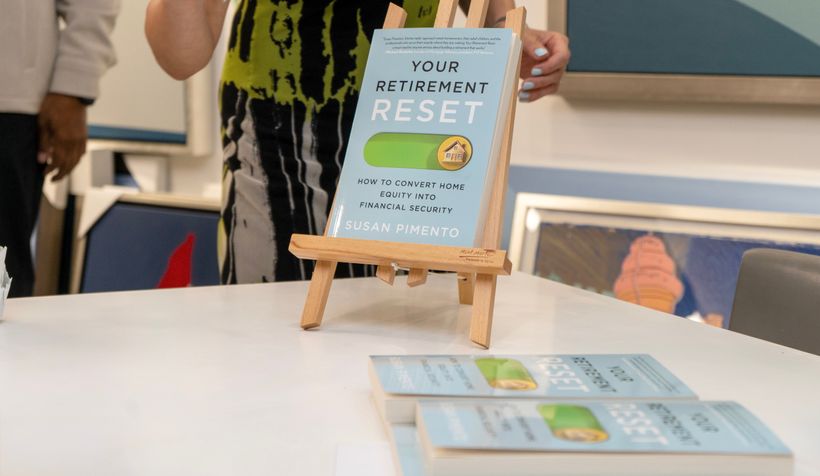
In my book "Your Retirement Reset" (ECW Press: Now available for Pre-Order here), I cover the topic of fraud and scams." I wanted to address this issue in depth because fraud prevention is not a footnote in retirement planning. It belongs front and center. Here is an excerpt of Chapter 9 of the book:


"Remember the old saying, 'Nothing ever comes free'? While it is hard for many seasoned Canadians not to trust a caller, unfortunately, that's the way of the world today. Here are some tips for protecting yourself.


Be skeptical. Be wary of unsolicited phone calls, emails, or messages, especially those asking for personal information or money.


Don't take their word for it. Ask the person for their details. If they say they are calling from your bank, get their name and branch number and call your bank for verification. If the message is in an email, contact the institution identified in the email. Do not respond right away, ever.


Don't share personal information. Never share personal, financial, or health information with unknown individuals or organizations.


Consult trusted individuals. Discuss suspicious offers or communications with family members, friends, or trusted advisors. This is especially important if you are asked to donate to a charity or make any kind of financial investment.


Use technology wisely. Install antivirus software, create strong passwords, and stay alert to phishing tactics such as harmful links in texts or emails. Use the block feature on your phone to cut off repeat callers you suspect are fraud artists.


Work closely with your financial institution. Ask your bank to send alerts for any unusual activity on your account. Review your statements every month and report unauthorized transactions immediately.


Report suspicious activity. If you suspect a scam has targeted you, contact the police.


Stay informed. Keep up to date on prevalent scams aimed at older adults. A quick Google search on any unsolicited information request can often tell you whether it has already been flagged. These scams are frequently reported to authorities and featured in the media and on consumer advocacy websites."


How to Stay Off the Hook When It Comes to Fraud


A little friction can be helpful. Scammers depend on speed, on you reacting before you think. The best thing you can do is slow down. Avoid clicking links in unexpected messages; instead, go directly to the company's website by typing it yourself. Call back on a number you find independently, not one provided in the suspicious message. Check email addresses carefully, as a transposed letter can sometimes be all it takes. Keep your devices updated, since those updates fix real vulnerabilities.


Discuss these topics openly. With your kids, friends, book club, or the person behind you in the coffee line. Scams flourish in silence and shame. Talking honestly is one of our strongest protections.

In retirement, urgency belongs in spin class. Not your inbox.


What to Do If You Took the Bait


No judgment here. These scams are truly sophisticated. Smart, experienced, financially educated people fall for them, as we've just established. If you think you've been scammed, stop engaging immediately, change your passwords, contact your bank to flag or freeze your account, run a security scan on your device, and report it to the Canadian Anti-Fraud Centre at 1-888-495-8501.


Reporting matters even if you cannot recover the money. It protects the next person in line. Think of it as cutting the line before the fish swims off with your whole tackle box.


3 Things Worth Setting Up This Week to Protect Yourself from Fraud


These take 20 minutes and quietly protect you around the clock.


Two-factor authentication (2FA) adds a second verification step. It's usually a text code. And it helps ensure that a stolen password alone won't give access to your accounts.


Credit Card controls allow you to lock and unlock your debit or credit card instantly through your bank's app, so if something seems suspicious, you can freeze it within seconds.


Real-time alerts enable you to set notifications for any transaction over a threshold you specify, so if someone is spending your money, you are informed immediately, rather than finding out at the end of the month when the damage is already done.


Don't Get Hooked by Fraud.  Retirement should be about freedom. The freedom to fish from a proper dock, travel somewhere warm, and spend your money on things that truly bring you happiness. It's not meant to involve fake urgency, suspicious links, or people who want your SIN and the name of your childhood cat.


We Need to Do More to Protect Seniors


The fraud prevention system in this country, to be frank, hasn't kept pace with the rise of fraud itself. That gap is real, it's growing, and it needs more attention than it currently gets. Meanwhile, the best we can do is stay informed, keep in touch with trusted people, and not let embarrassment prevent us from seeking help or reporting what happened.


You worked hard for what you have. You deserve to enjoy it without looking over your shoulder.


So enjoy the lake. Take the cruise — a real one that you booked yourself. Spend wisely, live well, and protect what's yours.


And if anyone ever tells you that you've won something you never entered?


Smile. Wish them a Happy April Fool's.


Then hang up.


Have a scam story, a close call, or thoughts on what fraud prevention is getting right or getting wrong? I would love to hear from you. Drop it in the comments or send me a note. This is exactly the kind of conversation we should all be having, and the more real experiences we share, the better equipped we all are to protect each other.


Sue


Don't Retire…ReWire!


My Book is Now Available for Pre-Order

If this message speaks to you, or to someone you love, I hope you will pre-order a copy of Your Retirement Reset.


Available September 8, 2026. Here's the link.  And if you love supporting Canadian booksellers, please also check with your local independent bookstore. Most can easily order it for you.



Connect with:
Sue Pimento

Sue Pimento

Founder | CEO

Writer, author & presenter focused on financial literacy and retirement strategies. I advocate for the health, wealth & purpose for retirees

Pension ReformInterest RatesHome EquityMortgagesReverse Mortgages
Powered by

You might also like...

Check out some other posts from Retire with Equity

Canada’s RRSP Program Has Too Many Jobs featured image

8 min

Canada’s RRSP Program Has Too Many Jobs

Summary: Since its inception in 1957, the Registered Retirement Savings Plan (RRSP) has been a cornerstone of Canada’s retirement system. However, the RRSP has taken on roles far beyond its original mandate, notably through the Home Buyers’ Plan (HBP) and the Lifelong Learning Plan (LLP). Although these programs provide short-term benefits, they significantly damage the long-term health of Canadians' retirement savings. This article explores how these additional roles are sabotaging retirement savings, highlights statistics about the state of RRSPs today, and discusses the disastrous impact these trends will have on future retirees. If you’re 55 and wondering whether your RRSP is on track, the latest numbers may surprise you. Recent data suggest that the average Canadian aged 55 has approximately $180,000 in their RRSP. But averages can be misleading because a relatively small number of very large accounts pull the number higher. A better measure of what most Canadians have actually saved is the median RRSP balance, which sits at approximately $146,000. In other words, half of Canadians have saved less than that. Even after decades of tax-assisted saving, these balances are unlikely to generate the retirement income most Canadians will need. That raises an important question. How did one of Canada’s most successful retirement savings programs produce such modest results? Part of the answer may be that we’ve quietly asked the RRSP to do far more than it was ever designed to do The average senior aged 65 in Canada receives $19,547 per year from OAS and CPP. If qualified for GIS, they would receive another $13,478 annually, for a total of $33,025 annually. This isn't much income, especially for homeowners who must pay for property taxes, utilities, upkeep, and maintenance. How it All Began At inception, the RRSP was called a Registered Retirement Annuity and was created in 1957. At the time, Canadians could contribute up to 10% of their income to a maximum of $2,500 annually. The goal was to give all Canadians the same tax benefits as members of registered employer-sponsored pension plans. Benefits of the RRSP Plan 1. Tax-Deferral: Contributions to an RRSP are tax-deductible, which can reduce your tax bill. 2. Tax-Free Growth: Your savings grow tax-free while the money is in the plan. 3. Retroactive: You can carry forward any unused contribution room to future years. The Multitasking Disaster Studies show that people are dreadful at multitasking; the same is true of government programs. Here is where the program went wrong. In 1992, the Home Buyer’s Plan (HBP) was made more flexible, which allowed first-time homebuyers to withdraw RRSP funds to buy a house. Then, in 1999, the Lifelong Learning Plan (LPP) was introduced, which permitted withdrawals to pay for education. The Home Buyers' Plan (HBP) was not introduced in 1957 alongside the Registered Retirement Savings Plan (RRSP) creation. Instead, the HBP was introduced in 1992 as a federal initiative to help Canadians buy their first homes by allowing them to withdraw funds from their RRSPs without tax penalties as long as they met specific conditions. Here's a timeline of crucial HBP withdrawal limits since its inception: Timeline of HBP and LLP Withdrawal Limits: 1992 - Introduction of the HBP • Maximum Withdrawal Limit: $20,000 per individual. • Purpose: To help first-time homebuyers purchase or build a home. 1999 – Introduction of Lifelong Learning Plan (LLP) • The annual withdrawal limit is $10,000 per individual • The lifetime withdrawal maximum is $20,000 per individual 2009 - First HBP increase • New Limit: $25,000 per individual. • The increase was introduced as part of federal budget changes to reflect rising housing costs. 2019 - Second HBP Increase • New Limit: $35,000 per individual. • Announced in the 2019 federal budget to support affordability for first-time homebuyers. 2019 -HBP Enhancement for Life Events • The HBP was expanded to allow individuals experiencing a marriage or common-law partnership breakdown to participate, even if they were not first-time homebuyers. 2024 - Recent increase • New Limit: $60,000 per individual. • The increase was introduced as part of federal budget changes to reflect rising costs. A Flawed Strategy The Home Buyers' Plan (HBP) and Lifelong Learning Plan (LLP) were introduced in Canada as tools to make housing and education more accessible. While well-intentioned, these programs effectively allow individuals to borrow from their future retirement savings—a strategy that can have significant negative consequences. Ask any high school economics student, and they will tell you that compromising two of the three main elements (principle and time) in investing growth will lead to a disappointing return. Here is the formula: principle X interest + time = compounded return. ⚠️ WARNING: Retirement Warning Using your RRSP to purchase a home or finance education may seem like a smart financial move. But remember, you’re withdrawing money from the very account designed to support you when you’re no longer earning an income. Lost time and compound growth can never be fully recovered. Are We Borrowing From the Future to Pay for Today? The Problem with the Home Buyers’ Plan (HBP): Addressing Housing Affordability at the Expense of Retirement The HBP permits individuals to withdraw up to $60,000 from their RRSP to buy a first home. In an environment of rising house prices, this measure may help buyers cobble together a down payment, but it drains retirement funds. The funds are unavailable to grow tax-free over decades, diminishing the compounding returns essential for retirement security. The Problem with the Lifelong Learning Plan (LLP): Financing Education by Sacrificing Retirement The LLP allows up to $20,000 in RRSP withdrawals to fund education, which can help individuals upskill. However, education often doesn’t yield immediate returns, and the withdrawn funds lose their growth potential, including the compounded returns. Why This Harms Future Retirees Issue #1: Loss of Compounding Growth Withdrawals disrupt the power of compounding, which is vital for retirement savings. For example, $35,000 left in an RRSP for 25 years at a 6% annual return could grow to over $150,000. If that same $35,000 were withdrawn 15 years ago and repaid over the same period as required by the HBP program, it would be worth $54,311, a loss of $95,689 Issue #2: Repayment Struggles While repayments are required, life’s expenses (mortgage, childcare, loans) often make it hard to repay on schedule. Failure to repay means the amount withdrawn is added to taxable income, further reducing the effectiveness of the programs. Issue #3: Insufficient Savings Most Canadians are already under-saving for retirement. Encouraging them to dip into their RRSPs exacerbates this shortfall. Two Different Problems.  One Harmful Solution Housing Affordability Rising house prices are driven by supply-demand imbalances, speculation, and policy failures—not a lack of down payments. Increasing the HBP withdrawal limit does nothing to address the root causes of affordability, but it may drive prices higher by giving buyers more purchasing power. Retirement Security Retirement savings should be preserved and grown to ensure financial stability in later years. Programs like HBP and LLP blur the line between short-term needs and long-term planning. Why Would our Government Do This? Political Expediency Housing affordability and access to education are politically sensitive issues. Allowing individuals to tap into their RRSPs is a cost-neutral policy for the government (unlike direct subsidies or programs). Policies like these help politicians get elected or stay in office. And in proper political form, these policies only tell half the story. Vote for us because we will help you buy your first home, which is a great campaign strategy. Vote for us because we will make it look like we help you buy your first home when, in fact, we will set up a program that will allow you to borrow from yourself at the cost of your retirement, which is political suicide. Short-Sighted Economic Policies Policymakers may believe that homeowners and educated individuals are more financially secure, even if their retirement savings are compromised. The logic might be that owning a home or having better job prospects could mitigate future hardship. Assuming Home Equity is a Safety Net The government might assume that homeownership ensures financial stability in retirement. However, this overlooks that rising housing costs often mean seniors have high debt levels or are "house rich but cash poor." The Bigger Problem with the HBP and LLP Programs: No Warnings or Education Given to Canadians Neither the HBP nor the LLP adequately informs individuals of the long-term consequences of their decisions. To make matters worse, the participants of these programs will likely realize the impact once it is too late to take action. People considering retirement are often in their late 50s to early 60s, past their prime saving years. Borrowing from retirement accounts may seem like “borrowing from yourself,” but this lost growth can never be recouped. Many Canadians are not well enough informed to assess these trade-offs, leading to decisions that harm their financial future. In Case You’re Thinking, These Seniors Have Inadequate Savings - But at They At Least their Homes. The HBP and LLP programs may reflect a government view that seniors would be better off owning a home than relying solely on inadequate savings. But this is flawed for a number of reasons: A home is not a liquid asset—it cannot pay for groceries or healthcare. Also,  Seniors with insufficient retirement savings often need help with financial distress despite owning property. They sometimes need reverse mortgages or sell their homes out of desperation. An Unfortunate Misguided Solution Rather than “quick fixes” that appear to solve immediate challenges while creating long-term problems, the Federal government should instead focus on longer-term, systemic solutions For housing: Governments need to curb speculative investments and provide targeted assistance for first-time buyers. Plus they need to focus on programs that increase housing supply, such as income tax incentives for homeowners to build accessory dwelling units (ADUs). These units could be rented out or used for caregivers. Or adopt a policy allowing first-time home buyers to not pay tax on their first $250,000 of income. First-time home buyers could use the tax savings as a down payment. The HST Rebate for eligible buyers of new homes introduced March 2026 is a start, not perfect, but it is a step in the right direction. For Education: Governments need to expand grant programs and low-interest loans to prevent reliance on retirement funds.  This will not only help us increase the number of skilled workers to fill critical gaps in vital sectors such as technology, healthcare engineering and the trades.  It will also contribute to a higher GDP and build a more sustainable tax base for future generations. Retirement savings should be treated as sacred capital, not a convenient source of funding for unrelated government priorities. Governments shouldn’t solve today’s problems by quietly asking Canadians to mortgage their retirement. Votes are counted on election night. The consequences aren’t counted until retirement. Don’t Retire … Re-Wire! Sue Important: This article is intended for educational purposes only and does not constitute financial, mortgage, tax, legal, or investment advice. Before making decisions about your retirement or home equity, consult qualified professionals who can assess your personal circumstances.

The Biological Clock Nobody Talks About featured image

7 min

The Biological Clock Nobody Talks About

Biology is ageist. There. I said it. Young people have a biological clock that ticks toward new life. It is loud and urgent, and it comes with its own well-funded industry of apps, doctors, and anxious dinner-party conversations. Ours ticks too, but more quietly. Less “the nursery won’t paint itself” and more “the knees are filing a formal complaint.” Same clock. Wildly different countdown. Young people race toward a beginning. We are racing toward… what, exactly? That is the part nobody warned us about in the brochure. I have been thinking about this clock a great deal lately, not in the abstract, philosophical, this-would-make-a-good-dinner-party-topic way. In the personal, slightly unsettling, why-am-I-like-this way. Because somewhere between turning seventy and watching my brother nearly run out of time entirely, I started to suspect that the clock is not just ticking quietly in the background of my life. It may be driving much of my behaviour, and not always in directions I am proud of. At seventy, I have become mildly obsessed with squeezing every drop out of life. Partly because of the birthday. Partly because 33-year-old entrepreneur Steven Bartlett recently declared that a couple of glasses of wine can derail several days of optimal living, causing poor sleep, missed workouts, reduced productivity, and full-scale biological chaos. The internet, predictably, exploded. One side applauded his discipline. The other suggested he put down the smartwatch and pick up a personality (Bartlett, 2025). Then broadcaster Greg James offered a counterpoint worth sitting with maybe measuring every step, calorie, and heartbeat is not making us happier. Maybe it is making us anxious (James, 2025). Let that idea marinate. It hit me harder than I expected. If I call balls and strikes here, I may have become a card-carrying member of Team Optimize. I teach fitness classes. I went back to school. I write books. I hike mountains. I track protein. I have voluntarily reached the age when discussing fibre intake is considered a contribution to the dinner conversation. Normal retirement behaviour, said no one ever. Apparently, I have a track record with this sort of thing. I have written before about my addiction to home improvement, the kind that finds a project the house did not actually need. Self-improvement, I am beginning to suspect, is the same compulsion wearing a different outfit. What I am exploring here is whether I am actually growing, or, as I am increasingly suspecting, just optimizing out of panic. So, I started asking myself an uncomfortable question, one that keeps circling back to that same clock. Am I pursuing excellence, or am I negotiating with my biological clock? Researchers studying aging have found something fascinating about how that clock changes us. As people become increasingly aware that time is finite, their priorities shift: less interested in accumulating and more interested in meaning, less interested in status and more interested in relationships, and less interested in “someday” and more interested in today. Psychologist Laura Carstensen’s landmark work on socioemotional selectivity theory suggests that it is not age itself that changes us. Rather, it is our perception of the time we have remaining (Carstensen, 2006; Carstensen et al., 1999). I am not sure I have made that shift. Not fully. If I am honest, I wonder whether all the doing, the relentless forward motion, is less about passion and more about outrunning something. Maybe I think that if I keep running, Father Time will not catch me. I can smell a fool’s errand a mile away, and yet here I am, lacing up my shoes … possibly while listening to a podcast on slowing down. I have a theory about this. I call it FORO, the Fear of Running Out. Most people assume it means Fear of Running Out of money, and money is certainly part of it. But lately I think money is just the socially acceptable thing we admit to worrying about. The less acceptable version is the fear of running out of time, energy, relevance, and chances to matter. FORO does not always show up as worry. Sometimes it shows up as motion. Another course. Another project. A new certification nobody asked for. A calendar so full it functions less as a planning tool and more as an alibi. If I cannot stop the running out, I can at least look busy while it happens. That is not ambition. That is panic, wearing a blazer and carrying a planner. Then something happened that stopped the clock cold … or at least kept me from ignoring it. Recently, one of my brothers suffered a massive heart attack. One moment, life was proceeding as planned. Next, he was in intensive care fighting for his life. Thankfully, he survived a quadruple bypass and is now on the long road to recovery. I am still processing it. Watching someone you love close to the edge clarifies things faster than any amount of journaling ever has. Suddenly, nobody is talking about productivity hacks or sleep scores. The conversation gets very simple. More time. More laughter. More family dinners. More life. His clock nearly ran out. Mine, presumably, has not. The question is what I plan to do with the difference. And I sat with that, quietly, for a while. Because his heart attack did not just scare me. It held up a mirror. If the people who matter most to me were sitting across the table right now, would they say I have been present, or would they say I have been busy? I am not sure I want to hear the answer. But I think I already know it, because my wife Bonnie and my dog Dottie have been telling me for a while now, in their own ways. Bonnie has not complained, not really, though I have noticed the particular quiet of someone who has learned not to wait up and has become quite good at saving me half a plate of dinner without asking what kept me. That quiet has nothing to do with her and everything to do with me. Dottie has taken a more direct approach. She has started leaving passive-aggressive stuffed toys outside my office door, which I choose to interpret as a formal grievance filed by a ten-pound dog with excellent comic timing. Both have been waiting for me while I try to sort this out. But patience, like biology, has its limits. Here is where I have landed, at least for now. Retirement, at its best, should be a contact sport: full-bodied, fully engaged, leaning into life with both hands. But there is a trade-off in the pursuit of optimization that no one puts on the inspirational poster. By filling every available hour with the next worthy initiative, I risk alienating the very people for whom “more life” was supposed to be. That is not ambition. That is a quietly self-sabotaging way of running out the clock on the wrong things. I do not have a tidy resolution. Maybe it means resisting the urge to add more simply because I can. What I keep coming back to is this: presence, being genuinely and unhurriedly present with the people I love, might be the optimization I have been overlooking all along. Not because it is hard to measure, but because it is hard to schedule, and even harder to admit I have been avoiding it. What I want, at the end of the day, is to be as present as humanly possible. Not present in the mindfulness app, remember-to-breathe sense. Actually present. Available. Unhurried. With Bonnie. With Dottie. With the people who have been waiting for me to look up. I am not going to pretend I have made this shift. I have not. But I have started doing something that feels different from doing nothing while thinking deeply about it, and I will take the small win. I dropped one school course this term. I have started leaving my phone in another room during dinner, which Dottie has not noticed, but Bonnie absolutely has. I am trying to ask myself, before I say yes to the next worthy thing, whether I want it or whether some part of me is still trying to outrun a clock that cannot be outrun. Some days I catch myself in time. Other days I sign up for the nine-week certificate anyway and figure it out later. Progress, not perfection. If you are reading this and recognize yourself, or someone you love, the invitation is not to overhaul your entire life by Tuesday, or to ask them to. It is to ask the same question I am still learning to ask. The next time your calendar fills with another worthy thing, pause and ask who benefits from that time. If the honest answer is mostly you, and mostly in a way that keeps you safely too busy to sit still with the people who love you, that might be worth a second look. Not guilt. Just a look. Which brings me back to the clock, because it always does. The biological clock of aging is not warning us that time is running out. It is reminding us that time is valuable, and that the people keeping time with us deserve more of it than the leftovers. Young people hear the clock and ask, “When should I start?” Older people hear the clock and ask, “What am I waiting for?” I think I finally know the answer. It is not another course. It is not another goal. It is them. Turns out the clock was never my enemy. It has been my alarm, going off for months while I kept hitting snooze and signing up for another nine-week certificate instead. The good news is I have finally found a project worth finishing. The bad news is it does not come with a certificate of completion, only my loved ones and whatever time the clock decides to give me to enjoy them. Biology may be ageist, but it is also, infuriatingly, right. Sue Don’t Retire…ReWire! My Book is Now Available for Pre-Order I hope you will consider pre-ordering a copy of Your Retirement Reset for you, a friend or loved one. It's available September 8, 2026 published by ECW Press - You can now order at Indigo or Amazon. And if you love supporting Canadian booksellers, please also check with your local independent bookstore. Most can easily order it for you.

GRANDSPLAINING...It's as Bad as it Sounds! featured image

8 min

GRANDSPLAINING...It's as Bad as it Sounds!

Summary: "Grandsplaining" is a playful term that captures the all-too-familiar situation where younger generations offer unsolicited advice to older family members, often in a manner that is as condescending as it is unhelpful. This behaviour can be perceived as disrespectful and potentially creates awkward communication barriers, emotional strain, and family tension. Rooted in ageist stereotypes, it can even undermine elders' self-esteem. Here, we explore alternatives to grandsplaining, including the radical concepts of genuinely listening, asking open-ended questions, demonstrating empathy, and avoiding assumptions. These suggestions aim to help adult children support their older family members—not merely swoop in with a "fix-it" attitude. The Disrespectful Impact of Condescending Advice on Seniors When I helped older Canadians navigate financing their retirements, I often witnessed what can only be described as "grandsplaining in the wild." Conversations between adult children and their elders usually felt less like dialogues and more like lectures—one-sided advice sessions that left everyone gritting their teeth. The younger relative, likely well-meaning, would offer suggestions like, “You should downsize and buy a condo,” “Sell and rent,” or, the pièce de resistance, “Move in with family!” Judging by the withering looks from their elders, it was clear this approach wasn’t winning any "Favorite Child" awards. The older family members often felt patronized, as though their decades of life experience had been conveniently forgotten. The advice was condescending, painfully obvious, and usually impractical or unwanted. The dynamic reminded me of the cringeworthy experience of being "mansplained." And that’s when it hit me: this is “grandsplaining.” Unfortunately, grandsplaining can turn retirement planning conversations into a crash course on how not to communicate! Fortunately, with a little effort (and much less lecturing), families can turn this ship around and build stronger, more respectful relationships. What is "Grandsplaining"? In an age where communication flows freely across digital platforms, I define "grandsplaining" as a colloquial expression to describe a situation where younger generations offer unsolicited advice to older individuals, often patronizing or condescendingly. Grandsplaining typically involves a younger person explaining something to an older individual in a way that belittles their experience or intelligence. The term combines "grand" (suggesting age or status) and "splaining" (a slang term for condescendingly explaining something). While the intention behind such advice may often be well-meaning, the delivery can be patronizing, reinforcing stereotypes about aging and competence. This behaviour can significantly undermine the dignity and autonomy of seniors, leading to feelings of frustration, resentment, and a sense of being marginalized. Understanding the nuances of grandsplaining sheds light on intergenerational dynamics in these conversations. We must find a better, more respectful, and effective way to communicate with our elders considering retiring. The phenomenon of grandsplaining can manifest in various contexts, not just financing retirement—whether it’s discussing technology, lifestyle choices, healthcare options, or even social norms. For instance, a grandchild might explain how to use a smartphone app to a grandparent, assuming that the older generation cannot understand it despite their own lifelong experience with technology in different forms. Communication Breakdown In an era where financial literacy and retirement planning are more crucial than ever, "grandsplaining" has become a significant barrier to effective communication between generations. Retirees often feel overwhelmed or dismissed when their relatives provide unsolicited advice, especially if it contradicts their wants or financial strategies. This can lead to a reluctance to engage in discussions about finances, creating a rift that undermines the potential for collaborative planning. When adult children dominate conversations with preconceived notions of financial management, it stifles the opportunity for seniors to express their feelings, share their knowledge, and collaborate on effective retirement strategies. The Generation Gap in Financial Understanding Adult children may rely on outdated financial paradigms that no longer apply to their elders' realities. The economic landscape has changed dramatically over the past few decades, with shifts in real estate markets, a lack of formal retirement plans, and longer life expectancies. This generational gap can lead to misguided advice that does not consider modern challenges such as retiring with debt, little or no pension income, or rising living costs. Emotional Strain and Family Tension When relatives impose their views, it can evoke frustration, resentment, or inadequacy in their elders. This dynamic can shift the conversation from one focused on financial empowerment to one steeped in emotional conflict and shame. Instead of fostering a supportive environment for discussing retirement goals, grandsplaining can create adversarial relationships where seniors feel belittled or pressured, further complicating an already sensitive topic. Erosion of Autonomy When relatives try to impose their methods or strategies, it can undermine the seniors’ independence, making them feel a lack of control over their finances. Financial decisions are deeply personal and often intertwined with individual circumstances, goals, and values. This loss of agency not only affects financial outcomes but can also impact the mental well-being of older adults, leading to feelings of incompetence or anxiety about their financial futures. The Context of Ageism The implications of ageism are particularly concerning in a rapidly changing world characterized by technological advancements and unprecedented changes in social norms. While younger generations may genuinely wish to assist their elders in navigating these changes, their actions can reinforce negative stereotypes rather than empower seniors. Grandsplaining highlights the generational divide, creating an "us versus them" mentality that hinders collaboration and mutual understanding. Grandsplaining is deeply intertwined with ageism, a pervasive societal attitude that discriminates against individuals based on their age. Ageism manifests in various forms, including stereotypes that depict older adults as technologically inept, resistant to change, or incapable of learning. These stereotypes can lead to the marginalization of seniors within families and communities. Not cool! When younger generations adopt a condescending tone, they inadvertently reinforce ageist stereotypes that portray older adults as out of touch or incapable. This affects individual relationships and perpetuates societal narratives devaluing older individuals' contributions and wisdom. The Impact on Relationships Grandsplaining can strain relationships between generations, fostering resentment and conflict. For many seniors, unsolicited advice can infringe on their autonomy, making them feel infantilized or disrespected. I've seen firsthand how parents can react defensively to younger family members and sometimes withdraw altogether from conversations. When assistance is delivered condescendingly, it can backfire. The resulting tension may prevent meaningful conversations about important topics, such as healthcare decisions or lifestyle changes, which are crucial for seniors' well-being. The Psychological Impact on Seniors Being on the receiving end of condescending advice can also lead to diminished self-esteem and increased feelings of inadequacy. Seniors may begin to internalize the belief that they are not capable of making sound decisions or understanding new concepts, which can further exacerbate issues related to aging, such as cognitive decline and depression.  Encouraging Respectful Communication with Seniors Addressing the issue of grandsplaining requires a concerted effort from both younger and older generations to cultivate respectful communication. Here are several strategies to foster more positive intergenerational interactions: 1. Actively Listen: Younger people should prioritize active listening when engaging with seniors. This involves hearing what the older person says and validating their experiences and perspectives. Younger people can create a more respectful dialogue by acknowledging their knowledge and expertise. 2. Seek to Understand: Younger generations must approach conversations with empathy. To quote Stephen Covey's wise words, "Seek first to understand, then to be understood."  Recognizing seniors' challenges, such as health issues or technological gaps, can foster a sense of compassion. This approach can help bridge the generational divide and promote more constructive conversations. 3. Avoid Assumptions: The tendency to assume that older adults are out of touch or incapable can lead to grandsplaining. Instead, younger individuals should avoid making assumptions about seniors’ knowledge or abilities. Asking questions like “What do you think about this?” or “How do you feel about that?” can empower seniors to share their insights and experiences. 4. Offer Support, Not Solutions: Ask questions like, “What does a successful retirement look like to you? How do you plan to finance your retirement? Do you want to stay in this home? Are you open to moving? If so, where? Do you have enough in savings? How can I support you in having an independent and dignified retirement”? 5. Understand the Bigger Picture: Don’t assume that the traditional strategies of downsizing, selling, renting, or moving in with family are reasonable solutions for your elder in today’s economic environment. These retirement strategies are problematic for today’s seniors. In most cases, downsizing only works financially if the retiree is willing to move to a smaller, more affordable community. Most seniors want to stay in their communities and not move away from family, friends, churches, or familiar shops and services. Selling, renting, or moving in with family requires the sale of their significant appreciating asset. Given today's longer life expectancies, it's not always a wise choice. 6. Humour: By skillfully using humour, you can turn potentially patronizing situations into moments of connection and shared joy, ensuring that conversations with elders remain meaningful, respectful and memorable. For example, you could start the conversation this way; "The last thing I want to do is give you advice. That would be ridiculous. You’re the wise sensei here—I’m just the clueless apprentice trying to save enough downpayment to buy a shoebox of a house." This approach humorously flips the script, poking fun at the presumptuousness of unsolicited advice while emphasizing the elder's experience and wisdom. People often feel judged or vulnerable when discussing finances or significant life changes. Humour shifts the dynamic, showing that you approach the conversation as an ally, not an adversary. For example: "Talking about budgets isn’t fun for anyone—I mean, who loves math? But it’s worth it if we can figure out how to turn this retirement conversation into Canada Day rather than Labour Day!" This playful approach lowers barriers, making the discussion feel collaborative rather than critical. Laughter fosters connection. Sharing a laugh creates a sense of camaraderie, making it easier for people to open up about sensitive topics. When elders feel that you’re not judging them but partnering with them—and can make them smile—they’re far more likely to trust your intentions and take your advice seriously. Humour invites the other person to join the conversation, breaking the ice and encouraging them to share their thoughts. It sets a tone that the conversation is a dialogue, not a lecture. Example: "You’ve been making great financial decisions for decades. I’m here to ensure we don’t accidentally end up with a basement full of K-tel Veg-O-Matics… unless that’s the plan?" This allows them to laugh, respond, and engage while respecting their autonomy. A word of caution.  Humour is only effective when paired with genuine respect and sensitivity. Pay attention to your elder's reactions and adapt if they seem uncomfortable or unamused. The goal is to build rapport, not to win laughs at their expense. Using humour skillfully, you can turn potentially patronizing situations into moments of connection and shared joy, ensuring that conversations with elders are respectful and memorable. Before You Go Good financial planning thrives on clear communication, but grandsplaining tends to turn productive discussions into monologues that undermine elder autonomy and trigger emotional static. To create a more harmonious environment, families should swap their megaphones for listening ears and embrace a collaborative approach that respects seniors' wisdom and frames younger relatives’ financial theories as conversation starters, not TED Talks. After all, when it comes to navigating retirement planning, a little less "know-it-all" and a bit more "let’s figure it out together" can go a long way. Think of it as building a bridge, not a lecture podium—because nothing says "family unity" like tackling compound interest together! Don’t Retire…Re-Wire! Sue My Book is Now Available for Pre-Order I hope you will consider pre-ordering a copy of Your Retirement Reset for you, a friend or loved one. It's available September 8, 2026 published by ECW Press - You can now order at Indigo or Amazon. And if you love supporting Canadian booksellers, please also check with your local independent bookstore. Most can easily order it for you.
View all posts