When the Cheque Stops Coming: Canada Post, Seniors, and the Quiet Cost of Modernization

Apr 9, 2026

7 min

Sue Pimento

There’s an old line that has saved more awkward conversations than most of us care to admit:


“The cheque is in the mail.”


It has been used to buy time, soften bad news, and occasionally stretch the definition of truth. But it worked because, deep down, everyone believed the premise. The mail would come. Eventually. Reliably. Without negotiation.


That quiet assumption carried a surprising amount of weight — especially for the 79-year-old navigating an icy driveway.


Now, it seems, even that assumption is up for review.


I understand the economic argument.


Big Losses: The official Canada Post 2024 Annual Report shows they have racked up $3.8 billion in losses since 2018. 


Lower Letter Volumes: The shift to email has hit Canada Post hard.  Letter volumes have dropped dramatically.  Less in the mailbag equals far less revenue to offset costs. 


Increasing Costs Factors: The number of Canadian addresses continues to grow.


The math is not subtle, and change is clearly required.  But this deserves more attention.  Modernization is not the problem. Thoughtless modernization is.


Cuts to Canada Post Service May Not Land Equally


Not all Canadians experience change the same way, and this particular shift will land unevenly if proper consultation isn't done.


We're getting older: According to Statistics Canada, nearly one in five Canadians is now over the age of 65, and that proportion continues to rise. A meaningful share of those older Canadians also live outside major urban centers.


We're spread out geographically: Depending on how you measure it, we're also far apart compared to most other countries.  According to the Public Health Agency of Canada & the Vanier Institute of the Family, roughly one-quarter to one-third of seniors live in rural or small communities, where services are more dispersed, and distances are longer.


Rural Canada is also aging faster than urban Canada. In other words, the places most likely to lose convenient access are often the places with the highest concentration of people who rely on it.


This is not a niche issue. It is a structural one.


The Real Issue Isn’t the Mailbox. It’s the Journey.


Policy discussions tend to reduce this to a simple question of location. Move the mailbox, problem solved.  But the issue is not where the mailbox is. The issue is whether someone can get to it safely, consistently, and without turning a routine task into a risk calculation.


I am thinking of a client. She is 79, sharp, organized, and fully in charge of her life. Her bills are paid on time, her paperwork is immaculate, and she has no interest in becoming dependent on anyone.  In the summer, she walks daily without a second thought. In the winter, she studies the ground before every step.


Ice changes everything.


A short walk becomes a decision. A slightly longer one becomes a concern.

For her, a community mailbox is not a mild inconvenience. It is a variable she now has to manage.  That is the difference between designing for the ideal user and designing for the real one.


Mail Still Matters More Than We Pretend


There is a quiet assumption that everything important has already moved online. That assumption works well for people who are comfortable navigating digital systems. It does not work for everyone.


For many seniors, mail remains the backbone of how they manage their lives. Pension statements, government notices, insurance documents, tax slips, prescription information, and replacement banking cards still arrive in envelopes, not inboxes.


And yes, occasionally, an actual cheque.


The phrase “the cheque is in the mail” may be fading, but the need behind it has not disappeared. For some Canadians, that envelope still represents income, security, and peace of mind.


Digital systems are efficient when they work. When they do not, they can be frustrating and, at times, risky. One expired password or one convincing phishing email can turn a simple task into an afternoon of confusion.


It is easy to underestimate the value of paper systems when you no longer rely on them. It is harder to replace them when you still do.


Efficiency Has a Way of Moving Downward


There is a pattern in modern service design worth naming. Call it effort laundering: the practice of shifting work from institutions to individuals in the name of efficiency.


We see it in banking, where branches quietly disappear.

We see it in healthcare systems that assume patients are comfortable online.

We see it in customer service models built around apps and automated menus.


And now we may see it in mail delivery.  Where the service moves from your front door to a location you must reach yourself.


For many Canadians, this is manageable. For others, it is not. When the burden of efficiency lands on those least able to absorb it, the system may be efficient on paper but inequitable in practice.


If Change Is Necessary, It Should Be Smarter


I understand that change is necessary. The cost differences between door-to-door delivery and centralized delivery are real, and the financial pressures on Canada Post are not going away.


But the choice is not between doing nothing and eliminating access. There is a middle path, and other countries have already explored it.


In Norway, proposed postal reforms included reducing delivery frequency to once per week. Following public consultation, the government stepped back earlier this year from that plan and maintained more frequent delivery, recognizing the impact on certain populations (Norwegian Ministry of Transport, 2026).  


In the United Kingdom, the regulator Ofcom has examined reducing delivery to 5 or even 3 days per week as a way to manage costs while preserving universal service (Ofcom, 2025).


Research from Sweden and New Zealand shows that older adults rely more heavily on traditional mail systems than the general population, particularly for official and financial communication (Crew & Kleindorfer, 2012; New Zealand Ministry of Business, Innovation and Employment, 2021).


These examples point to a practical conclusion. Reducing frequency can achieve savings without removing access. Eliminating access altogether is a different decision with different consequences.


Canada Is Not Denmark


Denmark has gone further than most, effectively ending traditional letter delivery after a dramatic decline in mail volumes of roughly 90 percent since 2000. The move is often cited as a model of modernization.


It should be considered with caution.


Denmark operates within a context of high digital adoption, a compact geography, and milder weather conditions. Notably, Canada’s digital divide among seniors is more pronounced than Denmark’s, meaning the proportion of older Canadians who cannot easily go online is higher to begin with. Even so, a significant number of Danish residents have been classified as "digitally exempt" and continue to rely on alternative arrangements to receive essential communications (PostNord, 2025).


Canada is not Denmark. Our geography is larger, our winters are harsher, and our population is more dispersed.  Also, we play better hockey. 


If Home Delivery Changes, People Will Adapt


Canadians are remarkably adaptable, and seniors are often the most resourceful of all.


If home delivery is reduced, practical solutions will emerge. Neighbours will organize. Families will build mail pickup into regular visits, turning a logistical task into a reason to connect. Some seniors will finally set up paperless billing, one account at a time.


These are workable adjustments. But they should be supported by thoughtful policy, not forced by avoidable design choices.


The Problem With Accommodation


Accommodation programs will likely exist, but their effectiveness depends on how easy they are to access. Systems that require people to search, apply, document their needs, and follow up repeatedly tend to favour those with the time and persistence to navigate them.


The seniors who most need support are often the least inclined to engage in that process.


The real test is not whether accommodation exists. It is whether it is simple, visible, and available before a problem becomes a crisis.


This Is About More Than Mail


At its core, this debate is not really about mail.


It is about independence. It is about whether people can continue to manage their own lives without unnecessary friction. It is about whether public systems are designed for real users rather than ideal ones.


The ideal user is mobile, tech-savvy, and well-supported. The real user may be older, living alone, and quietly determined to remain independent.


That determination deserves to be supported, not complicated.


Modernization, With a Memory


Home delivery is not just a legacy feature. For many seniors, it remains a small but meaningful part of how life stays organized and manageable.


When that support disappears, the burden does not disappear with it. It shifts to individuals, to families, and to systems that will eventually feel the impact.


If the greatest disruption falls on those least able to absorb it, the design needs a second look.


And About That Cheque...


We may be moving toward a world where fewer things arrive by mail. That is probably inevitable.

But before we retire the idea entirely, it is worth remembering why that old line worked in the first place.


“The cheque is in the mail” was believable because the system behind it was dependable. It showed up. It connected people. It did its job quietly and consistently.  Modernization should aim for the same thing.  Not nostalgia. Not resistance to change. Just reliability that works for everyone.


Because if the day comes when the cheque is no longer in the mail, we should at least be able to say that whatever replaces it works just as well for the people who need it most.


Ideally, without requiring ice cleats, a flashlight, and a willingness to sign a waiver.


Sue


Don’t Retire…ReWire!


My Book is Now Available for Pre-Order


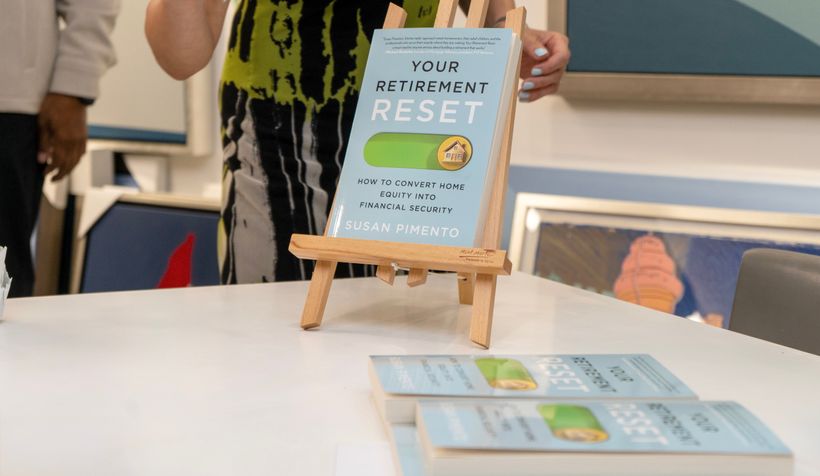
I hope you will consider pre-ordering a copy of Your Retirement Reset for you, a friend or loved one.  It's available September 8, 2026 - You can now order on the ECW Press site here. And if you love supporting Canadian booksellers, please also check with your local independent bookstore. Most can easily order it for you.





Connect with:
Sue Pimento

Sue Pimento

Founder | CEO

Writer, author & presenter focused on financial literacy and retirement strategies. I advocate for the health, wealth & purpose for retirees

Pension ReformInterest RatesHome EquityMortgagesReverse Mortgages
Powered by

You might also like...

Check out some other posts from Retire with Equity

The Grace to Fail: My MBA Journey (Part 3) featured image

8 min

The Grace to Fail: My MBA Journey (Part 3)

I have a confession to make. My wife Bonnie and I are addicts. Not the kind that requires an intervention, exactly, but close. We are addicted to home improvement. We are always planning the next upgrade, the next project, the next thing to tear apart and make better. It gives us genuine pleasure and a profound sense of accomplishment. Bonnie leads most of these endeavours. She is remarkably capable with power tools and can pull off a tool belt like she is strutting down a Home Depot runway (aisle). Our shared obsession has even spawned a series of Facebook posts called the 2 Capable Women, where we document everything from felling trees to the deeply humbling art of Ikea assembly. So there we were, driving in traffic, and Bonnie was telling me about her next project: removing the circa-1960 wood panelling and replacing it with modern shiplap. Mid-conversation, she went quiet for a moment and said, almost to herself, “I guess I need to allow myself the grace to fail.” I nearly drove off the road. You must understand something about Bonnie. She is a self-declared perfectionist. Not casually. She is committed to being a perfectionist at being a perfectionist. So, hearing those words come out of her mouth, unprompted, while discussing a renovation project, was like hearing your accountant quote Oprah. It stopped me completely. The truth has a certain ring to it. I heard that bell loud and clear. Because sometimes wisdom does not arrive in a lecture hall or a leadership book or a TED talk. Sometimes it arrives in a car, in traffic, from the person sitting next to you holding a coffee and thinking about shiplap. That phrase has not left me since. Many of us do this. We replay mistakes endlessly, convinced that self-criticism is somehow productive. We lie awake revisiting conversations and missteps, assuming that if we beat ourselves up long enough, we will emerge wiser. All we accomplish is a thorough self-beating followed by self-flagellation. Lots of noise. Zero progress. Zero calories burned. This is not just a problem for people climbing mountains or starting businesses. It plays out in perfectly ordinary moments. You send an email and immediately wish you had worded it differently. You make a comment at dinner that lands wrong and spend three days replaying it. You make a small error at work and carry it around like luggage for a week. The inner courtroom convenes regardless. Most of us are not failing spectacularly. We are just living, occasionally getting things slightly wrong, and treating that as evidence of something deeply and permanently wrong with us. It is not. It is just Tuesday. I have been thinking about this a lot lately because I am in the middle of my MBA at the Sprott School of Business. I wrote about My MBA at age 69 in Part I and Part II. Back in graduate school after four decades in the workforce, opportunities to feel uncomfortable, uncertain, and occasionally like you have wandered into the wrong building are plentiful. A recent assignment on crafting Team Charters and enhancing my leadership skills inspired me to write a personal manifesto for my graduate studies and to take a closer look at myself. You can read mine here. While working through it, I made a surprising discovery. Most of the commitments I was making to myself had nothing to do with school. They were about life. Read the instructions carefully. Ask for help sooner. Pay attention to what your emotions are trying to tell you. Trust your experience. Hold yourself to your own standards. And this one, which stopped me cold, and sounded very familiar: Allow yourself the grace to fail. There was that bell again. Those six words turned out to be the most important thing I wrote. Not because failure is something to celebrate, but because the willingness to risk it is the price of admission for virtually everything worth doing. Failure is not a topic most of us rush toward. It is about as pleasant as stubbing your toe in the dark. Yet every meaningful thing I have ever done required me to risk it. Starting a new career. Leading a sales team. Launching a business. Climbing a mountain. Writing a book. Going back to school at 69. None of it came with guarantees. All of it came with uncertainty, mistakes, and moments where I genuinely wondered whether I had lost my mind. The jury is still out on some of those. The irony is that failure and growth are inseparable. Dweck (2006) found that people who view setbacks as learning opportunities rather than evidence of inadequacy are more likely to persevere and ultimately succeed. Duckworth (2016) agreed, and in Grit, one of my favourite books, long-term success depends less on talent and more on the willingness to keep going after things fall apart. Neff (2023) added that people who respond to failure with self-compassion rather than harsh self-judgment show greater improvement and are more likely to try again. The friction produced by failure is often exactly what generates learning, but only if we give ourselves enough grace to stay in the game. I see this everywhere. Professionals are staying in jobs they no longer enjoy because starting over feels too risky. Retirees hesitate to try something new because they might not be good at it right away. Students who will not ask a question because they do not want to appear uninformed. And if I am being honest, I see it in myself. Every time I hesitate to contribute to class because everyone else seems younger and sharper. Every time I catch myself wondering whether I belong in the room. One exercise has helped me enormously. When I catch myself spiralling into negative self-talk, I imagine my five-year-old self standing beside me, listening. Would that little girl feel encouraged? Not a chance. So why do we think inner dialogue helps us? A recent example: I made a point in a meeting that got a polite nod and complete silence. You know the silence. The one that could mean anything from “interesting” to “what on earth did she just say?” I replayed that moment for two days. Eventually, I asked a colleague how the meeting had gone, and she said she barely remembered it. The forensic investigation was conducted entirely in my own head. I am not suggesting we lower our standards. We should hold ourselves accountable, learn from our mistakes, and strive to do better. But there is a meaningful difference between accountability and cruelty. Between reflection and rumination. Between learning from a mistake, and building a summer cottage on top of it, and checking in every long weekend. I worry about what this means for the generation behind us. Research by Professor Gabriel Rubin at Montclair State University found that despite living in one of the safest periods in history, Gen Z perceives risk virtually everywhere (Rubin, 2023). They have grown up knowing that at any moment, someone has a phone. One stumble, one terrible dance move, and the clip is posted before you catch your breath. Permanent, searchable, shareable public failure is something entirely new, and the consequences are showing up in surprising places. Monocle magazine noted young people standing completely still on nightclub dance floors, phones in hand, unable to lose themselves to the music. The club has become a stage, and the crowd has become the content. Instead of dancing, people film. Instead of connection, there is performance. This is not a small thing. Dancing is how humans have always signalled availability, built trust, and found each other. It requires a willingness to look slightly absurd. If we have raised a generation so terrified of being captured mid-stumble that they will not move to the music, we have handed surveillance culture a victory it does not deserve. Calculated risks lead to new opportunities, foster innovation, and teach lessons that comfort never could (Rubin, 2023). Risk aversion makes short-term sense. As a way of life, it quietly closes doors that were never meant to stay shut. Give yourself and the young people around you, explicit permission to be unpolished in public. To dance badly. To say the wrong thing and survive it. The phone will always be there. So, fortunately, will the music. Here is what I keep learning inside this MBA: wisdom arrives disguised as failure. The assignments that challenge me teach me more than the ones that come easily. The questions I most resist asking are usually the most important. I did not expect graduate school to teach me this. Then again, I did not expect to be here at seventy. I no longer think in terms of Wins and Losses. Those categories are too simple. I think in terms of Wisdom and Learning. Success builds confidence. Setbacks build insight. Both move us forward. Read that again. So the next time you find yourself at two in the morning replaying something you said three days ago, ask whether your five-year-old self would find your internal monologue useful. If the answer is no, offer yourself a little grace. Which brings me back to Bonnie. Last weekend, she pulled off that 1960s panelling. Every last piece. It was messy and uncertain, and at several points she was unsure what she would find underneath. There were surprises. There were moments of doubt. She kept going anyway. By the end of the weekend, the shiplap was going up, clean and bright and exactly right. She did not do it perfectly. She did it anyway. And it is beautiful. That is the whole lesson, right there, delivered by a woman with a pry bar and a tool belt, on a weekend in June. Failure is not the enemy. Most of the time it is just fear wearing a funny hat. And if you are lucky, it will teach you something genuinely worth knowing. Sometimes it comes from a research paper. Sometimes it comes from your wife, in a car thinking out loud about shiplap. Either way, listen for the bell. Writing my manifesto was one of the most clarifying things I did this year. Not because it solved anything, but because it forced me to decide, on paper, who I was going to be when things got hard. I want that for you, too. So I created the ReWirement Manifesto: a simple template for anyone navigating a new chapter, a big transition, or simply a Tuesday that did not go as planned. It is not a bucket list. It is not a vision board. It is a set of honest commitments you make to yourself, in your own words, that you can return to when your inner courtroom calls you to order. Download your free ReWirement Manifesto template here. Fill it in. Keep it somewhere you can find it. And the next time you are staring at a wall of 1960s panelling, wondering if you are in over your head, remember: the grace to fail is not a consolation prize. It is the whole point. Don’t Retire…Re-Wire! Sue My Book is Now Available for Pre-Order I hope you will consider pre-ordering a copy of Your Retirement Reset for you, a friend or loved one. It's available September 8, 2026 published by ECW Press - You can now order at Indigo or Amazon. And if you love supporting Canadian booksellers, please also check with your local independent bookstore. Most can easily order it for you.
Seniors and AI: What Could Possibly Go Wrong? featured image

9 min

Seniors and AI: What Could Possibly Go Wrong?

Let’s be honest: we’ve weathered every tech wave they’ve thrown our way. Rotary phones. Dial-up internet. The BlackBerry. And somehow, we’ve made it to AI. The robots know more about our shopping habits than our spouses do—and honestly, they’re better listeners. We’ve Survived Every Tech Wave. AI Is Just the Next One. Remember when the internet first emerged, and everyone claimed it would never take off? Shopping online was considered silly ("Who would buy shoes without trying them on?"), And email sounded like something only NASA engineers would use. Fast forward a few decades, and now you can't even renew a driver's licence without the internet. So much for "it'll never last."  It all began innocently enough. The first cordless phone was freedom on a frequency—you could step outside, yell "Can you hear me now?" and feel unstoppable. Then came remote controls, launching the golden era of couch-based cardio: jumping up every five minutes to find the one that actually worked. (Still missing: one VCR remote, circa 1987.) Next came AOL. "You've got mail!" was our first digital dopamine hit. Then the BlackBerry arrived—part phone, part pager, part fashion statement. It was heavy, expensive, and glorious. Until, like a hot potato, we all dropped it for the iPhone—sleeker, lighter, and small enough to fit in yoga pants. The iPod Nano followed. Goodbye radios, hello playlists! From there came Google, streaming, apps, and clouds (the digital kind, not the ones that ruin golf). And now… drumroll, please… Artificial Intelligence. The "It'll Never Last" File: Greatest Misses Edition We've encountered the skeptics before: • The Internet: "No one will use it." • Online Shopping: "People won't buy shoes sight unseen." • Email: "Who needs digital letters?" • Voice Assistants: "Talking to a speaker will freak people out." • AI: "It's just hype—like the Segway for brains." Well, the Segway is still technically around, but you're not riding one to the golf course. Meanwhile, AI is everywhere—and yes, seniors are joining the party. AI: The Latest "Fad" That Isn't If you think AI is a passing craze, you probably also dismissed online shopping and email. (Confession: I once thought, "Who would ever enter their credit card number online?") But AI isn't a gadget—it's the next era. As permanent as gravity, and just as invisible until it knocks something over. Use of generative AI among older adults throughout North America is growing. A Leger Research study revealed that 1 in 3 Canadians 55+ have tried an AI tool. We can ignore it, "poo-poo" it, or embrace it. But always remember: Resisting progress will not slow it down one byte. Why This Time Is Different Here's the twist: today's seniors aren't like our parents' generation. We're Boomers with bandwidth. We were the first to type with our thumbs, track our steps before it was trendy, and FaceTime the grandkids instead of mailing Polaroids. We've earned our tech credentials. Now it's time to flex them in the AI era. Seniors Meet AI: A Beautiful Disaster AI promised to make life easier. Instead, for many seniors, it's like adopting a mischievous grandchild who never listens and occasionally orders you twelve pineapples by accident. Let's be honest—we've all had those moments. Voice Assistants: The Frenemies "Alexa, play Staying Alive." "Calling 911. You appear to be in distress." "Siri, remind me to take my pill at 8." "Texting Phil at 8." "Hey Siri, stop listening." Silence. "Hey Siri, play jazz music." Still silence. (Give it a minute… you'll get it.) These so-called "assistants" are like toddlers with Wi-Fi—they only hear half of what you say, and always the half that causes chaos. The Sitcom Nobody Asked For Seniors using AI might just be the world's best sitcom waiting to happen: • Episode 1: ChatGPT Writes My Will (and Leaves Everything to Wi-Fi) • Episode 2: Siri Joins My Book Club and Never Stops Talking • Episode 3: I Asked Alexa to Play Jazz, and She Ordered a Jacuzzi Coming soon to streaming services everywhere—as soon as we find the remote. Texting While Senior: A New Dialect Emerges If you think AI is confusing, try texting with seniors. Somewhere between autocorrect and abbreviations, a new language has evolved—part English, part comedy special: BTW – Bring The Wheelchair ROFL... CGU – Rolling On The Floor Laughing... Can't Get Up LOL – Living On Lipitor BYOT – Bring Your Own Teeth TGIF – Thank Goodness It's Four (Early Bird Special) FWB – Friend With Beta-Blockers TTYL – Talk To You Louder LMDO – Laughing My Dentures Out GOML – Get Off My Lawn Honestly, AI could spend years decoding that list and still ask, "Did you mean BYOB?" "But What About Privacy?" (Spoiler: That Ship Has Sailed) Ah yes, the Privacy Protectors—those well-meaning friends who whisper, "Don't use AI, they're stealing your identity!" Spoiler alert: that ship already sailed. Siri and Alexa have been eavesdropping for years. Google knows where you've been, what you've read, and that you googled "how to delete Google history." Uber keeps a record of every trip you've ever taken—yes, even that midnight McDonald's run—and there's no "forget" button. Most of us have already traded privacy for utility. And honestly? It's not always a bad deal.  I'm happy to share a few megabytes of data if Apple can tell me where I parked in the underground garage with seventeen identical "P2" levels. That's not a conspiracy—that's a lifesaver. AI saves time, surfaces better options we didn't know existed, and delivers instant answers. No more hunting for the manual to your smoke detector—just snap a photo, and AI tells you exactly which button to push (and which one to avoid). We're not losing control; we're gaining convenience. And at this stage of life, that's worth more than a few anonymous data points. Ways Seniors Can Actually Use AI (and Enjoy It) AI tools are making daily life easier for older adults in practical, accessible ways. Here's how you can put them to work: The “Start Here” Ladder: Build Your AI Confidence One Rung at a Time Nobody learns to swim by jumping into the deep end. AI is the same. The trick isn’t to master everything at once—it’s to start somewhere low-stakes, build a little confidence, and move up when you’re ready. Here’s a simple progression that works: Level 1: Voice Assistants Risk Level: Minimal Fun Level: Surprisingly High ------------------- Start here if you haven’t already. Ask Alexa or Siri to set a timer, play music, check the weather, or settle a dinner-table argument. No typing required. Level 2: AI Chat Tools Risk Level: Low (with privacy settings activated) Usefulness Level: Eye-Opening ------------------- This is the “brilliant friend who knows everything” rung. Tools like ChatGPT or Google Gemini are free to use and can answer any question—no judgment, no wait times, no office hours. Try drafting a birthday message. Ask it to explain a medical term your doctor used. Get it to suggest a one-week meal plan. You type, it answers. Think of it as Google, but one that actually understands your question. A Note of Caution (Read This): Before you type anything personal into an AI app, go into the app’s privacy settings and switch off chat history/training so you don’t expose personal information. ChatGPT users can navigate to Settings > Data Controls and turn off "Improve the model for everyone". This prevents your conversations from being used to train future models. For extra privacy, disable "Chat History & Training," turn off memory features, or use the temporary chat feature. Level 3: Health and Wellness Wearables Risk Level: Low Payoff : Potentially Life-Saving ------------------- An Apple Watch or Fitbit isn’t simply a fancy step counter. These devices now detect irregular heart rhythms, monitor blood oxygen levels, track sleep quality, and—crucially—detect falls and automatically alert emergency contacts. For anyone living independently, that last feature alone makes it a worthwhile investment. You don’t need to know exactly how it works; just wear it. Level 4: Smart Home Tools Risk Level: Medium Payoff: You’ll Wonder How You Managed ------------------- Smart thermostats, video doorbells, voice-controlled lighting—these are AI tools you set up once and forget. The real win here is independence. Being able to control your home environment with your voice, check who’s at the door from your phone, or have the heat adjust automatically before you wake up: these aren’t luxuries. For many of us, they’re what make staying in our own homes longer a real and practical option. Level 5: AI-Assisted Financial Tools Risk Level: Higher. Stakes Level: Real. So Tread Carefully and Deliberately ------------------- This level is for when you’re comfortable and curious—not before. AI can now help you understand tax documents, summarize financial statements, compare mortgage products, and even flag unusual account activity. These tools are genuinely powerful. But they work best alongside a trusted human advisor, not instead of one. Think of AI as the research assistant who preps the questions. Your financial advisor is still the one who answers them.  The key is this: you don’t have to climb the whole ladder today. Pick one level. Try it for a week. Laugh when it goes sideways. Then decide if you want to go higher. Writing & Editing: Draft emails, thank-you notes, or letters with the right tone—ChatGPT handles over 1 million daily health-related queries from seniors, including help preparing questions for doctor visits Travel Planning: Find flights, plan itineraries, and even pack your suitcase virtually Financial Education: Ask about investments or taxes—AI explains without the jargon Health & Fitness: Wearable devices like Apple Watch and Fitbit track exercise, monitor heart rate, detect falls, and can notify help if you're in an accident Smart Home Control: Voice-activated systems can adjust temperature, turn lights on and off, unlock doors, and control security—all with simple voice commands Cooking: "AI, make a meal with tuna, yogurt, and hope" Entertainment: Jokes, playlists, stories, or party ideas Learning: Teach yourself a language, an instrument, or how to fix the Wi-Fi (again) Want to get started? OATS published "AI for Older Adults," a comprehensive guide covering health, finance, and lifestyle applications specifically for seniors. It's available at oats.org. The Serious Bit: AI and Your Portfolio Here’s where I put on my serious hat for a moment. The U.S. stock market is currently top-heavy with AI darlings—Nvidia, Microsoft, Alphabet, and Meta. Great companies. Exciting times. But retirement portfolios are not the place for a single-themed bet. If your retirement savings are overloaded with AI stocks, a correction could make your portfolio look like your Fitbit step count on a February long weekend. Diversify. Always. Love tech. Just don’t go steady with it. For more on this topic, check out Part 1 of my post: The Retirees' Guide to Market Volatility: Building Your Financial Safety Net Embrace AI, Don't Fear It AI is here to stay. Think of it as your digital assistant, not your replacement. Our generation has lived through it all: dial-up, disco, dot-com booms, and Bitcoin. If anyone can handle the rise of the machines, it's us. We figured out VCRs (eventually), navigated online banking, and mastered Zoom backgrounds (some better than others). And no, blurred does not count as a background. So fire up your curiosity. Try ChatGPT to plan your next vacation, use Google Gemini to get thoughtful answers to complex questions, or tell Alexa to crack a joke. (She's still learning… but she's improving.) We’ve adapted before. We’ll adapt again. That’s actually what we do. One baffling software update at a time. And here’s what no algorithm will ever replicate: Us. Our humour. Our resilience. The comedy gold of a pocket-dial to our X at 1am. The triumph of finding our reading glasses—while wearing them. AI is smart. But we’re wiser. And that still counts for a lot. So, here's the deal: AI can predict the stock market, diagnose your rash, and write a sonnet in seventeen seconds. But It still can't find your car keys, remember why it walked into the kitchen, or laugh until it snorts at its own joke. We've survived disco, dial-up, the dot-com crash, and that one Zoom call where someone didn't realize their camera was on in the bathroom. We will absolutely survive this, too. AI isn’t here to replace us; it’s here to keep up with us. And frankly, after decades of dealing with actual humans, a very smart, endlessly patient, never-hangry assistant sounds like an upgrade. So, when the robots eventually do take over, they'll need someone to tell them to slow down, dress properly, and call their mother. That's where we come in. Same as it ever was. One baffling software update at a time. Need more guidance? Here are some helpful resources: • AARP's 2025 Tech Trends Report – Research on how older adults are using technology • Bethesda Health Group's AI Guide for Seniors – Practical everyday applications • Ultimate Senior Resource: Top 10 AI Tools – Detailed reviews of the best AI tools for older adults Don't Retire...ReWire! Sue Want more of this? Subscribe for weekly doses of retirement reality—no golf-cart clichés, no sunset stock photos, just straight talk about staying Hip, Fit & Financially Free.

Tight-Wad or Spend-Thrift? featured image

6 min

Tight-Wad or Spend-Thrift?

My friend, Linda, retired at 66 after 35 years as a school principal. She had done everything right. Pension. Savings. No debt. A financial plan so airtight that her advisor framed it. On her first Monday of retirement, she drove to the grocery store, stood in front of the fancy olive oil, and put the $23 bottle back on the shelf. She grabbed the $10 one instead. That night, she called me, genuinely distressed. "Sue," she said, "I don't know how to spend the money." Linda is not alone. Her problem is not a math problem. It is a brain problem. Welcome to the neuroscience of aging and money, where biology is ageist, your prefrontal cortex is quietly retiring before you do, and the financial industry has somehow spent decades teaching you to save without ever explaining how to stop. What Is Actually Happening in That Brain of Yours As we age, the prefrontal cortex, the part of your brain responsible for planning, decision-making, and impulse regulation, starts to lose its edge. Meanwhile, the amygdala, the emotional centre, gains more influence. The result? Decisions that feel more emotional, more risk-averse, and sometimes more impulsive, depending on which way your wiring maps. Research published by Agarwal, S., Driscoll, J. C., Gabaix, X., & Laibson, D. found that financial decision-making peaks around age 53 and then declines steadily. This is not because older adults are less intelligent, but because the cognitive systems that weigh risk and reward begin to operate differently. Biology is ageist, as evidenced by the fact that your brain begins to change its relationship with money before you have even figured out what to do with it. A recent study from the National Bureau of Economic Research found that older adults are significantly more likely to make financial mistakes on both ends of the spectrum: excessive caution and excessive spending. The brain does not uniformly tighten the purse strings. It amplifies whatever pattern was already there. If you were a careful saver, you would become an Olympic penny-pincher. If you were a spender, you would become a one-person economic stimulus package. You become an exaggerated version of your younger self. Which is charming in theory and occasionally catastrophic in practice. Team Tight-Wad: All Chips, No Salsa You know the type. Actually, you might be the type. These are the people who still have their first chequebook, who compare per-unit prices for paper towels with the focus of a neurosurgeon, and who have not eaten at a restaurant without a coupon since the second Harper government. They are not cheap. They are terrified. As the prefrontal cortex loosens its grip on rational future planning, the fear of running out, what I call FORO (Fear of Running Out), takes the driver's seat. It whispers things like: what if the market crashes, what if I get sick, what if I live to 102 and run out of money at 99? And so the tight-wad doubles down. The $23 olive oil goes back on the shelf. The vacation gets postponed. The grandchildren's birthday gifts get slightly less grand. All chips, no salsa. You have built a pile of financial security and are sitting on it, stiff, virtuous, and mildly hungry, while the dip goes untouched. The tight-wad's greatest risk is not poverty. It is regret. Researchers at Cornell University found that people in the final chapters of their lives consistently reported regretting what they did not do far more than what they did. That trip not taken. That renovation not done. That bottle of good olive oil not purchased. FORO kept them safe and small, and the memory of that smallness stings. Team Spend-Thrift: All Salsa, No Chips On the other side of the spectrum, we have the spend-thrifts. As the emotional centres become more active and impulse regulation less reliable, some people lean into the "you only live once" philosophy. They book the trip to Portugal. They buy the golf club they do not need. They pick up the tab for dinner for eight people they met three hours ago. They are generous, spontaneous, and occasionally mystified by their bank statements. Research from Harvard Business School confirms that spending money on experiences and on others generates a meaningful boost in wellbeing. Spend-thrifts are onto something. The problem is sustainability. If the prefrontal cortex is not doing its job by asking "do we actually need this," the credit card bill arrives, and this is why we can't have nice things. Spend-thrifts also tend to underestimate longevity. A 65-year-old Canadian woman today can expect to live, on average, past 87. That is more than two decades of retirement to fund. All salsa, no chips is a delicious way to start a party and a terrible way to sustain it. The Gap Nobody Talks About: Permission to Spend Here is where I want to say something that gets almost no airtime in the financial services industry. We have an enormous education gap on this side of retirement. The entire financial industry, including the advisors, the institutions, the calculators, the seminars, and the books, has spent decades teaching people how to accumulate money. How to save. How to invest. How to sacrifice the latte. The message has been so relentless that it has rewired the way people feel about spending. And then retirement arrives. And nobody says: Okay, you can stop now. You can actually use this. This is what it was for. Switching from accumulation to decumulation requires real support, real education, and genuine permission. It is not a switch you flip. It is a gear shift that many people never make successfully. They arrive at retirement financially prepared but psychologically stuck. Honestly? The mother of all eye rolls is reserved for the financial institution that still calls it a savings account when you are 72. You are not saving anymore. You are managing a spending pool. Here is my modest proposal: once you turn 65, your savings account becomes your spending account. Not a radical rebranding. A psychological one. Words matter. Framing matters. Every time you log in and see the word "spending," your brain starts to normalize the idea that this money has a purpose, and that purpose is your life. Clients need financial therapists as much as they need financial planners. They need someone to look them in the eye and say: you earned this, you saved this, and spending it wisely and joyfully is not a failure of discipline. It is the entire point. Self-Awareness Is the Cheapest Investment You Will Ever Make Recognizing your pattern is step one. If you have not bought anything for yourself that was not on sale in the past calendar year, that is data. If you cannot remember the last time you checked your balance before a purchase, that is also data. Neither is a character flaw. Your brain is doing what it is supposed to do. Step two is to get the right support and give yourself explicit permission. A good retirement income specialist asks what you want your money to do for you now, not just how long it needs to last. A financial therapist helps you untangle your emotional history with money. At some point, you write it down: I am allowed to spend on things that bring me joy, keep me healthy, and connect me to the people I love. Post it somewhere you will see it when you are standing in front of the fancy olive oil. The Punchline Linda eventually bought the $23 olive oil. It took four months, a conversation with her advisor, and an honest chat with her daughter, who pointed out that Linda had about 90 jars of tomato sauce in her basement and no good reason to be rationing condiments. The brain changes that come with ageing are real. They are not personal failures. They are biology doing biology things, loudly and without your consent. But brains are also remarkably responsive to information, reframing, and the occasional kick in the pants from someone who loves you. You spent decades building financial security. The goal was never to die with the most money. It was a good life. All chips AND salsa. The full spread. The $23 olive oil on the good bread, with the people you love. Your spending account is waiting. Honestly, it has been waiting long enough. Because nobody wins a prize for being the richest person in the graveyard. Don’t Retire…Re-Wire! Sue My Book is Now Available for Pre-Order I hope you will consider pre-ordering a copy of Your Retirement Reset for you, a friend or loved one. It's available September 8, 2026 published by ECW Press - You can now order at Indigo or Amazon. And if you love supporting Canadian booksellers, please also check with your local independent bookstore. Most can easily order it for you.

View all posts