
Pope Leo XIV Paid Public Homage to St. Augustine in Algeria, but Has Invoked His Teachings Since Election, Says Augustine Scholar Paul Camacho

Apr 16, 2026

6 min

Paul Camacho, PhD

During his historic trip to Africa in April 2026, Pope Leo XIV toured the archaeological ruins of Annaba, Algeria, capping what he referred to as a “special” journey to the country. Annaba, where the ancient city of Hippo Regius once stood, is not far from where St. Augustine—patron of the Augustinian order to which the Pope belongs—was ordained, made bishop and crafted his most influential theological works.


Walking in his footsteps, Pope Leo—who referred to himself as a “Son of Augustine” upon his election to the papacy—toured the ruins with other members of the Order and his traveling party.


It was a personal and symbolic moment, but for those paying close attention to his early pontificate, it represented only the most recent of many tributes he has paid to Augustine and his teachings.


“In reading through Pope Leo’s addresses and his homilies, his messages and his video recordings, there is barely one that goes by without him referencing Augustine in some way,” said Paul A. Camacho, PhD, associate director of The Augustinian Institute at Villanova University, and scholar of Augustine’s teachings.


When the Pontiff accepted the St. Augustine Medal from the Augustinian Province of St. Thomas of Villanova in August 2025, he made it clear why.


“As Augustinians, we strive every day to live up to the spiritual example of our spiritual father, St. Augustine,” he said to the Province. “To be recognized as an Augustinian, it’s an honor held dearly. So much of who I am, I owe to the spirit and teachings of St. Augustine and I am grateful to all of you for all the many ways your lives exhibit a deep commitment to the values of Veritas, Unitas and Caritas.”


Veritas


Examples abound related to all three values and how Pope Leo has invoked Augustine in speaking about them. Dr. Camacho cites a handful he found particularly noteworthy. For example, Veritas first appeared in an especially prominent way during an early address for the June Solemnity of the Holy Trinity and Jubilee of Sport.


Then, Pope Leo said, “This combination of Trinity and Sport is somewhat unusual, yet the juxtaposition is not inappropriate. Every good worthwhile human activity is in some way a reflection of God’s infinite beauty, and sport is certainly one of these.”


“For St. Augustine, the Trinity and wisdom are intimately connected,” Dr. Camacho said, also mentioning that Augustine authored an entire book on the subject titled “On the Trinity.” “Divine wisdom is revealed in the Most Holy Trinity and wisdom always leads us to Veritas—the truth,” he said.


“What Pope Leo goes on to do is say that the life of God, the Trinity, is a life of play…It’s a dance, and dance is a sport, and our own way of participating in that kind of activity is a participation in life of God.”


When Pope Leo later spoke to the International Foundation of Catholic Universities—an occasion for which the motto was “Choreographers of Knowledge”—he referenced that dance again.


“Pope Leo invites us to think of our relationship to Veritas not as something to master,” Dr. Camacho said. “But rather as a light that draws us out of ourselves towards it, in a dance of relationship with it and one another.”


Unitas


During a September Mass for the General Chapter of the Order of St. Augustine, Pope Leo prayed that those in attendance be given “the gift to listen, the gift to be humble and the gift to promote unity within the Augustinian Order, and throughout the Order, throughout the Church and the world.”


Earlier in the summer, he touched on unity during the Jubilee of Families, Children, Grandparents and the Elderly, commenting on the Gospel of John, in which “Christ prays that we may all be one.”


“This being one is the greatest good we can desire, for this universal union brings about among his creatures the eternal communion of love that is God himself: the Father who gives life, the Son who received it and the Spirit who shares it… the Lord does not want us in this unity to be a nameless and faceless crowd,” Pope Leo said.


“What Pope Leo expresses here is that unity is not conformity, but rather community—the kind of community in which each one of us becomes more of who it is that we are the more we love and work for what is good in common,” explained Dr. Camacho. “This is a deeply Augustinian insight.”


In one general audience with members of various religious groups, Pope Leo relayed “Unity has always been a constant concern of mine, as witnessed by the motto I chose for my episcopal ministry.”


He was referencing, Dr. Camacho says, the Latin phrase In illo uno unum, displayed on his coat of arms.


“That phrase—‘in the one [Christ] we are one’—comes from St. Augustine’s commentary on the Psalms. Pope Leo comes back again to this idea that when we love and follow the truth that is Christ, we simultaneously become more uniquely individual, and our unity becomes genuine community, and not mass conformity.”


Caritas


In his Opening Homily for the Beginning of the Pontificate, Pope Leo followed his salutations with these words:


“I greet you all with a heart full of gratitude at the beginning of the ministry that has been entrusted to me. St. Augustine wrote: ‘Lord, you have made us for yourself, and our heart is restless until it rests in you.”


According to Dr. Camacho, Augustine taught that the solution to the restless heart is Caritas, or rightly ordered love that finds its rest in God. Augustine’s thinking about love is developed in a social dimension when he distinguishes between two different kinds of political communities, which he calls the “Earthly City” (in which pride and self-love dominate), and the “City of God” (in which love of God and neighbor form the community). Augustine’s enduring and influential work “De Civitas Dei,” or “City of God,” articulates this distinction between false and true loves.


At the 16th Annual Meeting of the International Catholic Legislators Network, Pope Leo suggested that we look to Augustine, citing his own witness of social upheavals in his time, and that we consider Augustine’s reminder that we must attend to these “two orientations of the human heart.”


Ordo amoris—order of love,” explained Dr. Camacho. “This is Augustine’s notion that following Christ is not a matter of private devotion, but rather demands a dilation of our hearts: our loves must move out to embrace the poor, the marginalized, the downtrodden, the forgotten. In Catholic Social Thought, this is the principle of solidarity: while the things that we love begin with what is most intimate to us, we are called to expand our love outward. One of the things Pope Leo is trying to say is that Augustine’s thought remains a living inspiration for how we might organize our societies.”


Speaking to the International Interparliamentary Union in late June, Pope Leo intimated that St. Augustine speaks of “your responsibility to promote and protect, independent of any special interest, the good of the community, the common good, particularly by defending the vulnerable and the marginalized.”


“Augustine’s idea was that what makes a community is what its members love in common,” Dr. Camacho said. “In other words, Caritas—love—is fundamental to how we think about how we relate to one another. Not just on a one-to-one, personal level or in terms of a private relationship to my own good, but rather how we relate to our communities, and what we build together for the common good.”


“Bringing Augustine Back to the World”


One of the great gifts of the Augustinian Order, says Dr. Camacho, is that “because of its charism of community, it draws individuals to become religious from all walks of life, and not just those who have extensively read or studied the work of Augustine.”


It is especially noteworthy, he says, just how entrenched Pope Leo’s words and actions are in his long-time study of Augustine.


“It is quite clear that Pope Leo loves Augustine, not just as an exemplar, as a patron saint of the Order, or as a doctor of the Church—though he is all of these. Leo loves Augustine as a companion: a man whose life reminds us that discipleship is about fidelity and not about perfection; a thinker who is rich in philosophical and theological insight; and a priest and bishop who cared deeply for his community.


“In his pontificate, it is already clear that Pope Leo, this great “Son of Augustine,” is bringing Augustine back to the Church and to the world as a vital source of wisdom and inspiration.”


Connect with:
Paul Camacho, PhD

Paul Camacho, PhD

Associate Teaching Professor of Philosophy; Associate Director, Augustinian Institute | College of Liberal Arts and Sciences

Paul Camacho, PhD, is an expert on St. Augustine, the Catholic intellectual tradition and the philosophies of love and religion.

St. AugustineAugustinian StudiesCatholic Intellectual TraditionPhilosophy of LoveMetaphysics
Powered by

You might also like...

Check out some other posts from Villanova University

Solar Déjà Vu: Eclipses, Like The One in August, Follow Predictable Cycles, Explains Villanova Astronomer featured image

3 min

Solar Déjà Vu: Eclipses, Like The One in August, Follow Predictable Cycles, Explains Villanova Astronomer

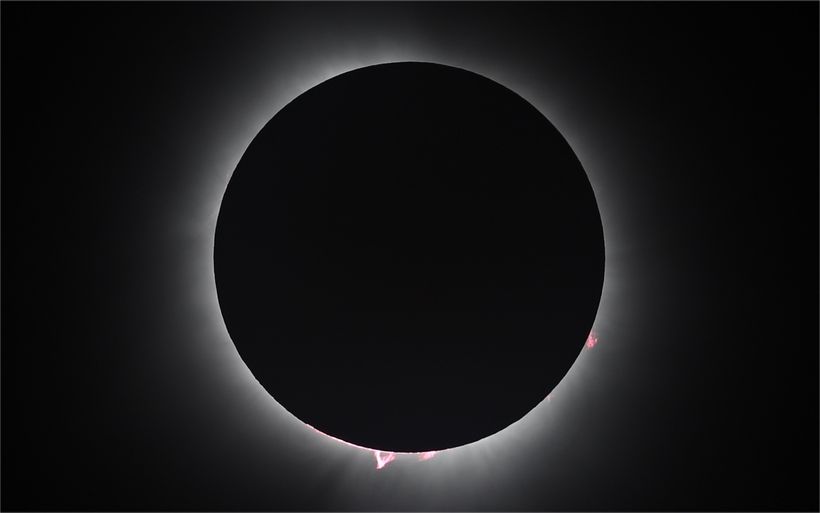
As the moon passes in front of the sun on August 12, 2026, viewers along the eclipse’s path of totality in Iceland, Greenland and Northern Spain will be treated to more than two minutes of daytime darkness. For many, it will be their first experience in totality. For the eclipse itself, it’s just another slightly different chapter in a millennium-long rinse and repeat. That’s because every eclipse belongs to what is called a saros series—a “family” of eclipses that follow a predictable schedule. A saros series begins and ends with partial eclipses near opposite poles of the Earth, and in between may feature annular, hybrid or total eclipses—like the kind occurring this August—across the world. “Then the series will end,” said Frank Maloney, PhD, associate professor of Astrophysics and Planetary Science at Villanova University. “New saros series are always coming into being, and old ones fading from existence. While they are here, they usually have between 70-73 eclipses over a span of 1,200-1,300 years.” Within the series is what is known as a saros cycle. It’s a period of roughly 18 years, 11 days and eight hours, when a natural synchronization of the moon’s three lunar phases arises. That synchronization can predict both lunar and solar eclipses, which follow very similar geometrics to the ones that precede and follow in their series. But why, then, aren’t all eclipses in a series over the same viewing area? The answer lies more with the movement of the Earth than with the eclipse. Within each series, the biggest cause of change from eclipse to eclipse comes from that last eight hours. It’s only the length of a workday, but each cycle, the Earth has rotated an additional 120 degrees from the previous. While the eclipse itself remains very similar to its predecessor and successor in the series, the viewing area does not. “Every fourth eclipse, or roughly every 54 years, you are back to where you began,” said Dr. Maloney. “That fourth eclipse in a saros is referred to as an exeligmos. But even that eclipse won’t follow the exact same path for a few reasons, including slight variations in the moon’s orbital node and distance from Earth.” Same region, but different track. The August 2026 eclipse will pass over Greenland, Iceland and Northern Spain, but its exeligmos from July 10, 1972 passed over parts of Russia, Alaska and Northeast Canada. Ed Guinan, PhD, ’64 CLAS, professor of Astrophysics and Planetary Science, witnessed that one with a Villanova contingent on the Gulf of St. Lawrence in Nova Scotia. Fifty-four years from now, this eclipse will be only a partial one, as the saros series begins to wane. The upcoming August event, in fact, is the penultimate of 10 total solar eclipses in Saros 126. The 10th will be in August 2044—the next one visible in the contiguous United States, seen in totality in parts of Montana, North Dakota and South Dakota. Saros 126 began with a partial eclipse on March 10, 1179, and will end with another partial on May 3, 2459. Humans understood these patterns long before this one began. In the first millennium BCE, the Chaldeans discovered the saros cycle by “carefully keeping record of observations” of eclipses over time, explained Dr. Maloney. “Our lives are linked with the sun. To the ancients, having the sun disappear was believed to be a really bad thing, like a demon devouring it. That goes for lunar eclipses too, which caused the moon to turn red and really bother people. When they could begin to predict them, total eclipses ceased to be the powerfully bad omens that ancients believed they were. It was still a mystery as to why it happened, but at least it was predictable, which reduced people's anxieties.” Now, the anxiety stemming from eclipse viewing is saved for the fierce competition for hotels along the path of totality and threats of cloudy weather. “But don’t worry,” Dr. Maloney said. "If you miss one, you might be able to see it ‘nearby’ in another 54 years.”

Ahead of America250, Villanova Historian Reveals How Independence Hall Almost Didn't Survive featured image

4 min

Ahead of America250, Villanova Historian Reveals How Independence Hall Almost Didn't Survive

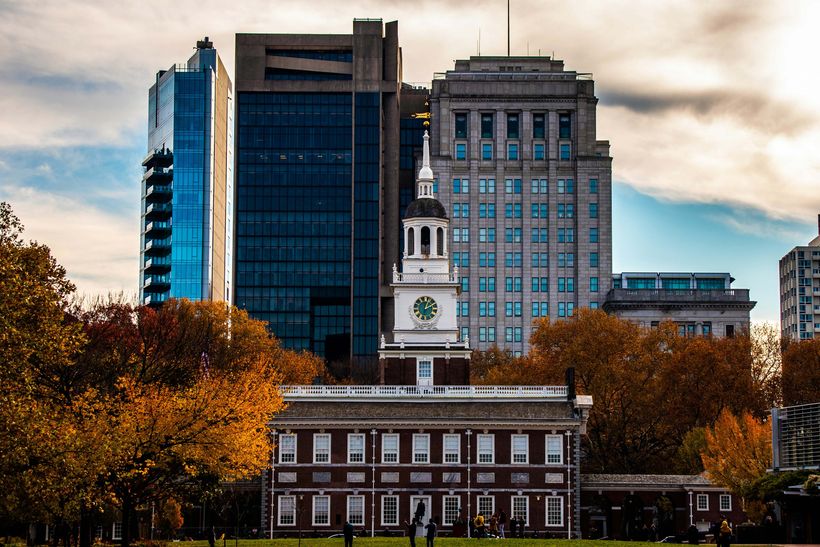
Philadelphia’s Independence Hall has long occupied an outsized place in the American imagination. The space where the Continental Army was established, the Declaration of Independence adopted and the United States Constitution ratified, the site was once described by President Abraham Lincoln as the source “where were collected together the wisdom, the patriotism, the devotion to principle, from which sprang the institutions under which we live.” In July, these hallowed grounds will yet again take center stage, as the country observes its semiquincentennial, or America250, celebration. In due course, House lawmakers will gather at the landmark for a special commemorative event, mayors from across the U.S. will march to the gates in a show of civic pride and solidarity, and thousands of visitors will flock to the site daily in appreciation for its significance to the cause of “Life, Liberty and the pursuit of Happiness.” However, while Independence Hall’s role in the national saga will go widely remarked and recognized, the building itself has a story that remains largely unknown. According to Whitney Martinko, PhD, associate professor of History and director of the Albert Lepage Center for History in the Public Interest at Villanova University, the “cradle of American democracy” almost never survived the country’s infancy. “Early on, the challenge was about two things,” says Dr. Martinko, who specializes in public history, historic preservation and the early U.S. “One was about ownership of what was called the ‘Old State House,’ because it was the former statehouse in the colony of Pennsylvania. And the second was about the development of the city around it.” As Dr. Martinko explains, in the early 19th century, Independence Hall—then the Old State House—was under the control of the Commonwealth of Pennsylvania, which had shifted its governmental seat from Philadelphia to Harrisburg by 1812. To fund the construction of a new capitol building in the wake of the move, Pennsylvania legislators seriously contemplated selling the site to private enterprise, with the surrounding area undergoing a development boom. “Today’s Independence Mall was built up entirely,” says Dr. Martinko. “In the 18th century, it was full of buildings, shops and houses, and by the 19th century, it had become a huge furniture district and a heart of commerce in many ways.” As plans were drawn up to deliver the hall to the highest bidder, local resistance quickly emerged. Opposed to the landmark’s loss, citizens of Philadelphia and municipal leaders rushed to the defense of the building and its lawn, arguing that their preservation entailed a necessary public good. “Everyone looked to this site as the heart of the new nation. It’s a historic site. It’s an important building. People thought of it as one of the great pieces of Georgian architecture at the time,” says Dr. Martinko. “It was also seen as a civic space, as people gathered there on Election Day. And its lawn was highly valued, with green, open space considered important even then, for air circulation. So, it was really seen as a political space, a civic space and a green space that was important for the well-being of Philadelphians and the health of Philadelphia.” Deliberations over the fate of Independence Hall would continue for a period of five years, up until 1818. After a spirited public campaign, a settlement was finally reached when the City of Philadelphia purchased the plot from the Commonwealth of Pennsylvania for $70,000 (roughly $1.85 million in today’s currency). In essence, the deal would forevermore secure Independence Hall’s place within the pantheon of great American shrines, parks and monuments. However, in a terrific irony, it would also eventually lead to the loss of a different piece of history: Between 1950 and 1967, the 19th-century development projects that once threatened Independence Hall became a casualty of the city’s efforts to make the “birthplace of America” an urban focal point, with the creation of Independence Mall. “Those buildings were all torn down in the mid-20th century, when Ed Bacon and the City Planning Commission decided to make Independence Hall a major attraction,” says Dr. Martinko. “There were debates surrounding this issue as well. The Jayne Building was one of the 19th-century buildings that was demolished and that is most well-known. So, there’s this sense of preserving 18th-century history through the demolition of 19th-century architecture.” As the nation approaches its 250th anniversary, the near loss of Independence Hall and the removal of its 19th-century neighbors stand as striking examples of the ways in which what we value, and how much we value it, evolves over time. What’s more, the historic threats to Philadelphia’s most famous site serve as a poignant reminder of the delicate nature of public memory and preservation—and the fact that the places we treasure today may not always be with us tomorrow. “Even though it seems absurd to us now, we’re still seeing debates over the line between redevelopment and connection with the past,” concludes Dr. Martinko. “It’s not that no one saw the value of Independence Hall, or that they didn’t see it as historic. It was just this debate that a lot of very reasonable people continue to have today: Is this what really needs to be preserved? And how should it be preserved?”

100 Years After the "Launch" of Aerospace Industry, Villanova Faculty Continue to Innovate the Sector featured image

4 min

100 Years After the "Launch" of Aerospace Industry, Villanova Faculty Continue to Innovate the Sector

In 1926, Robert H. Goddard launched the world’s first liquid-fueled rocket in Auburn, Mass. Goddard’s 10-foot-tall rocket was airborne for just 2.5 seconds, reaching speeds of 60 miles per hour before landing 184 feet away from the launch site. A century later, the aerospace industry is booming, with new technology and missions making headlines every day—some with incredible success, and others encountering challenges that send scientists back to the drawing board. In February 2026, NASA delayed the launch of Artemis II—its next mission to the moon—citing issues with helium flow in the rocket’s systems. By April, the mission was on track again, and Artemis II completed the first crewed flight to the moon in more than half a century. Crew members for the upcoming Artemis III mission were also recently announced, as well as a timeline and overview for Artemis IV, the first planned crewed mission to the lunar South Pole in 2028. Amid these successes and setbacks, researchers continue to innovate the field and develop new technologies designed to help expand our knowledge of the vast universe. That innovation comes from diverse and unique places, including Villanova University. Research in Flight Student interest in aerospace led to the creation of a Master of Science in Aerospace Engineering (MSAE) program at Villanova University, which began in the Fall 2025 semester. Sergey Nersesov, PhD, associate professor of Mechanical Engineering, was instrumental in the inception of the MSAE program and helped develop courses in space flight mechanics, applied aerodynamics, aerospace structures analysis and advanced flight dynamics and control, among others. The idea for the graduate program was inspired by the growing popularity of the College of Engineering’s Minor in Aerospace Engineering. The minor attracts students from across the university, drawing from other majors and colleges at Villanova. For example, Dr. Nersesov recently collaborated on a research project focused on spacecraft and satellite control systems with Aedan Disanto ‘26 CLAS, an astrophysics and planetary sciences major and aerospace engineering minor. “If you look up at the sky, sometimes you see satellites chasing each other,” said Dr. Nersesov. “Dynamics and control researchers develop algorithms to ensure proper spacing between the satellites so they can function correctly.” The spacing between satellites is crucial to avoid collision, which is also a potential issue when a spacecraft approaches a space station to dock. In this situation the velocities, rotation and orientation of both vehicles are carefully controlled so that docking mechanisms align correctly, which requires up to 12 variables to be coordinated simultaneously. Dr. Nersesov and Disanto analyzed the algorithms needed to guarantee perfect satellite function and built upon them, discovering more efficient ways to operate vehicles in space. This summer, Dr. Nersesov and his students will also begin designing a prototype for a new kind of drone. Typical drones use ample amounts of energy to become airborne and capture photos or video content because they rely entirely on thrust to hold themselves up. To improve effectiveness, Dr. Nersesov and his students aim to create a drone in the style of an airplane, with vertical takeoff and landing (VTOL) capability. The drone will take off vertically, like a helicopter, but then transition to flying horizontally like an airplane, allowing lift from the wings to reduce the energy needed to stay airborne. As a result, it could stay in the air up to ten times longer than a hovering drone. While the project focuses on a single aircraft design, it represents the type of forward-thinking research driving the aerospace field today. Aerospace Engineering with Biology Elsewhere, Qianhong Wu, PhD, chair of Mechanical Engineering in the College of Engineering, is exploring a concept called super-lubrication, inspired by the way red blood cells move through the human body. Blood cells travel through capillaries narrower than their own diameter without damaging themselves or the vessel walls. A soft, porous layer called the endothelial glycocalyx within the vessels allows cells to glide through, reducing friction. In studying this biological process, an idea emerged that could potentially be translated to the aerospace field. Dr. Wu’s team is currently applying their deep understanding of biomechanical processes to applications that might reduce aerodynamic friction on aircraft surfaces by more than 90 percent. This lower friction may also improve fuel efficiency and extend flight endurance for drones or other aircraft. “Our work is an example of how thinking outside your traditional field can lead to innovation,” said Dr. Wu. “Sometimes the solution comes from a completely different subject, like biology.” A Century of Momentum One hundred years after Goddard’s brief but groundbreaking flight, aerospace innovation has expanded far beyond its earliest experiments. Today, progress in the field depends not only on major missions and milestones, but also on the steady work of researchers refining systems and exploring new ideas. At Villanova, that work is taking shape across disciplines—from spacecraft control systems to biologically inspired materials. Together, these efforts reflect how the field continues to evolve through collaboration and creativity.

View all posts