
How the Class of 2026 can keep resumes out of the digital black hole

Apr 24, 2026

2 min

Jill Panté


Students set to graduate this May are entering a job market where the rules of engagement are being rewritten in real-time. AI is both friend and foe, and ghosting has become the norm. University of Delaware career expert Jill Panté shares how college students can navigate these challenges in a rapidly shifting economy.


Panté, director of the Lerner Career Services Center at UD, can apply her expertise to the following:


The AI recruitment gap

• How to prevent resumes from falling into the "digital black hole" of automated tracking systems.

• Current recruitment in 2026 is heavily filtered by AI. If resumes don't mirror the language of the job description, a human might never even see it.

• In 2026, AI is the gatekeeper. Students who aren’t using AI for assistance are working twice as hard for half the results. However, the goal is to use it as a co-pilot, not an autopilot.


Beat the bots (tailor your content)

• Use tools like Resume Worded or Generative AI like Microsoft Co-Pilot or Gemini to see how resumes stack up against specific job postings.

• It is better to send five highly tailored, thoughtful applications than 50 generic ones that get auto-rejected by an algorithm.

• Use AI to run a mock interview based on the job description and company.


The "hidden” job market

• If a "job search" consists solely of clicking "Easy Apply" on LinkedIn for six hours a day, it’s not searching; it’s just doom-scrolling with a resume. Roughly 80% of your time should be spent talking to humans. The other 20% should be spent on applications and research.

• Find the recruiter or a department head on LinkedIn. Send a brief (2-3 sentence) note reiterating your interest.

• Leverage alumni networks through LinkedIn.


Narrative branding

• Especially for Gen Z: Hiring managers don't just want to know what you did; they want to know the impact you made.

• Instead of saying "Responsible for social media,” say "Increased engagement by 40% over 3 months by implementing a new video strategy."

• Always lead with results (LinkedIn, resume, Interviews) to showcase the value you bring.


Workforce anxiety

• Managing the mental toll of the modern, high-speed job search and the professional "ghosting" epidemic.

• Establish a personal "Board of Directors" to provide a balance of support, accountability and feedback.

• Maintain momentum by volunteering, attending local networking events and learning new skills on platforms like LinkedIn Learning and Coursera.


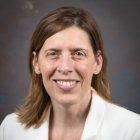
To reach Jill Panté directly and arrange an interview, visit her profile and click on the “contact” button.


Connect with:
Jill Panté

Jill Panté

Director, Lerner College Career Services Center

Prof. Panté can comment on workplace issues such as hiring, professional etiquette, personal branding, interviewing, and job search.

Job SearchLinkedinRecruitmentHiringResume
Powered by

You might also like...

Check out some other posts from University of Delaware

Experts on Hurricane Preparedness, Public Health and Community Recovery featured image

2 min

Experts on Hurricane Preparedness, Public Health and Community Recovery

When hurricanes threaten communities already facing social and economic challenges, the need for effective disaster preparedness and response becomes even more critical. University of Delaware disaster research experts can discuss the challenges communities face before, during and after hurricanes, including Hurricane Isaias and its potential impacts across Alabama, Mississippi, the Florida Panhandle and other parts of the northern Gulf Coast. The following experts from UD's Disaster Research Center are available to discuss the public health consequences of hurricanes, disaster preparedness and community recovery. Sarah DeYoung, associate professor of sociology and criminal justice, can discuss the needs of refugee and immigrant communities before, during and after disasters, including challenges accessing information, assistance and essential resources. She worked for several years with refugee and immigrant communities in southern Alabama through a grant-funded project. Jennifer Horney, professor of epidemiology, can discuss the public health consequences of hurricanes and other disasters, including evacuation decisions, the risks posed by inland flooding and the challenges communities face during recovery. She was part of the public health response to Hurricane Harvey and can discuss how communities still recovering from major storms may face additional challenges when another hurricane threatens the region. Jennifer Trivedi, associate professor of anthropology, studies how disasters affect marginalized communities. She can discuss how disasters compound existing challenges for people struggling to meet basic needs, particularly when flooding disrupts housing, transportation, food access and other essential services. Tricia Wachtendorf, co-director of the Disaster Research Center, can discuss the social impacts of hurricanes and inland flooding, including evacuation, preparedness, community response and recovery. She can also discuss how storms that are not the most powerful can nonetheless cause significant damage and disruption. To reach these experts directly, visit their ExpertFile profile and click on the "contact" button. Interested journalists can also contact MediaRelations@udel.edu.

How should journalists cover politics when democracy is at stake featured image

1 min

How should journalists cover politics when democracy is at stake

Political coverage often centers on the president, but according to the University of Delaware’s Dannagal Young, journalists can sometimes provide more meaningful coverage by focusing more on democracy and less on the commander in chief’s every movement. Young calls this approach “democracy-centered reporting.” Instead of treating every presidential announcement or provocative statement as the central event, democracy-centered reporting asks how political actions affect democratic institutions, constitutional principles and Americans’ ability to exercise their rights as citizens, Young says. Young, professor of communication and director of UD’s Center for Political Communication, says “access journalism” has an important role, but an overreliance on access can also make political leaders the organizing principle of coverage. In moments when executive power is expanding, she argues, journalists should consider whether their coverage is inadvertently amplifying the power they are trying to scrutinize. Young can discuss: • How journalists can cover presidents without making the president the center of every story • The benefits and risks of access journalism • How coverage of political conflict affects public understanding of democracy To arrange an interview with Young, visit her profile and click on the "contact" button. Interested reporters can also send an email to MediaRelations@udel.edu.

Public health risks after a major flood featured image

1 min

Public health risks after a major flood

Floodwaters may recede quickly, but the health consequences of a major disaster can last for months or even years, says University of Delaware epidemiologist Jennifer Horney. Horney, an expert in disaster recovery and public health, can discuss the longer-term health challenges communities face after major flooding events, including the Aug. 26 flash floods in Nepal that resulted in 1,450 deaths, with 6,000 people still missing. Horney can talk about: • How damage to health infrastructure can make it more difficult for people to access medical care after a disaster, and what communities can do to prepare for and reduce longer-term health consequences following flooding and other disasters. • How contaminated water and food can increase the risk of infectious disease, and how standing water left behind by floods can create breeding grounds for mosquitoes that transmit diseases such as dengue, malaria, encephalitis and chikungunya. • The impact disasters have on physical and mental health well after the immediate emergency has passed. To arrange an interview, visit Horney's profile and click on the contact button. Interested reporters can also send an email to MediaRelations@udel.edu.

View all posts