
I’m Seventy. Try to Keep Up

May 26, 2026

10 min

Sue Pimento

Seventy


There it is. Just sitting there. A number that tends to land somewhere between “good for you” and “are you feeling alright?” And before you answer that, let me tell you I am more than alright. I am thriving. Loudly. Definitely with dancing. And with just enough attitude to make a few people slightly uncomfortable, which I have decided is a sign of a life extremely well lived.


But first, let me tell you about the plan.


The Plan Was Magnificent. It Lasted Eleven Minutes

The plan was to retire gracefully. Ease into a slower pace. Read more. Maybe garden. Drink better wine. Finally, work through all those documentaries piling up in my queue with the quiet confidence of someone who had absolutely earned the right to nothing.


Here is what actually happened. The documentaries stayed in the queue, and the garden did not get planted. I did, however, read one book. Just one. But it turned out to be exactly the right one.


David Brooks wrote The Second Mountain: The Quest for a Moral Life, and I picked it up the way you pick up something that does not look urgent, only to find you cannot put it down. Brooks argues that we spend the first part of our lives climbing what he calls the first mountain: the career, the credentials, the identity, the whole elaborate structure of proving ourselves. And then something happens. You reach the top, or you fall off, or the mountain turns out to be considerably smaller than it looked from the bottom. Either way, you end up in a valley, slightly winded, wondering what comes next.


And that, Brooks says, is where real life begins. The second mountain. The one you climb not for yourself but for something greater. The one where the question shifts from “what do I want?” to “what does the world need from me?”


I read that while sitting in my living room and thought: that is the whole story, right there.


There is a phrase I use throughout this blog: try to keep up. I say it because seventy feels faster and fuller than I ever expected, and because it is an invitation, not a taunt. You still have tread on your tires. I mean that warmly.

Try to keep up.


The Valley Was Not Optional

My valley arrived without warning or invitation: I lost my job unexpectedly. No graceful wind-down. No farewell luncheon with a tasteful card, no parade! Just the particular silence that follows the end of something you had not quite finished.


Nobody glides gracefully from mountain one to mountain two, no matter how it looks on social media. What nobody tells you about retirement, voluntary or otherwise, is that stopping is quite difficult. Not the logistics. The identity. You spend thirty years answering the question “What do you do?” and then one day no one asks anymore. We carefully plan the money. We almost never plan for the morning when your calendar is empty, your inbox is quiet, and no one expects you anywhere. That morning is its own kind of reckoning.


Brooks calls this the valley experience, and he is right that it is unavoidable. It is where you shed the old self so a new one can emerge. There are no shortcuts. I tried several. But then I hired a coach. Not just any coach. A thought leadership coach, which sounds very impressive but turns out to involve a great deal of uncomfortable self-reflection and at least one conversation in which the coach tells you to write a blog. “Do your research,” he said. “Find your niche. Share what you know. And honestly, you should probably write a book.” (Thank you, Peter!)


I nodded. I smiled. I thanked him warmly. Then I went home, sat down, and had a completely private, entirely dignified meltdown that I will describe only as spirited. Action absorbs anxiety, so once the spirited moment passed, I got to work.


Try to keep up.


The Second Mountain Has a Name. It Is Retire with Equity

I started writing. Article after article, something unexpected happened: I found my voice. It turns out my voice is part educator, part agitator, and part hilarious, where kitchen-table logic meets a spreadsheet. I began calling her Aunt Equity, and she has been absolutely delightful company ever since.


A word on naming your alter ego after a financial product: no one recommends it. No self-help book has a chapter that says ‘step three, create a persona rooted in home equity solutions and give her a sassy name.’ And yet Aunt Equity arrived fully formed, with opinions, a logo, and an inexplicable amount of charisma. She is part brand, part character, and entirely my fault. I am keeping her.


For Brooks, the second mountain is a calling, not a career move. For me, it is a community. The Canadian retirement community. The people who built this country, paid into it, raised children in it, and are now quietly panicking about whether they have enough to keep going. That community. They are my people, and this is my mountain and I have built my company, Retire with Equity to support it.


And I will be honest: this mountain is considerably steeper and way more fun.


Try to keep up.


What Is Your Second Mountain?

Here is where this stops being about me and starts being about you. The second mountain is not one thing. It is not a prescription. It is not reserved for people who write blogs, build platforms, or have particularly spirited meltdowns. It is waiting for you, wherever you are, whatever you are carrying, whether you are fifty or seventy or somewhere in between and still not entirely sure you are allowed to want something new.


The second mountain looks different for everyone, and that is entirely the point. Also, a feature, not a bug.


For some people, it is family. Really showing up for grandchildren in ways that a demanding career never allowed. Being present, not just present-ish. Taking the grandkids to school on Tuesdays because Tuesday is your day now and the best day of the week. Becoming the person in the family who holds things together, not because you have to, but because you finally have the time and the wisdom to do it right.


For others, it is community. A neighbourhood organization, a cause that has been pulling at you for years, or a faith community that needs exactly the skills you spent a career building. Brooks tells the story of a woman who was moving out of a rough Chicago neighbourhood, looked out the window, saw little girls playing with broken bottles in an empty lot, turned to her husband, and said: we are not leaving. She ended up running a major community organization. She did not set out to build a movement. She just decided not to look away.


And then there are the callings that have been patiently waiting in the back of a drawer since approximately 1987. This is my personal favourite category because it is full of people who surprise themselves completely.


Andrea, whom I see every week at the gym, spent her late fifties doing something most people her age were emphatically not doing: she went to law school. In London, England. A yearning carried for decades, quietly set aside while she built a career and raised a family. Then one day she stopped being polite about it and went. She is one of the most alive people I know.


David discovered painting. Not dabbling. Painting. He picked up a brush at a class a friend dragged him to, and something clicked open that had apparently been waiting for that exact moment. He paints almost every day now, and the look on his face when he talks about it is that of someone who found something he did not know he had lost.


If you are sitting there thinking you have left it too long, or that your moment has passed, that is a you problem, and I say that with complete affection. The door is still open. Walk through it.


Brooks calls it the place where your deep gladness meets a deep hunger in the world. I think of it as the morning when you wake up and you are not just filling time. You are fulfilling a purpose.


Try to keep up.


What Actually Works (And What Dottie Has to Do With It)

I have a ten-pound dog named Dottie. She is the canine embodiment of purposeful living and, frankly, an unsolicited life coach. Full speed, tail up, no apologies. I take notes.


The retirements that work, the ones people describe as genuinely meaningful rather than merely solvent, share a few things in common.


They move. Consistently, enjoyably, sustainably. The body is not a liability to be managed in retirement. It is an asset, and it responds remarkably well to being treated like one.


For me, part of that meant I needed a break from drinking, and the origin story is not glamorous: I woke up one morning and could not remember how the movie I watched the night before ended. That was the moment. What began as a one-month experiment quietly became almost two years. I sleep better, think more clearly, and no longer find myself wide awake at 2 am doing mental arithmetic about nothing. I feel sharper and more energized at seventy than I did a decade ago. The fifties, it turns out, were not the peak. They were the warm-up act. And for the record, I still cannot remember how that movie ended some mornings. Some things are beyond even sobriety.


Physical vitality expands your options. Financial clarity reduces your dread. Purpose gives both of those things a reason to matter. Tend to all three. Not perfectly. Just intentionally.


Dottie, for what it is worth, nails all three before anyone else in the house has had coffee. If she is the bar, she is not wrong to set it there.


Try to keep up.


A Confession. Then a Celebration

Almost five years into this accidental, exhilarating, occasionally terrifying reinvention, I still do not have it entirely figured out. The documentaries remain unwatched. I still cannot tell you how they end.


What I do have is this: evidence, personal and otherwise, that the second mountain is real and better. Not easier. Better. Because when you are climbing toward something that matters beyond your own resume, the climb itself changes. The effort feels different. The setbacks feel survivable. And the view, when you get there, means something.


You do not need to have it figured out before you start. You just need to take a step. Then another. Then hire a coach, have your spirited moment, and remember: action absorbs anxiety. Say the number out loud, whatever it is. Forty, fifty, sixty, seventy. Say it. Then decide what it means, because that part is entirely up to you.


The first mountain shows you what you are capable of. The second one shows you who you actually are. If you have not read David Brooks’ The Second Mountain, put it at the top of the list. The documentaries can wait. I have confirmed this from personal experience.


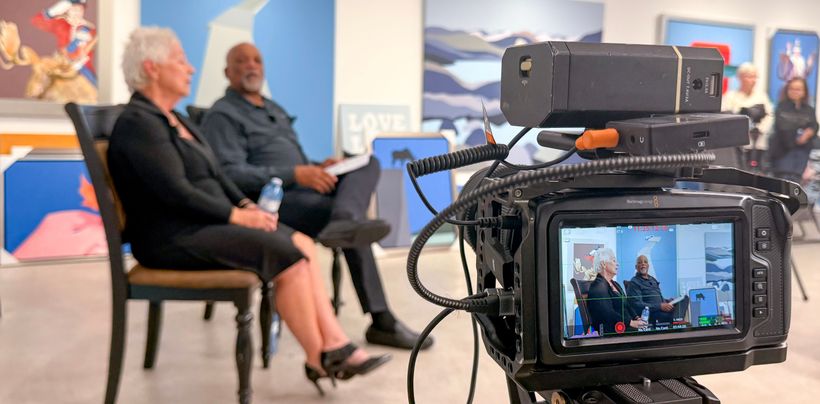
The Friday night of my birthday week, there was an epic dance party at a local brewery, organized by my wife Bonnie, the woman I met on a dance floor thirty-three years ago and have been dancing with ever since. Bonnie deserves more than a shout-out here. She deserves a medal, a monument, and honestly, serious consideration for sainthood. For over three decades, she has lived with my schemes, my pivots, and my absolute certainty that each new thing is the thing. She has never once wavered. Bonnie is the reason any of this works, and the reason that dance floor was full of people who love me. I am, by any objective measure, an extremely lucky person. I am also aware that she will read this, so I want to be clear: yes, I mean every word, and no, this does not get me out of whatever I am currently scheming.


The glow of that party remains, and I know I have truly arrived because there was even a party crasher. I named her Mona. Mona could not resist the pull of that much joy and some absolutely kickin’ eighties music. The story of Mona, the early thirties party crasher, is being reserved for another time, but know this: if your birthday celebration attracts a stranger named Mona, you are doing seventy exactly right.


The second mountain, it turns out, has a very good playlist. And if you are worried you are not quite ready for it, or that the moment may have passed, I want to leave you with this: you still have tread on your tires. So does everyone in this community.


And if you cannot keep up, at least come dance. You might surprise yourself. Just ask Mona.

I am seventy. I am on my second mountain. Come find yours.

Try to keep up.


Sue


Don't Retire...Re-Wire!


My Book is Now Available for Pre-Order

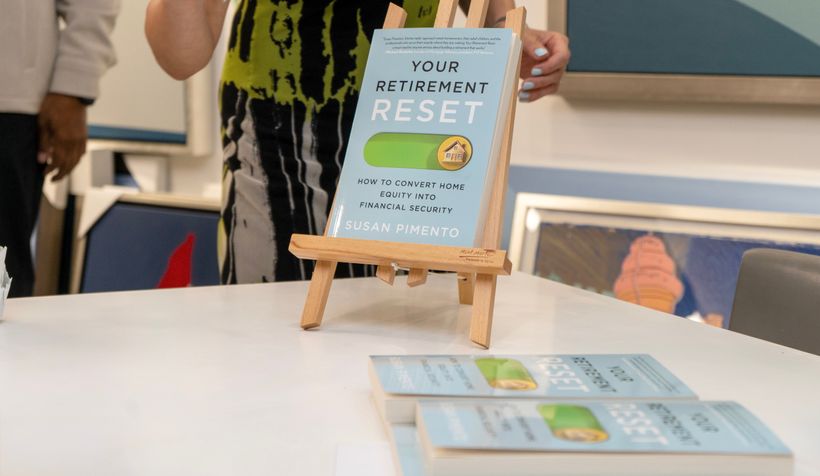
I hope you will consider pre-ordering a copy of Your Retirement Reset for you, a friend or loved one. It's available September 8, 2026 - You can now order on the ECW Press site here. And if you love supporting Canadian booksellers, please also check with your local independent bookstore. Most can easily order it for you.

Connect with:
Sue Pimento

Sue Pimento

Founder | CEO

Writer, author & presenter focused on financial literacy and retirement strategies. I advocate for the health, wealth & purpose for retirees

Pension ReformInterest RatesHome EquityMortgagesReverse Mortgages
Powered by

You might also like...

Check out some other posts from Retire with Equity

GRANDSPLAINING...It's as Bad as it Sounds! featured image

8 min

GRANDSPLAINING...It's as Bad as it Sounds!

Summary: "Grandsplaining" is a playful term that captures the all-too-familiar situation where younger generations offer unsolicited advice to older family members, often in a manner that is as condescending as it is unhelpful. This behaviour can be perceived as disrespectful and potentially creates awkward communication barriers, emotional strain, and family tension. Rooted in ageist stereotypes, it can even undermine elders' self-esteem. Here, we explore alternatives to grandsplaining, including the radical concepts of genuinely listening, asking open-ended questions, demonstrating empathy, and avoiding assumptions. These suggestions aim to help adult children support their older family members—not merely swoop in with a "fix-it" attitude. The Disrespectful Impact of Condescending Advice on Seniors When I helped older Canadians navigate financing their retirements, I often witnessed what can only be described as "grandsplaining in the wild." Conversations between adult children and their elders usually felt less like dialogues and more like lectures—one-sided advice sessions that left everyone gritting their teeth. The younger relative, likely well-meaning, would offer suggestions like, “You should downsize and buy a condo,” “Sell and rent,” or, the pièce de resistance, “Move in with family!” Judging by the withering looks from their elders, it was clear this approach wasn’t winning any "Favorite Child" awards. The older family members often felt patronized, as though their decades of life experience had been conveniently forgotten. The advice was condescending, painfully obvious, and usually impractical or unwanted. The dynamic reminded me of the cringeworthy experience of being "mansplained." And that’s when it hit me: this is “grandsplaining.” Unfortunately, grandsplaining can turn retirement planning conversations into a crash course on how not to communicate! Fortunately, with a little effort (and much less lecturing), families can turn this ship around and build stronger, more respectful relationships. What is "Grandsplaining"? In an age where communication flows freely across digital platforms, I define "grandsplaining" as a colloquial expression to describe a situation where younger generations offer unsolicited advice to older individuals, often patronizing or condescendingly. Grandsplaining typically involves a younger person explaining something to an older individual in a way that belittles their experience or intelligence. The term combines "grand" (suggesting age or status) and "splaining" (a slang term for condescendingly explaining something). While the intention behind such advice may often be well-meaning, the delivery can be patronizing, reinforcing stereotypes about aging and competence. This behaviour can significantly undermine the dignity and autonomy of seniors, leading to feelings of frustration, resentment, and a sense of being marginalized. Understanding the nuances of grandsplaining sheds light on intergenerational dynamics in these conversations. We must find a better, more respectful, and effective way to communicate with our elders considering retiring. The phenomenon of grandsplaining can manifest in various contexts, not just financing retirement—whether it’s discussing technology, lifestyle choices, healthcare options, or even social norms. For instance, a grandchild might explain how to use a smartphone app to a grandparent, assuming that the older generation cannot understand it despite their own lifelong experience with technology in different forms. Communication Breakdown In an era where financial literacy and retirement planning are more crucial than ever, "grandsplaining" has become a significant barrier to effective communication between generations. Retirees often feel overwhelmed or dismissed when their relatives provide unsolicited advice, especially if it contradicts their wants or financial strategies. This can lead to a reluctance to engage in discussions about finances, creating a rift that undermines the potential for collaborative planning. When adult children dominate conversations with preconceived notions of financial management, it stifles the opportunity for seniors to express their feelings, share their knowledge, and collaborate on effective retirement strategies. The Generation Gap in Financial Understanding Adult children may rely on outdated financial paradigms that no longer apply to their elders' realities. The economic landscape has changed dramatically over the past few decades, with shifts in real estate markets, a lack of formal retirement plans, and longer life expectancies. This generational gap can lead to misguided advice that does not consider modern challenges such as retiring with debt, little or no pension income, or rising living costs. Emotional Strain and Family Tension When relatives impose their views, it can evoke frustration, resentment, or inadequacy in their elders. This dynamic can shift the conversation from one focused on financial empowerment to one steeped in emotional conflict and shame. Instead of fostering a supportive environment for discussing retirement goals, grandsplaining can create adversarial relationships where seniors feel belittled or pressured, further complicating an already sensitive topic. Erosion of Autonomy When relatives try to impose their methods or strategies, it can undermine the seniors’ independence, making them feel a lack of control over their finances. Financial decisions are deeply personal and often intertwined with individual circumstances, goals, and values. This loss of agency not only affects financial outcomes but can also impact the mental well-being of older adults, leading to feelings of incompetence or anxiety about their financial futures. The Context of Ageism The implications of ageism are particularly concerning in a rapidly changing world characterized by technological advancements and unprecedented changes in social norms. While younger generations may genuinely wish to assist their elders in navigating these changes, their actions can reinforce negative stereotypes rather than empower seniors. Grandsplaining highlights the generational divide, creating an "us versus them" mentality that hinders collaboration and mutual understanding. Grandsplaining is deeply intertwined with ageism, a pervasive societal attitude that discriminates against individuals based on their age. Ageism manifests in various forms, including stereotypes that depict older adults as technologically inept, resistant to change, or incapable of learning. These stereotypes can lead to the marginalization of seniors within families and communities. Not cool! When younger generations adopt a condescending tone, they inadvertently reinforce ageist stereotypes that portray older adults as out of touch or incapable. This affects individual relationships and perpetuates societal narratives devaluing older individuals' contributions and wisdom. The Impact on Relationships Grandsplaining can strain relationships between generations, fostering resentment and conflict. For many seniors, unsolicited advice can infringe on their autonomy, making them feel infantilized or disrespected. I've seen firsthand how parents can react defensively to younger family members and sometimes withdraw altogether from conversations. When assistance is delivered condescendingly, it can backfire. The resulting tension may prevent meaningful conversations about important topics, such as healthcare decisions or lifestyle changes, which are crucial for seniors' well-being. The Psychological Impact on Seniors Being on the receiving end of condescending advice can also lead to diminished self-esteem and increased feelings of inadequacy. Seniors may begin to internalize the belief that they are not capable of making sound decisions or understanding new concepts, which can further exacerbate issues related to aging, such as cognitive decline and depression.  Encouraging Respectful Communication with Seniors Addressing the issue of grandsplaining requires a concerted effort from both younger and older generations to cultivate respectful communication. Here are several strategies to foster more positive intergenerational interactions: 1. Actively Listen: Younger people should prioritize active listening when engaging with seniors. This involves hearing what the older person says and validating their experiences and perspectives. Younger people can create a more respectful dialogue by acknowledging their knowledge and expertise. 2. Seek to Understand: Younger generations must approach conversations with empathy. To quote Stephen Covey's wise words, "Seek first to understand, then to be understood."  Recognizing seniors' challenges, such as health issues or technological gaps, can foster a sense of compassion. This approach can help bridge the generational divide and promote more constructive conversations. 3. Avoid Assumptions: The tendency to assume that older adults are out of touch or incapable can lead to grandsplaining. Instead, younger individuals should avoid making assumptions about seniors’ knowledge or abilities. Asking questions like “What do you think about this?” or “How do you feel about that?” can empower seniors to share their insights and experiences. 4. Offer Support, Not Solutions: Ask questions like, “What does a successful retirement look like to you? How do you plan to finance your retirement? Do you want to stay in this home? Are you open to moving? If so, where? Do you have enough in savings? How can I support you in having an independent and dignified retirement”? 5. Understand the Bigger Picture: Don’t assume that the traditional strategies of downsizing, selling, renting, or moving in with family are reasonable solutions for your elder in today’s economic environment. These retirement strategies are problematic for today’s seniors. In most cases, downsizing only works financially if the retiree is willing to move to a smaller, more affordable community. Most seniors want to stay in their communities and not move away from family, friends, churches, or familiar shops and services. Selling, renting, or moving in with family requires the sale of their significant appreciating asset. Given today's longer life expectancies, it's not always a wise choice. 6. Humour: By skillfully using humour, you can turn potentially patronizing situations into moments of connection and shared joy, ensuring that conversations with elders remain meaningful, respectful and memorable. For example, you could start the conversation this way; "The last thing I want to do is give you advice. That would be ridiculous. You’re the wise sensei here—I’m just the clueless apprentice trying to save enough downpayment to buy a shoebox of a house." This approach humorously flips the script, poking fun at the presumptuousness of unsolicited advice while emphasizing the elder's experience and wisdom. People often feel judged or vulnerable when discussing finances or significant life changes. Humour shifts the dynamic, showing that you approach the conversation as an ally, not an adversary. For example: "Talking about budgets isn’t fun for anyone—I mean, who loves math? But it’s worth it if we can figure out how to turn this retirement conversation into Canada Day rather than Labour Day!" This playful approach lowers barriers, making the discussion feel collaborative rather than critical. Laughter fosters connection. Sharing a laugh creates a sense of camaraderie, making it easier for people to open up about sensitive topics. When elders feel that you’re not judging them but partnering with them—and can make them smile—they’re far more likely to trust your intentions and take your advice seriously. Humour invites the other person to join the conversation, breaking the ice and encouraging them to share their thoughts. It sets a tone that the conversation is a dialogue, not a lecture. Example: "You’ve been making great financial decisions for decades. I’m here to ensure we don’t accidentally end up with a basement full of K-tel Veg-O-Matics… unless that’s the plan?" This allows them to laugh, respond, and engage while respecting their autonomy. A word of caution.  Humour is only effective when paired with genuine respect and sensitivity. Pay attention to your elder's reactions and adapt if they seem uncomfortable or unamused. The goal is to build rapport, not to win laughs at their expense. Using humour skillfully, you can turn potentially patronizing situations into moments of connection and shared joy, ensuring that conversations with elders are respectful and memorable. Before You Go Good financial planning thrives on clear communication, but grandsplaining tends to turn productive discussions into monologues that undermine elder autonomy and trigger emotional static. To create a more harmonious environment, families should swap their megaphones for listening ears and embrace a collaborative approach that respects seniors' wisdom and frames younger relatives’ financial theories as conversation starters, not TED Talks. After all, when it comes to navigating retirement planning, a little less "know-it-all" and a bit more "let’s figure it out together" can go a long way. Think of it as building a bridge, not a lecture podium—because nothing says "family unity" like tackling compound interest together! Don’t Retire…Re-Wire! Sue My Book is Now Available for Pre-Order I hope you will consider pre-ordering a copy of Your Retirement Reset for you, a friend or loved one. It's available September 8, 2026 published by ECW Press - You can now order at Indigo or Amazon. And if you love supporting Canadian booksellers, please also check with your local independent bookstore. Most can easily order it for you.

The Grace to Fail: My MBA Journey (Part 3) featured image

8 min

The Grace to Fail: My MBA Journey (Part 3)

I have a confession to make. My wife Bonnie and I are addicts. Not the kind that requires an intervention, exactly, but close. We are addicted to home improvement. We are always planning the next upgrade, the next project, the next thing to tear apart and make better. It gives us genuine pleasure and a profound sense of accomplishment. Bonnie leads most of these endeavours. She is remarkably capable with power tools and can pull off a tool belt like she is strutting down a Home Depot runway (aisle). Our shared obsession has even spawned a series of Facebook posts called the 2 Capable Women, where we document everything from felling trees to the deeply humbling art of Ikea assembly. So there we were, driving in traffic, and Bonnie was telling me about her next project: removing the circa-1960 wood panelling and replacing it with modern shiplap. Mid-conversation, she went quiet for a moment and said, almost to herself, “I guess I need to allow myself the grace to fail.” I nearly drove off the road. You must understand something about Bonnie. She is a self-declared perfectionist. Not casually. She is committed to being a perfectionist at being a perfectionist. So, hearing those words come out of her mouth, unprompted, while discussing a renovation project, was like hearing your accountant quote Oprah. It stopped me completely. The truth has a certain ring to it. I heard that bell loud and clear. Because sometimes wisdom does not arrive in a lecture hall or a leadership book or a TED talk. Sometimes it arrives in a car, in traffic, from the person sitting next to you holding a coffee and thinking about shiplap. That phrase has not left me since. Many of us do this. We replay mistakes endlessly, convinced that self-criticism is somehow productive. We lie awake revisiting conversations and missteps, assuming that if we beat ourselves up long enough, we will emerge wiser. All we accomplish is a thorough self-beating followed by self-flagellation. Lots of noise. Zero progress. Zero calories burned. This is not just a problem for people climbing mountains or starting businesses. It plays out in perfectly ordinary moments. You send an email and immediately wish you had worded it differently. You make a comment at dinner that lands wrong and spend three days replaying it. You make a small error at work and carry it around like luggage for a week. The inner courtroom convenes regardless. Most of us are not failing spectacularly. We are just living, occasionally getting things slightly wrong, and treating that as evidence of something deeply and permanently wrong with us. It is not. It is just Tuesday. I have been thinking about this a lot lately because I am in the middle of my MBA at the Sprott School of Business. I wrote about My MBA at age 69 in Part I and Part II. Back in graduate school after four decades in the workforce, opportunities to feel uncomfortable, uncertain, and occasionally like you have wandered into the wrong building are plentiful. A recent assignment on crafting Team Charters and enhancing my leadership skills inspired me to write a personal manifesto for my graduate studies and to take a closer look at myself. You can read mine here. While working through it, I made a surprising discovery. Most of the commitments I was making to myself had nothing to do with school. They were about life. Read the instructions carefully. Ask for help sooner. Pay attention to what your emotions are trying to tell you. Trust your experience. Hold yourself to your own standards. And this one, which stopped me cold, and sounded very familiar: Allow yourself the grace to fail. There was that bell again. Those six words turned out to be the most important thing I wrote. Not because failure is something to celebrate, but because the willingness to risk it is the price of admission for virtually everything worth doing. Failure is not a topic most of us rush toward. It is about as pleasant as stubbing your toe in the dark. Yet every meaningful thing I have ever done required me to risk it. Starting a new career. Leading a sales team. Launching a business. Climbing a mountain. Writing a book. Going back to school at 69. None of it came with guarantees. All of it came with uncertainty, mistakes, and moments where I genuinely wondered whether I had lost my mind. The jury is still out on some of those. The irony is that failure and growth are inseparable. Dweck (2006) found that people who view setbacks as learning opportunities rather than evidence of inadequacy are more likely to persevere and ultimately succeed. Duckworth (2016) agreed, and in Grit, one of my favourite books, long-term success depends less on talent and more on the willingness to keep going after things fall apart. Neff (2023) added that people who respond to failure with self-compassion rather than harsh self-judgment show greater improvement and are more likely to try again. The friction produced by failure is often exactly what generates learning, but only if we give ourselves enough grace to stay in the game. I see this everywhere. Professionals are staying in jobs they no longer enjoy because starting over feels too risky. Retirees hesitate to try something new because they might not be good at it right away. Students who will not ask a question because they do not want to appear uninformed. And if I am being honest, I see it in myself. Every time I hesitate to contribute to class because everyone else seems younger and sharper. Every time I catch myself wondering whether I belong in the room. One exercise has helped me enormously. When I catch myself spiralling into negative self-talk, I imagine my five-year-old self standing beside me, listening. Would that little girl feel encouraged? Not a chance. So why do we think inner dialogue helps us? A recent example: I made a point in a meeting that got a polite nod and complete silence. You know the silence. The one that could mean anything from “interesting” to “what on earth did she just say?” I replayed that moment for two days. Eventually, I asked a colleague how the meeting had gone, and she said she barely remembered it. The forensic investigation was conducted entirely in my own head. I am not suggesting we lower our standards. We should hold ourselves accountable, learn from our mistakes, and strive to do better. But there is a meaningful difference between accountability and cruelty. Between reflection and rumination. Between learning from a mistake, and building a summer cottage on top of it, and checking in every long weekend. I worry about what this means for the generation behind us. Research by Professor Gabriel Rubin at Montclair State University found that despite living in one of the safest periods in history, Gen Z perceives risk virtually everywhere (Rubin, 2023). They have grown up knowing that at any moment, someone has a phone. One stumble, one terrible dance move, and the clip is posted before you catch your breath. Permanent, searchable, shareable public failure is something entirely new, and the consequences are showing up in surprising places. Monocle magazine noted young people standing completely still on nightclub dance floors, phones in hand, unable to lose themselves to the music. The club has become a stage, and the crowd has become the content. Instead of dancing, people film. Instead of connection, there is performance. This is not a small thing. Dancing is how humans have always signalled availability, built trust, and found each other. It requires a willingness to look slightly absurd. If we have raised a generation so terrified of being captured mid-stumble that they will not move to the music, we have handed surveillance culture a victory it does not deserve. Calculated risks lead to new opportunities, foster innovation, and teach lessons that comfort never could (Rubin, 2023). Risk aversion makes short-term sense. As a way of life, it quietly closes doors that were never meant to stay shut. Give yourself and the young people around you, explicit permission to be unpolished in public. To dance badly. To say the wrong thing and survive it. The phone will always be there. So, fortunately, will the music. Here is what I keep learning inside this MBA: wisdom arrives disguised as failure. The assignments that challenge me teach me more than the ones that come easily. The questions I most resist asking are usually the most important. I did not expect graduate school to teach me this. Then again, I did not expect to be here at seventy. I no longer think in terms of Wins and Losses. Those categories are too simple. I think in terms of Wisdom and Learning. Success builds confidence. Setbacks build insight. Both move us forward. Read that again. So the next time you find yourself at two in the morning replaying something you said three days ago, ask whether your five-year-old self would find your internal monologue useful. If the answer is no, offer yourself a little grace. Which brings me back to Bonnie. Last weekend, she pulled off that 1960s panelling. Every last piece. It was messy and uncertain, and at several points she was unsure what she would find underneath. There were surprises. There were moments of doubt. She kept going anyway. By the end of the weekend, the shiplap was going up, clean and bright and exactly right. She did not do it perfectly. She did it anyway. And it is beautiful. That is the whole lesson, right there, delivered by a woman with a pry bar and a tool belt, on a weekend in June. Failure is not the enemy. Most of the time it is just fear wearing a funny hat. And if you are lucky, it will teach you something genuinely worth knowing. Sometimes it comes from a research paper. Sometimes it comes from your wife, in a car thinking out loud about shiplap. Either way, listen for the bell. Writing my manifesto was one of the most clarifying things I did this year. Not because it solved anything, but because it forced me to decide, on paper, who I was going to be when things got hard. I want that for you, too. So I created the ReWirement Manifesto: a simple template for anyone navigating a new chapter, a big transition, or simply a Tuesday that did not go as planned. It is not a bucket list. It is not a vision board. It is a set of honest commitments you make to yourself, in your own words, that you can return to when your inner courtroom calls you to order. Download your free ReWirement Manifesto template here. Fill it in. Keep it somewhere you can find it. And the next time you are staring at a wall of 1960s panelling, wondering if you are in over your head, remember: the grace to fail is not a consolation prize. It is the whole point. Don’t Retire…Re-Wire! Sue My Book is Now Available for Pre-Order I hope you will consider pre-ordering a copy of Your Retirement Reset for you, a friend or loved one. It's available September 8, 2026 published by ECW Press - You can now order at Indigo or Amazon. And if you love supporting Canadian booksellers, please also check with your local independent bookstore. Most can easily order it for you.

Seniors and AI: What Could Possibly Go Wrong? featured image

9 min

Seniors and AI: What Could Possibly Go Wrong?

Let’s be honest: we’ve weathered every tech wave they’ve thrown our way. Rotary phones. Dial-up internet. The BlackBerry. And somehow, we’ve made it to AI. The robots know more about our shopping habits than our spouses do—and honestly, they’re better listeners. We’ve Survived Every Tech Wave. AI Is Just the Next One. Remember when the internet first emerged, and everyone claimed it would never take off? Shopping online was considered silly ("Who would buy shoes without trying them on?"), And email sounded like something only NASA engineers would use. Fast forward a few decades, and now you can't even renew a driver's licence without the internet. So much for "it'll never last."  It all began innocently enough. The first cordless phone was freedom on a frequency—you could step outside, yell "Can you hear me now?" and feel unstoppable. Then came remote controls, launching the golden era of couch-based cardio: jumping up every five minutes to find the one that actually worked. (Still missing: one VCR remote, circa 1987.) Next came AOL. "You've got mail!" was our first digital dopamine hit. Then the BlackBerry arrived—part phone, part pager, part fashion statement. It was heavy, expensive, and glorious. Until, like a hot potato, we all dropped it for the iPhone—sleeker, lighter, and small enough to fit in yoga pants. The iPod Nano followed. Goodbye radios, hello playlists! From there came Google, streaming, apps, and clouds (the digital kind, not the ones that ruin golf). And now… drumroll, please… Artificial Intelligence. The "It'll Never Last" File: Greatest Misses Edition We've encountered the skeptics before: • The Internet: "No one will use it." • Online Shopping: "People won't buy shoes sight unseen." • Email: "Who needs digital letters?" • Voice Assistants: "Talking to a speaker will freak people out." • AI: "It's just hype—like the Segway for brains." Well, the Segway is still technically around, but you're not riding one to the golf course. Meanwhile, AI is everywhere—and yes, seniors are joining the party. AI: The Latest "Fad" That Isn't If you think AI is a passing craze, you probably also dismissed online shopping and email. (Confession: I once thought, "Who would ever enter their credit card number online?") But AI isn't a gadget—it's the next era. As permanent as gravity, and just as invisible until it knocks something over. Use of generative AI among older adults throughout North America is growing. A Leger Research study revealed that 1 in 3 Canadians 55+ have tried an AI tool. We can ignore it, "poo-poo" it, or embrace it. But always remember: Resisting progress will not slow it down one byte. Why This Time Is Different Here's the twist: today's seniors aren't like our parents' generation. We're Boomers with bandwidth. We were the first to type with our thumbs, track our steps before it was trendy, and FaceTime the grandkids instead of mailing Polaroids. We've earned our tech credentials. Now it's time to flex them in the AI era. Seniors Meet AI: A Beautiful Disaster AI promised to make life easier. Instead, for many seniors, it's like adopting a mischievous grandchild who never listens and occasionally orders you twelve pineapples by accident. Let's be honest—we've all had those moments. Voice Assistants: The Frenemies "Alexa, play Staying Alive." "Calling 911. You appear to be in distress." "Siri, remind me to take my pill at 8." "Texting Phil at 8." "Hey Siri, stop listening." Silence. "Hey Siri, play jazz music." Still silence. (Give it a minute… you'll get it.) These so-called "assistants" are like toddlers with Wi-Fi—they only hear half of what you say, and always the half that causes chaos. The Sitcom Nobody Asked For Seniors using AI might just be the world's best sitcom waiting to happen: • Episode 1: ChatGPT Writes My Will (and Leaves Everything to Wi-Fi) • Episode 2: Siri Joins My Book Club and Never Stops Talking • Episode 3: I Asked Alexa to Play Jazz, and She Ordered a Jacuzzi Coming soon to streaming services everywhere—as soon as we find the remote. Texting While Senior: A New Dialect Emerges If you think AI is confusing, try texting with seniors. Somewhere between autocorrect and abbreviations, a new language has evolved—part English, part comedy special: BTW – Bring The Wheelchair ROFL... CGU – Rolling On The Floor Laughing... Can't Get Up LOL – Living On Lipitor BYOT – Bring Your Own Teeth TGIF – Thank Goodness It's Four (Early Bird Special) FWB – Friend With Beta-Blockers TTYL – Talk To You Louder LMDO – Laughing My Dentures Out GOML – Get Off My Lawn Honestly, AI could spend years decoding that list and still ask, "Did you mean BYOB?" "But What About Privacy?" (Spoiler: That Ship Has Sailed) Ah yes, the Privacy Protectors—those well-meaning friends who whisper, "Don't use AI, they're stealing your identity!" Spoiler alert: that ship already sailed. Siri and Alexa have been eavesdropping for years. Google knows where you've been, what you've read, and that you googled "how to delete Google history." Uber keeps a record of every trip you've ever taken—yes, even that midnight McDonald's run—and there's no "forget" button. Most of us have already traded privacy for utility. And honestly? It's not always a bad deal.  I'm happy to share a few megabytes of data if Apple can tell me where I parked in the underground garage with seventeen identical "P2" levels. That's not a conspiracy—that's a lifesaver. AI saves time, surfaces better options we didn't know existed, and delivers instant answers. No more hunting for the manual to your smoke detector—just snap a photo, and AI tells you exactly which button to push (and which one to avoid). We're not losing control; we're gaining convenience. And at this stage of life, that's worth more than a few anonymous data points. Ways Seniors Can Actually Use AI (and Enjoy It) AI tools are making daily life easier for older adults in practical, accessible ways. Here's how you can put them to work: The “Start Here” Ladder: Build Your AI Confidence One Rung at a Time Nobody learns to swim by jumping into the deep end. AI is the same. The trick isn’t to master everything at once—it’s to start somewhere low-stakes, build a little confidence, and move up when you’re ready. Here’s a simple progression that works: Level 1: Voice Assistants Risk Level: Minimal Fun Level: Surprisingly High ------------------- Start here if you haven’t already. Ask Alexa or Siri to set a timer, play music, check the weather, or settle a dinner-table argument. No typing required. Level 2: AI Chat Tools Risk Level: Low (with privacy settings activated) Usefulness Level: Eye-Opening ------------------- This is the “brilliant friend who knows everything” rung. Tools like ChatGPT or Google Gemini are free to use and can answer any question—no judgment, no wait times, no office hours. Try drafting a birthday message. Ask it to explain a medical term your doctor used. Get it to suggest a one-week meal plan. You type, it answers. Think of it as Google, but one that actually understands your question. A Note of Caution (Read This): Before you type anything personal into an AI app, go into the app’s privacy settings and switch off chat history/training so you don’t expose personal information. ChatGPT users can navigate to Settings > Data Controls and turn off "Improve the model for everyone". This prevents your conversations from being used to train future models. For extra privacy, disable "Chat History & Training," turn off memory features, or use the temporary chat feature. Level 3: Health and Wellness Wearables Risk Level: Low Payoff : Potentially Life-Saving ------------------- An Apple Watch or Fitbit isn’t simply a fancy step counter. These devices now detect irregular heart rhythms, monitor blood oxygen levels, track sleep quality, and—crucially—detect falls and automatically alert emergency contacts. For anyone living independently, that last feature alone makes it a worthwhile investment. You don’t need to know exactly how it works; just wear it. Level 4: Smart Home Tools Risk Level: Medium Payoff: You’ll Wonder How You Managed ------------------- Smart thermostats, video doorbells, voice-controlled lighting—these are AI tools you set up once and forget. The real win here is independence. Being able to control your home environment with your voice, check who’s at the door from your phone, or have the heat adjust automatically before you wake up: these aren’t luxuries. For many of us, they’re what make staying in our own homes longer a real and practical option. Level 5: AI-Assisted Financial Tools Risk Level: Higher. Stakes Level: Real. So Tread Carefully and Deliberately ------------------- This level is for when you’re comfortable and curious—not before. AI can now help you understand tax documents, summarize financial statements, compare mortgage products, and even flag unusual account activity. These tools are genuinely powerful. But they work best alongside a trusted human advisor, not instead of one. Think of AI as the research assistant who preps the questions. Your financial advisor is still the one who answers them.  The key is this: you don’t have to climb the whole ladder today. Pick one level. Try it for a week. Laugh when it goes sideways. Then decide if you want to go higher. Writing & Editing: Draft emails, thank-you notes, or letters with the right tone—ChatGPT handles over 1 million daily health-related queries from seniors, including help preparing questions for doctor visits Travel Planning: Find flights, plan itineraries, and even pack your suitcase virtually Financial Education: Ask about investments or taxes—AI explains without the jargon Health & Fitness: Wearable devices like Apple Watch and Fitbit track exercise, monitor heart rate, detect falls, and can notify help if you're in an accident Smart Home Control: Voice-activated systems can adjust temperature, turn lights on and off, unlock doors, and control security—all with simple voice commands Cooking: "AI, make a meal with tuna, yogurt, and hope" Entertainment: Jokes, playlists, stories, or party ideas Learning: Teach yourself a language, an instrument, or how to fix the Wi-Fi (again) Want to get started? OATS published "AI for Older Adults," a comprehensive guide covering health, finance, and lifestyle applications specifically for seniors. It's available at oats.org. The Serious Bit: AI and Your Portfolio Here’s where I put on my serious hat for a moment. The U.S. stock market is currently top-heavy with AI darlings—Nvidia, Microsoft, Alphabet, and Meta. Great companies. Exciting times. But retirement portfolios are not the place for a single-themed bet. If your retirement savings are overloaded with AI stocks, a correction could make your portfolio look like your Fitbit step count on a February long weekend. Diversify. Always. Love tech. Just don’t go steady with it. For more on this topic, check out Part 1 of my post: The Retirees' Guide to Market Volatility: Building Your Financial Safety Net Embrace AI, Don't Fear It AI is here to stay. Think of it as your digital assistant, not your replacement. Our generation has lived through it all: dial-up, disco, dot-com booms, and Bitcoin. If anyone can handle the rise of the machines, it's us. We figured out VCRs (eventually), navigated online banking, and mastered Zoom backgrounds (some better than others). And no, blurred does not count as a background. So fire up your curiosity. Try ChatGPT to plan your next vacation, use Google Gemini to get thoughtful answers to complex questions, or tell Alexa to crack a joke. (She's still learning… but she's improving.) We’ve adapted before. We’ll adapt again. That’s actually what we do. One baffling software update at a time. And here’s what no algorithm will ever replicate: Us. Our humour. Our resilience. The comedy gold of a pocket-dial to our X at 1am. The triumph of finding our reading glasses—while wearing them. AI is smart. But we’re wiser. And that still counts for a lot. So, here's the deal: AI can predict the stock market, diagnose your rash, and write a sonnet in seventeen seconds. But It still can't find your car keys, remember why it walked into the kitchen, or laugh until it snorts at its own joke. We've survived disco, dial-up, the dot-com crash, and that one Zoom call where someone didn't realize their camera was on in the bathroom. We will absolutely survive this, too. AI isn’t here to replace us; it’s here to keep up with us. And frankly, after decades of dealing with actual humans, a very smart, endlessly patient, never-hangry assistant sounds like an upgrade. So, when the robots eventually do take over, they'll need someone to tell them to slow down, dress properly, and call their mother. That's where we come in. Same as it ever was. One baffling software update at a time. Need more guidance? Here are some helpful resources: • AARP's 2025 Tech Trends Report – Research on how older adults are using technology • Bethesda Health Group's AI Guide for Seniors – Practical everyday applications • Ultimate Senior Resource: Top 10 AI Tools – Detailed reviews of the best AI tools for older adults Don't Retire...ReWire! Sue Want more of this? Subscribe for weekly doses of retirement reality—no golf-cart clichés, no sunset stock photos, just straight talk about staying Hip, Fit & Financially Free.

View all posts