
UD experts break down the 2026 World Cup

May 13, 2026

2 min

Tom KaminskiMatthew RobinsonAmit Kumar

As the world gears up for the 2026 FIFA World Cup, experts from the University of Delaware are available to provide timely insight on the science, business, and human impact behind the global tournament.


Player Safety, Concussions and the Future of the Game


Tom Kaminski, professor of kinesiology and applied physiology, is a leading authority on player safety and head injuries. As the sole U.S. representative on FIFA’s Heading Expert Group, Kaminski is helping shape international guidelines around heading in soccer—particularly for youth athletes. He can speak to concussion risks, prevention strategies, and how evolving safety standards are influencing the modern game.


Joining him is Tom Buckley, who also specializes in concussion research and athlete health, offering additional perspective on injury trends and recovery in elite competition.


The Business of the World Cup: Tourism and Global Impact


Matt Robinson from UD’s Lerner College of Business and Economics explores how mega-events like the World Cup drive tourism, economic growth, and global connection. Robinson can discuss how host cities benefit, the long-term economic ripple effects, and how sports act as a powerful unifier across cultures.


Youth, Development and the Next Generation of Fans


Sara Goldstein brings expertise in adolescent development, offering insight into how traditions with family shape youth identity, social development, and engagement with physical activity. Her perspective is especially relevant for younger audiences experiencing the World Cup through schools and community programs, including UD’s Lab School initiatives.


Inside the Game: Sports Analytics in Action


With the rise of data-driven performance, UD’s new Sports Performance Analytics major is preparing students to analyze gameplay at the highest level.


Martin Heintzelman, department chair, can connect media with program leaders and practitioners including Jack Davis and Christina Rasnake, who are helping students apply real-time analytics to global competitions like the World Cup.


The Science Beneath the Game: Playing Surfaces


World Cup matches are required to be played on natural grass—a costly and complex requirement, especially for indoor stadiums. Erik Ervin can discuss how turfgrass systems have evolved, the science behind maintaining elite playing surfaces, and the massive investment required to meet international standards.


Why Watching Together Matters


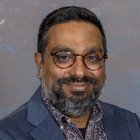
Amit Kumar studies the psychology of happiness and shared experiences. He can speak to why gathering to watch World Cup matches—whether in stadiums, bars, or living rooms—boosts well-being and strengthens social bonds, making the tournament as meaningful off the field as it is on it.


Connect with UD experts to explore every angle of the 2026 World Cup – from the pitch to the people. Email mediarelations@udel.edu to connect with these experts. 

Connect with:
Tom Kaminski

Tom Kaminski

Professor, Kinesiology and Applied Physiology

Prof. Kaminski is a leading expert on issues related to purposeful headers in interscholastic and intercollegiate soccer.

Chronic Ankle InstabilityRepetitive Head ImpactsRecovery Assessment
Matthew Robinson

Matthew Robinson

Professor, Sport Management

Prof. Robinson is an expert on international sport development.

CoachingSports as a Diplomatic ToolInternational Sports GovernanceU.S. Sports ModelOlympics
Amit Kumar

Amit Kumar

Assistant Professor of Marketing

Professor Kumar’s research focuses on the scientific study of happiness.

HappinessConsumer BehaviorSocial PsychologyBehavioral Decision MakingKindness
Powered by

You might also like...

Check out some other posts from University of Delaware

How Electric Vehicles Could Power Homes and Support the Electric Grid featured image

1 min

How Electric Vehicles Could Power Homes and Support the Electric Grid

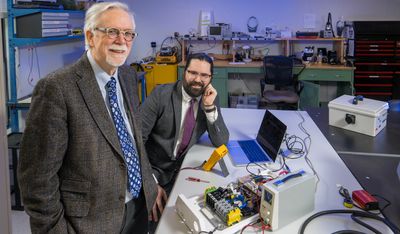
University of Delaware researchers Willett Kempton and Rodney McGee are advancing technologies and standards that allow electric vehicles to send electricity back to homes and the power grid. Known as vehicle-to-grid (V2G) technology, this approach could help consumers manage electricity costs, provide backup power and improve grid reliability. Kempton pioneered vehicle-to-grid research at the University of Delaware nearly three decades ago, helping establish the foundation for using electric vehicles as mobile energy storage systems. McGee chaired the development of SAE J3068, an automotive communications standard that supports more affordable bidirectional charging. As automakers, including Ford, move toward bringing bidirectional power technology to more affordable electric vehicles, Kempton and McGee can explain how it works, what it means for consumers and utilities, and how it could shape the future of transportation and energy. Areas of Expertise • Electric vehicles • Vehicle-to-grid (V2G) technology • Bidirectional charging • Energy storage • Electric power grids • Automotive engineering • Renewable energy • EV charging standards To connect with Kempton directly and arrange an interview, visit his ExpertFile profile and click on the "contact" button. Interested journalists can also email MediaRelations@udel.edu to email Kempton or McGee.

Two years after the 2024 election, where does civil discourse stand? featured image

1 min

Two years after the 2024 election, where does civil discourse stand?

Election season has brought the expected vicious political campaign ads, heated online disagreements and difficult dinner table conversations with family and friends. But the University of Delaware’s Timothy Shaffer says there’s still room for civil discourse. Shaffer, UD’s inaugural Stavros Niarchos Foundation (SNF) Chair of Civil Discourse, studies how people can engage across significant differences while maintaining the relationships and democratic institutions that make disagreement possible. As chair of UD's SNF Ithaca Initiative, Shaffer works with students, educators and civic leaders to develop and practice constructive engagement across differences. He can comment on the following through the lens of the first midterm election since the vitriolic 2024 general elections. • What has changed since 2024: How have the past two years affected the way Americans talk about politics, disagreement and democracy? • Polarization and dialogue: Is political disagreement itself the problem, or is the greater challenge engaging constructively across differences? • The role of disagreement: Why civil discourse doesn't require consensus and how listening to competing perspectives can strengthen democratic engagement. • Politics and personal relationships: How to navigate political differences with family, friends, neighbors and colleagues without letting disagreements become personal. • Social media and the 2026 election: How online environments shape political conversations, what Shaffer expects as Election Day approaches, and how people can engage more constructively across differences. To reach Shaffer and arrange an interview, visit his profile page and click on the "contact" button. Interested reporters can also send an email to MediaRelations@udel.edu.

Blood Clots Can Sideline Elite Athletes. Could Microrobots Offer a New Approach? featured image

1 min

Blood Clots Can Sideline Elite Athletes. Could Microrobots Offer a New Approach?

Blood clots have sidelined or ended the careers of several elite athletes, drawing attention to a potentially life-threatening condition. The University of Delaware's Sambeeta Das is part of a team that has developed tiny, magnetically guided robots that could offer a new approach to removing such blockages. The list of athletes affected by blood clots includes NBA champion Chris Bosh, whose career ended after recurring clots; tennis great Serena Williams, who survived two life-threatening pulmonary embolisms; San Antonio Spurs center Victor Wembanyama, who was shut down in February 2025 when deep vein thrombosis was discovered in his right shoulder; and Philadelphia Eagles quarterback Jalen Hurts, whose recent diagnosis of blood clots in his lungs has drawn national attention. In a published study, Das and her colleagues demonstrated that magnetic microrobots could mechanically break apart clusters of human liver cancer cells and clear them from narrow channels designed to model blood vessels. The robots used mechanical forces rather than drugs or chemicals to disperse the clusters. The research offers an early proof of concept for using microrobots to remove unwanted cellular material in confined spaces. Das can discuss how the technology works, its potential application to blood-clot removal, the challenges of targeting blockages inside the body, and what further research is needed to explore its use in patients. To contact Das and arrange an interview, visit her profile and click the “Contact” button. Reporters can also email MediaRelations@udel.edu.

View all posts