

Seniors and AI (Part 2): Exercise Caution

Jun 3, 2026

6 min

Sue Pimento

If you haven't read Seniors and AI (Part 1) What Could Possibly Go Wrong?, catch up here.


My friend Gloria told me she asked her AI assistant what to do about a “sore knee,” and it suggested she might be experiencing “symptoms consistent with early-stage gout, possible DVT, or referred pain from lumbar stenosis.” Gloria is 74, lives alone, and spent the next three hours convinced she was dying. She was not. She had slept on the couch in an awkward position.


This is Part 2 of our look at Seniors and AI. If Part 1 was about the laughs, Part 2 is where we put on our reading glasses and pay attention. When technology moves from ordering groceries to offering medical advice or emotional support, the stakes get considerably higher than an accidental pineapple on your pizza.


AI and Medical Advice: The Good, the Bad, and the “You Googled What?”


Let’s give credit where it’s due. AI genuinely helps in healthcare in meaningful ways. It’s available at 2 AM without judgment. It translates medical jargon into plain English. It can help you walk into a doctor’s appointment with better questions instead of the usual panicked stare.

But here’s what it cannot do: see you, touch you, or notice you’re limping. It can’t smell an infection, hear the wheeze in your chest, or detect the subtle signs that something is wrong. At its core, it is an elaborate and very polite Google search. Not a doctor.


Takita et al. (2025), in a systematic review and meta-analysis published in Digital Medicine, found that the overall diagnostic accuracy of generative AI models is about 52 percent. Read that again. Fifty-two percent. Suitable for a second opinion, nowhere near sufficient to replace an experienced clinician. And yet, we hear a confident-sounding response and think, “Well, the computer said so.” Confidence and correctness are not the same thing, a lesson most of us learned the hard way in our thirties.


When AI Is Safe (and When It Is Decidedly Not)


Go ahead and ask AI about:

  • What does that lab term on your bloodwork actually mean
  • Common side effects of medications you’re already taking
  • Questions to bring to your next appointment
  • General information about a health condition


Do not ask AI about:

  • Anything you’d describe as “just making sure it’s not something bad”?
  • Chest pain, sudden numbness, or anything that begins with “I’ve never felt this before”
  • Whether to stop taking a medication
  • Whether your symptoms are serious enough to go to the ER


Think of AI as the helpful intern, not the chief medical officer. You’d let the intern look something up for you, but you wouldn’t let the intern prescribe your blood pressure medication.


Bottom line: if you wouldn’t trust your toaster to measure your blood pressure, don’t trust a chatbot to diagnose your heart.


AI Therapy: Comfort or Catastrophe?


Mental health chatbots promise empathy. Let’s be precise about what that means: they simulate compassion, not feel it. There is a difference, and it matters.


A Stanford University study (Moore & Haber, 2025) warns that therapy chatbots can reinforce stigma or provide genuinely unsafe responses. They can’t detect tone, see tears, read a room, or call for help when things turn dark. This is especially concerning for older adults. Loneliness and depression are common among seniors and are routinely dismissed as “just slowing down” or “getting older.” That’s not aging. Those are invisible illnesses that deserve real attention and real human connection.


The Signs We Miss


According to the National Institute on Ageing’s 2025 Ageing in Canada Survey, 57 percent of Canadians over 50 report feeling somewhat or very lonely, and 43 percent are at risk of social isolation. These figures haven’t changed since 2022. This is not a fringe problem. It is a quiet epidemic hiding in plain sight.


Watch for these signs in yourself and in the people you love:

  • Pulling back from activities they once loved
  • Sleeping too much or not nearly enough
  • Loss of appetite or unexplained weight changes
  • Talking nonstop when the company finally arrives (that’s hunger or severe loneliness, not chattiness)
  • Inventing reasons to call or visit
  • Self-deprecating humour that feels a little too real.


Here’s a small but important piece of advice: don’t ask, “Are you lonely?” You’ll get a cheerful “Of course not!” Pride and independence run deep, especially among a generation that survived things we can’t imagine.


Instead, act as if. Drop by with coffee. Ask for help with something they are well versed in. Bring the dog. Go for a walk. Sit quietly and watch a show together. Share a meal. Loneliness doesn’t always need a conversation. Sometimes it just needs to know someone showed up.


What Your Elder Is Thinking (But Will Never Tell You)


Tread carefully here. These thoughts tend to live in the quiet spaces between sentences, felt but rarely spoken.


  • How much time do I have? Have I done enough?
  • Will my money run out before I do?
  • Will anyone remember me?
  • Do I still matter?
  • Why do I feel so sad? Why are my friends getting sick and slipping away?
  • Will I get sick? Who will look after me?
  • Do my children know I love them?
  • What if I start to forget? The creeping fear of losing names, faces, the stories that make life feel like mine.
  • Am I a burden? (This one usually hides behind a joke.)
  • What if my best days are already behind me?


Some of these will surprise you. Some won’t. Some will make you want to pick up the phone right now. That’s the right instinct. You don’t need to fix these feelings. Sometimes, sitting quietly with someone in the silence between their words is the most healing thing you can offer.


For the Family: What to Watch For and What to Do


A quick note for the kids, grandkids, nieces, nephews, and anyone who forwards funny videos to their grandparents: your elders are going to experiment with AI. Probably the same way you experimented with your first beer or a regrettable tattoo: curious, enthusiastic, and occasionally overconfident.


Watch for these warning signs:

  • Increasing withdrawal from real-world activities and people
  • Confusion about what is real versus AI-generated
  • Replacing actual conversations with chatbot exchanges
  • Acting on AI medical or financial advice without verifying it with a professional
  • Being secretive or evasive about what they’re doing online


Here is what you can do:

  • Connect regularly. Ask what they’re learning or laughing about.
  • Create opportunities for in-person time. FaceTime counts in a pinch, but in-person is irreplaceable.
  • Know when to call the doctor. Know when all they need is your time.
  • Don’t lecture. Don’t infantilize. Just stay connected.


The best firewall against the risks of AI is not better technology. It’s better relationships.


The Real Threat: Replacing Connection


Here is the uncomfortable truth. AI is tempting. It’s always available, never interrupts, doesn’t judge, and responds instantly without getting distracted by its own problems. For someone who feels lonely, invisible, or like a burden, that can feel like a lifeline.


But it’s a false one. AI cannot hold your hand or share a meal. It can’t laugh at your jokes in a way that truly counts. It cannot offer the warmth of human presence, which is what we need most, especially as we age.


The danger isn’t primarily that AI will give bad medical advice, though it might. The danger is that it will replace human connection altogether. And that is a problem no algorithm can solve.


CTRL ALT DEL: Now Go Call Someone


AI is a tool. Part marvel, part mistake, and entirely dependent on who holds it. Use it wisely. Enjoy the entertainment. Stay curious. And remember who is actually in charge.

Technology will keep getting smarter. It will not get warmer. It will not hear the sound of your laugh, remember the story you’ve told seventeen times, or show up at the door with soup when you’re not feeling well. That is still us. That will always be us.


So yes, let Gloria ask her AI about her knee. But let’s also make sure someone calls Gloria on Tuesday.


Key Takeaways

  • Use AI for information, not diagnosis or treatment.
  • Stay alert to signs of loneliness in yourself and in the people you love.
  • Stay genuinely connected with older family members and friends.
  • When in doubt, choose the human over the algorithm.


The greatest upgrade to AI isn’t a newer version. It’s showing up.


Sue


Don't Retire...ReWire!


My Book is Now Available for Pre-Order

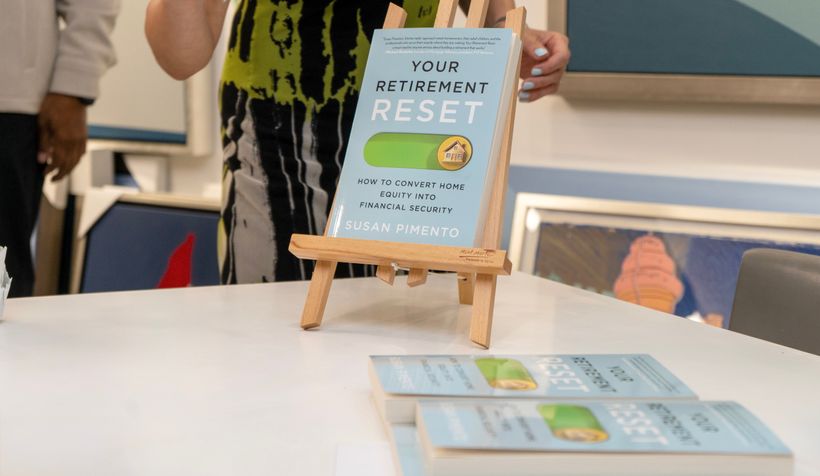
I hope you will consider pre-ordering a copy of Your Retirement Reset for you, a friend or loved one. It's available September 8, 2026 - You can now order on the ECW Press site here. And if you love supporting Canadian booksellers, please also check with your local independent bookstore. Most can easily order it for you.


Connect with:
Sue Pimento

Sue Pimento

Founder | CEO

Writer, author & presenter focused on financial literacy and retirement strategies. I advocate for the health, wealth & purpose for retirees

Pension ReformInterest RatesHome EquityMortgagesReverse Mortgages
Powered by

You might also like...

Check out some other posts from Retire with Equity

The Biological Clock Nobody Talks About featured image

7 min

The Biological Clock Nobody Talks About

Biology is ageist. There. I said it. Young people have a biological clock that ticks toward new life. It is loud and urgent, and it comes with its own well-funded industry of apps, doctors, and anxious dinner-party conversations. Ours ticks too, but more quietly. Less “the nursery won’t paint itself” and more “the knees are filing a formal complaint.” Same clock. Wildly different countdown. Young people race toward a beginning. We are racing toward… what, exactly? That is the part nobody warned us about in the brochure. I have been thinking about this clock a great deal lately, not in the abstract, philosophical, this-would-make-a-good-dinner-party-topic way. In the personal, slightly unsettling, why-am-I-like-this way. Because somewhere between turning seventy and watching my brother nearly run out of time entirely, I started to suspect that the clock is not just ticking quietly in the background of my life. It may be driving much of my behaviour, and not always in directions I am proud of. At seventy, I have become mildly obsessed with squeezing every drop out of life. Partly because of the birthday. Partly because 33-year-old entrepreneur Steven Bartlett recently declared that a couple of glasses of wine can derail several days of optimal living, causing poor sleep, missed workouts, reduced productivity, and full-scale biological chaos. The internet, predictably, exploded. One side applauded his discipline. The other suggested he put down the smartwatch and pick up a personality (Bartlett, 2025). Then broadcaster Greg James offered a counterpoint worth sitting with maybe measuring every step, calorie, and heartbeat is not making us happier. Maybe it is making us anxious (James, 2025). Let that idea marinate. It hit me harder than I expected. If I call balls and strikes here, I may have become a card-carrying member of Team Optimize. I teach fitness classes. I went back to school. I write books. I hike mountains. I track protein. I have voluntarily reached the age when discussing fibre intake is considered a contribution to the dinner conversation. Normal retirement behaviour, said no one ever. Apparently, I have a track record with this sort of thing. I have written before about my addiction to home improvement, the kind that finds a project the house did not actually need. Self-improvement, I am beginning to suspect, is the same compulsion wearing a different outfit. What I am exploring here is whether I am actually growing, or, as I am increasingly suspecting, just optimizing out of panic. So, I started asking myself an uncomfortable question, one that keeps circling back to that same clock. Am I pursuing excellence, or am I negotiating with my biological clock? Researchers studying aging have found something fascinating about how that clock changes us. As people become increasingly aware that time is finite, their priorities shift: less interested in accumulating and more interested in meaning, less interested in status and more interested in relationships, and less interested in “someday” and more interested in today. Psychologist Laura Carstensen’s landmark work on socioemotional selectivity theory suggests that it is not age itself that changes us. Rather, it is our perception of the time we have remaining (Carstensen, 2006; Carstensen et al., 1999). I am not sure I have made that shift. Not fully. If I am honest, I wonder whether all the doing, the relentless forward motion, is less about passion and more about outrunning something. Maybe I think that if I keep running, Father Time will not catch me. I can smell a fool’s errand a mile away, and yet here I am, lacing up my shoes … possibly while listening to a podcast on slowing down. I have a theory about this. I call it FORO, the Fear of Running Out. Most people assume it means Fear of Running Out of money, and money is certainly part of it. But lately I think money is just the socially acceptable thing we admit to worrying about. The less acceptable version is the fear of running out of time, energy, relevance, and chances to matter. FORO does not always show up as worry. Sometimes it shows up as motion. Another course. Another project. A new certification nobody asked for. A calendar so full it functions less as a planning tool and more as an alibi. If I cannot stop the running out, I can at least look busy while it happens. That is not ambition. That is panic, wearing a blazer and carrying a planner. Then something happened that stopped the clock cold … or at least kept me from ignoring it. Recently, one of my brothers suffered a massive heart attack. One moment, life was proceeding as planned. Next, he was in intensive care fighting for his life. Thankfully, he survived a quadruple bypass and is now on the long road to recovery. I am still processing it. Watching someone you love close to the edge clarifies things faster than any amount of journaling ever has. Suddenly, nobody is talking about productivity hacks or sleep scores. The conversation gets very simple. More time. More laughter. More family dinners. More life. His clock nearly ran out. Mine, presumably, has not. The question is what I plan to do with the difference. And I sat with that, quietly, for a while. Because his heart attack did not just scare me. It held up a mirror. If the people who matter most to me were sitting across the table right now, would they say I have been present, or would they say I have been busy? I am not sure I want to hear the answer. But I think I already know it, because my wife Bonnie and my dog Dottie have been telling me for a while now, in their own ways. Bonnie has not complained, not really, though I have noticed the particular quiet of someone who has learned not to wait up and has become quite good at saving me half a plate of dinner without asking what kept me. That quiet has nothing to do with her and everything to do with me. Dottie has taken a more direct approach. She has started leaving passive-aggressive stuffed toys outside my office door, which I choose to interpret as a formal grievance filed by a ten-pound dog with excellent comic timing. Both have been waiting for me while I try to sort this out. But patience, like biology, has its limits. Here is where I have landed, at least for now. Retirement, at its best, should be a contact sport: full-bodied, fully engaged, leaning into life with both hands. But there is a trade-off in the pursuit of optimization that no one puts on the inspirational poster. By filling every available hour with the next worthy initiative, I risk alienating the very people for whom “more life” was supposed to be. That is not ambition. That is a quietly self-sabotaging way of running out the clock on the wrong things. I do not have a tidy resolution. Maybe it means resisting the urge to add more simply because I can. What I keep coming back to is this: presence, being genuinely and unhurriedly present with the people I love, might be the optimization I have been overlooking all along. Not because it is hard to measure, but because it is hard to schedule, and even harder to admit I have been avoiding it. What I want, at the end of the day, is to be as present as humanly possible. Not present in the mindfulness app, remember-to-breathe sense. Actually present. Available. Unhurried. With Bonnie. With Dottie. With the people who have been waiting for me to look up. I am not going to pretend I have made this shift. I have not. But I have started doing something that feels different from doing nothing while thinking deeply about it, and I will take the small win. I dropped one school course this term. I have started leaving my phone in another room during dinner, which Dottie has not noticed, but Bonnie absolutely has. I am trying to ask myself, before I say yes to the next worthy thing, whether I want it or whether some part of me is still trying to outrun a clock that cannot be outrun. Some days I catch myself in time. Other days I sign up for the nine-week certificate anyway and figure it out later. Progress, not perfection. If you are reading this and recognize yourself, or someone you love, the invitation is not to overhaul your entire life by Tuesday, or to ask them to. It is to ask the same question I am still learning to ask. The next time your calendar fills with another worthy thing, pause and ask who benefits from that time. If the honest answer is mostly you, and mostly in a way that keeps you safely too busy to sit still with the people who love you, that might be worth a second look. Not guilt. Just a look. Which brings me back to the clock, because it always does. The biological clock of aging is not warning us that time is running out. It is reminding us that time is valuable, and that the people keeping time with us deserve more of it than the leftovers. Young people hear the clock and ask, “When should I start?” Older people hear the clock and ask, “What am I waiting for?” I think I finally know the answer. It is not another course. It is not another goal. It is them. Turns out the clock was never my enemy. It has been my alarm, going off for months while I kept hitting snooze and signing up for another nine-week certificate instead. The good news is I have finally found a project worth finishing. The bad news is it does not come with a certificate of completion, only my loved ones and whatever time the clock decides to give me to enjoy them. Biology may be ageist, but it is also, infuriatingly, right. Sue Don’t Retire…ReWire! My Book is Now Available for Pre-Order I hope you will consider pre-ordering a copy of Your Retirement Reset for you, a friend or loved one. It's available September 8, 2026 published by ECW Press - You can now order at Indigo or Amazon. And if you love supporting Canadian booksellers, please also check with your local independent bookstore. Most can easily order it for you.

GRANDSPLAINING...It's as Bad as it Sounds! featured image

8 min

GRANDSPLAINING...It's as Bad as it Sounds!

Summary: "Grandsplaining" is a playful term that captures the all-too-familiar situation where younger generations offer unsolicited advice to older family members, often in a manner that is as condescending as it is unhelpful. This behaviour can be perceived as disrespectful and potentially creates awkward communication barriers, emotional strain, and family tension. Rooted in ageist stereotypes, it can even undermine elders' self-esteem. Here, we explore alternatives to grandsplaining, including the radical concepts of genuinely listening, asking open-ended questions, demonstrating empathy, and avoiding assumptions. These suggestions aim to help adult children support their older family members—not merely swoop in with a "fix-it" attitude. The Disrespectful Impact of Condescending Advice on Seniors When I helped older Canadians navigate financing their retirements, I often witnessed what can only be described as "grandsplaining in the wild." Conversations between adult children and their elders usually felt less like dialogues and more like lectures—one-sided advice sessions that left everyone gritting their teeth. The younger relative, likely well-meaning, would offer suggestions like, “You should downsize and buy a condo,” “Sell and rent,” or, the pièce de resistance, “Move in with family!” Judging by the withering looks from their elders, it was clear this approach wasn’t winning any "Favorite Child" awards. The older family members often felt patronized, as though their decades of life experience had been conveniently forgotten. The advice was condescending, painfully obvious, and usually impractical or unwanted. The dynamic reminded me of the cringeworthy experience of being "mansplained." And that’s when it hit me: this is “grandsplaining.” Unfortunately, grandsplaining can turn retirement planning conversations into a crash course on how not to communicate! Fortunately, with a little effort (and much less lecturing), families can turn this ship around and build stronger, more respectful relationships. What is "Grandsplaining"? In an age where communication flows freely across digital platforms, I define "grandsplaining" as a colloquial expression to describe a situation where younger generations offer unsolicited advice to older individuals, often patronizing or condescendingly. Grandsplaining typically involves a younger person explaining something to an older individual in a way that belittles their experience or intelligence. The term combines "grand" (suggesting age or status) and "splaining" (a slang term for condescendingly explaining something). While the intention behind such advice may often be well-meaning, the delivery can be patronizing, reinforcing stereotypes about aging and competence. This behaviour can significantly undermine the dignity and autonomy of seniors, leading to feelings of frustration, resentment, and a sense of being marginalized. Understanding the nuances of grandsplaining sheds light on intergenerational dynamics in these conversations. We must find a better, more respectful, and effective way to communicate with our elders considering retiring. The phenomenon of grandsplaining can manifest in various contexts, not just financing retirement—whether it’s discussing technology, lifestyle choices, healthcare options, or even social norms. For instance, a grandchild might explain how to use a smartphone app to a grandparent, assuming that the older generation cannot understand it despite their own lifelong experience with technology in different forms. Communication Breakdown In an era where financial literacy and retirement planning are more crucial than ever, "grandsplaining" has become a significant barrier to effective communication between generations. Retirees often feel overwhelmed or dismissed when their relatives provide unsolicited advice, especially if it contradicts their wants or financial strategies. This can lead to a reluctance to engage in discussions about finances, creating a rift that undermines the potential for collaborative planning. When adult children dominate conversations with preconceived notions of financial management, it stifles the opportunity for seniors to express their feelings, share their knowledge, and collaborate on effective retirement strategies. The Generation Gap in Financial Understanding Adult children may rely on outdated financial paradigms that no longer apply to their elders' realities. The economic landscape has changed dramatically over the past few decades, with shifts in real estate markets, a lack of formal retirement plans, and longer life expectancies. This generational gap can lead to misguided advice that does not consider modern challenges such as retiring with debt, little or no pension income, or rising living costs. Emotional Strain and Family Tension When relatives impose their views, it can evoke frustration, resentment, or inadequacy in their elders. This dynamic can shift the conversation from one focused on financial empowerment to one steeped in emotional conflict and shame. Instead of fostering a supportive environment for discussing retirement goals, grandsplaining can create adversarial relationships where seniors feel belittled or pressured, further complicating an already sensitive topic. Erosion of Autonomy When relatives try to impose their methods or strategies, it can undermine the seniors’ independence, making them feel a lack of control over their finances. Financial decisions are deeply personal and often intertwined with individual circumstances, goals, and values. This loss of agency not only affects financial outcomes but can also impact the mental well-being of older adults, leading to feelings of incompetence or anxiety about their financial futures. The Context of Ageism The implications of ageism are particularly concerning in a rapidly changing world characterized by technological advancements and unprecedented changes in social norms. While younger generations may genuinely wish to assist their elders in navigating these changes, their actions can reinforce negative stereotypes rather than empower seniors. Grandsplaining highlights the generational divide, creating an "us versus them" mentality that hinders collaboration and mutual understanding. Grandsplaining is deeply intertwined with ageism, a pervasive societal attitude that discriminates against individuals based on their age. Ageism manifests in various forms, including stereotypes that depict older adults as technologically inept, resistant to change, or incapable of learning. These stereotypes can lead to the marginalization of seniors within families and communities. Not cool! When younger generations adopt a condescending tone, they inadvertently reinforce ageist stereotypes that portray older adults as out of touch or incapable. This affects individual relationships and perpetuates societal narratives devaluing older individuals' contributions and wisdom. The Impact on Relationships Grandsplaining can strain relationships between generations, fostering resentment and conflict. For many seniors, unsolicited advice can infringe on their autonomy, making them feel infantilized or disrespected. I've seen firsthand how parents can react defensively to younger family members and sometimes withdraw altogether from conversations. When assistance is delivered condescendingly, it can backfire. The resulting tension may prevent meaningful conversations about important topics, such as healthcare decisions or lifestyle changes, which are crucial for seniors' well-being. The Psychological Impact on Seniors Being on the receiving end of condescending advice can also lead to diminished self-esteem and increased feelings of inadequacy. Seniors may begin to internalize the belief that they are not capable of making sound decisions or understanding new concepts, which can further exacerbate issues related to aging, such as cognitive decline and depression.  Encouraging Respectful Communication with Seniors Addressing the issue of grandsplaining requires a concerted effort from both younger and older generations to cultivate respectful communication. Here are several strategies to foster more positive intergenerational interactions: 1. Actively Listen: Younger people should prioritize active listening when engaging with seniors. This involves hearing what the older person says and validating their experiences and perspectives. Younger people can create a more respectful dialogue by acknowledging their knowledge and expertise. 2. Seek to Understand: Younger generations must approach conversations with empathy. To quote Stephen Covey's wise words, "Seek first to understand, then to be understood."  Recognizing seniors' challenges, such as health issues or technological gaps, can foster a sense of compassion. This approach can help bridge the generational divide and promote more constructive conversations. 3. Avoid Assumptions: The tendency to assume that older adults are out of touch or incapable can lead to grandsplaining. Instead, younger individuals should avoid making assumptions about seniors’ knowledge or abilities. Asking questions like “What do you think about this?” or “How do you feel about that?” can empower seniors to share their insights and experiences. 4. Offer Support, Not Solutions: Ask questions like, “What does a successful retirement look like to you? How do you plan to finance your retirement? Do you want to stay in this home? Are you open to moving? If so, where? Do you have enough in savings? How can I support you in having an independent and dignified retirement”? 5. Understand the Bigger Picture: Don’t assume that the traditional strategies of downsizing, selling, renting, or moving in with family are reasonable solutions for your elder in today’s economic environment. These retirement strategies are problematic for today’s seniors. In most cases, downsizing only works financially if the retiree is willing to move to a smaller, more affordable community. Most seniors want to stay in their communities and not move away from family, friends, churches, or familiar shops and services. Selling, renting, or moving in with family requires the sale of their significant appreciating asset. Given today's longer life expectancies, it's not always a wise choice. 6. Humour: By skillfully using humour, you can turn potentially patronizing situations into moments of connection and shared joy, ensuring that conversations with elders remain meaningful, respectful and memorable. For example, you could start the conversation this way; "The last thing I want to do is give you advice. That would be ridiculous. You’re the wise sensei here—I’m just the clueless apprentice trying to save enough downpayment to buy a shoebox of a house." This approach humorously flips the script, poking fun at the presumptuousness of unsolicited advice while emphasizing the elder's experience and wisdom. People often feel judged or vulnerable when discussing finances or significant life changes. Humour shifts the dynamic, showing that you approach the conversation as an ally, not an adversary. For example: "Talking about budgets isn’t fun for anyone—I mean, who loves math? But it’s worth it if we can figure out how to turn this retirement conversation into Canada Day rather than Labour Day!" This playful approach lowers barriers, making the discussion feel collaborative rather than critical. Laughter fosters connection. Sharing a laugh creates a sense of camaraderie, making it easier for people to open up about sensitive topics. When elders feel that you’re not judging them but partnering with them—and can make them smile—they’re far more likely to trust your intentions and take your advice seriously. Humour invites the other person to join the conversation, breaking the ice and encouraging them to share their thoughts. It sets a tone that the conversation is a dialogue, not a lecture. Example: "You’ve been making great financial decisions for decades. I’m here to ensure we don’t accidentally end up with a basement full of K-tel Veg-O-Matics… unless that’s the plan?" This allows them to laugh, respond, and engage while respecting their autonomy. A word of caution.  Humour is only effective when paired with genuine respect and sensitivity. Pay attention to your elder's reactions and adapt if they seem uncomfortable or unamused. The goal is to build rapport, not to win laughs at their expense. Using humour skillfully, you can turn potentially patronizing situations into moments of connection and shared joy, ensuring that conversations with elders are respectful and memorable. Before You Go Good financial planning thrives on clear communication, but grandsplaining tends to turn productive discussions into monologues that undermine elder autonomy and trigger emotional static. To create a more harmonious environment, families should swap their megaphones for listening ears and embrace a collaborative approach that respects seniors' wisdom and frames younger relatives’ financial theories as conversation starters, not TED Talks. After all, when it comes to navigating retirement planning, a little less "know-it-all" and a bit more "let’s figure it out together" can go a long way. Think of it as building a bridge, not a lecture podium—because nothing says "family unity" like tackling compound interest together! Don’t Retire…Re-Wire! Sue My Book is Now Available for Pre-Order I hope you will consider pre-ordering a copy of Your Retirement Reset for you, a friend or loved one. It's available September 8, 2026 published by ECW Press - You can now order at Indigo or Amazon. And if you love supporting Canadian booksellers, please also check with your local independent bookstore. Most can easily order it for you.

The Grace to Fail: My MBA Journey (Part 3) featured image

8 min

The Grace to Fail: My MBA Journey (Part 3)

I have a confession to make. My wife Bonnie and I are addicts. Not the kind that requires an intervention, exactly, but close. We are addicted to home improvement. We are always planning the next upgrade, the next project, the next thing to tear apart and make better. It gives us genuine pleasure and a profound sense of accomplishment. Bonnie leads most of these endeavours. She is remarkably capable with power tools and can pull off a tool belt like she is strutting down a Home Depot runway (aisle). Our shared obsession has even spawned a series of Facebook posts called the 2 Capable Women, where we document everything from felling trees to the deeply humbling art of Ikea assembly. So there we were, driving in traffic, and Bonnie was telling me about her next project: removing the circa-1960 wood panelling and replacing it with modern shiplap. Mid-conversation, she went quiet for a moment and said, almost to herself, “I guess I need to allow myself the grace to fail.” I nearly drove off the road. You must understand something about Bonnie. She is a self-declared perfectionist. Not casually. She is committed to being a perfectionist at being a perfectionist. So, hearing those words come out of her mouth, unprompted, while discussing a renovation project, was like hearing your accountant quote Oprah. It stopped me completely. The truth has a certain ring to it. I heard that bell loud and clear. Because sometimes wisdom does not arrive in a lecture hall or a leadership book or a TED talk. Sometimes it arrives in a car, in traffic, from the person sitting next to you holding a coffee and thinking about shiplap. That phrase has not left me since. Many of us do this. We replay mistakes endlessly, convinced that self-criticism is somehow productive. We lie awake revisiting conversations and missteps, assuming that if we beat ourselves up long enough, we will emerge wiser. All we accomplish is a thorough self-beating followed by self-flagellation. Lots of noise. Zero progress. Zero calories burned. This is not just a problem for people climbing mountains or starting businesses. It plays out in perfectly ordinary moments. You send an email and immediately wish you had worded it differently. You make a comment at dinner that lands wrong and spend three days replaying it. You make a small error at work and carry it around like luggage for a week. The inner courtroom convenes regardless. Most of us are not failing spectacularly. We are just living, occasionally getting things slightly wrong, and treating that as evidence of something deeply and permanently wrong with us. It is not. It is just Tuesday. I have been thinking about this a lot lately because I am in the middle of my MBA at the Sprott School of Business. I wrote about My MBA at age 69 in Part I and Part II. Back in graduate school after four decades in the workforce, opportunities to feel uncomfortable, uncertain, and occasionally like you have wandered into the wrong building are plentiful. A recent assignment on crafting Team Charters and enhancing my leadership skills inspired me to write a personal manifesto for my graduate studies and to take a closer look at myself. You can read mine here. While working through it, I made a surprising discovery. Most of the commitments I was making to myself had nothing to do with school. They were about life. Read the instructions carefully. Ask for help sooner. Pay attention to what your emotions are trying to tell you. Trust your experience. Hold yourself to your own standards. And this one, which stopped me cold, and sounded very familiar: Allow yourself the grace to fail. There was that bell again. Those six words turned out to be the most important thing I wrote. Not because failure is something to celebrate, but because the willingness to risk it is the price of admission for virtually everything worth doing. Failure is not a topic most of us rush toward. It is about as pleasant as stubbing your toe in the dark. Yet every meaningful thing I have ever done required me to risk it. Starting a new career. Leading a sales team. Launching a business. Climbing a mountain. Writing a book. Going back to school at 69. None of it came with guarantees. All of it came with uncertainty, mistakes, and moments where I genuinely wondered whether I had lost my mind. The jury is still out on some of those. The irony is that failure and growth are inseparable. Dweck (2006) found that people who view setbacks as learning opportunities rather than evidence of inadequacy are more likely to persevere and ultimately succeed. Duckworth (2016) agreed, and in Grit, one of my favourite books, long-term success depends less on talent and more on the willingness to keep going after things fall apart. Neff (2023) added that people who respond to failure with self-compassion rather than harsh self-judgment show greater improvement and are more likely to try again. The friction produced by failure is often exactly what generates learning, but only if we give ourselves enough grace to stay in the game. I see this everywhere. Professionals are staying in jobs they no longer enjoy because starting over feels too risky. Retirees hesitate to try something new because they might not be good at it right away. Students who will not ask a question because they do not want to appear uninformed. And if I am being honest, I see it in myself. Every time I hesitate to contribute to class because everyone else seems younger and sharper. Every time I catch myself wondering whether I belong in the room. One exercise has helped me enormously. When I catch myself spiralling into negative self-talk, I imagine my five-year-old self standing beside me, listening. Would that little girl feel encouraged? Not a chance. So why do we think inner dialogue helps us? A recent example: I made a point in a meeting that got a polite nod and complete silence. You know the silence. The one that could mean anything from “interesting” to “what on earth did she just say?” I replayed that moment for two days. Eventually, I asked a colleague how the meeting had gone, and she said she barely remembered it. The forensic investigation was conducted entirely in my own head. I am not suggesting we lower our standards. We should hold ourselves accountable, learn from our mistakes, and strive to do better. But there is a meaningful difference between accountability and cruelty. Between reflection and rumination. Between learning from a mistake, and building a summer cottage on top of it, and checking in every long weekend. I worry about what this means for the generation behind us. Research by Professor Gabriel Rubin at Montclair State University found that despite living in one of the safest periods in history, Gen Z perceives risk virtually everywhere (Rubin, 2023). They have grown up knowing that at any moment, someone has a phone. One stumble, one terrible dance move, and the clip is posted before you catch your breath. Permanent, searchable, shareable public failure is something entirely new, and the consequences are showing up in surprising places. Monocle magazine noted young people standing completely still on nightclub dance floors, phones in hand, unable to lose themselves to the music. The club has become a stage, and the crowd has become the content. Instead of dancing, people film. Instead of connection, there is performance. This is not a small thing. Dancing is how humans have always signalled availability, built trust, and found each other. It requires a willingness to look slightly absurd. If we have raised a generation so terrified of being captured mid-stumble that they will not move to the music, we have handed surveillance culture a victory it does not deserve. Calculated risks lead to new opportunities, foster innovation, and teach lessons that comfort never could (Rubin, 2023). Risk aversion makes short-term sense. As a way of life, it quietly closes doors that were never meant to stay shut. Give yourself and the young people around you, explicit permission to be unpolished in public. To dance badly. To say the wrong thing and survive it. The phone will always be there. So, fortunately, will the music. Here is what I keep learning inside this MBA: wisdom arrives disguised as failure. The assignments that challenge me teach me more than the ones that come easily. The questions I most resist asking are usually the most important. I did not expect graduate school to teach me this. Then again, I did not expect to be here at seventy. I no longer think in terms of Wins and Losses. Those categories are too simple. I think in terms of Wisdom and Learning. Success builds confidence. Setbacks build insight. Both move us forward. Read that again. So the next time you find yourself at two in the morning replaying something you said three days ago, ask whether your five-year-old self would find your internal monologue useful. If the answer is no, offer yourself a little grace. Which brings me back to Bonnie. Last weekend, she pulled off that 1960s panelling. Every last piece. It was messy and uncertain, and at several points she was unsure what she would find underneath. There were surprises. There were moments of doubt. She kept going anyway. By the end of the weekend, the shiplap was going up, clean and bright and exactly right. She did not do it perfectly. She did it anyway. And it is beautiful. That is the whole lesson, right there, delivered by a woman with a pry bar and a tool belt, on a weekend in June. Failure is not the enemy. Most of the time it is just fear wearing a funny hat. And if you are lucky, it will teach you something genuinely worth knowing. Sometimes it comes from a research paper. Sometimes it comes from your wife, in a car thinking out loud about shiplap. Either way, listen for the bell. Writing my manifesto was one of the most clarifying things I did this year. Not because it solved anything, but because it forced me to decide, on paper, who I was going to be when things got hard. I want that for you, too. So I created the ReWirement Manifesto: a simple template for anyone navigating a new chapter, a big transition, or simply a Tuesday that did not go as planned. It is not a bucket list. It is not a vision board. It is a set of honest commitments you make to yourself, in your own words, that you can return to when your inner courtroom calls you to order. Download your free ReWirement Manifesto template here. Fill it in. Keep it somewhere you can find it. And the next time you are staring at a wall of 1960s panelling, wondering if you are in over your head, remember: the grace to fail is not a consolation prize. It is the whole point. Don’t Retire…Re-Wire! Sue My Book is Now Available for Pre-Order I hope you will consider pre-ordering a copy of Your Retirement Reset for you, a friend or loved one. It's available September 8, 2026 published by ECW Press - You can now order at Indigo or Amazon. And if you love supporting Canadian booksellers, please also check with your local independent bookstore. Most can easily order it for you.

View all posts