

The Grace to Fail: My MBA Journey (Part 3)

Jun 17, 2026

8 min

Sue Pimento

I have a confession to make.


My wife Bonnie and I are addicts. Not the kind that requires an intervention, exactly, but close. We are addicted to home improvement. We are always planning the next upgrade, the next project, the next thing to tear apart and make better. It gives us genuine pleasure and a profound sense of accomplishment. Bonnie leads most of these endeavours. She is remarkably capable with power tools and can pull off a tool belt like she is strutting down a Home Depot runway (aisle). Our shared obsession has even spawned a series of Facebook posts called the 2 Capable Women, where we document everything from felling trees to the deeply humbling art of Ikea assembly.


So there we were, driving in traffic, and Bonnie was telling me about her next project: removing the circa-1960 wood panelling and replacing it with modern shiplap. Mid-conversation, she went quiet for a moment and said, almost to herself, “I guess I need to allow myself the grace to fail.”


I nearly drove off the road.


You must understand something about Bonnie. She is a self-declared perfectionist. Not casually. She is committed to being a perfectionist at being a perfectionist. So, hearing those words come out of her mouth, unprompted, while discussing a renovation project, was like hearing your accountant quote Oprah. It stopped me completely.


The truth has a certain ring to it. I heard that bell loud and clear.


Because sometimes wisdom does not arrive in a lecture hall or a leadership book or a TED talk. Sometimes it arrives in a car, in traffic, from the person sitting next to you holding a coffee and thinking about shiplap.


That phrase has not left me since.


Many of us do this. We replay mistakes endlessly, convinced that self-criticism is somehow productive. We lie awake revisiting conversations and missteps, assuming that if we beat ourselves up long enough, we will emerge wiser. All we accomplish is a thorough self-beating followed by self-flagellation. Lots of noise. Zero progress. Zero calories burned.


This is not just a problem for people climbing mountains or starting businesses. It plays out in

perfectly ordinary moments. You send an email and immediately wish you had worded it differently. You make a comment at dinner that lands wrong and spend three days replaying it. You make a small error at work and carry it around like luggage for a week. The inner courtroom convenes regardless. Most of us are not failing spectacularly. We are just living, occasionally getting things slightly wrong, and treating that as evidence of something deeply and permanently wrong with us.


It is not. It is just Tuesday.


I have been thinking about this a lot lately because I am in the middle of my MBA at the Sprott School of Business. I wrote about My MBA at age 69 in Part I and Part II. Back in graduate school after four decades in the workforce, opportunities to feel uncomfortable, uncertain, and occasionally like you have wandered into the wrong building are plentiful.


A recent assignment on crafting Team Charters and enhancing my leadership skills inspired me to write a personal manifesto for my graduate studies and to take a closer look at myself. You can read mine here. While working through it, I made a surprising discovery. Most of the commitments I was making to myself had nothing to do with school. They were about life.


Read the instructions carefully. Ask for help sooner. Pay attention to what your emotions are trying to tell you. Trust your experience. Hold yourself to your own standards. And this one, which stopped me cold, and sounded very familiar: Allow yourself the grace to fail.


There was that bell again.


Those six words turned out to be the most important thing I wrote. Not because failure is something to celebrate, but because the willingness to risk it is the price of admission for virtually everything worth doing.


Failure is not a topic most of us rush toward. It is about as pleasant as stubbing your toe in the dark. Yet every meaningful thing I have ever done required me to risk it. Starting a new career. Leading a sales team. Launching a business. Climbing a mountain. Writing a book. Going back to school at 69. None of it came with guarantees. All of it came with uncertainty, mistakes, and moments where I genuinely wondered whether I had lost my mind. The jury is still out on some of those.


The irony is that failure and growth are inseparable. Dweck (2006) found that people who view setbacks as learning opportunities rather than evidence of inadequacy are more likely to persevere and ultimately succeed. Duckworth (2016) agreed, and in Grit, one of my favourite books, long-term success depends less on talent and more on the willingness to keep going after things fall apart. Neff (2023) added that people who respond to failure with self-compassion rather than harsh self-judgment show greater improvement and are more likely to try again. The friction produced by failure is often exactly what generates learning, but only if we give ourselves enough grace to stay in the game.


I see this everywhere. Professionals are staying in jobs they no longer enjoy because starting over feels too risky. Retirees hesitate to try something new because they might not be good at it right away. Students who will not ask a question because they do not want to appear uninformed. And if I am being honest, I see it in myself. Every time I hesitate to contribute to class because everyone else seems younger and sharper. Every time I catch myself wondering whether I belong in the room.


One exercise has helped me enormously. When I catch myself spiralling into negative self-talk, I imagine my five-year-old self standing beside me, listening. Would that little girl feel encouraged? Not a chance. So why do we think inner dialogue helps us?


A recent example: I made a point in a meeting that got a polite nod and complete silence. You know the silence. The one that could mean anything from “interesting” to “what on earth did she just say?” I replayed that moment for two days. Eventually, I asked a colleague how the meeting had gone, and she said she barely remembered it. The forensic investigation was conducted entirely in my own head.


I am not suggesting we lower our standards. We should hold ourselves accountable, learn from our mistakes, and strive to do better. But there is a meaningful difference between accountability and cruelty. Between reflection and rumination. Between learning from a mistake, and building a summer cottage on top of it, and checking in every long weekend.


I worry about what this means for the generation behind us.


Research by Professor Gabriel Rubin at Montclair State University found that despite living in one of the safest periods in history, Gen Z perceives risk virtually everywhere (Rubin, 2023). They have grown up knowing that at any moment, someone has a phone. One stumble, one terrible dance move, and the clip is posted before you catch your breath. Permanent, searchable, shareable public failure is something entirely new, and the consequences are showing up in surprising places.


Monocle magazine noted young people standing completely still on nightclub dance floors, phones in hand, unable to lose themselves to the music. The club has become a stage, and the crowd has become the content. Instead of dancing, people film. Instead of connection, there is performance.


This is not a small thing. Dancing is how humans have always signalled availability, built trust, and found each other. It requires a willingness to look slightly absurd. If we have raised a generation so terrified of being captured mid-stumble that they will not move to the music, we have handed surveillance culture a victory it does not deserve. Calculated risks lead to new opportunities, foster innovation, and teach lessons that comfort never could (Rubin, 2023). Risk aversion makes short-term sense. As a way of life, it quietly closes doors that were never meant to stay shut.


Give yourself and the young people around you, explicit permission to be unpolished in public. To dance badly. To say the wrong thing and survive it. The phone will always be there. So, fortunately, will the music.


Here is what I keep learning inside this MBA: wisdom arrives disguised as failure. The assignments that challenge me teach me more than the ones that come easily. The questions I most resist asking are usually the most important. I did not expect graduate school to teach me this. Then again, I did not expect to be here at seventy.


I no longer think in terms of Wins and Losses. Those categories are too simple. I think in terms of Wisdom and Learning. Success builds confidence. Setbacks build insight. Both move us forward.

Read that again.


So the next time you find yourself at two in the morning replaying something you said three days ago, ask whether your five-year-old self would find your internal monologue useful. If the answer is no, offer yourself a little grace.


Which brings me back to Bonnie.


Last weekend, she pulled off that 1960s panelling. Every last piece. It was messy and uncertain, and at several points she was unsure what she would find underneath. There were surprises. There were moments of doubt. She kept going anyway. By the end of the weekend, the shiplap was going up, clean and bright and exactly right.


She did not do it perfectly. She did it anyway. And it is beautiful.


That is the whole lesson, right there, delivered by a woman with a pry bar and a tool belt, on a weekend in June.


Failure is not the enemy. Most of the time it is just fear wearing a funny hat. And if you are lucky, it will teach you something genuinely worth knowing. Sometimes it comes from a research paper. Sometimes it comes from your wife, in a car thinking out loud about shiplap.


Either way, listen for the bell.


Writing my manifesto was one of the most clarifying things I did this year. Not because it solved anything, but because it forced me to decide, on paper, who I was going to be when things got hard. I want that for you, too.


So I created the ReWirement Manifesto: a simple template for anyone navigating a new chapter, a big transition, or simply a Tuesday that did not go as planned. It is not a bucket list. It is not a vision board. It is a set of honest commitments you make to yourself, in your own words, that you can return to when your inner courtroom calls you to order.


Download your free ReWirement Manifesto template here.


Fill it in. Keep it somewhere you can find it. And the next time you are staring at a wall of 1960s panelling, wondering if you are in over your head, remember: the grace to fail is not a consolation prize. It is the whole point.


Don’t Retire…Re-Wire!


Sue


My Book is Now Available for Pre-Order

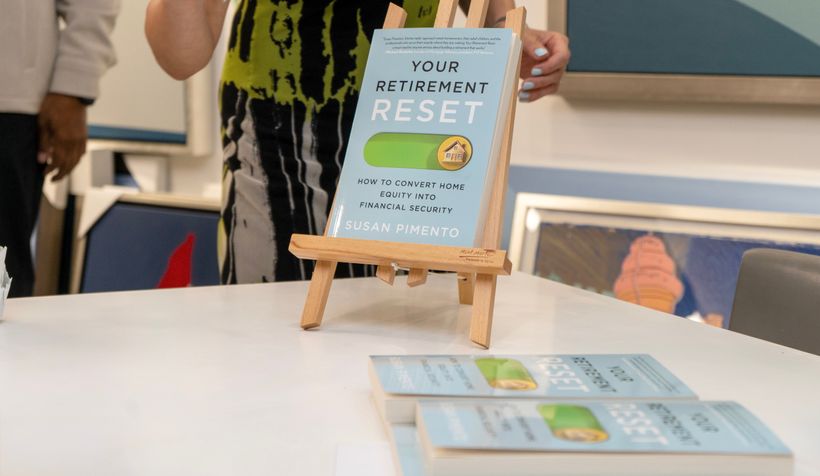
I hope you will consider pre-ordering a copy of Your Retirement Reset for you, a friend or loved one. It's available September 8, 2026 published by ECW Press - You can now order at Indigo or Amazon. And if you love supporting Canadian booksellers, please also check with your local independent bookstore. Most can easily order it for you.


Connect with:
Sue Pimento

Sue Pimento

Founder | CEO

Writer, author & presenter focused on financial literacy and retirement strategies. I advocate for the health, wealth & purpose for retirees

Pension ReformInterest RatesHome EquityMortgagesReverse Mortgages
Powered by

You might also like...

Check out some other posts from Retire with Equity

Canadian Retirement Expert Susan Pimento Co-Authors Newly Released EY Report on the Future of Retirement in Canada featured image

3 min

Canadian Retirement Expert Susan Pimento Co-Authors Newly Released EY Report on the Future of Retirement in Canada

Former bank executive and Retire with Equity founder says "fear of running out" reflects a structural gap in retirement system design — not a failure of individual planning TORONTO, ON — July 23, 2026 — Susan Pimento, founder of Retire with Equity, is a co-author to The Canadian retirement evolution: Why financial institutions and policymakers must rethink retirement, a new report published today by EY examining how Canada's retirement landscape is changing — and why the systems built to support retirees are struggling to keep pace. The report arrives amid a structural shift in how Canadians fund retirement: in 1990, over 70 percent of Canadian workplace pension plans were defined-benefit schemes providing predictable lifelong income; by 2022, that figure had fallen to 37 percent — shifting investment risk, and the fear of running out onto individuals. Drawing on more than 30 years of senior leadership in Canadian banking and frontline lending, including serving as Vice President at a Schedule I bank, Pimento contributed a framework that groups Canadian retirees into three primary categories, each with distinct financial circumstances and priorities — a lens designed to help financial institutions and policymakers move beyond one-size-fits-all retirement planning. Sue Pimento is also the author of the forthcoming Your Retirement Reset: How to Convert Home Equity into Financial Security (ECW Press, to be released September 2026), "Fear of running out — FORO — reflects a structural gap in retirement system design, not a failure of individual planning," said Pimento. "Most retirement frameworks were built for accumulation rather than sustainable income in later life. Canadians aren't failing their retirement plans. In many cases, the plans were never designed for the retirement they're actually living." Pimento's contribution reflects the research focus of Retire with Equity, which provides retirement intelligence to Canada's financial sector on its fastest-growing and wealthiest demographic: adults 55 and over. Her forthcoming book examines how home equity — the largest asset most Canadian households hold — can be strategically converted into retirement income, and argues it belongs in every retirement conversation and product roadmap. "The industry has spent decades perfecting how Canadians save," Pimento added. "The next decade will be judged on how well we help them spend — sustainably, confidently, and without fear." The EY Report: "Canadian Retirement Evolution" is publicly available at: https://www.ey.com/en_ca/insights/financial-services/canadas-retirement-evolution Media availability: Susan Pimento is available for interviews and commentary on: retirement income design the three categories of Canadian retirees financial strategies for aging in place Intergenerational financial conversations about money (between seniors and their adult children) home equity strategies new ways for government and banks to serve the 55+ demographic About Susan Pimento Susan Pimento brings deep experience to the conversation on modern retirement strategies in Canada. With over 30 years of senior leadership in banking and frontline lending — including serving as Vice President at a Schedule I bank — she now advises financial institutions and policymakers on how to modernize retirement solutions and engage Canada's fastest-growing, wealthiest demographic: adults 55+. She is the founder of Retire with Equity and author of Your Retirement Reset: How to Convert Home Equity into Financial Security (ECW Press, September 2026). . Media Contact: Susan Pimento Website: www.retirewithequity.ca Email: sue@retirewithequity.ca

Everything Old Is New Again. Even Layaway. featured image

8 min

Everything Old Is New Again. Even Layaway.

I've noticed a flurry of articles lately about the explosive growth of Buy Now, Pay Later. The Globe and Mail reported that BNPL has gone fully mainstream, with Canadians across income levels stretching groceries and gadgets into “manageable” monthly bites. The Walrus ran a piece by Vass Bednar arguing that BNPL has quietly become a shadow credit system that doesn't show up on any credit bureau's radar until it implodes. Reading both, I couldn't help but smile. Not because the trend is amusing, quite the opposite. It's because we've been here before. Long before Klarna, Afterpay, Sezzle and Affirm, there were Sears, Woolworth's, Kmart and Leon's. Canadians had layaway. No app, no one-click checkout, no influencer urging you to split a purchase into four easy instalments. Just a patient store clerk, a paper receipt, and a straightforward deal: you made payments over time, and only after the last one cleared did you take the item home, along with the quiet pride of knowing you'd earned it. Delayed gratification wasn't a burden; it was simply how responsible people bought things. Try explaining that to a twenty-five-year-old today. “Wait... what? You paid for it, and they wouldn't let you take it home?” Over the past forty years, we quietly flipped the model upside down. Yesterday's philosophy was pay first, enjoy later. Today, we enjoy first, pay later. The payment schedule looks remarkably similar, but the psychology could not be more different. That took me straight back to my childhood, when my parents represented two entirely different schools of financial thought. To Dad, cash wasn't just king; it was emperor, prime minister, pope, and captain of the soccer team, all rolled into one. If he didn't have it, he didn't buy it. Mom's favourite line was different: “If I waited until I could afford it, I'd never get it!” One afternoon, she came through the door beaming and announced, “I saved a thousand dollars today!” This was the 1970s, real money, and we waited breathlessly to hear how. “I bought a baby grand piano,” she said. “It was four thousand, on sale for three. I saved a thousand dollars!” The room went silent. Technically, she wasn't wrong. Dad never fully embraced Mom's definition of “saving.” I believe he eventually paid off the piano. I'm less convinced he ever settled the argument. Looking back, I don't think they were arguing about money at all. They were arguing about time. Dad believed that sacrificing today made tomorrow easier. Mom believed that tomorrow would work itself out. If they were alive now, Dad would still be carrying cash in his wallet, and Mom would have four BNPL apps on her phone and know exactly which one had the best promo running. I suspect most of us carry a bit of both. We're remarkably good at convincing ourselves that Future Me will be wealthier, more disciplined, and generally more together than Present Me. Future Me will get the raise, won't mind another monthly payment, will eat well, will sleep eight hours, will exercise regularly, and will never procrastinate. Read that again. Now look in the mirror. Got you, didn't I? Future Me usually looks a lot like Present Me, just with a few more wrinkles and a little less earning power. Behavioural economists call this present bias, or hyperbolic discounting: we place a much higher value on immediate rewards than on future ones. Nobel laureate Richard Thaler and Shlomo Benartzi built much of their retirement research around this tendency, and their Save More Tomorrow program showed how much help people need to overcome it (Thaler & Benartzi, 2004). Once you see that, BNPL stops looking like a payment option and starts looking like brilliant behavioural design. A $2,000 purchase quietly becomes “only $83 a month.” The price hasn't changed; our perception has. That, not the payment plans themselves, is the real story: the tug-of-war between Present Me and Future Me. That explains why so many Canadians struggle to save for retirement and often arrive there wishing we decided differently decades earlier. Why Is BNPL Suddenly Everywhere? Convenience is only part of the answer. The real drivers are rising living costs, stubborn inflation, and a culture that's grown allergic to waiting. BNPL fits that mindset perfectly: Payments Canada data shows usage rising from roughly 9% in 2022 to 25% in 2024. Younger Canadians cite quick access to credit, while middle-aged Canadians call it a budgeting tool. One group sees borrowing; the other sees it as managing cash flow as paycheques stretch less far. A recent Globe and Mail report on Koho's Grocery Gap data found that BNPL use for groceries more than doubled between May 2025 and May 2026, while incomes barely budged. Dad would have hated that explanation. Mom would have reminded him that life doesn't wait for your savings account to catch up. Like most financial tools, BNPL is neither inherently good nor bad. A hammer can build a house or break a window, depending on who's holding it. If your furnace dies mid-winter, financing the replacement is one of the smartest moves you'll make. The same goes for emergency dental work or a computer you need for work. Those are investments, not expenses. Financing concert tickets or a smartphone upgrade because yours is eighteen months old is a different category, one where Future Me keeps paying long after Present Me has finished enjoying the fun. Whenever I'm unsure where a purchase belongs, I ask one question: will this make my financial life stronger a year from now, or will I still be paying for it? Retailers didn't embrace BNPL out of concern for our budgeting skills; they embraced it because it works. Research from the National Bureau of Economic Research found that offering BNPL at checkout increases sales by roughly 20%, largely by nudging people to spend more than they otherwise would (Berg et al., 2024). The product hasn't changed, and your income hasn't changed; only the payment method has. That's why “$89 a month” feels far less alarming than “$2,500,” even though the math is identical. A Word on Fraud Here's a related trend that concerns me, especially for older homeowners: be cautious when someone knocks on your door offering a new roof, windows, or solar panels for “only a few dollars a day.” Before signing, ask: did I think I needed this before the salesperson showed up? Sometimes yes. Roofs wear out. But sometimes the problem is manufactured right along with the financing, and a $25,000 renovation can sound reasonable when framed as “less than your cable bill.” Dad would have insisted on three quotes; Mom would have admired the enthusiasm. Listen to Dad: get multiple estimates, loop in someone you trust, and never sign on the spot. Read that again. Never sign on the spot! The RRSP Parallel and What Retirees Should Watch For BNPL also parallels something I wrote about recently in Canada's RRSP Program Has Too Many Jobs. The Home Buyers' Plan looks nothing like Buy Now, Pay Later on the surface, but look closer, and they sound alike. Both solve today's problem by borrowing from tomorrow's resources. It's helped thousands get into homes, and homeownership remains one of the best long-term wealth builders. But every dollar pulled from an RRSP stops compounding for retirement. We celebrate the house and quietly forget the retirement income we gave up for it, Present Me negotiating a deal Future Me eventually must honour. And Future Me always shows up, whether we're ready or not. It's tempting to think of BNPL as a young person's problem, but the psychological pull intensifies in retirement, not diminishes. When you're working, the next paycheque is a couple of weeks away. In retirement, every purchase competes with a finite pool of assets that may need to last thirty years. Financing groceries isn't a budgeting strategy; it's a signal that your income isn't keeping pace with your lifestyle. If every purchase starts with “what's the monthly payment?” instead of “can I actually afford this?” it's time to step back. I've long recommended imagining every purchase as a conversation with your retired self: would Future Me thank me, or wish I'd shown more restraint? Isn't a Reverse Mortgage the Same Thing? Some readers wonder whether reverse mortgages belong in this conversation. I'd argue they're nearly the opposite. Both involve money today and repayment later, but that's where the similarity ends. BNPL borrows against tomorrow's income to finance today's consumption, while a reverse mortgage, used appropriately, converts wealth you've already built into retirement income. One asks Future Me to earn more; the other recognizes that Past Me already did the heavy lifting. There's a world of difference between borrowing against tomorrow and drawing on yesterday's success. Whatever Happened to Paying Cash? Dad's advice was simple: if you can't pay cash, don't buy it. It's a little outdated now. Few of us carry cash anymore, and digital payments are so seamless that spending barely feels like spending. Tap, click, done. Maybe the rule just needs updating. Instead of “can I pay cash?” try “if I had to pay for this in full today, would I still buy it?” That shifts our focus from the monthly payment to the total cost and from affordability to value. BNPL isn't inherently good or bad; it's a tool like any other, and the real danger is forgetting that every financial decision is a negotiation between Present Me and Future Me. What My Parents Really Taught Me Looking back, my parents weren't really arguing about money; they were arguing about time. Dad taught me the value of patience and living within my means, and he understood instinctively what behavioural economists would later prove: delaying gratification pays remarkable dividends. Mom taught me something just as important: that life isn't meant to be spent waiting forever, and that some experiences create memories no investment account can measure. The wisdom lies in knowing the difference. Retirement requires both the discipline to save while working and the wisdom to enjoy what you've built. Save every penny and never spend it, and you've missed the point, tragically. Spend it all before retirement arrives, and biology has a nasty habit of showing up right on schedule, winning every time, just as tragically. Perhaps that's the real story behind Buy Now, Pay Later. It was never really about payment plans; it's about patience, priorities, and the lifelong conversation between who we are today and who we're becoming tomorrow. Present Me always gets the microphone, while Future Me waits quietly in the wings, hoping today's decisions leave something to work with. Next time you're offered four easy payments, ask the better question: will Future Me thank me for saying yes? Someday, Future Me becomes Present Me, and that's the day we find out whether today's purchase was an investment in our happiness or just another bill waiting, not so patiently, for retirement. I have a feeling Dad would smile reading this, quietly certain he'd finally won the argument. Mom would smile too, already wondering if she could get that validation in four easy instalments, and still call it saving money. Don’t Retire … Re-Wire! Sue

Canada’s RRSP Program Has Too Many Jobs featured image

8 min

Canada’s RRSP Program Has Too Many Jobs

Summary: Since its inception in 1957, the Registered Retirement Savings Plan (RRSP) has been a cornerstone of Canada’s retirement system. However, the RRSP has taken on roles far beyond its original mandate, notably through the Home Buyers’ Plan (HBP) and the Lifelong Learning Plan (LLP). Although these programs provide short-term benefits, they significantly damage the long-term health of Canadians' retirement savings. This article explores how these additional roles are sabotaging retirement savings, highlights statistics about the state of RRSPs today, and discusses the disastrous impact these trends will have on future retirees. If you’re 55 and wondering whether your RRSP is on track, the latest numbers may surprise you. Recent data suggest that the average Canadian aged 55 has approximately $180,000 in their RRSP. But averages can be misleading because a relatively small number of very large accounts pull the number higher. A better measure of what most Canadians have actually saved is the median RRSP balance, which sits at approximately $146,000. In other words, half of Canadians have saved less than that. Even after decades of tax-assisted saving, these balances are unlikely to generate the retirement income most Canadians will need. That raises an important question. How did one of Canada’s most successful retirement savings programs produce such modest results? Part of the answer may be that we’ve quietly asked the RRSP to do far more than it was ever designed to do The average senior aged 65 in Canada receives $19,547 per year from OAS and CPP. If qualified for GIS, they would receive another $13,478 annually, for a total of $33,025 annually. This isn't much income, especially for homeowners who must pay for property taxes, utilities, upkeep, and maintenance. How it All Began At inception, the RRSP was called a Registered Retirement Annuity and was created in 1957. At the time, Canadians could contribute up to 10% of their income to a maximum of $2,500 annually. The goal was to give all Canadians the same tax benefits as members of registered employer-sponsored pension plans. Benefits of the RRSP Plan 1. Tax-Deferral: Contributions to an RRSP are tax-deductible, which can reduce your tax bill. 2. Tax-Free Growth: Your savings grow tax-free while the money is in the plan. 3. Retroactive: You can carry forward any unused contribution room to future years. The Multitasking Disaster Studies show that people are dreadful at multitasking; the same is true of government programs. Here is where the program went wrong. In 1992, the Home Buyer’s Plan (HBP) was made more flexible, which allowed first-time homebuyers to withdraw RRSP funds to buy a house. Then, in 1999, the Lifelong Learning Plan (LPP) was introduced, which permitted withdrawals to pay for education. The Home Buyers' Plan (HBP) was not introduced in 1957 alongside the Registered Retirement Savings Plan (RRSP) creation. Instead, the HBP was introduced in 1992 as a federal initiative to help Canadians buy their first homes by allowing them to withdraw funds from their RRSPs without tax penalties as long as they met specific conditions. Here's a timeline of crucial HBP withdrawal limits since its inception: Timeline of HBP and LLP Withdrawal Limits: 1992 - Introduction of the HBP • Maximum Withdrawal Limit: $20,000 per individual. • Purpose: To help first-time homebuyers purchase or build a home. 1999 – Introduction of Lifelong Learning Plan (LLP) • The annual withdrawal limit is $10,000 per individual • The lifetime withdrawal maximum is $20,000 per individual 2009 - First HBP increase • New Limit: $25,000 per individual. • The increase was introduced as part of federal budget changes to reflect rising housing costs. 2019 - Second HBP Increase • New Limit: $35,000 per individual. • Announced in the 2019 federal budget to support affordability for first-time homebuyers. 2019 -HBP Enhancement for Life Events • The HBP was expanded to allow individuals experiencing a marriage or common-law partnership breakdown to participate, even if they were not first-time homebuyers. 2024 - Recent increase • New Limit: $60,000 per individual. • The increase was introduced as part of federal budget changes to reflect rising costs. A Flawed Strategy The Home Buyers' Plan (HBP) and Lifelong Learning Plan (LLP) were introduced in Canada as tools to make housing and education more accessible. While well-intentioned, these programs effectively allow individuals to borrow from their future retirement savings—a strategy that can have significant negative consequences. Ask any high school economics student, and they will tell you that compromising two of the three main elements (principle and time) in investing growth will lead to a disappointing return. Here is the formula: principle X interest + time = compounded return. ⚠️ WARNING: Retirement Warning Using your RRSP to purchase a home or finance education may seem like a smart financial move. But remember, you’re withdrawing money from the very account designed to support you when you’re no longer earning an income. Lost time and compound growth can never be fully recovered. Are We Borrowing From the Future to Pay for Today? The Problem with the Home Buyers’ Plan (HBP): Addressing Housing Affordability at the Expense of Retirement The HBP permits individuals to withdraw up to $60,000 from their RRSP to buy a first home. In an environment of rising house prices, this measure may help buyers cobble together a down payment, but it drains retirement funds. The funds are unavailable to grow tax-free over decades, diminishing the compounding returns essential for retirement security. The Problem with the Lifelong Learning Plan (LLP): Financing Education by Sacrificing Retirement The LLP allows up to $20,000 in RRSP withdrawals to fund education, which can help individuals upskill. However, education often doesn’t yield immediate returns, and the withdrawn funds lose their growth potential, including the compounded returns. Why This Harms Future Retirees Issue #1: Loss of Compounding Growth Withdrawals disrupt the power of compounding, which is vital for retirement savings. For example, $35,000 left in an RRSP for 25 years at a 6% annual return could grow to over $150,000. If that same $35,000 were withdrawn 15 years ago and repaid over the same period as required by the HBP program, it would be worth $54,311, a loss of $95,689 Issue #2: Repayment Struggles While repayments are required, life’s expenses (mortgage, childcare, loans) often make it hard to repay on schedule. Failure to repay means the amount withdrawn is added to taxable income, further reducing the effectiveness of the programs. Issue #3: Insufficient Savings Most Canadians are already under-saving for retirement. Encouraging them to dip into their RRSPs exacerbates this shortfall. Two Different Problems.  One Harmful Solution Housing Affordability Rising house prices are driven by supply-demand imbalances, speculation, and policy failures—not a lack of down payments. Increasing the HBP withdrawal limit does nothing to address the root causes of affordability, but it may drive prices higher by giving buyers more purchasing power. Retirement Security Retirement savings should be preserved and grown to ensure financial stability in later years. Programs like HBP and LLP blur the line between short-term needs and long-term planning. Why Would our Government Do This? Political Expediency Housing affordability and access to education are politically sensitive issues. Allowing individuals to tap into their RRSPs is a cost-neutral policy for the government (unlike direct subsidies or programs). Policies like these help politicians get elected or stay in office. And in proper political form, these policies only tell half the story. Vote for us because we will help you buy your first home, which is a great campaign strategy. Vote for us because we will make it look like we help you buy your first home when, in fact, we will set up a program that will allow you to borrow from yourself at the cost of your retirement, which is political suicide. Short-Sighted Economic Policies Policymakers may believe that homeowners and educated individuals are more financially secure, even if their retirement savings are compromised. The logic might be that owning a home or having better job prospects could mitigate future hardship. Assuming Home Equity is a Safety Net The government might assume that homeownership ensures financial stability in retirement. However, this overlooks that rising housing costs often mean seniors have high debt levels or are "house rich but cash poor." The Bigger Problem with the HBP and LLP Programs: No Warnings or Education Given to Canadians Neither the HBP nor the LLP adequately informs individuals of the long-term consequences of their decisions. To make matters worse, the participants of these programs will likely realize the impact once it is too late to take action. People considering retirement are often in their late 50s to early 60s, past their prime saving years. Borrowing from retirement accounts may seem like “borrowing from yourself,” but this lost growth can never be recouped. Many Canadians are not well enough informed to assess these trade-offs, leading to decisions that harm their financial future. In Case You’re Thinking, These Seniors Have Inadequate Savings - But at They At Least their Homes. The HBP and LLP programs may reflect a government view that seniors would be better off owning a home than relying solely on inadequate savings. But this is flawed for a number of reasons: A home is not a liquid asset—it cannot pay for groceries or healthcare. Also,  Seniors with insufficient retirement savings often need help with financial distress despite owning property. They sometimes need reverse mortgages or sell their homes out of desperation. An Unfortunate Misguided Solution Rather than “quick fixes” that appear to solve immediate challenges while creating long-term problems, the Federal government should instead focus on longer-term, systemic solutions For housing: Governments need to curb speculative investments and provide targeted assistance for first-time buyers. Plus they need to focus on programs that increase housing supply, such as income tax incentives for homeowners to build accessory dwelling units (ADUs). These units could be rented out or used for caregivers. Or adopt a policy allowing first-time home buyers to not pay tax on their first $250,000 of income. First-time home buyers could use the tax savings as a down payment. The HST Rebate for eligible buyers of new homes introduced March 2026 is a start, not perfect, but it is a step in the right direction. For Education: Governments need to expand grant programs and low-interest loans to prevent reliance on retirement funds.  This will not only help us increase the number of skilled workers to fill critical gaps in vital sectors such as technology, healthcare engineering and the trades.  It will also contribute to a higher GDP and build a more sustainable tax base for future generations. Retirement savings should be treated as sacred capital, not a convenient source of funding for unrelated government priorities. Governments shouldn’t solve today’s problems by quietly asking Canadians to mortgage their retirement. Votes are counted on election night. The consequences aren’t counted until retirement. Don’t Retire … Re-Wire! Sue Important: This article is intended for educational purposes only and does not constitute financial, mortgage, tax, legal, or investment advice. Before making decisions about your retirement or home equity, consult qualified professionals who can assess your personal circumstances.

View all posts