
New Harvard Report Highlights the Need for Ethical Leaders and Responsible Citizens

TCU's Heath Einstein says higher education must help students think critically, engage across differences, and solve society's most pressing challenges.

Jun 29, 2026

2 min

Heath Einstein


A new report from Harvard University's Making Caring Common Project and the National Association for College Admission Counseling is calling for a renewed focus on character, purpose, civic engagement, and ethical leadership in the college admissions process. The report, Turning the Tide in 2026: Preparing Students for Lives of Caring and Purpose, argues that colleges can play a critical role in helping develop the moral and civic capacities needed to strengthen communities and democracy.


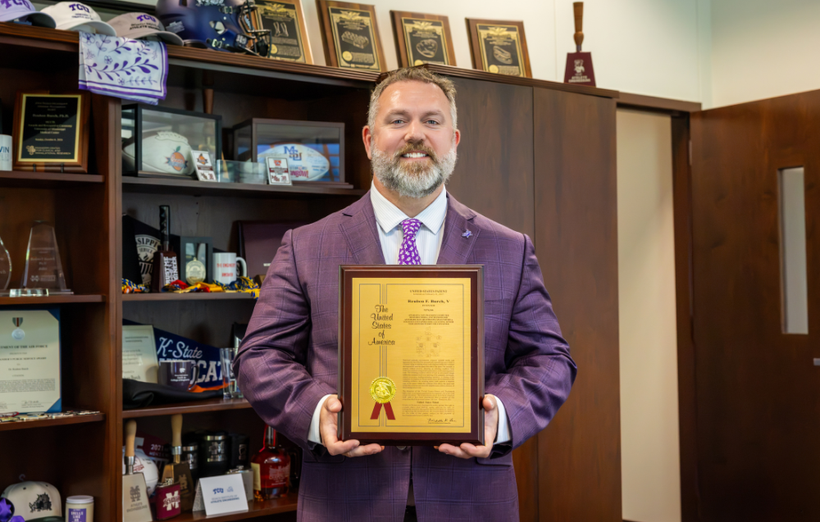
Among the higher education leaders featured in the report is Heath Einstein, Vice Provost for Enrollment Management at Texas Christian University, whose comments reinforce TCU's longstanding commitment to preparing students for lives of purpose and service.


"In near perfect alignment with this report's principles, TCU's raison d'être is to produce ethical leaders and responsible citizens in the global community. At a time when our society—perhaps intentionally fragmented—cannot even agree on facts, it is essential to teach young people how to think critically about the world around them, communicate across difference, and collaborate to solve humanity's most pressing issues."


The report warns that increasing political polarization, declining trust, rising mental health challenges, and excessive achievement pressure are affecting young people across the United States. Its authors argue that colleges, schools, and families should place greater emphasis on helping students develop empathy, curiosity, humility, civic responsibility, and a sense of purpose.


Einstein notes that these qualities are central to the student experience TCU seeks to cultivate.


"In order to achieve this outcome, we seek to create a class of students who possess empathy and humility so that they can critique ideas without critiquing the people presenting the ideas."


The report's recommendations include encouraging meaningful engagement over résumé-building, helping students identify what they value and find purposeful, and creating admissions processes that recognize ethical character alongside academic achievement.


Looking to know more? We can help.


Heath Einstein, Vice Provost for Enrollment Management at Texas Christian University, is available to discuss college admissions, student success, ethical leadership, civic engagement, student purpose, and the evolving role of higher education in preparing future leaders.

Connect with:
Heath Einstein

Heath Einstein

Vice Provost for Enrollment

Heath Einstein is an empathetic leader skilled in shared governance, staff development, crisis management, and cultural humility.

Cultural HumilityShared GovernanceCrisis ManagementStaff DevelopmentData Analytics
Powered by

You might also like...

Check out some other posts from Texas Christian University

Inside the Partnership Between Texas Christian University and Taylor Sheridan’s Four Sixes Ranch featured image

1 min

Inside the Partnership Between Texas Christian University and Taylor Sheridan’s Four Sixes Ranch

A unique partnership between Texas Christian University and the legendary Four Sixes Ranch is giving students hands-on experience helping shape the future of one of the most recognizable brands in the American West. Recently featured at a major national rodeo event, the ranch’s newly designed retail booth, created by TCU faculty and students, blends heritage-inspired design with modern merchandising, reflecting the ranch’s growing national profile under the ownership of Taylor Sheridan and Nicole Sheridan. “We’re now written into the history of the Four Sixes Ranch.” The collaboration spans fashion merchandising, branding and business strategy, allowing students to contribute directly to product development, retail design and digital marketing initiatives. For students involved, the project offered a rare opportunity to see classroom ideas become real-world products tied to an internationally recognized Texas brand. Faculty members say the partnership reflects TCU’s focus on experiential learning while helping preserve and evolve an important piece of Texas cultural identity. Check out the video TCU and Four Sixes Ranch, and you can read more about this project in the full article below: Looking to connect with Chares Freeman, Kevin Smith, Nicole Bettinger or Rima Shrestha about this exciting project? Simply contact Holly Ellman, Associate Director of Communication, at h.ellman@tcu.edu today.

Psychology Expert Explains Why Nostalgia Hits Us So Hard featured image

1 min

Psychology Expert Explains Why Nostalgia Hits Us So Hard

Whether it’s the smell from a vintage shop or the recent social media trend of sharing 2016 photos, Professor Cathy Cox from TCU’s Louise Dilworth Davis College of Science & Engineering recently spoke to TCU News about why our brains respond so strongly to nostalgia. Read the full interview below and check out her Explained in 60 Seconds video: Looking to connect with Cathy Cox? Simply contact Holly Ellman, Associate Director of Communication, today at h.ellman@tcu.edu.

Beyond the Recipe: Rebecca Sharpless Explores the Hidden History of Southern Baking featured image

1 min

Beyond the Recipe: Rebecca Sharpless Explores the Hidden History of Southern Baking

Recently published stories exploring the history of baking traditions are shedding light on how many beloved holiday treats are rooted in centuries of trade, survival and innovation. According to Rebecca Sharpless, professor of history in Texas Christian University’s AddRan College of Liberal Arts, staples like gingerbread and fruitcake carry surprisingly deep historical connections, from medieval spice routes to 19th-century preservation methods that allowed cakes to survive nearly year-long journeys. Sharpless, whose upcoming book People of the Wheat examines the history of wheat culture in North Texas, says many foods now associated with “traditional” Southern baking are actually far more modern than people realize. From red velvet cake to pecan pie, marketing and industrial food production played a major role in shaping today’s culinary traditions. Her research also highlights the social and economic realities behind baking history, including how access to ingredients like wheat and sugar once reflected class, geography and race. The full article and interview is attached below - and if you're a baker, a foodie or a journalist looking to know more about this popular topic - it's a must read. For journalists exploring food history, holiday traditions, agriculture, or the cultural roots of Southern cuisine, Sharpless offers expert insight into how everyday recipes reveal larger stories about migration, labor, trade and identity. And if you're looking to connect with Rebecca Sharpless, simply contact Holly Ellman, Associate Director of Communication, today at h.ellman@tcu.edu.

View all posts