GRANDSPLAINING...It's as Bad as it Sounds!

We need more respectful inter-generational communication

Jun 24, 2026

8 min

Sue Pimento

Summary:   "Grandsplaining" is a playful term that captures the all-too-familiar situation where younger generations offer unsolicited advice to older family members, often in a manner that is as condescending as it is unhelpful. This behaviour can be perceived as disrespectful and potentially creates awkward communication barriers, emotional strain, and family tension. Rooted in ageist stereotypes, it can even undermine elders' self-esteem. Here, we explore alternatives to grandsplaining, including the radical concepts of genuinely listening, asking open-ended questions, demonstrating empathy, and avoiding assumptions. These suggestions aim to help adult children support their older family members—not merely swoop in with a "fix-it" attitude.


The Disrespectful Impact of Condescending Advice on Seniors


When I helped older Canadians navigate financing their retirements, I often witnessed what can only be described as "grandsplaining in the wild." Conversations between adult children and their elders usually felt less like dialogues and more like lectures—one-sided advice sessions that left everyone gritting their teeth.


The younger relative, likely well-meaning, would offer suggestions like, “You should downsize and buy a condo,” “Sell and rent,” or, the pièce de resistance, “Move in with family!” Judging by the withering looks from their elders, it was clear this approach wasn’t winning any "Favorite Child" awards.


The older family members often felt patronized, as though their decades of life experience had been conveniently forgotten. The advice was condescending, painfully obvious, and usually impractical or unwanted. The dynamic reminded me of the cringeworthy experience of being "mansplained." And that’s when it hit me: this is “grandsplaining.”


Unfortunately, grandsplaining can turn retirement planning conversations into a crash course on how not to communicate! Fortunately, with a little effort (and much less lecturing), families can turn this ship around and build stronger, more respectful relationships.


What is "Grandsplaining"?


In an age where communication flows freely across digital platforms, I define "grandsplaining" as a colloquial expression to describe a situation where younger generations offer unsolicited advice to older individuals, often patronizing or condescendingly.


Grandsplaining typically involves a younger person explaining something to an older individual in a way that belittles their experience or intelligence. The term combines "grand" (suggesting age or status) and "splaining" (a slang term for condescendingly explaining something). While the intention behind such advice may often be well-meaning, the delivery can be patronizing, reinforcing stereotypes about aging and competence.


This behaviour can significantly undermine the dignity and autonomy of seniors, leading to feelings of frustration, resentment, and a sense of being marginalized. Understanding the nuances of grandsplaining sheds light on intergenerational dynamics in these conversations. We must find a better, more respectful, and effective way to communicate with our elders considering retiring.


The phenomenon of grandsplaining can manifest in various contexts, not just financing retirement—whether it’s discussing technology, lifestyle choices, healthcare options, or even social norms. For instance, a grandchild might explain how to use a smartphone app to a grandparent, assuming that the older generation cannot understand it despite their own lifelong experience with technology in different forms.


Communication Breakdown


In an era where financial literacy and retirement planning are more crucial than ever, "grandsplaining" has become a significant barrier to effective communication between generations.


Retirees often feel overwhelmed or dismissed when their relatives provide unsolicited advice, especially if it contradicts their wants or financial strategies. This can lead to a reluctance to engage in discussions about finances, creating a rift that undermines the potential for collaborative planning. When adult children dominate conversations with preconceived notions of financial management, it stifles the opportunity for seniors to express their feelings, share their knowledge, and collaborate on effective retirement strategies.


The Generation Gap in Financial Understanding


Adult children may rely on outdated financial paradigms that no longer apply to their elders' realities. The economic landscape has changed dramatically over the past few decades, with shifts in real estate markets, a lack of formal retirement plans, and longer life expectancies. This generational gap can lead to misguided advice that does not consider modern challenges such as retiring with debt, little or no pension income, or rising living costs.


Emotional Strain and FamilTension


When relatives impose their views, it can evoke frustration, resentment, or inadequacy in their elders. This dynamic can shift the conversation from one focused on financial empowerment to one steeped in emotional conflict and shame. Instead of fostering a supportive environment for discussing retirement goals, grandsplaining can create adversarial relationships where seniors feel belittled or pressured, further complicating an already sensitive topic.


Erosion of Autonomy


When relatives try to impose their methods or strategies, it can undermine the seniors’ independence, making them feel a lack of control over their finances. Financial decisions are deeply personal and often intertwined with individual circumstances, goals, and values. This loss of agency not only affects financial outcomes but can also impact the mental well-being of older adults, leading to feelings of incompetence or anxiety about their financial futures.


The Context of Ageism


The implications of ageism are particularly concerning in a rapidly changing world characterized by technological advancements and unprecedented changes in social norms. While younger generations may genuinely wish to assist their elders in navigating these changes, their actions can reinforce negative stereotypes rather than empower seniors. Grandsplaining highlights the generational divide, creating an "us versus them" mentality that hinders collaboration and mutual understanding.


Grandsplaining is deeply intertwined with ageism, a pervasive societal attitude that discriminates against individuals based on their age. Ageism manifests in various forms, including stereotypes that depict older adults as technologically inept, resistant to change, or incapable of learning. These stereotypes can lead to the marginalization of seniors within families and communities. Not cool!


When younger generations adopt a condescending tone, they inadvertently reinforce ageist stereotypes that portray older adults as out of touch or incapable. This affects individual relationships and perpetuates societal narratives devaluing older individuals' contributions and wisdom.


The Impact on Relationships


Grandsplaining can strain relationships between generations, fostering resentment and conflict. For many seniors, unsolicited advice can infringe on their autonomy, making them feel infantilized or disrespected.


I've seen firsthand how parents can react defensively to younger family members and sometimes withdraw altogether from conversations. When assistance is delivered condescendingly, it can backfire. The resulting tension may prevent meaningful conversations about important topics, such as healthcare decisions or lifestyle changes, which are crucial for seniors' well-being.


The Psychological Impact on Seniors


Being on the receiving end of condescending advice can also lead to diminished self-esteem and increased feelings of inadequacy. Seniors may begin to internalize the belief that they are not capable of making sound decisions or understanding new concepts, which can further exacerbate issues related to aging, such as cognitive decline and depression. 


Encouraging Respectful Communication with Seniors


Addressing the issue of grandsplaining requires a concerted effort from both younger and older generations to cultivate respectful communication. Here are several strategies to foster more positive intergenerational interactions:


1. Actively Listen: Younger people should prioritize active listening when engaging with seniors. This involves hearing what the older person says and validating their experiences and perspectives. Younger people can create a more respectful dialogue by acknowledging their knowledge and expertise.


2. Seek to Understand: Younger generations must approach conversations with empathy. To quote Stephen Covey's wise words, "Seek first to understand, then to be understood."  Recognizing seniors' challenges, such as health issues or technological gaps, can foster a sense of compassion. This approach can help bridge the generational divide and promote more constructive conversations.


3. Avoid Assumptions: The tendency to assume that older adults are out of touch or incapable can lead to grandsplaining. Instead, younger individuals should avoid making assumptions about seniors’ knowledge or abilities. Asking questions like “What do you think about this?” or “How do you feel about that?” can empower seniors to share their insights and experiences.


4. Offer Support, Not Solutions: Ask questions like, “What does a successful retirement look like to you? How do you plan to finance your retirement? Do you want to stay in this home? Are you open to moving? If so, where? Do you have enough in savings? How can I support you in having an independent and dignified retirement”?


5. Understand the Bigger Picture: Don’t assume that the traditional strategies of downsizing, selling, renting, or moving in with family are reasonable solutions for your elder in today’s economic environment. These retirement strategies are problematic for today’s seniors. In most cases, downsizing only works financially if the retiree is willing to move to a smaller, more affordable community. Most seniors want to stay in their communities and not move away from family, friends, churches, or familiar shops and services. Selling, renting, or moving in with family requires the sale of their significant appreciating asset. Given today's longer life expectancies, it's not always a wise choice.


6. Humour:    By skillfully using humour, you can turn potentially patronizing situations into moments of connection and shared joy, ensuring that conversations with elders remain meaningful, respectful and memorable. For example, you could start the conversation this way; "The last thing I want to do is give you advice. That would be ridiculous. You’re the wise sensei here—I’m just the clueless apprentice trying to save enough downpayment to buy a shoebox of a house." This approach humorously flips the script, poking fun at the presumptuousness of unsolicited advice while emphasizing the elder's experience and wisdom.


People often feel judged or vulnerable when discussing finances or significant life changes. Humour shifts the dynamic, showing that you approach the conversation as an ally, not an adversary. For example: "Talking about budgets isn’t fun for anyone—I mean, who loves math? But it’s worth it if we can figure out how to turn this retirement conversation into Canada Day rather than Labour Day!" This playful approach lowers barriers, making the discussion feel collaborative rather than critical.


Laughter fosters connection. Sharing a laugh creates a sense of camaraderie, making it easier for people to open up about sensitive topics. When elders feel that you’re not judging them but partnering with them—and can make them smile—they’re far more likely to trust your intentions and take your advice seriously. Humour invites the other person to join the conversation, breaking the ice and encouraging them to share their thoughts. It sets a tone that the conversation is a dialogue, not a lecture. Example: "You’ve been making great financial decisions for decades. I’m here to ensure we don’t accidentally end up with a basement full of K-tel Veg-O-Matics… unless that’s the plan?" This allows them to laugh, respond, and engage while respecting their autonomy.


A word of caution.  Humour is only effective when paired with genuine respect and sensitivity. Pay attention to your elder's reactions and adapt if they seem uncomfortable or unamused. The goal is to build rapport, not to win laughs at their expense. Using humour skillfully, you can turn potentially patronizing situations into moments of connection and shared joy, ensuring that conversations with elders are respectful and memorable.


Before You Go


Good financial planning thrives on clear communication, but grandsplaining tends to turn productive discussions into monologues that undermine elder autonomy and trigger emotional static. To create a more harmonious environment, families should swap their megaphones for listening ears and embrace a collaborative approach that respects seniors' wisdom and frames younger relatives’ financial theories as conversation starters, not TED Talks.


After all, when it comes to navigating retirement planning, a little less "know-it-all" and a bit more "let’s figure it out together" can go a long way. Think of it as building a bridge, not a lecture podium—because nothing says "family unity" like tackling compound interest together!


Don’t Retire…Re-Wire!


Sue


My Book is Now Available for Pre-Order

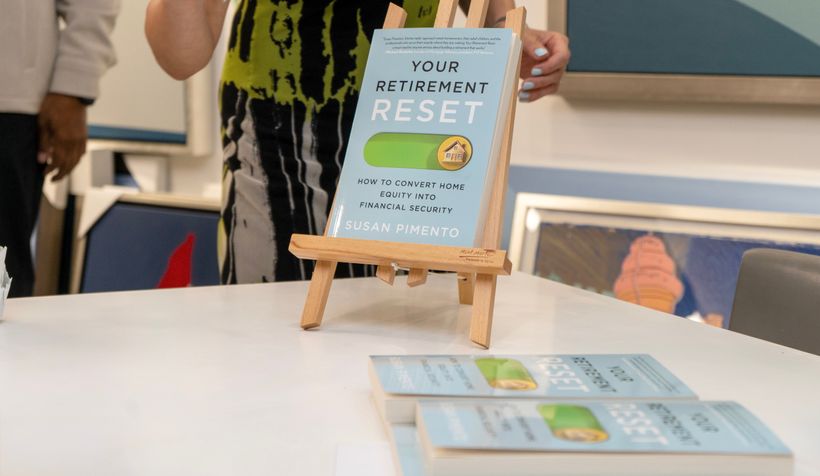
I hope you will consider pre-ordering a copy of Your Retirement Reset for you, a friend or loved one. It's available September 8, 2026 published by ECW Press - You can now order at Indigo or Amazon. And if you love supporting Canadian booksellers, please also check with your local independent bookstore. Most can easily order it for you.



Connect with:
Sue Pimento

Sue Pimento

Founder | CEO

Writer, author & presenter focused on financial literacy and retirement strategies. I advocate for the health, wealth & purpose for retirees

Pension ReformInterest RatesHome EquityMortgagesReverse Mortgages
Powered by

You might also like...

Check out some other posts from Retire with Equity

There's No Such Thing as the Average Canadian Retiree. There Are Three. featured image

5 min

There's No Such Thing as the Average Canadian Retiree. There Are Three.

You've seen the photo. Silver-haired couple on a sailboat, or walking on a beach at golden hour, laughing about nothing in particular. It's on the cover of every retirement brochure ever printed. It's what "the average Canadian retiree" looks like. In thirty years of banking, I never met that couple. I met a widow in her seventies deciding between a dental crown and her property taxes. I met a couple in their sixties quietly draining their RRSPs to keep a grandchild in university. And yes, I met people with sailboats, though they weren't asking me about retirement income. They were asking about estate freezes and charitable foundations. Three conversations. Three completely different Canadians. And after three decades of having them, most recently as a vice president at one of Canada's Schedule I banks, I've come to believe our biggest retirement problem isn't that Canadians plan badly. It's that we keep designing for an "average retiree" who doesn't exist. In The Canadian Retirement Evolution, a report newly published by EY that I was proud to co-author, I make the case for seeing Canadian retirees as three distinct groups. 1) Retirees in Need (roughly 30%) Nearly one-third of Canadian retirees are living close to the edge. Limited pension income, modest personal savings, and rising living costs define their retirement. Adding to the pressure, retirement debt is becoming the new reality. According to Royal LePage, 29% of Canadians who are recently retired or approaching retirement expect to continue making mortgage payments on their primary residence. For many Canadians, debt has become a permanent companion, extending well into what should be their most financially secure years. Perhaps the most troubling reality is this. Most people in this group have never received professional financial advice. The Canadians who need planning the most are often the Canadians the financial planning industry reaches the least. That should concern every financial institution, advisor and policymaker in this country. When retirement arrives with too little income, too much debt and no plan, the result is not just financial stress. It is anxiety, reduced independence and difficult choices that no Canadian should have to make after a lifetime of work. 2) Retirees Seeking Stability (roughly 60%) This is the majority of Canadian retirees, and the group that the sailboat photo completely misses. They are not financially struggling, but neither are they financially free. They have enough to retire, but not enough to stop worrying. What they want is simple. They want to maintain the lifestyle they spent forty years building. They want confidence that their money will last as long as they do. They want a retirement plan that offers stability and predictability. And they want the freedom to help the people they love, whether that's contributing to a grandchild's education, helping with a first home, or lending a hand when life throws one of their children an unexpected curveball. That is where retirement becomes complicated. Retirement has changed dramatically over the past three decades, but much of the advice Canadians receive has not. The result is a growing gap between today's retirement realities and yesterday's retirement plans. Every dollar shared with family is one less dollar available to fund their own future. Every unexpected expense raises the same unsettling question: Will I still have enough? This group lives in the space between abundance and anxiety. They have assets, but not always confidence. They have choices, but every choice comes with trade-offs. They don't need a miracle. They need a plan that provides stability, predictability, and the confidence to enjoy the retirement they worked so hard to earn without constantly wondering if today's decisions will become tomorrow's regrets. 3) Affluent Retirees (roughly 10%) The remaining ten percent focuses on sophisticated wealth management: transferring wealth to the next generation, structuring estates to minimize taxes, and giving philanthropically. These are good problems to have, served by an entire industry built to solve them. And that's the uncomfortable truth hiding in the framework: most of our retirement advice, most of our products, and most of our planning tools were designed with this group in mind. Retirement Fear Has a Name In 1990, more than 70% of Canadian workplace pension plans were defined benefit plans, providing predictable, guaranteed lifetime income. By 2022, that figure had fallen to just 37%. In the span of a single working generation, we quietly shifted the risk of outliving retirement savings from institutions to individuals. The anxiety created by that shift is something I encountered in thousands of conversations with Canadians throughout my lending career, long before I had a name for it. I call it FORO, the Fear of Running Out. In the EY report, we describe it this way: "Fear of running out (FORO) reflects a structural gap in retirement system design, not a failure of individual planning. Most retirement frameworks were built for accumulation rather than sustainable income in later life." That is the heart of the challenge. Canada's retirement system does an excellent job of helping people save, but far less to help them transform those savings into sustainable, predictable income throughout retirement. It is little wonder that so many Canadians approach retirement with uncertainty rather than confidence. The Elephant in the Living Room One final reality deserves far more attention. Canada is in the midst of one of the largest intergenerational wealth transfers in its history. Much of that wealth is tied up in residential real estate, owned by Canadians who consistently say they want to remain in their homes for as long as possible. That creates an important contradiction. The largest asset held by most Canadian households is also one of the least integrated into mainstream retirement planning. We encourage Canadians to build home equity for decades, then often ignore it when they need income the most. If retirement planning is meant to consider every available resource, why do we continue to overlook the largest one? Resolving that question has become the focus of my research and my forthcoming book, Your Retirement Reset: How to Convert Home Equity into Financial Security (ECW Press, September 2026). But that discussion extends beyond the scope of this article. For now, it is enough to recognize the disconnect. Retirement has changed. Canadians' balance sheets have changed. It may be time for retirement planning to change as well. A Retirement System Designed for Everyone The EY report reminds us that retirement is more than a financial milestone. It is one of life's most significant transitions, and every Canadian deserves to approach it with confidence, dignity and choice. That outcome will not be achieved with a retirement system designed around a single, hypothetical retiree. Canadians retire with different financial realities, different goals and different challenges. A retirement system that recognizes only one path will continue to leave too many people behind. Designing for the three retirement realities outlined in this paper is not simply good policy. It is good business. Financial institutions that tailor products, advice and education to meet the needs of all three groups will be better positioned to serve Canada's fastest-growing demographic. Policymakers who encourage that evolution will help create a retirement system that reflects the way Canadians actually live today, not the way they lived thirty years ago. The question is no longer whether retirement has changed. It has. The question is whether our retirement system will evolve quickly enough to meet Canadians where they are. Don't Retire... Re-Wire! Sue

Canadian Retirement Expert Susan Pimento Co-Authors Newly Released EY Report on the Future of Retirement in Canada featured image

3 min

Canadian Retirement Expert Susan Pimento Co-Authors Newly Released EY Report on the Future of Retirement in Canada

Former bank executive and Retire with Equity founder says "fear of running out" reflects a structural gap in retirement system design — not a failure of individual planning TORONTO, ON — July 23, 2026 — Susan Pimento, founder of Retire with Equity, is a co-author to The Canadian retirement evolution: Why financial institutions and policymakers must rethink retirement, a new report published today by EY examining how Canada's retirement landscape is changing — and why the systems built to support retirees are struggling to keep pace. The report arrives amid a structural shift in how Canadians fund retirement: in 1990, over 70 percent of Canadian workplace pension plans were defined-benefit schemes providing predictable lifelong income; by 2022, that figure had fallen to 37 percent — shifting investment risk, and the fear of running out onto individuals. Drawing on more than 30 years of senior leadership in Canadian banking and frontline lending, including serving as Vice President at a Schedule I bank, Pimento contributed a framework that groups Canadian retirees into three primary categories, each with distinct financial circumstances and priorities — a lens designed to help financial institutions and policymakers move beyond one-size-fits-all retirement planning. Sue Pimento is also the author of the forthcoming Your Retirement Reset: How to Convert Home Equity into Financial Security (ECW Press, to be released September 2026), "Fear of running out — FORO — reflects a structural gap in retirement system design, not a failure of individual planning," said Pimento. "Most retirement frameworks were built for accumulation rather than sustainable income in later life. Canadians aren't failing their retirement plans. In many cases, the plans were never designed for the retirement they're actually living." Pimento's contribution reflects the research focus of Retire with Equity, which provides retirement intelligence to Canada's financial sector on its fastest-growing and wealthiest demographic: adults 55 and over. Her forthcoming book examines how home equity — the largest asset most Canadian households hold — can be strategically converted into retirement income, and argues it belongs in every retirement conversation and product roadmap. "The industry has spent decades perfecting how Canadians save," Pimento added. "The next decade will be judged on how well we help them spend — sustainably, confidently, and without fear." The EY Report: "Canadian Retirement Evolution" is publicly available at: https://www.ey.com/en_ca/insights/financial-services/canadas-retirement-evolution Media availability: Susan Pimento is available for interviews and commentary on: retirement income design the three categories of Canadian retirees financial strategies for aging in place Intergenerational financial conversations about money (between seniors and their adult children) home equity strategies new ways for government and banks to serve the 55+ demographic About Susan Pimento Susan Pimento brings deep experience to the conversation on modern retirement strategies in Canada. With over 30 years of senior leadership in banking and frontline lending — including serving as Vice President at a Schedule I bank — she now advises financial institutions and policymakers on how to modernize retirement solutions and engage Canada's fastest-growing, wealthiest demographic: adults 55+. She is the founder of Retire with Equity and author of Your Retirement Reset: How to Convert Home Equity into Financial Security (ECW Press, September 2026). . Media Contact: Susan Pimento Website: www.retirewithequity.ca Email: sue@retirewithequity.ca

Everything Old Is New Again. Even Layaway. featured image

8 min

Everything Old Is New Again. Even Layaway.

I've noticed a flurry of articles lately about the explosive growth of Buy Now, Pay Later. The Globe and Mail reported that BNPL has gone fully mainstream, with Canadians across income levels stretching groceries and gadgets into “manageable” monthly bites. The Walrus ran a piece by Vass Bednar arguing that BNPL has quietly become a shadow credit system that doesn't show up on any credit bureau's radar until it implodes. Reading both, I couldn't help but smile. Not because the trend is amusing, quite the opposite. It's because we've been here before. Long before Klarna, Afterpay, Sezzle and Affirm, there were Sears, Woolworth's, Kmart and Leon's. Canadians had layaway. No app, no one-click checkout, no influencer urging you to split a purchase into four easy instalments. Just a patient store clerk, a paper receipt, and a straightforward deal: you made payments over time, and only after the last one cleared did you take the item home, along with the quiet pride of knowing you'd earned it. Delayed gratification wasn't a burden; it was simply how responsible people bought things. Try explaining that to a twenty-five-year-old today. “Wait... what? You paid for it, and they wouldn't let you take it home?” Over the past forty years, we quietly flipped the model upside down. Yesterday's philosophy was pay first, enjoy later. Today, we enjoy first, pay later. The payment schedule looks remarkably similar, but the psychology could not be more different. That took me straight back to my childhood, when my parents represented two entirely different schools of financial thought. To Dad, cash wasn't just king; it was emperor, prime minister, pope, and captain of the soccer team, all rolled into one. If he didn't have it, he didn't buy it. Mom's favourite line was different: “If I waited until I could afford it, I'd never get it!” One afternoon, she came through the door beaming and announced, “I saved a thousand dollars today!” This was the 1970s, real money, and we waited breathlessly to hear how. “I bought a baby grand piano,” she said. “It was four thousand, on sale for three. I saved a thousand dollars!” The room went silent. Technically, she wasn't wrong. Dad never fully embraced Mom's definition of “saving.” I believe he eventually paid off the piano. I'm less convinced he ever settled the argument. Looking back, I don't think they were arguing about money at all. They were arguing about time. Dad believed that sacrificing today made tomorrow easier. Mom believed that tomorrow would work itself out. If they were alive now, Dad would still be carrying cash in his wallet, and Mom would have four BNPL apps on her phone and know exactly which one had the best promo running. I suspect most of us carry a bit of both. We're remarkably good at convincing ourselves that Future Me will be wealthier, more disciplined, and generally more together than Present Me. Future Me will get the raise, won't mind another monthly payment, will eat well, will sleep eight hours, will exercise regularly, and will never procrastinate. Read that again. Now look in the mirror. Got you, didn't I? Future Me usually looks a lot like Present Me, just with a few more wrinkles and a little less earning power. Behavioural economists call this present bias, or hyperbolic discounting: we place a much higher value on immediate rewards than on future ones. Nobel laureate Richard Thaler and Shlomo Benartzi built much of their retirement research around this tendency, and their Save More Tomorrow program showed how much help people need to overcome it (Thaler & Benartzi, 2004). Once you see that, BNPL stops looking like a payment option and starts looking like brilliant behavioural design. A $2,000 purchase quietly becomes “only $83 a month.” The price hasn't changed; our perception has. That, not the payment plans themselves, is the real story: the tug-of-war between Present Me and Future Me. That explains why so many Canadians struggle to save for retirement and often arrive there wishing we decided differently decades earlier. Why Is BNPL Suddenly Everywhere? Convenience is only part of the answer. The real drivers are rising living costs, stubborn inflation, and a culture that's grown allergic to waiting. BNPL fits that mindset perfectly: Payments Canada data shows usage rising from roughly 9% in 2022 to 25% in 2024. Younger Canadians cite quick access to credit, while middle-aged Canadians call it a budgeting tool. One group sees borrowing; the other sees it as managing cash flow as paycheques stretch less far. A recent Globe and Mail report on Koho's Grocery Gap data found that BNPL use for groceries more than doubled between May 2025 and May 2026, while incomes barely budged. Dad would have hated that explanation. Mom would have reminded him that life doesn't wait for your savings account to catch up. Like most financial tools, BNPL is neither inherently good nor bad. A hammer can build a house or break a window, depending on who's holding it. If your furnace dies mid-winter, financing the replacement is one of the smartest moves you'll make. The same goes for emergency dental work or a computer you need for work. Those are investments, not expenses. Financing concert tickets or a smartphone upgrade because yours is eighteen months old is a different category, one where Future Me keeps paying long after Present Me has finished enjoying the fun. Whenever I'm unsure where a purchase belongs, I ask one question: will this make my financial life stronger a year from now, or will I still be paying for it? Retailers didn't embrace BNPL out of concern for our budgeting skills; they embraced it because it works. Research from the National Bureau of Economic Research found that offering BNPL at checkout increases sales by roughly 20%, largely by nudging people to spend more than they otherwise would (Berg et al., 2024). The product hasn't changed, and your income hasn't changed; only the payment method has. That's why “$89 a month” feels far less alarming than “$2,500,” even though the math is identical. A Word on Fraud Here's a related trend that concerns me, especially for older homeowners: be cautious when someone knocks on your door offering a new roof, windows, or solar panels for “only a few dollars a day.” Before signing, ask: did I think I needed this before the salesperson showed up? Sometimes yes. Roofs wear out. But sometimes the problem is manufactured right along with the financing, and a $25,000 renovation can sound reasonable when framed as “less than your cable bill.” Dad would have insisted on three quotes; Mom would have admired the enthusiasm. Listen to Dad: get multiple estimates, loop in someone you trust, and never sign on the spot. Read that again. Never sign on the spot! The RRSP Parallel and What Retirees Should Watch For BNPL also parallels something I wrote about recently in Canada's RRSP Program Has Too Many Jobs. The Home Buyers' Plan looks nothing like Buy Now, Pay Later on the surface, but look closer, and they sound alike. Both solve today's problem by borrowing from tomorrow's resources. It's helped thousands get into homes, and homeownership remains one of the best long-term wealth builders. But every dollar pulled from an RRSP stops compounding for retirement. We celebrate the house and quietly forget the retirement income we gave up for it, Present Me negotiating a deal Future Me eventually must honour. And Future Me always shows up, whether we're ready or not. It's tempting to think of BNPL as a young person's problem, but the psychological pull intensifies in retirement, not diminishes. When you're working, the next paycheque is a couple of weeks away. In retirement, every purchase competes with a finite pool of assets that may need to last thirty years. Financing groceries isn't a budgeting strategy; it's a signal that your income isn't keeping pace with your lifestyle. If every purchase starts with “what's the monthly payment?” instead of “can I actually afford this?” it's time to step back. I've long recommended imagining every purchase as a conversation with your retired self: would Future Me thank me, or wish I'd shown more restraint? Isn't a Reverse Mortgage the Same Thing? Some readers wonder whether reverse mortgages belong in this conversation. I'd argue they're nearly the opposite. Both involve money today and repayment later, but that's where the similarity ends. BNPL borrows against tomorrow's income to finance today's consumption, while a reverse mortgage, used appropriately, converts wealth you've already built into retirement income. One asks Future Me to earn more; the other recognizes that Past Me already did the heavy lifting. There's a world of difference between borrowing against tomorrow and drawing on yesterday's success. Whatever Happened to Paying Cash? Dad's advice was simple: if you can't pay cash, don't buy it. It's a little outdated now. Few of us carry cash anymore, and digital payments are so seamless that spending barely feels like spending. Tap, click, done. Maybe the rule just needs updating. Instead of “can I pay cash?” try “if I had to pay for this in full today, would I still buy it?” That shifts our focus from the monthly payment to the total cost and from affordability to value. BNPL isn't inherently good or bad; it's a tool like any other, and the real danger is forgetting that every financial decision is a negotiation between Present Me and Future Me. What My Parents Really Taught Me Looking back, my parents weren't really arguing about money; they were arguing about time. Dad taught me the value of patience and living within my means, and he understood instinctively what behavioural economists would later prove: delaying gratification pays remarkable dividends. Mom taught me something just as important: that life isn't meant to be spent waiting forever, and that some experiences create memories no investment account can measure. The wisdom lies in knowing the difference. Retirement requires both the discipline to save while working and the wisdom to enjoy what you've built. Save every penny and never spend it, and you've missed the point, tragically. Spend it all before retirement arrives, and biology has a nasty habit of showing up right on schedule, winning every time, just as tragically. Perhaps that's the real story behind Buy Now, Pay Later. It was never really about payment plans; it's about patience, priorities, and the lifelong conversation between who we are today and who we're becoming tomorrow. Present Me always gets the microphone, while Future Me waits quietly in the wings, hoping today's decisions leave something to work with. Next time you're offered four easy payments, ask the better question: will Future Me thank me for saying yes? Someday, Future Me becomes Present Me, and that's the day we find out whether today's purchase was an investment in our happiness or just another bill waiting, not so patiently, for retirement. I have a feeling Dad would smile reading this, quietly certain he'd finally won the argument. Mom would smile too, already wondering if she could get that validation in four easy instalments, and still call it saving money. Don’t Retire … Re-Wire! Sue

View all posts