
Structural Engineering Expert Available to Discuss High-Rise Building Stability, Structural Failures and Building Safety

Jul 8, 2026

1 min

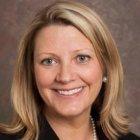
Michael Chajes


University of Delaware structural engineering expert Michael Chajes is available to discuss the engineering challenges involved in assessing and stabilizing high-rise buildings following structural damage, structural failures and concerns about potential collapse.


Chajes, a professor of civil and environmental engineering and a registered professional engineer, specializes in structural engineering, structural health monitoring and forensic engineering. He has provided expert commentary to national media outlets on major structural failures, including the Surfside condominium collapse and the Francis Scott Key Bridge collapse.


His expertise is particularly relevant to the ongoing situation in New York involving a high-rise that is at-risk of partial collapse. He can discuss.


• The conditions that can trigger structural instability during construction, renovation or changes in building use.


• How engineers assess damaged structures and determine whether a building can be stabilized or safely repaired.


• The engineering challenges involved in converting older office towers into residential buildings, including changes in structural loads, construction sequencing and temporary support systems.


• How structural health monitoring and inspection technologies help engineers evaluate the safety of aging infrastructure and high-rise buildings.


To arrange an interview with Chajes, visit his profile and click on the contact button. Interested reporters can also send an email to MediaRelations@udel.edu.

Connect with:
Michael Chajes

Michael Chajes

Professor of Civil, Construction, and Environmental Engineering; Interim Vice Provost for Undergraduate Education; Dean of the Honors College

Prof. Chajes focuses on bridge engineering and forensic engineering, unearthing the causes of engineering failures.

BridgesForensic EngineeringStructuresSustainability
Powered by

You might also like...

Check out some other posts from University of Delaware

Experts on earthquake response, community recovery and building safety featured image

1 min

Experts on earthquake response, community recovery and building safety

The shaking from a major earthquake may be over in minutes, but its consequences will last for years. University of Delaware experts can address emergency response, distributing aid, assessing damaged buildings, helping vulnerable communities and planning for long-term recovery. Their expertise is particularly relevant as communities across Latin America respond to major earthquakes, including the deadly magnitude 7.4 earthquake in Colombia. Tricia Wachtendorf, co-director of UD’s Disaster Research Center, offers expertise on how governments, nonprofits, emergency responders and community groups coordinate following a major disaster. Her research examines the role of spontaneous or “emergent” groups, humanitarian aid and donations, and how communities and organizations respond in the aftermath of disasters. Jennifer Trivedi, associate professor of anthropology and Disaster Research Center faculty member, specializes in disaster vulnerability and why some communities are more severely affected than others. She also addresses the long-term recovery needs and planning that emerge after the immediate crisis. Michael Chajes, professor of civil and environmental engineering, provides expertise on the structural damage caused by earthquakes, why some buildings collapse while others withstand the shaking and how engineers assess damaged structures and improve earthquake resilience. To arrange an interview with one of these experts, visit their profiles and click on the contact button. Interested reporters can also email MediaRelations@udel.edu.

Mapping the ancient world with underwater robotics featured image

1 min

Mapping the ancient world with underwater robotics

As audiences flock to theaters for Christopher Nolan's The Odyssey, University of Delaware professor Art Trembanis is leading a real-life expedition to uncover one of ancient Greece's most important maritime landscapes. Trembanis, a professor in UD's School of Marine Science and Policy and an expert in seafloor mapping, marine robotics and underwater sensing technologies, recently led a team of students and researchers to the ancient harbor of Kenchreai, where they deployed autonomous underwater vehicles, advanced sonar systems and other cutting-edge mapping technologies to document a harbor that has remained hidden beneath the Mediterranean Sea for centuries. The expedition collected geospatial data that will allow researchers to reconstruct the ancient port in remarkable detail and ultimately create a "digital twin" of the site. The virtual model will enable archaeologists, engineers, students and the public to explore the harbor as if the water had been removed, preserving an invaluable piece of cultural heritage while advancing the use of marine technology in archaeology. Trembanis can discuss: Marine robotics and autonomous underwater vehicles Seafloor mapping and underwater imaging technologies The use of digital twins and 3D modeling to study underwater environments Advances in marine geospatial technology and ocean exploration Underwater archaeology and documenting submerged cultural heritage How engineering and marine science are transforming the study of oceans and ancient landscapes The role of emerging technologies in scientific discovery and education To arrange an interview with Trembanis, click on his profile or email mediarelations@udel.edu.

How Wildfires Impact Vulnerable Communities, Pets and Public Health Systems featured image

1 min

How Wildfires Impact Vulnerable Communities, Pets and Public Health Systems

Wildfires burning across the world, now in parts of France and Spain, are forcing hundreds of thousands of people to evacuate. University of Delaware experts are available to discuss wildfire evacuations, vulnerable communities, animal rescue and the health effects of wildfire smoke exposure. Those experts, from UD’s Disaster Research Center, include: Sarah DeYoung Professor of sociology and criminal justice: • How people are forced to make split-second decisions involving horses, livestock and companion animals during fast-moving wildfires. • Why some owners must turn animals loose when evacuation time is limited. • Lessons from past disasters and animal rescue research. Jennifer Trivedi Assistant professor of anthropology: • The unique challenges faced by vulnerable populations during wildfires. • Complications surrounding evacuation decision-making and evacuation needs. • Long-term recovery following catastrophic disasters. Jennifer Horney Chair of UD’s Department of Epidemiology: • Health risks associated with wildfire smoke exposure, including respiratory infections. • How wildfire smoke and airborne pollutants affect population health. • The strain major wildfires can place on public health and health care systems. To arrange an interview with these experts, visit their profile page and click on the "contact" button. Interested journalists can also send an email to MediaRelations@udel.edu.

View all posts