Canada’s RRSP Program Has Too Many Jobs

Are we borrowing from the future to pay for today?

Jul 15, 2026

8 min

Sue Pimento

Summary: Since its inception in 1957, the Registered Retirement Savings Plan (RRSP) has been a cornerstone of Canada’s retirement system. However, the RRSP has taken on roles far beyond its original mandate, notably through the Home Buyers’ Plan (HBP) and the Lifelong Learning Plan (LLP).  Although these programs provide short-term benefits, they significantly damage the long-term health of Canadians' retirement savings. This article explores how these additional roles are sabotaging retirement savings, highlights statistics about the state of RRSPs today, and discusses the disastrous impact these trends will have on future retirees.


If you’re 55 and wondering whether your RRSP is on track, the latest numbers may surprise you.


Recent data suggest that the average Canadian aged 55 has approximately $180,000 in their RRSP.  But averages can be misleading because a relatively small number of very large accounts pull the number higher. A better measure of what most Canadians have actually saved is the median RRSP balance, which sits at approximately $146,000. In other words, half of Canadians have saved less than that.


Even after decades of tax-assisted saving, these balances are unlikely to generate the retirement income most Canadians will need.


That raises an important question.


How did one of Canada’s most successful retirement savings programs produce such modest results?


Part of the answer may be that we’ve quietly asked the RRSP to do far more than it was ever designed to do


The average senior aged 65 in Canada receives $19,547 per year from OAS and CPP. If qualified for GIS, they would receive another $13,478 annually, for a total of $33,025 annually. This isn't much income, especially for homeowners who must pay for property taxes, utilities, upkeep, and maintenance.


How it All Began


At inception, the RRSP was called a Registered Retirement Annuity and was created in 1957. At the time, Canadians could contribute up to 10% of their income to a maximum of $2,500 annually. The goal was to give all Canadians the same tax benefits as members of registered employer-sponsored pension plans.


Benefits of the RRSP Plan


1. Tax-Deferral: Contributions to an RRSP are tax-deductible, which can reduce your tax bill.

2. Tax-Free Growth: Your savings grow tax-free while the money is in the plan.

3. Retroactive: You can carry forward any unused contribution room to future years.


The Multitasking Disaster


Studies show that people are dreadful at multitasking; the same is true of government programs. Here is where the program went wrong. In 1992, the Home Buyer’s Plan (HBP) was made more flexible, which allowed first-time homebuyers to withdraw RRSP funds to buy a house. Then, in 1999, the Lifelong Learning Plan (LPP) was introduced, which permitted withdrawals to pay for education.


The Home Buyers' Plan (HBP) was not introduced in 1957 alongside the Registered Retirement Savings Plan (RRSP) creation. Instead, the HBP was introduced in 1992 as a federal initiative to help Canadians buy their first homes by allowing them to withdraw funds from their RRSPs without tax penalties as long as they met specific conditions. Here's a timeline of crucial HBP withdrawal limits since its inception:


Timeline of HBP and LLP Withdrawal Limits:


1992 - Introduction of the HBP

• Maximum Withdrawal Limit: $20,000 per individual.

• Purpose: To help first-time homebuyers purchase or build a home.


1999 – Introduction of Lifelong Learning Plan (LLP)

• The annual withdrawal limit is $10,000 per individual

• The lifetime withdrawal maximum is $20,000 per individual


2009 - First HBP increase

• New Limit: $25,000 per individual.

• The increase was introduced as part of federal budget changes to reflect rising housing costs.


2019 - Second HBP Increase

• New Limit: $35,000 per individual.

• Announced in the 2019 federal budget to support affordability for first-time homebuyers.


2019 -HBP Enhancement for Life Events

• The HBP was expanded to allow individuals experiencing a marriage or common-law partnership breakdown to participate, even if they were not first-time homebuyers.


2024 - Recent increase

• New Limit: $60,000 per individual.

• The increase was introduced as part of federal budget changes to reflect rising costs.


A Flawed Strategy


The Home Buyers' Plan (HBP) and Lifelong Learning Plan (LLP) were introduced in Canada as tools to make housing and education more accessible. While well-intentioned, these programs effectively allow individuals to borrow from their future retirement savings—a strategy that can have significant negative consequences. Ask any high school economics student, and they will tell you that compromising two of the three main elements (principle and time) in investing growth will lead to a disappointing return. Here is the formula: principle X interest + time = compounded return.


⚠️ WARNING: Retirement Warning

Using your RRSP to purchase a home or finance education may seem like a smart financial move. But remember, you’re withdrawing money from the very account designed to support you when you’re no longer earning an income. Lost time and compound growth can never be fully recovered.


Are We Borrowing From the Future to Pay for Today?


The Problem with the Home Buyers’ Plan (HBP): Addressing Housing Affordability at the Expense of Retirement

The HBP permits individuals to withdraw up to $60,000 from their RRSP to buy a first home.

In an environment of rising house prices, this measure may help buyers cobble together a down payment, but it drains retirement funds. The funds are unavailable to grow tax-free over decades, diminishing the compounding returns essential for retirement security.


The Problem with the Lifelong Learning Plan (LLP): Financing Education by Sacrificing Retirement

The LLP allows up to $20,000 in RRSP withdrawals to fund education, which can help individuals upskill. However, education often doesn’t yield immediate returns, and the withdrawn funds lose their growth potential, including the compounded returns.


Why This Harms Future Retirees


Issue #1: Loss of Compounding Growth

Withdrawals disrupt the power of compounding, which is vital for retirement savings. For example, $35,000 left in an RRSP for 25 years at a 6% annual return could grow to over $150,000. If that same $35,000 were withdrawn 15 years ago and repaid over the same period as required by the HBP program, it would be worth $54,311, a loss of $95,689


Issue #2: Repayment Struggles

While repayments are required, life’s expenses (mortgage, childcare, loans) often make it hard to repay on schedule. Failure to repay means the amount withdrawn is added to taxable income, further reducing the effectiveness of the programs.


Issue #3: Insufficient Savings

Most Canadians are already under-saving for retirement. Encouraging them to dip into their RRSPs exacerbates this shortfall.


Two Different Problems.  One Harmful Solution


Housing Affordability

Rising house prices are driven by supply-demand imbalances, speculation, and policy failures—not a lack of down payments. Increasing the HBP withdrawal limit does nothing to address the root causes of affordability, but it may drive prices higher by giving buyers more purchasing power.


Retirement Security

Retirement savings should be preserved and grown to ensure financial stability in later years. Programs like HBP and LLP blur the line between short-term needs and long-term planning.


Why Would our Government Do This?


Political Expediency

Housing affordability and access to education are politically sensitive issues. Allowing individuals to tap into their RRSPs is a cost-neutral policy for the government (unlike direct subsidies or programs). Policies like these help politicians get elected or stay in office. And in proper political form, these policies only tell half the story. Vote for us because we will help you buy your first home, which is a great campaign strategy. Vote for us because we will make it look like we help you buy your first home when, in fact, we will set up a program that will allow you to borrow from yourself at the cost of your retirement, which is political suicide.


Short-Sighted Economic Policies

Policymakers may believe that homeowners and educated individuals are more financially secure, even if their retirement savings are compromised. The logic might be that owning a home or having better job prospects could mitigate future hardship.


Assuming Home Equity is a Safety Net

The government might assume that homeownership ensures financial stability in retirement. However, this overlooks that rising housing costs often mean seniors have high debt levels or are "house rich but cash poor."


The Bigger Problem with the HBP and LLP Programs: No Warnings or Education Given to Canadians


Neither the HBP nor the LLP adequately informs individuals of the long-term consequences of their decisions. To make matters worse, the participants of these programs will likely realize the impact once it is too late to take action. People considering retirement are often in their late 50s to early 60s, past their prime saving years.


Borrowing from retirement accounts may seem like “borrowing from yourself,” but this lost growth can never be recouped. Many Canadians are not well enough informed to assess these trade-offs, leading to decisions that harm their financial future.


In Case You’re Thinking, These Seniors Have Inadequate Savings - But at They At Least their Homes.


The HBP and LLP programs may reflect a government view that seniors would be better off owning a home than relying solely on inadequate savings. But this is flawed for a number of reasons:

A home is not a liquid asset—it cannot pay for groceries or healthcare. Also,  Seniors with insufficient retirement savings often need help with financial distress despite owning property. They sometimes need reverse mortgages or sell their homes out of desperation.


An Unfortunate Misguided Solution


Rather than “quick fixes” that appear to solve immediate challenges while creating long-term problems, the Federal government should instead focus on longer-term, systemic solutions


For housing: Governments need to curb speculative investments and provide targeted assistance for first-time buyers. Plus they need to focus on programs that increase housing supply, such as income tax incentives for homeowners to build accessory dwelling units (ADUs). These units could be rented out or used for caregivers. Or adopt a policy allowing first-time home buyers to not pay tax on their first $250,000 of income. First-time home buyers could use the tax savings as a down payment. The HST Rebate for eligible buyers of new homes introduced March 2026 is a start, not perfect, but it is a step in the right direction.


For Education: Governments need to expand grant programs and low-interest loans to prevent reliance on retirement funds.  This will not only help us increase the number of skilled workers to fill critical gaps in vital sectors such as technology, healthcare engineering and the trades.  It will also contribute to a higher GDP and build a more sustainable tax base for future generations.


Retirement savings should be treated as sacred capital, not a convenient source of funding for unrelated government priorities. Governments shouldn’t solve today’s problems by quietly asking Canadians to mortgage their retirement. Votes are counted on election night. The consequences aren’t counted until retirement.


Don’t Retire … Re-Wire!


Sue


My Book is Now Available for Pre-Order

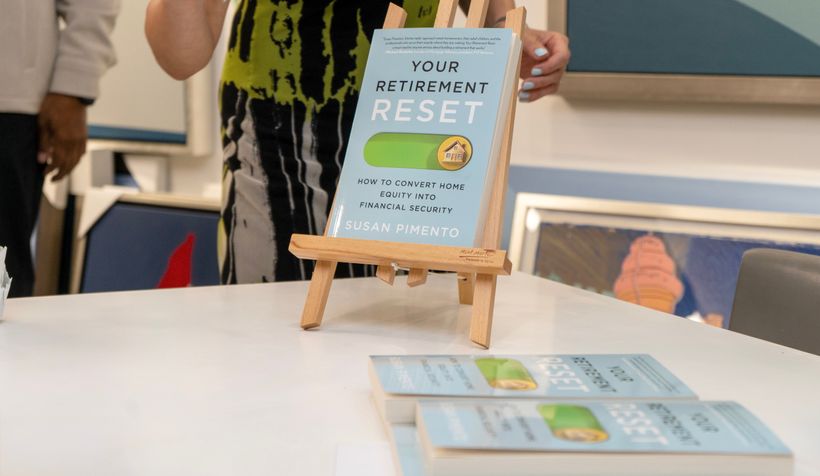
I hope you will consider pre-ordering a copy of Your Retirement Reset for you, a friend or loved one. It's available September 8, 2026 published by ECW Press - You can now order at Indigo or Amazon. And if you love supporting Canadian booksellers, please also check with your local independent bookstore. Most can easily order it for you.


Important: This article is intended for educational purposes only and does not constitute financial, mortgage, tax, legal, or investment advice. Before making decisions about your retirement or home equity, consult qualified professionals who can assess your personal circumstances.






Connect with:
Sue Pimento

Sue Pimento

Founder | CEO

Writer, author & presenter focused on financial literacy and retirement strategies. I advocate for the health, wealth & purpose for retirees

Public speaking & trainingFitness and WellnessBankingPension ReformInterest Rates
Powered by

You might also like...

Check out some other posts from Retire with Equity

Why the retirement plan that worked for your parents is failing millions of Canadians featured image

4 min

Why the retirement plan that worked for your parents is failing millions of Canadians

Last month, I found a jar of mustard at the back of my fridge with a best-before date of 2019. It looked and smelled fine. My wife watched me unscrew the lid like I was about to eat gas-station sushi, and I threw the mustard away. I wish Canadians gave their retirement plans the same hard look, because most of the advice we hand people over 55 carries a best-before date of 1990, the year my parents' retirement began. They met at the grocery chain where they both worked, and each left with a defined-benefit pension: a monthly cheque that arrived for the rest of their lives, regardless of what the stock market did. Their employer bore the investment risk. Their job was to show up at the retirement party and eat the cake. That plan stood on three legs: a workplace pension, CPP and Old Age Security, and a paid-off house you would eventually sell to trade down. In 1991, a 65-year-old Canadian man could expect to live about 16 more years and a woman about 20. A plan built for that stretch did its job. Look at those legs today. Only 37.7 per cent of paid workers in Canada belonged to a workplace pension plan of any kind in 2023, according to Statistics Canada, and coverage has been declining for two decades. For most people, the cheque that used to arrive like the newspaper has been replaced by a statement that reads like a horoscope. CPP and OAS were never meant to carry anyone alone. That leaves the house. A 2023 CPP Investments survey found that only 45 per cent of Canadians have a financial plan for retirement, yet about three in four Canadians aged 55 to 74 own their homes. For millions of families, the house was the plan: buy it, pay it off, and burn the mortgage papers in a roasting pan. The old playbook still has one instruction for that asset, unchanged since 1990: sell, move, and hope the condo is cheaper. Most like to stay in their neighbourhood. In Toronto, they usually can't afford to. The calendar changed, too. My parents' plan was built for that 15-to-20-year stretch. Today, Canadian financial planning standards give a 65-year-old couple an even chance of one living to 94, a retirement closer to 30 years. That is about 10 extra years of groceries, property tax and dental work, and nobody gave the plan a raise to cover them. Larry Fink, who runs BlackRock, put his finger on it in his 2024 letter to investors: we have worked hard to help people live longer and much less hard to help them afford those extra years. Those years arrived just as the guaranteed pension cheque was disappearing, a change Fink called "a shift from financial certainty to financial uncertainty." When the man in charge of the world's largest pile of other people's money says so, I'd put down the mustard. Our system does a fine job of helping people pile up money, then goes quiet the moment they need that pile to become a paycheque. We hand people a savings target, a risk questionnaire and an RRSP deadline. On their last day of work, we hand them a bouquet. How much do you withdraw? Which account first? What happens to your OAS when your RRIF minimum pushes you past the clawback threshold? Where does the house fit? The old plan shrugs. The strain shows. Statistics Canada reports that among Canadians aged 65 to 74 who worked in 2022, almost half did so out of necessity. After a late-life divorce, my mother returned to part-time work at a grocery store. She had done everything the old plan asked of her. The usual reply is that people just need to save more. Telling a 72-year-old to save more is like telling a marathoner at kilometre 40 to train harder. An up-to-date plan opens with the question that matters at 65: how will this money cover the bills for 30 years? Home equity goes on the balance sheet at the first meeting, pulled from the drawer marked "emergencies and inheritance." Ninety-one per cent of Canadians say they want to live independently in their own homes for as long as possible, so a good plan offers ways to do that beyond a For Sale sign. And the industry that spent 40 years teaching people to save owes them the same energy in how to spend it. I have a modest proposal for the banks. Every February, you run RRSP season, complete with sailboat commercials. Give us an RRIF season to match, with the same budget, and put a drawdown plan in front of every client who turns 65. And while you are at it, switch the word "savings" to "spending" or "paycheque" on our bank account. Take your retirement plan out of the back of the fridge and check the date on the lid. If it says 1990, you know where it goes. My wife will be happy to show you the garbage. This Opinion Article was published in the Business Section of the Saturday Star and online Toronto Star on October 17, 2026, 

When Two Retirements Collide featured image

8 min

When Two Retirements Collide

All this talk lately about Trump and Carney squaring off has made me reflect on matters closer to home. My living room has never quite reached the level of a televised leaders’ debate, but retirement has a way of turning minor domestic disagreements into full parliamentary sessions. And unlike politicians, you can’t call a recess and fly to Florida. For years, we’ve been sold a lovely picture of retirement. The alarm clock disappears. The kids have finally stopped treating your house like a storage locker. There are leisurely breakfasts, travel, golf, grandchildren, and coffee on the patio on a Tuesday morning simply because you can. And there is your spouse. Every. Single. Day. For many couples, this is wonderful. Even in the happiest relationships, though, somewhere around the third consecutive Tuesday morning together, a thought may quietly surface: Have you always chewed like that? We spend years trying to figure out whether we have enough money to retire. We calculate pensions, RRSPs, CPP, home equity, and how long our savings might last. We consult financial planners and make budgets. Some of us even build colour-coded spreadsheets, which I think is taking things a little far (just saying). Far fewer couples spend time figuring out how they will retire together, and that’s a different calculation altogether. Two Retirement Plans before One During our working years, most couples have something that retirement quietly removes: separation. You go to work. I go to work. You have your colleagues, routines, frustrations, and responsibilities, and I have mine. We leave each other in the morning, collect a day’s worth of stories, and come home with something to talk about. Retirement can fold two fairly independent lives into the same house and the same calendar, usually by the first Monday. Research backs this up. A German study of 2,117 couples, drawing on more than 30 years of national survey data, found that on average both partners grew more satisfied with life around retirement. The changes were also highly correlated within couples, so when one partner’s satisfaction slipped, the other’s tended to slip right along with it (Weber et al., 2021). Your retirement becomes my retirement, whether I applied for the position or not. Then come the expectations. One person has been dreaming of travelling for 20 years. The other would happily never set foot in an airport again. One wants to move, and one wants to stay. One wants to golf four days a week. The other thought retirement meant finally doing things together. One wants to help the kids financially. The other believes the kids are 43 and it may be time they gave adulthood a whirl. Even the timing can cause friction. One of you retires in June, the other has three years left before the pension kicks in, and suddenly someone is home all day reorganizing the spice drawer. Research on how couples make retirement decisions suggests that the way the call gets made, and whether both people feel they had a say, shapes how satisfied they are with retirement afterward (Szinovacz & Davey, 2005). The relationship you bring into retirement also comes along for the ride. Old patterns of closeness and conflict travel with you like carry-on luggage, and retirement simply changes the scenery around them (Davey & Szinovacz, 2004). That makes me wonder whether every couple needs two retirement plans before they have one. What does your retirement look like? What does mine look like? Where do they overlap? Those questions may matter more than whether we can afford the Viking cruise. And Then There’s Money Of course there is. Money has always had an extraordinary ability to walk into a perfectly pleasant conversation and leave with a baseball bat. In retirement it gets even more emotionally charged, because our financial psychology shifts. During our working years, another paycheque is always coming. In retirement, many of us start drawing down assets we spent decades building, which can feel completely sensible to one spouse and mildly terrifying to the other. This is where FORO, Fear of Running Out, can pull up a chair at breakfast. One partner sees $800,000 as security. The other sees the same $800,000 as a number that can only get smaller. Suddenly a $12,000 trip to Italy is carrying a lot of luggage: safety, control, mortality, and whether 93-year-old you might someday need that money. Then health can change the equation again. A spouse gets sick. Mobility changes. One person becomes a caregiver, and independence starts to slip away. Retirement plans that once looked beautifully aligned suddenly don’t, and that is a lot of change for any relationship to absorb. Apparently, Fighting Isn’t Necessarily Bad Three very different thinkers have helped me rethink the whole subject: an ancient Chinese general, a modern conflict facilitator, and a psychologist with a lab full of arguing couples. Sun Tzu’s The Art of War is about military strategy, yet one of its most enduring ideas travels surprisingly well into marriage: understand the situation, understand the other person, and don’t waste resources on battles that don’t need to be fought. Priya Parker comes at conflict from almost the opposite direction in her new book, The Art of Fighting (2026). Her work explores how conflict can strengthen relationships when people engage with it well. She calls this idea “healthy heat.” Some difficult conversations need enough heat to burn through to what actually matters. Then there is psychologist John Gottman, who studied couples over time and found something I love: happy couples don’t all fight the same way (Gottman, 1993). His research identified three stable types. Validators calmly talk their disagreements through. Avoiders would much prefer to change the subject. Volatile couples argue loudly and passionately and keep their marriages intact anyway. The couples headed for trouble were the hostile ones, along with the ones who had quietly checked out. So you and I don’t have to argue like the nice couple down the street. They look exhausted and bored, to be frank. What seems to matter is whether we can disagree and still hold on to respect, affection, and the sense that we are on the same side. That calls for something to sit beside the retirement financial plan. The Retirement Rules of Engagement 1. Figure out what you’re really fighting about. Before digging in your heels, ask why this matters so much to each of you. The argument about selling the house may really be about losing independence. A fight over spending can be tangled up with FORO. Too much golf might be about purpose for one person and loneliness for the other. And the argument about money may have very little to do with the actual numbers. Once the real issue is on the table, at least you’re having the right argument. 2. Choose your battles. Sun Tzu would make an excellent retirement consultant. Some things matter enormously, and others really don’t. If your spouse has loaded the dishwasher incorrectly for 37 years and everyone is still alive, victory may no longer be strategically important. 3. Keep the heat healthy. Disagreement has a place in a strong relationship. Parker’s idea of healthy heat gives us permission to have uncomfortable conversations without treating the discomfort as proof that the relationship is in trouble. Say the difficult thing. Ask the awkward question. Then stay curious about the answer. 4. Remember who is sitting across from you. This is the person you chose to build a life with. Opposing counsel bills by the hour. Gottman’s research is especially useful here, because hostility and emotional disengagement are the real warning signs. Anger passes. Contempt has a nasty habit of moving into the spare room. 5. Build some mine, yours, and ours. Two people don’t need to become one organism to have a good retirement. Separate interests, friendships, and activities give each partner purpose and independence, plus fresh material for dinner conversation. Then build the shared things on purpose too: travel, grandchildren, exercise, volunteering, cottage time, date nights, or whatever makes retirement feel like ours. A little absence can still make the heart grow fonder. 6. Know when you’re stuck. If you keep having the same argument, if conversations regularly turn hostile or contemptuous, or if one of you has simply stopped engaging, outside help may be worth it. A couples therapist can untangle relationship patterns. A financial planner can put real numbers around money fears. A retirement coach can help when identity and purpose are causing friction. Sometimes the most useful person at the kitchen table is the third one. What About Grey Divorce? Grey divorce is worth a few minutes here, because ending a marriage later in life is especially hard to recover from financially, and it ripples through the whole family, right down to the grandchildren who now spend Christmas in two places. The Canadian story, however, is less dramatic than the headlines suggest, partly because so many of those headlines are American. In the United States, adults 50 and older made up 8% of all divorces in 1990 and nearly 40% in the latest figures, and their divorce rate doubled between 1990 and 2010 before levelling off (Westrick-Payne & Brown, 2024). Canada never had that boom. Statistics Canada reports that the divorce rate among Canadians aged 50 and older rose 26% between 1991 and 2006, from 4.2 to 5.3 divorces per 1,000 married people, and has since remained relatively stable (Statistics Canada, 2022). Grey divorce remains considerably less common here than divorce among younger adults, so if you’ve read that it has doubled, you were reading about Americans. Still, divorce at 65 is financially different from divorce at 35. There are fewer working years to rebuild. One household becomes two. Housing, retirement income, pensions, estate plans, and family relationships can all take a hit, and women tend to feel it most. A Statistics Canada study that tracked Canadians from their mid-50s into their 70s found that divorced women kept about 70% of their family income, compared with about 87% for women who stayed married (Mehdi, 2023). The study concluded that divorce lowers living standards in retirement more than the death of a spouse does. Till Death Do Us Part Is Longer Than It Used to Be A couple retiring in their 60s could easily have another 20 or 30 years together. That’s an extraordinary gift. It’s also a very long time to argue over the thermostat. Our health will change, our finances may shift, and our interests will wander off in directions neither of us saw coming. The people we were when we walked away from our careers won’t necessarily be the people we are at 75, 80, or 90, so our relationships need room to grow with us. So pick the battles worth fighting, bring a little healthy heat to the ones that matter, and concede the rest, especially the dishwasher. Thirty years of retirement works out to more than 1,500 Tuesdays together. It would be a shame to spend them arguing about the forks. Don’t retire. ReWire. Sue P.S. Retiring solo? Don’t get too comfortable. Many of the same issues show up with adult children, friends, and family, along with everyone’s sudden assumption that you now have all kinds of free time. I’ll tackle that one in two weeks. My Book is Available for Order: I hope you will consider ordering a copy of Your Retirement Reset for yourself, a friend, or someone you love. Published by ECW Press and is available through Indigo or Amazon and McNally Robinson. If you like supporting Canadian booksellers, check with your local independent bookstore too. Most can order it.

MEDIA ADVISORY: “Your Retirement Reset” by Canadian Retirement Expert Susan Pimento Arrives in Bookstores Across Canada featured image

3 min

MEDIA ADVISORY: “Your Retirement Reset” by Canadian Retirement Expert Susan Pimento Arrives in Bookstores Across Canada

Practical guide to turning home equity into lasting retirement income is now available at Indigo, independent bookstores, Amazon.ca and McNally Robinson, and through Simon & Schuster in the U.S., in paperback, ebook and audiobook. Pimento is on a national media tour. TORONTO, ONTARIO, CANADA, September 29, 2026 -- Many Canadians share the same quiet worry: running out of money before they run out of life. Retirement expert Susan Pimento has a name for it: FORO, the Fear Of Running Out. As of today, her answer to it is in bookstores across the country. Your Retirement Reset: How to Convert Home Equity into Financial Security, published by ECW Press, is now in stores nationwide, including Indigo and Chapters locations and independent booksellers. It is also available on Amazon.ca and from Canadian independent bookseller McNally Robinson, in trade paperback, ebook and audiobook. In the United States, readers can order the book through Simon & Schuster. The book is written for Canadians in or near retirement and for the adult children who help them plan. It addresses a gap in how Canadians talk about retirement. Most advice is about saving. Very little explains how to turn what people have built into steady income that lasts. For many retirees, the family home is their largest asset. Your Retirement Reset explains, in plain language, the tools Canadians can use to unlock home equity. It shows how those tools fit alongside government benefits and registered savings, and how to weigh the trade-offs with family before making a decision. “Canadians have been told to save, save, save. Nobody tells them how to spend it,” said Pimento. “Meanwhile, the biggest asset most retirees own is right under their feet, and they’ve been taught to treat it like it’s off limits. A lot of people are house-rich and cheque-poor. This book is for anyone lying awake at 3 a.m. doing retirement math. You’ve done the hard part. Now let’s make it work for you.” “The book is about something that affects every one of us. How we're going to live and live well in the second half of our lives. Sue challenges us to think differently about retirement, especially the difference between having assets and having the income we need to enjoy life. She also challenges the traditional idea that the equity in our homes should simply sit there untouched until we die. Used thoughtfully and conservatively, she believes home equity can be a part of the retirement income conversation,” said Jennifer Smith, Publisher at ECW Press, at the book launch. National Media Tour Underway Susan Pimento is on a national media tour, and ECW Press is booking interviews with broadcast, print, podcast and online outlets. She can speak to: FORO (the Fear Of Running Out) and why it is keeping retirees up at night How Canadians can use home equity safely as a source of retirement income Common myths about reverse mortgages and downsizing What the shift from defined benefit to defined contribution pensions means for today’s retirees How adult children can start the money conversation with their parents To request an interview, contact Cassie Smyth, Publicist, at ECW Press (details below). Readers can find free resources and learn more about Pimento’s work at retirewithequity.ca. Book Details Title: Your Retirement Reset: How to Convert Home Equity into Financial Security Author: Susan Pimento Publisher: ECW Press In stores: September 29, 2026 Formats: Trade paperback, ebook, audiobook Price: $28.95 (Canada); US$28.95 (United States) ISBN (paperback): 978-1-77041-897-4 Pages: 280 US distribution: Simon & Schuster About Susan Pimento and Retire with Equity Susan Pimento is a Canadian retirement expert, author and founder of Retire with Equity, an education and advocacy platform on retirement financing. She spent more than 30 years in banking and mortgage lending, including as a Vice President at a Schedule I bank. She advises financial institutions and policymakers on modernizing retirement solutions for Canadians 55+, and co-authored EY Canada’s report The Canadian Retirement Evolution. Her motto: “Don’t Retire…ReWire!” Learn more at retirewithequity.ca Media Contact Cassie Smyth, Publicist ECW Press cassie@ecwpress.com | 416-694-3348 | info@ecwpress.com

View all posts