
Fewer Essays, Fiercer Odds: The New College Application Math

Heath Einstein on why cutting supplemental essays is driving up applications — and admissions selectivity — at schools like TCU.

Jul 24, 2026

2 min

Heath Einstein


A growing number of top colleges — including Tulane, Washington University in St. Louis, and UNC Chapel Hill — are trimming or eliminating supplemental essays, citing student stress and the rise of AI-assisted writing that makes it harder to tell who actually wrote an application. But the shift comes with a catch: fewer barriers to applying tend to mean more applications and lower admit rates.


The Wall Street Journal explored the trend, and pointed to Texas Christian University as a case study already living the tradeoff.


Heath Einstein is Vice Provost for Enrollment at Texas Christian University, now in his 13th year at TCU after previously serving as dean of admission and director of freshman admission. With more than two decades in admission and college counseling, he is a frequent speaker at national conferences and a voting delegate to the National Association for College Admission Counseling's Assembly, the governing body that sets national admissions-practice standards.


He has chaired Texas ACAC's Government Relations and Advancement committees, received the association's Founders' Award, and served as Board Chair of ACCEPT: Admissions Community Cultivating Equity and Peace Today. His expertise spans cultural humility, shared governance, crisis management, staff development, and data analytics. 


Einstein was recently featured in The Wall Street Journal article “Colleges Juice Application Numbers by Letting Students Write Fewer Essays” by Roshan Fernandez (July 10, 2026), which examines how cutting supplemental essays is reshaping admissions strategy nationally.


“TCU said responses to the questions it cut—about its values and inclusivity—lacked originality. ‘You still see a narrowing to the mean,’ said Heath Einstein, vice provost of enrollment management. ‘Students are still going to respond in ways that they think we want to hear.’ Einstein said the school's aim in expanding application numbers is simply to increase enrollment, not lower its admit rate.”


Einstein is available to speak with media on college admissions strategy, the impact of AI on application review, supplemental essays and holistic review, enrollment management, and higher-education leadership through crisis and change — all live issues as the 2026-27 application cycle takes shape.


To arrange an interview or request a comment, click through to Heath Einstein's profile below.


Connect with:
Heath Einstein

Heath Einstein

Vice Provost for Enrollment

Heath Einstein is an empathetic leader skilled in shared governance, staff development, crisis management, and cultural humility.

Cultural HumilityShared GovernanceCrisis ManagementStaff DevelopmentData Analytics
Powered by

You might also like...

Check out some other posts from Texas Christian University

The Truth About “Negative-Calorie” Cucumbers featured image

2 min

The Truth About “Negative-Calorie” Cucumbers

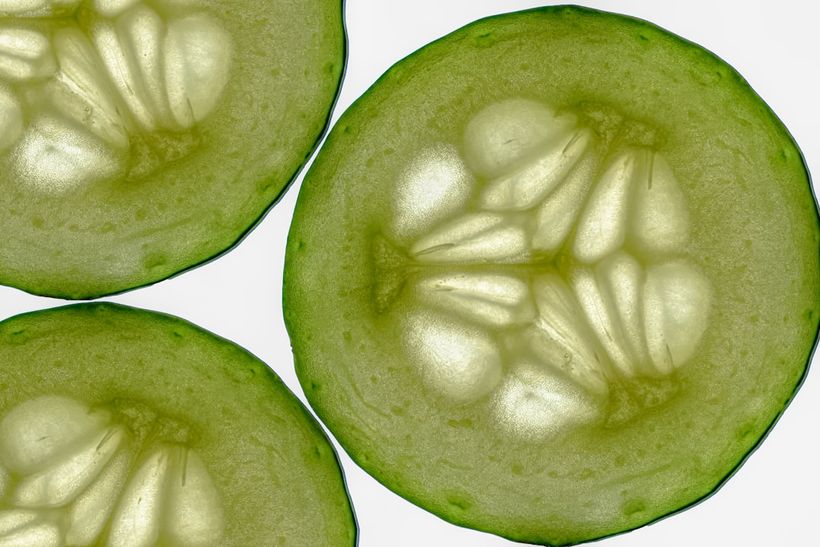
As summer temperatures climb, so does interest in cucumbers — crunchy, hydrating, and long rumored to be a “negative-calorie food” that burns more energy to digest than it provides. It's a claim that circulates every year in diet culture, but it isn't true. The New York Times recently set out to separate the nutrition science from the myth, and turned to registered dietitians for a clear-eyed answer. Dr. Gina Jarman Hill is a Professor and Chair of the Department of Nutritional Sciences at Texas Christian University. A Registered and Licensed Dietitian, she has worked as a clinical and consultant dietitian and is a member of the Hunger and Environmental Nutrition (HEN) and Dietitians in Integrative and Functional Medicine dietetic practice groups. Her teaching and research center on food and sustainability, nutrition ecology, community nutrition, and public health — with particular expertise in food security, urban agriculture, and hunger. She earned her BS, MS, and PhD in Food and Nutrition from Texas Tech University and was named the Texas Academy of Nutrition and Dietetics' Outstanding Nutrition Educator in 2017. Dr. Hill was recently featured in The New York Times article “How Healthy Are Cucumbers?” by Amanda Schupak (July 13, 2026), which examines what cucumbers do — and don't — offer nutritionally. Read the full article here. A 10.5-ounce unpeeled garden cucumber, for instance, contains just over one cup of water and 45 calories. Gina Jarman Hill, a professor of nutritional sciences at Texas Christian University, said there is a common misconception that cucumbers are “negative-calorie foods” — meaning they contain fewer calories than it takes to burn digesting them. “There’s no such thing as a ‘negative-calorie food,’” she said, but because the number of calories in cucumbers is so low, they’re about as close as you will get to one. As long as you’re mindful of what you pair them with, Dr. Hill said, there is no reason to curb your cucumber consumption. Dr. Hill is available to speak with media on nutrition myths, food security, sustainable and urban agriculture, community nutrition education, and healthy eating on a budget — timely topics as outlets continue to cover diet trends, food waste, and seasonal eating. To arrange an interview or request a comment, click through to Dr. Hill's profile below.

The Final Whistle: What Ronaldo’s World Cup
Exit Reveals About Letting Go featured image

2 min

The Final Whistle: What Ronaldo’s World Cup Exit Reveals About Letting Go

While the fans watched the final moments of Cristiano Ronaldo’s World Cup career, they were also witnessing something much deeper than the end of a match. They were seeing the psychological transition that every athlete eventually faces. Elite athletes spend decades developing an identity centered around training, competing, and performing at the highest level. When that chapter comes to an end, the challenge is no longer physical — it becomes psychological. It isn’t about walking away from the sport. It’s about redefining who they are without the game that has shaped so much of their life, and answering the question: who am I without sport? From a sport psychology perspective, successful retirement is defined by how well an athlete adapts to life after sport. Research shows that retirement is healthier when it is done proactively. Ideally, the athlete begins to develop interests outside of sport, builds a strong support system, and recognizes that their value extends beyond athletic performance. The goal is not to replace the identity of the “athlete” but to expand it. The skills that made them successful — discipline, leadership, and resilience — become the foundation for the next chapter. Retirement from elite sport is a process, not a single moment. For someone like Ronaldo, what makes this transition especially unique is that it happened on the world’s biggest stage. Elite athletes transition as millions watch, analyze every reaction, and say goodbye alongside them. It’s completely normal for athletes to experience mixed emotions— pride, gratitude, sadness, uncertainty, and even relief — all at the same time, as they reflect on the reality of closing a chapter that has defined much of their life. The end of an athlete’s elite career isn’t just about leaving competition. It’s about navigating a new sense of identity, discovering purpose beyond sport, and embracing a legacy that has impacted the sport and inspired generations. If you're covering stories on athlete retirement, identity, or the psychology behind the 2026 World Cup, connect with Robyn Trocchio. CONNECT WITH THE EXPERT Robyn Trocchio, Ph.D., CMPC Associate Professor and Graduate Program Director | Harris College of Nursing & Health Sciences, Kinesiology View Full Profile. Areas of expertise: Sport, exercise, and performance psychology · enhancing human performance from a psychophysiological perspective · attention allocation and perception of effort during physical activity · applied sport psychology research

New Harvard Report Highlights the Need for Ethical Leaders and Responsible Citizens featured image

2 min

New Harvard Report Highlights the Need for Ethical Leaders and Responsible Citizens

A new report from Harvard University's Making Caring Common Project and the National Association for College Admission Counseling is calling for a renewed focus on character, purpose, civic engagement, and ethical leadership in the college admissions process. The report, Turning the Tide in 2026: Preparing Students for Lives of Caring and Purpose, argues that colleges can play a critical role in helping develop the moral and civic capacities needed to strengthen communities and democracy. Among the higher education leaders featured in the report is Heath Einstein, Vice Provost for Enrollment Management at Texas Christian University, whose comments reinforce TCU's longstanding commitment to preparing students for lives of purpose and service. "In near perfect alignment with this report's principles, TCU's raison d'être is to produce ethical leaders and responsible citizens in the global community. At a time when our society—perhaps intentionally fragmented—cannot even agree on facts, it is essential to teach young people how to think critically about the world around them, communicate across difference, and collaborate to solve humanity's most pressing issues." The report warns that increasing political polarization, declining trust, rising mental health challenges, and excessive achievement pressure are affecting young people across the United States. Its authors argue that colleges, schools, and families should place greater emphasis on helping students develop empathy, curiosity, humility, civic responsibility, and a sense of purpose. Einstein notes that these qualities are central to the student experience TCU seeks to cultivate. "In order to achieve this outcome, we seek to create a class of students who possess empathy and humility so that they can critique ideas without critiquing the people presenting the ideas." The report's recommendations include encouraging meaningful engagement over résumé-building, helping students identify what they value and find purposeful, and creating admissions processes that recognize ethical character alongside academic achievement. Looking to know more? We can help. Heath Einstein, Vice Provost for Enrollment Management at Texas Christian University, is available to discuss college admissions, student success, ethical leadership, civic engagement, student purpose, and the evolving role of higher education in preparing future leaders.

View all posts