
Experts on earthquake response, community recovery and building safety

Aug 10, 2026

1 min

Tricia WachtendorfJennifer TrivediMichael Chajes


The shaking from a major earthquake may be over in minutes, but its consequences will last for years. University of Delaware experts can address emergency response, distributing aid, assessing damaged buildings, helping vulnerable communities and planning for long-term recovery.


Their expertise is particularly relevant as communities across Latin America respond to major earthquakes, including the deadly magnitude 7.4 earthquake in Colombia.


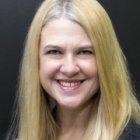
Tricia Wachtendorf, co-director of UD’s Disaster Research Center, offers expertise on how governments, nonprofits, emergency responders and community groups coordinate following a major disaster. Her research examines the role of spontaneous or “emergent” groups, humanitarian aid and donations, and how communities and organizations respond in the aftermath of disasters.


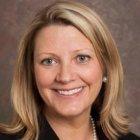
Jennifer Trivedi, associate professor of anthropology and Disaster Research Center faculty member, specializes in disaster vulnerability and why some communities are more severely affected than others. She also addresses the long-term recovery needs and planning that emerge after the immediate crisis.


Michael Chajes, professor of civil and environmental engineering, provides expertise on the structural damage caused by earthquakes, why some buildings collapse while others withstand the shaking and how engineers assess damaged structures and improve earthquake resilience.


To arrange an interview with one of these experts, visit their profiles and click on the contact button. Interested reporters can also email MediaRelations@udel.edu.

Connect with:
Tricia Wachtendorf

Tricia Wachtendorf

Director / Professor, Disaster Research Center / Department of Sociology & Criminal Justice

Prof. Wachtendorf expertise lies in the social, organizational, and decision-making aspects of disasters.

evacuationsMulti-organizational coordination and responses in disastersTransnational crisesImprovisation and adaptationCommunity-based approaches to preparedness, response, recovery, and mitigation
Jennifer Trivedi

Jennifer Trivedi

Assistant Professor, Anthropology; Core Faculty Member, Disaster Research Center

Prof. Trivedi's research explores disaster vulnerability, response, recovery, resilience and decision-making.

Disaster Resilience‎Disaster ResponseDisaster VulnerabilityDisaster RecoveryHurricanes
Michael Chajes

Michael Chajes

Professor of Civil, Construction, and Environmental Engineering; Interim Vice Provost for Undergraduate Education; Dean of the Honors College

Prof. Chajes focuses on bridge engineering and forensic engineering, unearthing the causes of engineering failures.

BridgesForensic EngineeringStructuresSustainability
Powered by

You might also like...

Check out some other posts from University of Delaware

Experts on Hurricane Preparedness, Public Health and Community Recovery featured image

2 min

Experts on Hurricane Preparedness, Public Health and Community Recovery

When hurricanes threaten communities already facing social and economic challenges, the need for effective disaster preparedness and response becomes even more critical. University of Delaware disaster research experts can discuss the challenges communities face before, during and after hurricanes, including Hurricane Isaias and its potential impacts across Alabama, Mississippi, the Florida Panhandle and other parts of the northern Gulf Coast. The following experts from UD's Disaster Research Center are available to discuss the public health consequences of hurricanes, disaster preparedness and community recovery. Sarah DeYoung, associate professor of sociology and criminal justice, can discuss the needs of refugee and immigrant communities before, during and after disasters, including challenges accessing information, assistance and essential resources. She worked for several years with refugee and immigrant communities in southern Alabama through a grant-funded project. Jennifer Horney, professor of epidemiology, can discuss the public health consequences of hurricanes and other disasters, including evacuation decisions, the risks posed by inland flooding and the challenges communities face during recovery. She was part of the public health response to Hurricane Harvey and can discuss how communities still recovering from major storms may face additional challenges when another hurricane threatens the region. Jennifer Trivedi, associate professor of anthropology, studies how disasters affect marginalized communities. She can discuss how disasters compound existing challenges for people struggling to meet basic needs, particularly when flooding disrupts housing, transportation, food access and other essential services. Tricia Wachtendorf, co-director of the Disaster Research Center, can discuss the social impacts of hurricanes and inland flooding, including evacuation, preparedness, community response and recovery. She can also discuss how storms that are not the most powerful can nonetheless cause significant damage and disruption. To reach these experts directly, visit their ExpertFile profile and click on the "contact" button. Interested journalists can also contact MediaRelations@udel.edu.

How should journalists cover politics when democracy is at stake featured image

1 min

How should journalists cover politics when democracy is at stake

Political coverage often centers on the president, but according to the University of Delaware’s Dannagal Young, journalists can sometimes provide more meaningful coverage by focusing more on democracy and less on the commander in chief’s every movement. Young calls this approach “democracy-centered reporting.” Instead of treating every presidential announcement or provocative statement as the central event, democracy-centered reporting asks how political actions affect democratic institutions, constitutional principles and Americans’ ability to exercise their rights as citizens, Young says. Young, professor of communication and director of UD’s Center for Political Communication, says “access journalism” has an important role, but an overreliance on access can also make political leaders the organizing principle of coverage. In moments when executive power is expanding, she argues, journalists should consider whether their coverage is inadvertently amplifying the power they are trying to scrutinize. Young can discuss: • How journalists can cover presidents without making the president the center of every story • The benefits and risks of access journalism • How coverage of political conflict affects public understanding of democracy To arrange an interview with Young, visit her profile and click on the "contact" button. Interested reporters can also send an email to MediaRelations@udel.edu.

Public health risks after a major flood featured image

1 min

Public health risks after a major flood

Floodwaters may recede quickly, but the health consequences of a major disaster can last for months or even years, says University of Delaware epidemiologist Jennifer Horney. Horney, an expert in disaster recovery and public health, can discuss the longer-term health challenges communities face after major flooding events, including the Aug. 26 flash floods in Nepal that resulted in 1,450 deaths, with 6,000 people still missing. Horney can talk about: • How damage to health infrastructure can make it more difficult for people to access medical care after a disaster, and what communities can do to prepare for and reduce longer-term health consequences following flooding and other disasters. • How contaminated water and food can increase the risk of infectious disease, and how standing water left behind by floods can create breeding grounds for mosquitoes that transmit diseases such as dengue, malaria, encephalitis and chikungunya. • The impact disasters have on physical and mental health well after the immediate emergency has passed. To arrange an interview, visit Horney's profile and click on the contact button. Interested reporters can also send an email to MediaRelations@udel.edu.

View all posts