
Where Will AI Change Work First?

MIT CTL researchers Pierre Bouquet and Luca Mouchel are bringing new clarity to AI’s impact on jobs.

Sep 18, 2026

3 min


Artificial intelligence is changing the workplace, but predicting which jobs will disappear may be the wrong place to start.


A recent Boston Globe article looks at new research from Pierre Bouquet, a PhD candidate and research assistant at the MIT Center for Transportation & Logistics (MIT CTL), and Luca Mouchel, a visiting student at MIT CTL completing his master’s thesis in affiliation with MIT. Their AI Labor Exposure Map examines the specific tasks that make up different occupations and measures which of those tasks can already be performed or accelerated by AI.


The distinction matters. AI exposure does not mean that a job is about to disappear. It can mean that certain parts of a job are becoming easier to automate while other responsibilities, particularly those involving judgment, oversight and human interaction, remain firmly in human hands. (news.mit.edu)


“It’s not a forecast. It’s a measurement.”


Pierre Bouquet, MIT Center for Transportation & Logistics, speaking to The Boston Globe (ctl.mit.edu)


That idea is central to the broader work Bouquet and Mouchel are doing at MIT CTL.


Bouquet’s doctoral research focuses on the future of work and measuring AI’s impact on labor markets, organizations and society. Mouchel’s work focuses on quantifying workforce exposure to AI. Together, their research contributes to MIT CTL’s broader effort to understand how technology changes work at the level of individual tasks. (ctl.mit.edu)


Their work is part of the Work Analytics Lab at MIT CTL, which studies AI exposure, job design, productivity and workforce planning. The goal is to give employers and policymakers better information about where AI may automate work, where it may augment people and how jobs themselves could evolve.


That approach produces a more nuanced picture of the future of work.


Exposure varies considerably across occupations and regions. Knowledge-intensive jobs can contain highly exposed tasks, while many service and physical roles remain less affected by current AI capabilities. Even within an exposed occupation, the parts of the job requiring human judgment, management and interpersonal skills may remain essential.


For employers, the question may therefore be less about which jobs AI will replace and more about which parts of work should change.


That creates an opportunity to think differently about workforce planning, job redesign, training and how organizations divide responsibilities between people and technology.


Story Ideas


  • AI exposure is not job loss: Why measuring tasks gives a clearer picture of workforce risk.


  • Which jobs will AI change first? The occupations and regions showing the greatest exposure.


  • What should stay human? Identifying the tasks where judgment and human interaction still matter most.


  • The entry-level AI question: How automation could reshape the early stages of professional careers.


  • Redesigning work around AI: How companies can use task-level data to rethink jobs, training and productivity.


Read the Boston Globe article: AI’s impact on jobs? It’s all over the map.


Visit MIT CTL to learn more about their work at the MIT Center for Transportation & Logistics are conducting on on AI, labor markets, workforce planning and the changing nature of work.


Powered by

You might also like...

Check out some other posts from MIT Center for Transportation & Logistics

When Hackers Attack the Supply Chain, the Consequences Go Far Beyond Stolen Data featured image

3 min

When Hackers Attack the Supply Chain, the Consequences Go Far Beyond Stolen Data

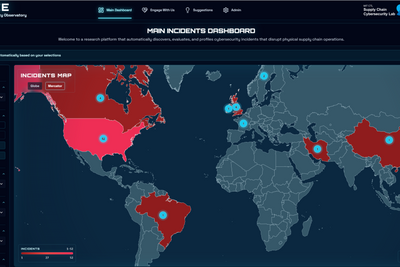
When cybercriminals target a business, the consequences can extend far beyond stolen data and compromised computer systems. Factories can shut down, shipments can be delayed, and disruptions can spread across entire supply networks, affecting businesses and consumers around the world. Recognizing these growing threats, the MIT Center for Transportation & Logistics has launched a new Supply Chain Cybersecurity Lab dedicated to helping organizations prevent, manage and recover from cyberattacks that threaten global operations. The initiative is co-founded by MIT researchers Dr. Miguel Rodríguez García and Dr. Camilo Mora, who are combining expertise in cybersecurity and supply chain management to address vulnerabilities that traditional IT security approaches may overlook. When a Cyberattack Becomes a Supply Chain Crisis The stakes are significant. A 2025 cyberattack against Jaguar Land Rover forced the manufacturer to suspend production at its UK facilities for five to six weeks, with an estimated economic impact exceeding $2 billion. Dr. Camilo Mora is a researcher at the MIT Center for Transportation & Logistics and Co-founder of the MIT Supply Chain Cybersecurity Lab. His research explores how ransomware, cyberattacks and digital vulnerabilities affect supply chain operations and resilience. View his profile And the risks are growing as manufacturers, warehouses and transportation networks become increasingly dependent on interconnected technologies, artificial intelligence, robotics and third-party software providers. For Dr. Camilo Mora, the importance of this research became clear after learning about a ransomware attack that disrupted a company's operations nationwide and required approximately three months to restore its systems. "That moment made me realize the enormous impact that a cyber-attack can have beyond the classic IT department, affecting the flow of goods, information, and money all at once, plus reputational damage across the entire network." The researchers are particularly concerned about smaller suppliers that lack the resources to defend themselves against sophisticated attacks, yet play critical roles in global supply networks. New Research to Identify and Prevent Disruptions The MIT lab is developing three research tools to help organizations understand and address these threats: TRACE: Tracks cyber incidents and their real-world consequences, including operational shutdowns, financial losses and disruptions to supply networks. RADAR: Identifies emerging cybersecurity risks associated with technologies such as autonomous systems, quantum computing and robotics. SCOUT: Helps smaller suppliers identify vulnerabilities and develop practical cybersecurity improvement strategies. The research also emphasizes that technology alone cannot protect supply chains. Employee awareness, leadership preparedness and coordination between IT and operational teams are essential to preventing disruptions and recovering when attacks occur. Protecting Global Supply Chains Before the Next Attack As global supply chains become increasingly interconnected, the work raises urgent questions for business leaders. How vulnerable are their suppliers? Could a cyberattack shut down their operations? And are organizations prepared to keep goods moving when critical technology fails? Dr. Miguel Rodríguez García is a Research Scientist at the MIT Center for Transportation & Logistics and Co-founder and Director of the Supply Chain Cybersecurity Lab. His research examines the cybersecurity risks associated with emerging technologies, automation, robotics and interconnected global supply chains. View his profile For Dr. Miguel Rodríguez García, addressing these challenges requires bringing together two disciplines that have traditionally operated independently. "We created this lab because supply chain and cybersecurity professionals have not been talking to each other. We're here to help companies continue operating even when technology fails, and we want to learn from companies that have suffered these attacks so we can bring those lessons back to the industry and make cybersecurity better for everybody." The lab's mission is straightforward: keeping supply chains moving even when technology fails. By combining research, industry collaboration and practical cybersecurity tools, MIT researchers hope to help organizations anticipate threats, strengthen resilience and recover more quickly when attacks occur. If you're interested in speaking with these MIT researchers about supply chain cybersecurity, ransomware, emerging technology risks, operational disruptions and protecting global commerce, simply click on the profiles of Dr. Miguel Rodríguez García or Dr. Camilo Mora to arrange an interview today.

Companies Are More Committed to Sustainability Than Ever. So What's Holding Them Back? featured image

3 min

Companies Are More Committed to Sustainability Than Ever. So What's Holding Them Back?

Corporate commitments to sustainability have reached record levels, but a new report from the Massachusetts Institute of Technology (MIT) suggests that turning those promises into meaningful action remains a significant challenge. The 2026 State of Supply Chain Sustainability Report, based on a survey of 1,810 supply chain professionals across 91 countries, found that 83 percent consider sustainability important or very important to long-term business success, the highest level recorded in the report's seven-year history. Yet the research reveals a troubling disconnect between corporate ambition and the structures needed to achieve measurable results. Dr. Sreedevi Rajagopalan, Director of the MIT Sustainable Supply Chain Lab and lead author of the report, says the challenge is no longer simply convincing companies that sustainability matters. "Commitment is strong, measurement is expanding, and AI is accelerating," says Dr. Sreedevi Rajagopalan, director of the MIT Sustainable Supply Chain Lab and lead author of the report. "What comes next is harder: converting commitment into accountability, operational integration into strategic decision making, and incremental decarbonization into genuine transition." Rajagopalan cautions that the next challenge involves turning those commitments into accountability, integrating sustainability into strategic decisions and achieving more substantial reductions in emissions. Dr. Sreedevi Rajagopalan is a Research Scientist at the MIT Center for Transportation & Logistics and Director of the MIT Sustainable Supply Chain Lab. Her research focuses on sustainable logistics, circular supply chains, Scope 3 emissions and helping organizations translate sustainability commitments into practical strategies. View her profile The report identifies several important findings: Corporate accountability is lagging: Only 51 percent of companies with publicly stated sustainability goals have formal cross-functional sustainability teams, while just 33 percent have board-level oversight. Tariffs are disrupting progress: Sixty-eight percent of respondents say tariff uncertainty has forced them to delay, reduce or abandon sustainability strategies. AI offers promise, but also challenges: While 87 percent of organizations adopting AI for sustainability report positive impacts, improvements in operational efficiency do not necessarily translate into lower overall emissions. Transportation remains a challenge: Forty-three percent of freight fleets still operate mostly or entirely on conventional diesel, while only eight percent have fully transitioned to low-emission energy. Collaboration is increasing: Participation in joint supplier engagement and decarbonization programs has climbed from 31 to 58 percent in just one year. Perhaps one of the report's most important findings concerns how sustainability is managed inside organizations. Companies with formal cross-functional teams report integrating sustainability into decisions far more frequently than those assigning responsibility to a single department. The findings raise important questions for business leaders. Are sustainability commitments being supported by meaningful governance? Can AI deliver measurable environmental improvements? And how can companies maintain progress when tariffs, geopolitical uncertainty and changing policies disrupt long-term plans? For Rajagopalan, the research points to a critical distinction: making sustainability a corporate priority is not the same as making it part of how a business operates. If you're interested in speaking with Dr. Rajagopalan about corporate sustainability, supply chain emissions, artificial intelligence, environmental accountability and the challenges facing global businesses, simply click on her profile to arrange an interview today.

When Food Supply Chains Break: Why Traceability Matters featured image

2 min

When Food Supply Chains Break: Why Traceability Matters

A foodborne illness outbreak can begin with a single contaminated product. Finding where that contamination occurred, however, can mean tracing a product backward through a complicated network of retailers, distributors, brokers, carriers, wholesalers and suppliers. That challenge has been brought into focus by the 2026 Cyclospora outbreak, which has disproportionately affected lettuce and resulted in thousands of confirmed cases and thousands more under investigation in the United States. Dr. Christopher Mejía Argueta, a Research Scientist at the MIT Center for Transportation and Logistics, compares tracing the source of a foodborne illness outbreak to a “criminal investigation. “After officials investigate that, they go back and identify where the retailers sold those potential products, and then they start going upstream in the supply chain.” The process starts with consumers who have been diagnosed and works backward through the supply chain, identifying where products were sold before moving upstream through distributors and brokers and ultimately toward suppliers and vendors. But the more complicated the supply chain becomes, the harder that investigation can be. “The more the complexity grows, the more difficult it is to identify where all of this happened.” Chris Mejía Argueta is a Senior Research Scientist at the MIT Center for Transportation and Logistics with 20 years of experience delivering applied research in 20+ countries. His work helps organizations turn complex supply chain challenges into practical strategies that improve competitiveness, efficiency, and flexibility. View his profile Mejía Argueta explains that contamination could potentially occur at several points, including at the carrier or wholesale level. With fresh produce often moving through numerous intermediaries before reaching consumers, each additional participant can add another layer to the investigation. Once a likely source is identified, recalls become an important tool for containing the outbreak. Potentially contaminated products must be located, brought back and destroyed, while supply chain stakeholders also need to consider the possibility of cross-contamination involving other products that came into contact with them. The 2026 Cyclospora outbreak raises broader questions about how food supply chains can improve visibility and traceability as they become increasingly complex. How can better traceability help investigators identify the source of contaminated food faster? What happens when products move through numerous distributors, brokers and carriers? Where can contamination occur as food moves through the supply chain? How do recalls work once a potentially contaminated product has been identified? What role does supply chain visibility play in limiting cross-contamination? How can food supply chains become better prepared to identify and contain future outbreaks? If you’re interested in speaking with Dr. Mejía Argueta about food supply chain traceability, the challenges of tracking contamination and what the 2026 Cyclospora outbreak reveals about supply chain visibility, simply click on his profile below to arrange an interview today.

View all posts