Cornea specialist, educator named chair of MCG Ophthalmology

Aug 27, 2026

2 min


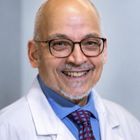
Amy Estes, MD, a cornea specialist, educator and long‑time faculty leader, has been named chair of the Department of Ophthalmology at the Medical College of Georgia at Augusta University, effective July 1.


Pending approval of the University System of Georgia Board of Regents, she will also hold the Knights Templar Educational Foundation of Georgia/Fleetwood Maddox Chair in Ophthalmology.


Estes joined MCG in 2013 and currently serves as director of the Cornea Service. She is a highly respected clinician who cares for patients from across Georgia who require advanced medical and surgical management of complex corneal disease.


A dedicated educator, Estes has played a central role in training the next generation. She has advised numerous medical students pursuing careers in ophthalmology, served on multiple PhD committees and contributed extensively to resident education. She previously served as associate director of the Ophthalmology Residency Program and has led the residency program as director since 2020. Her leadership has strengthened the visibility and reputation of the department’s educational programs across the state.


She also brings significant leadership experience at both the state and national levels. She has served on the council of the Georgia Society of Ophthalmology, ultimately becoming its president, and as the Georgia representative at the American Academy of Ophthalmology. Her research collaborations with the James and Jean Culver Vision Discovery Institute have contributed to six R01 grants and 19 peer-reviewed publications, advancing both basic science and translational vision research at MCG.


“Dr. Estes has demonstrated exceptional commitment to patient care, education, and research throughout her career at MCG,” said MCG Dean David C. Hess, MD. “Her vision for the department, combined with her deep understanding of our institution and the needs of patients across Georgia, makes her an outstanding choice to lead the department into its next chapter.


“I also want to express my sincere appreciation to Steve Brooks, MD, who has served as chair of the department since 2020 and will return to his faculty role as a pediatric ophthalmologist. Dr. Brooks has guided the department through significant transitions with steadiness, compassion, and a deep commitment to learners and patients. I’m thankful that he will continue to share his expertise with our students, residents, and the children and families he serves, and that he will continue his important work in patient care, research, and education.”


As chair, Estes plans to prioritize faculty recruitment and retention, support continued growth in research and education, and pursue opportunities to expand clinical services, including exploring satellite locations to improve patient access and accommodate increasing demand for eye care across the state.


She completed her undergraduate education at Davidson College before earning her medical degree from The Ohio State University College of Medicine. She completed both her ophthalmology residency and a fellowship in cornea and refractive surgery at Wake Forest Baptist Medical Center.


See more experts at Augusta University → Click here

Powered by

You might also like...

Check out some other posts from Augusta University

When Science Can't Be Repeated: Tackling a Crisis in Research featured image

3 min

When Science Can't Be Repeated: Tackling a Crisis in Research

Science depends on a simple but critical principle: Research findings should be reliable enough that other researchers can reproduce them. But what happens when they can't? Biomedical research is confronting what has become known as the “reproducibility crisis,” with major scientific journals estimating that more than 80% of published biomedical research is negatively affected by defects that can make findings non-reproducible or unusable. Now, researchers at Augusta University are taking a closer look at why research goes wrong – and, more importantly, whether those problems can be prevented before findings are published. Backed by a new $2.5 million R01 grant from the National Institutes of Health, researchers in Augusta University's School of Public Health will identify common research defects and develop strategies to help scientists avoid them. The project is led by E. Andrew Balas, MD, PhD, a professor in the Department of Health Management, Economics, and Policy who has spent more than a decade studying the research process itself. “Research quality is not only a matter of detecting errors after they occur. The critical question is, how can we understand the conditions that produce research defects and develop effective ways to prevent them before they compromise scientific results?”  E. Andrew Balas, MD, PhD The consequences extend well beyond the laboratory. Unreliable findings can influence patient care, waste research funding and send other scientists down paths built on results that were never dependable. They can also contribute to something increasingly important for the scientific community: declining public trust. The Augusta University team plans to create a database of common research defects and examine which stages of the research process are particularly vulnerable. Researchers also envision a tool that could eventually allow scientists to enter information about their methodology and identify potential problems before completing and publishing their work. Wendy Burnett, PhD, an assistant professor in the School of Public Health and co-investigator on the study, summed up the stakes: “Years of work and substantial funding may be invested in studies based on results that were never dependable.”  Wendy Burnett, PhD The interdisciplinary project will also examine the human side of the problem, gathering perspectives from researchers, peer reviewers and journal editors to better understand why research defects happen and what may prevent people from recognizing or addressing them. Ultimately, the research asks a question that goes to the heart of modern science: How can we make research more trustworthy before mistakes become part of the scientific record? After the project is complete, Balas and his team hope the results will ultimately impact science and society in many significant ways. “Research has made wonders in our lives – we have life-saving drugs, we have a lifestyle that is healthier than ever before and so forth. If research could produce more valuable, useful, trustworthy, reproducible results, then we will all be better, and it should also increase public trust in research.” For media covering scientific integrity, biomedical research, public trust in science, research funding, peer review or the reproducibility crisis, this work offers a timely look at how the scientific community can improve not only what it discovers, but how those discoveries are made.

A Silent Disease, a Surprising Discovery: Research Uncovers Chagas Risk in the U.S. featured image

2 min

A Silent Disease, a Surprising Discovery: Research Uncovers Chagas Risk in the U.S.

Chagas disease is often associated with Latin America, but new research from Augusta University is raising questions about how frequently the potentially serious infection may be going undiagnosed in the United States. Jose Vazquez, MD, division chief and professor of medicine in infectious diseases at the Medical College of Georgia at Augusta University, and his team recently tested farmworkers for antibodies associated with Chagas disease as part of a seroprevalence study. Of 155 blood specimens collected, 15 tested positive, a positivity rate of nearly 10%. The finding was particularly notable because Vazquez points to a recent study from Columbia and Greenville, South Carolina, that found a positivity rate of 2% to 3%. Chagas disease is caused by the parasite Trypanosoma cruzi and is found predominantly in Latin America. An estimated 240,000 to 350,000 people are infected in the United States. The disease can be especially difficult to identify because approximately 70% of cases are asymptomatic. When complications do develop, they can include serious cardiac and gastrointestinal problems. Dr. Jose Vazquez studies and treats infectious diseases, including COVID-19, antibiotic-resistant superbugs and fungal infections. View his profile Vazquez's interest in the disease became personal after someone he knew, originally from El Salvador, suffered cardiac arrest and was subsequently diagnosed with Chagas disease and severe cardiomyopathy. That experience helped prompt Vazquez to look more closely at the disease and its potential prevalence among populations in the region. “The reason why I’m doing it is twofold: One is if they’re positive, so we can treat them and maybe prevent these complications.” Jose Vazquez, MD For journalists covering Chagas disease, infectious diseases, health disparities, migrant and farmworker health, disease screening or emerging public health concerns in the United States, Vazquez can provide expert insight into what these findings mean and why greater awareness and screening may be important. Simply click on his profile now to arrange an interview today.

AU Hosts Congressional Hearing on 'Building an AI-Ready America' featured image

3 min

AU Hosts Congressional Hearing on 'Building an AI-Ready America'

The U.S. House Committee on Education and Workforce held its first artificial intelligence field hearing of the year, titled "Building an AI-Ready America: How AI Is Creating Opportunities Across America's Workforce," at the Georgia Cyber Center at Augusta University on July 24. U.S. Rep. Rick W. Allen, who represents Georgia's 12th District and chairs the committee's Subcommittee on Health, Employment, Labor, and Pensions, chaired the hearing. He was joined by U.S. Rep. Joe Wilson of South Carolina and U.S. Rep. Lucy McBath of Georgia. Jeffery Talbert, PhD, chair of Augusta University's Department of Artificial Intelligence and Health at the Medical College of Georgia and a Georgia Research Alliance Eminent Scholar, served as one of four witnesses at the hearing. "Today, we examine how artificial intelligence, AI, is creating economic opportunities for American workers, job creators and our communities," Allen told the committee. "There's no better place to hold this hearing than right here in Augusta." Allen said the combination of the Georgia Cyber Center and Fort Gordon provides the expertise needed to discuss AI. "Fort Gordon is just a short 30-minute drive from where we currently sit," he said. "It hosts the Army Cyber Center of Excellence and is home to Army Cyber School, which trains, educates and develops the Army's Cyberspace and Electronic Warfare workforce. Every year, thousands of people leave Fort Gordon looking for work." He added that the Georgia Cyber Center "was created to meet this growing demand and drive collaboration between academia, government and industry stakeholders to equip a superior cybersecurity workforce with the skills they need." Augusta University President Russell T. Keen told the committee it was an honor for AU's Georgia Cyber Center to host the hearing. "Congressman Allen has long recognized the important role that education, innovation and workforce development play in strengthening our state and our nation," Keen said. He added that AI "will continue to change how we live, how we learn, how we work and how we solve problems," and that Augusta University "intends to lead in that transformation in ways that strengthen our workforce, advance discovery, improve lives, change lives and save lives." Talbert, who has more than 30 years of experience in biomedical informatics, has published approximately 260 times and has led more than 100 funded research projects totaling more than $130 million. He told the committee that in health care, AI is demonstrating its greatest value through augmentation, helping professionals "work more effectively, reducing administrative burdens, improving patient outcomes and expanding workforce capacity." He pointed to ambient documentation technology, which converts clinical conversations into draft notes clinicians review and approve, as one of the industry's most successful AI applications. "Multiple studies show these tools reduce documentation burden, after-hours work and burnout," Talbert said. "One multisystem implementation found clinician burnout fell from approximately 52 percent to 39 percent." He also cited studies showing AI-assisted breast cancer screening detecting approximately 29 percent higher cancer rates, "helping more patients benefit from earlier diagnosis and treatment." America's opportunity, Talbert said, "is not simply to adopt AI, but to lead its responsible development, education and implementation." He pointed to Augusta University's Department of AI and Health, the first of its kind in Georgia, as an example of that approach. Allen closed the hearing by cautioning against a one-size-fits-all approach to AI policy. "The needs of a family farm are not the same as those of a hospital, a manufacturing plant or a small business," he said. "Congress must pursue flexible policies that allow businesses to adopt AI in ways that best suit their industry and workforce." JagWire has the full recap of the hearing and the Augusta Chronicle, Innovation & Entrepreneurs News and Traders Union also covered the field hearing. Augusta University experts in artificial intelligence, healthcare innovation and workforce development are available for interviews. If you're covering similar stories, reach out to schedule time.

View all posts