

Vanderbilt Index Finds Sustainability Remains a Mainstream Consumer Priority

Sep 3, 2026

4 min

Eric VanEppsMichael Vandenbergh

As companies reconsider environmental commitments and sustainability receives less attention in corporate America, American consumers appear to be holding their ground.


The inaugural Vanderbilt Consumer Sustainability Index (VCSI), released today by Vanderbilt University and consumer research company Switch 5, finds broad and consistent commitment to sustainability across the country. The national survey of 2,528 American adults found that 83% score above the midpoint on the new index, with surprisingly small differences across regions, gender and urban and rural communities.


The findings establish the first baseline for the VCSI, a new quarterly measure designed to track how Americans’ attitudes toward sustainability change over time. Unlike existing measures focused primarily on climate policy or political attitudes, the VCSI looks at Americans as consumers — what they believe, what they expect from businesses and other institutions, and what they say they are willing to do themselves.


The inaugural July 2026 reading places the VCSI at 69.2 out of 100, indicating a moderate-to-strong sustainability orientation among American consumers.


The VCSI builds on more than two years of consumer research by Switch 5, which studies the attitudes and behaviors shaping consumer adoption of clean energy and sustainable products. That research has included more than 16 national surveys involving more than 50,000 Americans. The partnership with Vanderbilt brings that work into a recurring academic index designed to provide researchers, journalists, and businesses with a consistent measure of how consumer sustainability sentiment is changing over time.


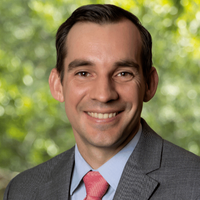
“Sustainability is often discussed through the lens of politics or corporate commitments, but consumer preferences are a critical part of the picture,” said Eric VanEpps, Associate Professor of Marketing at Vanderbilt Owen Graduate School of Management and coauthor of the study. “We created the VCSI to establish a consistent measure of what Americans believe and expect when it comes to sustainability, and to track how those attitudes change over time.”


Key Findings from the Inaugural Wave


1. Consumer sustainability orientation is stronger than commonly recognized. 83% of Americans score above the midpoint of 50 on the index, suggesting broad popularity of sustainability.


“People might read media coverage about how both public and private investments in sustainability initiatives have been reduced, and how large corporations have pulled back from the climate goals they set a few years ago. But the American public still cares about the environment, and these initial results create a baseline from which we can now measure trends in general sentiment,” said VanEpps.


2. Americans want businesses to lead on sustainability. Nearly nine in ten Americans (87%) want companies to help them be more environmentally friendly, and 85% say corporations bear responsibility for addressing climate change. Support for federal government action to address climate change is similarly high, at 84%, indicating broad public expectation that institutions — both public and private — should be part of the solution.


“One thing to note is that most Americans work for either large corporations or the government. So when survey respondents say they want these organizations to address climate change, that is also a likely signal of how they want their employers to act,” said Vanderbilt Law School professor and study coauthor Michael Vandenbergh.


3. Concerns about future generations are widespread. More than four in five Americans (81%) believe climate change will harm future generations, including nearly half (47%) who say it will do a great deal of harm. Parents score meaningfully higher on the overall index than non-parents (72.9 vs. 67.3), suggesting the intergenerational frame is a significant motivator of sustainability commitment.


4. Americans say they are willing to act — including at some personal cost. Nearly three-quarters (74%) of Americans say they are willing to pay a little more for products that are better for the environment, and 72% say they are willing to sacrifice convenience to make environmentally friendly choices. These findings suggest meaningful room for consumer-facing sustainability initiatives that go beyond attitude measurement into behavioral change.


5. Sustainability commitment cuts across demographic lines. Perhaps the most noteworthy finding of the inaugural wave is how narrow the differences are across groups typically assumed to hold divergent views on the environment. Regional differences are minimal, with less than 2 points separating the highest and lowest of the four census regions. The gender gap is 1.5 points, and the urban-rural gap is 3 points.


6. Younger Americans lead, but sustainability commitment is broad across generations. Americans aged 18-34 score 72.2 on the index, compared to 65.1 among those 65 and older — a 7-point generational gap that reflects growing sustainability orientation among younger cohorts. Even the oldest segment sits well above the midpoint of the scale, however, indicating sustainability commitment has broad support across generations.


Methodology


The inaugural wave of the VCSI was fielded to a nationally representative sample of 2,528 American adults in July 2026, with data collection and analysis conducted by Switch 5 using PureSpectrum and Beacon Research. The 10-item composite index demonstrates strong internal reliability (Cronbach’s α = 0.87). Two sub-indices — Consumer Commitment (5 items) and Climate Concern & Responsibility (5 items) — correlate at r = 0.52, indicating that the two dimensions are meaningfully related but distinct. Full methodology and item-level results are available upon request, with a website currently in development.


The next wave of the VCSI is expected to be fielded in October 2026 and released in late fall. Subsequent waves will report the current index level along with wave-over-wave and year-over-year changes.

Connect with:
Eric VanEpps

Eric VanEpps

Associate Professor of Marketing

Expert in consumer behavior and judgment and decision making.

Judgment and Decision MakingConsumer BehaviorMarketing
Michael Vandenbergh

Michael Vandenbergh

Professor of Law

Expert in environmental law and how private industry can help slow climate change.

Environmental LawCorporate Environmental BehaviorCarbon EmissionsOrganizational CultureClimate Change Research
Powered by

You might also like...

Check out some other posts from Vanderbilt University

Absence and Opportunity: New Academy Report on Working Class Candidates featured image

3 min

Absence and Opportunity: New Academy Report on Working Class Candidates

A new report released by the American Academy of Arts & Sciences aims to explain the near-absence of elected politicians from working-class occupations at all levels of government in the in the U.S., despite making up more than half of the U.S. labor force, and highlights strategies that can give working-class Americans a seat at the table in our elected institutions. In How to Elect More Working-Class Americans and Why It Matters, authors Noam Lupu (Vanderbilt University) and Nicholas Carnes (Duke University) describe how the shortage of politicians from the working class harms trust in government, runs contrary to our national ideals, and makes it difficult for our political institutions to understand and respond to the needs of working people in a fast-changing economy. Carnes and Lupu sought input from the working group that convened to support a recommendation of the Academy’s Commission on Reimagining Our Economy to increase working-class candidates. A main focus of the report is understanding and addressing the barriers that keep working-class Americans from running for office. How to Elect More Working-Class Americans and Why It Matters includes detailed descriptions of how parties, unions, interest groups, funders, and policymakers can increase the number of working-class candidates and officeholders. “Our democracy and our economy will grow stronger when more Americans feel included and invested,” said Laurie Patton, president of the Academy. “To address declining trust and engagement in our government, we need workable evidence-backed solutions that are driven by good ideas and good will. Nick Carnes and Noam Lupu provide a blueprint for how a policymakers, leaders and citizens across the country can increase the number of working-class candidates and benefit all who care about strengthening America.” The report represents the culmination of a decade-and-a-half of research. “Working-class people almost never go on to hold elected office in the U.S.,” said Nick Carnes, Z. Smith Reynolds Distinguished Professor of Public Policy Studies at Duke’s Sanford School of Public Policy. “In this report, we look to the available research to dispel myths about the working class and highlight the real obstacles that prevent working-class Americans from holding office.” “At a time when both major parties are seeking to win over working-class Americans, we hope this document will provide clear and actionable advice for anyone hoping to support working-class people serving their communities as elected officeholders,” said Noam Lupu, Gertrude Conaway Vanderbilt Professor of Political Science at Vanderbilt University. The challenge is not that workers are unqualified or uninterested in public service; it’s that running for office in our nation is burdensome. Candidates have to spend an enormous amount of time, money, and personal resources to run for office, making it difficult for working-class Americans to take time away from work and devote the resources necessary to mount a successful campaign. The report builds on the Academy’s enduring commitment to strengthening democracy, beginning with the organization’s founding in 1780 and embodied most recently with the Our Common Purpose initiative, and the Commission on Reimagining Our Economy, which recognized the inextricable link between democracy and economy. Adam Bonica, Stanford University; Andrea Louise Campbell, Massachusetts Institute of Technology; Katherine J. Cramer, University of Wisconsin–Madison; Jake M. Grumbach, University of California, Berkeley; Alexandra Killewald, University of Michigan; Jane Mansbridge, Harvard University; Tali Mendelberg, Princeton University; Lara Putnam, University of Pittsburgh; and Kay Lehman Schlozman, Boston College served on the advisory group with Carnes and Lupu on this project.

How Americans Want Colleges to Teach Thinking — And Why the Experts from Vanderbilt Say This Moment Matters featured image

3 min

How Americans Want Colleges to Teach Thinking — And Why the Experts from Vanderbilt Say This Moment Matters

A new national Unity Poll from Vanderbilt University shows overwhelming agreement among Americans on one core belief: colleges should teach students how to think, not what to think. At a time when higher education is under intense political and cultural scrutiny, this finding reveals an unexpected area of unity. Amid debates over free speech, curriculum design, and the purpose of a degree, Americans are signaling a shared expectation for colleges to cultivate critical thinking and reasoning — not ideological conformity. For journalists, observers or anyone keeping a close eye on post-secondary education,  this is a rare lens into what the public actually wants from higher education, and a timely point of entry into stories about academic freedom, the value of a college degree, political polarization, and workforce readiness. “Many observers think current debates about the nature of higher education are relatively new but they are not,” said John Geer, co-director of the Vanderbilt Unity Poll and professor of political science. “The country, for example, was debating the purpose, value and direction of higher education in the 1940s when the federal government made major investments in research and teaching during and after World War II.” “People want colleges and professors to teach students how to think, not what to think,” added Vanderbilt Poll Co-Director Josh Clinton, who holds the Abby and Jon Winkelried Chair at Vanderbilt and is a professor of political science. “The public most highly values those parts of higher education that help students think critically, process information and contribute meaningfully to society. The closer you get to subjects and content that has associations with contemporary political divisions, the more you see public support fracture.” John Geer and Josh Clinton, Co-Directors of the Vanderbilt Unity Poll and Professors of Political Science, are among the nation’s leading experts on public opinion, political behavior and democratic attitudes. With decades of research experience and multiple national polls under their leadership, Geer and Clinton bring essential context to these findings. Their perspective helps media interpret not only the data itself, but the broader social forces shaping how Americans view higher education, institutional trust and the role of colleges in preparing the next generation. What the Data Reveals: 1. A Return to Fundamentals: The Public Wants Critical Thinking Above All Ninety percent of Americans say “the ability to think more logically” is extremely or very important for their children to gain from college. Factual knowledge matters too, but the public places higher value on reasoning, analysis and cognitive skill-building. Geer can help illuminate why this shift is resonating so strongly now — and what it suggests about the changing expectations placed on colleges and universities. 2. A Rare Point of Consensus in a Polarized Era The emphasis on teaching students how to think cuts across political, geographic and demographic lines. Geer notes that agreement of this magnitude is increasingly uncommon in today’s contentious climate. This story angle gives journalists a data-driven counterpoint to the typical “campus culture wars” narrative — showing where unity still exists and why. 3. Is College Worth It? Depends How You Ask When asked about long-term value, a majority of Americans say a college degree is worth the time because it opens better job prospects. But when the question focuses on financial cost, support drops significantly. Geer and Clinton can walk reporters through why perceptions differ depending on how “value” is framed — and how these attitudes influence choices about pursuing postsecondary education. 4. Americans Oppose Government Control of College Teaching Most respondents say the federal government should not direct how professors teach. This adds nuance to ongoing debates about curriculum oversight, classroom autonomy and political influence in higher education. Geer and Clinton’s expertise help explain how this preference aligns with longstanding public attitudes about institutional independence. 5. Curriculum Flashpoints Reveal Sharp Divides While many Americans agree on the need for core historical and civic content, support fragments around politically charged topics. Issues such as gender identity, sexual orientation, and certain cultural topics show much lower consensus. Read the full article and report here:

Pope Francis, leader of the Roman Catholic Church, dies at 88 featured image

1 min

Pope Francis, leader of the Roman Catholic Church, dies at 88

The world woke up to breaking news that Pope Francis had died at the age of 88. Media across the globe are scrambling to discuss a wide variety of angles ranging from the history of the papacy, the purpose and process of the conclave and the future faced by the next pope leading the Catholic Church. Bruce Morrill, a Roman Catholic priest and fellow Jesuit, is available to share his unique perspective on topics, including Pope Francis' legacy, the significance of this loss and the likely direction of the Catholic Church moving forward. Dr. Bruce Morrill focuses his theological scholarship in the area of liturgy and sacraments, drawing upon a range of interdisciplinary resources in the fields of systematic and historical theology, ritual studies, cultural anthropology, and biblical studies. His other primary and strongly related interest is in political theologies, as they investigate the problems of suffering in social contexts. Pope Francis died at the age of 88. We look back at his life, time as pope, and his legacy with Bruce Morrill, Distinguished Professor of Theology at Vanderbilt University and holds the Edward A. Malloy Chair in Roman Catholic Studies and a Jesuit priest - WWL First News

View all posts