
Researchers detail why kissing bug far from home across Atlantic is an international concern

What the finding means for global invasive species tracking

Sep 11, 2026

3 min

On an August morning last year, an American couple soon to embark on a European river cruise awoke in a luxury hotel in Lisbon.


Staring back at them from the headboard was a bloodsucking insect. It wasn’t a mosquito. It wasn’t a bedbug.They wondered: Could it have bitten them while they slept?


They’d later learn the culprit was an adult female kissing bug.


More than half of all kissing bugs travel with an accomplice — a parasite called Trypanosoma cruzi. The parasite causes Chagas disease which can lead to serious heart problems. T. cruzi is transmitted through the insect’s feces rather than its bite.


But how did this particular species of kissing bug, native to the southwestern U.S. and northwestern Mexico for its dry, desert-like climate, get to Portugal?


That question became the centerpiece of a scientific investigation led by University of Delaware assistant professor and medical entomologist Jennifer K. Peterson and her team of Blue Hen sleuths. Their findings were recently published in the journal Parasites and Vectors.


A bug’s life


When the couple returned to their East Coast home, they brought the now-dead specimen with them in a jewelry box. They reached out to Peterson for identification.


“When they first contacted me, I was super skeptical,” Peterson said. “My first response was, ‘Is there a Lisbon, Delaware? Because they can’t be referring to Lisbon, Portugal.’”


Peterson and colleagues identified the insect as a species of kissing bug, Hospesneotomae protracta, native to the southwestern U.S. and northwestern Mexico.


The insect traveled a 5,000-mile transatlantic journey. Could it have stowed away aboard a cargo shipment? Did it hitchhike in somebody’s suitcase and take an international flight?


No one knows how it got to Portugal.


Portugal imports hundreds of millions of dollars in U.S. agricultural products each year, and more than 2 million American tourists visit the country annually. Any number of pathways could explain its remarkable journey.


“This case demonstrates they are hardy enough to survive that journey and then continue on to do what they biologically do, which is, basically, eating,” Peterson said.


Six weeks after the incident, the American couple was tested for T. cruzi antibodies, which would indicate exposure to the parasite.


The results showed the couple was not infected; their worries were over. But for medical entomologists like Peterson, the case was far from over.


Medical entomologists in training


Rather than simply presenting the case to her students, Peterson turned it into a collaborative class research project.


She gave her class the basic facts and challenged students to investigate the insect’s

biology, identify other hitchhiking cases and explore how the kissing bug might have reached Europe. She then combined the strongest elements of their work into one research paper.


“Writing, peer review and publishing are such a huge part of being a researcher,” Peterson said. “As university academics, it’s our bread and butter. I wanted students to experience that process from beginning to end.”


To Hunt Kinnaird, a UD Class of 2025 environmental science graduate and current master’s entomology student in Peterson’s lab, the case was a great experience in “digital detective work.”


“Our job was to explain why this matters and investigate how the kissing bug could have traveled so far,” Kinnaird said. “I looked at global trade. It’s fascinating that either international commerce or human travel can move an insect thousands of miles beyond its natural range.”


Increasing awareness


The Lisbon case illustrates how easily this insect (and others) can travel across the globe.


Peterson said when any insect that can transmit pathogens or parasites journeys outside of its usual range, there can be medical consequences. Especially if the insect is able to lay eggs and start an infestation. In the case of the adventurous kissing bug, it was not carrying the parasite that causes Chagas disease.


The next one might.


“This particular kissing bug was not infected with T. cruzi, but others could be,” Peterson said. “What we don’t want is to see kissing bug populations in places where they aren’t. Because once that takes off, they’re really tough to eliminate.”


She hopes customs officials, border patrol agents and others who monitor for agricultural pests will become more familiar with kissing bugs.


To speak with Peterson more about this extraordinary discovery, email mediarelations@udel.edu.


Powered by

You might also like...

Check out some other posts from University of Delaware

Experts on Hurricane Preparedness, Public Health and Community Recovery featured image

2 min

Experts on Hurricane Preparedness, Public Health and Community Recovery

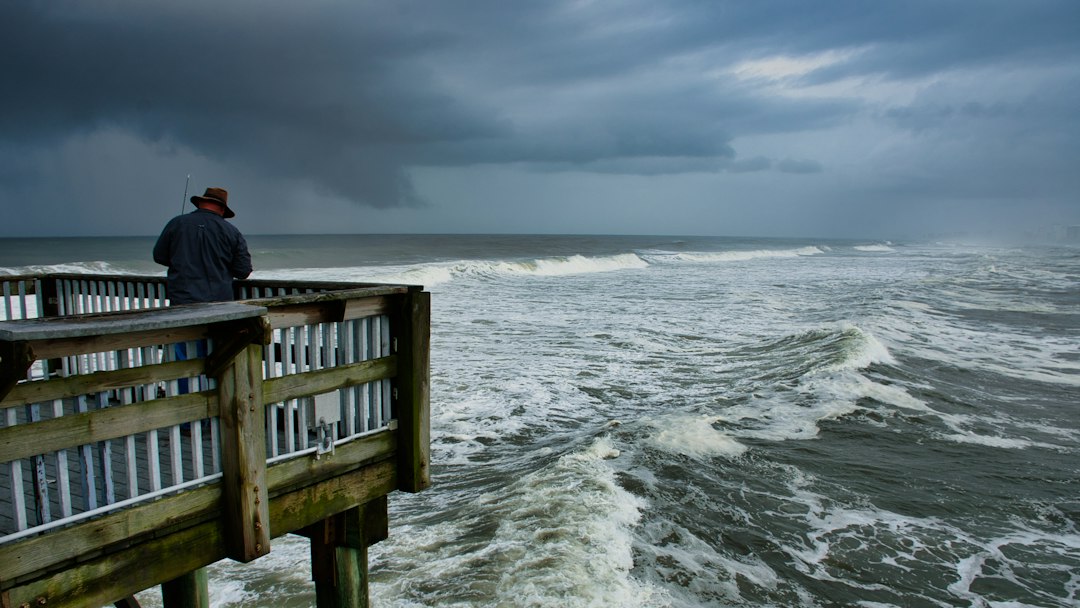
When hurricanes threaten communities already facing social and economic challenges, the need for effective disaster preparedness and response becomes even more critical. University of Delaware disaster research experts can discuss the challenges communities face before, during and after hurricanes, including Hurricane Isaias and its potential impacts across Alabama, Mississippi, the Florida Panhandle and other parts of the northern Gulf Coast. The following experts from UD's Disaster Research Center are available to discuss the public health consequences of hurricanes, disaster preparedness and community recovery. Sarah DeYoung, associate professor of sociology and criminal justice, can discuss the needs of refugee and immigrant communities before, during and after disasters, including challenges accessing information, assistance and essential resources. She worked for several years with refugee and immigrant communities in southern Alabama through a grant-funded project. Jennifer Horney, professor of epidemiology, can discuss the public health consequences of hurricanes and other disasters, including evacuation decisions, the risks posed by inland flooding and the challenges communities face during recovery. She was part of the public health response to Hurricane Harvey and can discuss how communities still recovering from major storms may face additional challenges when another hurricane threatens the region. Jennifer Trivedi, associate professor of anthropology, studies how disasters affect marginalized communities. She can discuss how disasters compound existing challenges for people struggling to meet basic needs, particularly when flooding disrupts housing, transportation, food access and other essential services. Tricia Wachtendorf, co-director of the Disaster Research Center, can discuss the social impacts of hurricanes and inland flooding, including evacuation, preparedness, community response and recovery. She can also discuss how storms that are not the most powerful can nonetheless cause significant damage and disruption. To reach these experts directly, visit their ExpertFile profile and click on the "contact" button. Interested journalists can also contact MediaRelations@udel.edu.

How should journalists cover politics when democracy is at stake featured image

1 min

How should journalists cover politics when democracy is at stake

Political coverage often centers on the president, but according to the University of Delaware’s Dannagal Young, journalists can sometimes provide more meaningful coverage by focusing more on democracy and less on the commander in chief’s every movement. Young calls this approach “democracy-centered reporting.” Instead of treating every presidential announcement or provocative statement as the central event, democracy-centered reporting asks how political actions affect democratic institutions, constitutional principles and Americans’ ability to exercise their rights as citizens, Young says. Young, professor of communication and director of UD’s Center for Political Communication, says “access journalism” has an important role, but an overreliance on access can also make political leaders the organizing principle of coverage. In moments when executive power is expanding, she argues, journalists should consider whether their coverage is inadvertently amplifying the power they are trying to scrutinize. Young can discuss: • How journalists can cover presidents without making the president the center of every story • The benefits and risks of access journalism • How coverage of political conflict affects public understanding of democracy To arrange an interview with Young, visit her profile and click on the "contact" button. Interested reporters can also send an email to MediaRelations@udel.edu.

Public health risks after a major flood featured image

1 min

Public health risks after a major flood

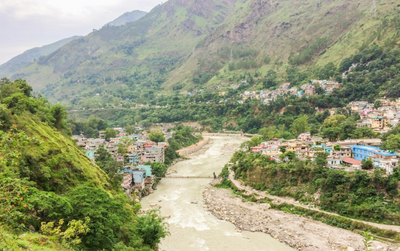
Floodwaters may recede quickly, but the health consequences of a major disaster can last for months or even years, says University of Delaware epidemiologist Jennifer Horney. Horney, an expert in disaster recovery and public health, can discuss the longer-term health challenges communities face after major flooding events, including the Aug. 26 flash floods in Nepal that resulted in 1,450 deaths, with 6,000 people still missing. Horney can talk about: • How damage to health infrastructure can make it more difficult for people to access medical care after a disaster, and what communities can do to prepare for and reduce longer-term health consequences following flooding and other disasters. • How contaminated water and food can increase the risk of infectious disease, and how standing water left behind by floods can create breeding grounds for mosquitoes that transmit diseases such as dengue, malaria, encephalitis and chikungunya. • The impact disasters have on physical and mental health well after the immediate emergency has passed. To arrange an interview, visit Horney's profile and click on the contact button. Interested reporters can also send an email to MediaRelations@udel.edu.

View all posts