

Is AI ethical? One philosophy professor has an answer.

As artificial intelligence becomes more powerful and pervasive, applying critical thinking and ethical oversight become more important

Sep 18, 2026

3 min

During a snowstorm last winter, University of Delaware philosophy professor Thomas Powers fixed his own thermostat by typing the error codes into ChatGPT and following the instructions it provided. As he discovered on that cold, snowy night, AI can make DIY projects that much easier, potentially saving time and money.


Ever the philosopher, Powers wondered about the ethics of his solution: What is the impact of taking the repair job away from someone who relies on the work? What about the risk of being wrong? Is the environmental impact of using AI worth the result?


After 20 years in the Department of Philosophy and as director of the Center for Science, Ethics and Public Policy, Powers is uniquely suited to explore questions about the ethics of AI.


What does “ethical AI” mean?


POWERS: We want AI systems that are helpful and useful, but also safe. We want systems that don’t produce biased or dangerous results. One approach to achieve that, which I’m hopeful about, is to create systems that are “safe by design” or “ethical by design.” In other words, instead of relying entirely on outside regulation to prevent harmful behavior, we try to design the systems themselves so that they behave in ways we consider ethical.


Is it possible to make an AI system truly “safe by design” if it eventually becomes capable of acting in ways its creators didn’t anticipate?


POWERS: There is a big difference between most technologies and AI. With the latter, especially current large language models (LLMs), it appears that there is some unpredictability in their behaviors. Thus, their apparent autonomy complicates the "safe by design" motto. AI autonomy introduces the need for "guardrails" that constrain what AIs can do. But even this may not be possible.


Why are AI companies hiring philosophers, and what does this mean for the field of philosophy?


POWERS: Some of the hardest questions in AI aren’t purely technical questions. To build systems that are safe, fair or aligned with human values, you first have to decide what those concepts actually mean and how they can be translated into something a computer system can use. The challenge is to educate people who can move between those worlds — who understand the technology but can also ask the deeper questions about what we should want that technology to do.


How has AI changed philosophy?


POWERS: Philosophers have long discussed the philosophy of action with the concept of agency. For decades we assumed that an agent must be human — someone who acts on their own behalf, or on the behalf of another person, with some kind of plan or attitude.


This concept transfers to discussions about AI, and whether it can be considered an agent and be responsible for its actions.


The next step is to ask harder questions: Are autonomous AI agents responsible, in some sense, for what they do, and does this suggest or imply that they are conscious?


I don’t think AI will become conscious any time soon, but I don’t think it is impossible, and other philosophers and scientists are broaching the question.


To speak with Powers further about the philosophy of AI, reach out mediarelations@udel.edu. 


ABOUT THOMAS POWERS


Thomas M. Powers, Ph.D., is an associate professor in the Department of Philosophy at the University of Delaware. He is also the director of the Center for Science, Ethics & Public Policy at UD.


Powers' current research focuses on the ethics of information technology and the philosophy of technology. He contributes to scholarship on rule-based conceptions of machine ethics, computer agency, the ethics of artificial intelligence, and other philosophical issues involving emerging technologies, including human-robot interaction. ​​

Powered by

You might also like...

Check out some other posts from University of Delaware

Two years after the 2024 election, where does civil discourse stand? featured image

1 min

Two years after the 2024 election, where does civil discourse stand?

Election season has brought the expected vicious political campaign ads, heated online disagreements and difficult dinner table conversations with family and friends. But the University of Delaware’s Timothy Shaffer says there’s still room for civil discourse. Shaffer, UD’s inaugural Stavros Niarchos Foundation (SNF) Chair of Civil Discourse, studies how people can engage across significant differences while maintaining the relationships and democratic institutions that make disagreement possible. As chair of UD's SNF Ithaca Initiative, Shaffer works with students, educators and civic leaders to develop and practice constructive engagement across differences. He can comment on the following through the lens of the first midterm election since the vitriolic 2024 general elections. • What has changed since 2024: How have the past two years affected the way Americans talk about politics, disagreement and democracy? • Polarization and dialogue: Is political disagreement itself the problem, or is the greater challenge engaging constructively across differences? • The role of disagreement: Why civil discourse doesn't require consensus and how listening to competing perspectives can strengthen democratic engagement. • Politics and personal relationships: How to navigate political differences with family, friends, neighbors and colleagues without letting disagreements become personal. • Social media and the 2026 election: How online environments shape political conversations, what Shaffer expects as Election Day approaches, and how people can engage more constructively across differences. To reach Shaffer and arrange an interview, visit his profile page and click on the "contact" button. Interested reporters can also send an email to MediaRelations@udel.edu.

Blood Clots Can Sideline Elite Athletes. Could Microrobots Offer a New Approach? featured image

1 min

Blood Clots Can Sideline Elite Athletes. Could Microrobots Offer a New Approach?

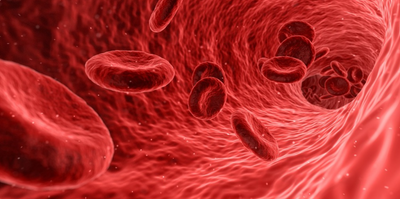
Blood clots have sidelined or ended the careers of several elite athletes, drawing attention to a potentially life-threatening condition. The University of Delaware's Sambeeta Das is part of a team that has developed tiny, magnetically guided robots that could offer a new approach to removing such blockages. The list of athletes affected by blood clots includes NBA champion Chris Bosh, whose career ended after recurring clots; tennis great Serena Williams, who survived two life-threatening pulmonary embolisms; San Antonio Spurs center Victor Wembanyama, who was shut down in February 2025 when deep vein thrombosis was discovered in his right shoulder; and Philadelphia Eagles quarterback Jalen Hurts, whose recent diagnosis of blood clots in his lungs has drawn national attention. In a published study, Das and her colleagues demonstrated that magnetic microrobots could mechanically break apart clusters of human liver cancer cells and clear them from narrow channels designed to model blood vessels. The robots used mechanical forces rather than drugs or chemicals to disperse the clusters. The research offers an early proof of concept for using microrobots to remove unwanted cellular material in confined spaces. Das can discuss how the technology works, its potential application to blood-clot removal, the challenges of targeting blockages inside the body, and what further research is needed to explore its use in patients. To contact Das and arrange an interview, visit her profile and click the “Contact” button. Reporters can also email MediaRelations@udel.edu.

From Baseball to Business: The Science of Team Success featured image

2 min

From Baseball to Business: The Science of Team Success

The ingredients that create a World Series team often mirrors how units achieve success in business. How did they get there? The University of Delaware's Kyle Emich says the answer goes beyond assembling a roster of star players. Emich, a professor of management, says that how players combine their strengths, respond to opponents and create opportunities together can be just as important as individual talent. The same is true in business, where a collection of talented employees doesn’t automatically translate into a high-performing team, he said. One example is the approach that the 2026 Milwaukee Brewers’ took during their postseason run. Rather than relying exclusively on home runs and individual star power, the team created opportunities through a combination of speed, patience at the plate, timely hitting and pressure on opposing defenses. A stolen base, a walk or a defensive mistake might seem like a small event on its own, but the effects can build as players’ actions interact. These interactions matter, he says, because teams are not simply collections of individuals; their performance emerges from how people and their activities affect one another within a larger environment. The same is true in business as well as baseball. Businesses may recruit exceptional employees or invest in promising technologies such as artificial intelligence, yet fail to realize their potential if their processes, team structures and working practices don’t support those strengths. Emich can discuss: • Beyond Moneyball: What baseball’s emphasis on statistics and individual talent reveals about the limits of evaluating people in isolation. • Building better teams: How coordination, complementary strengths and the interaction among team members contribute to performance. • Strategy and competition: What baseball teams’ adjustments to opponents can teach business leaders about responding to competitors and changing conditions. • Technology and the future of work: Why adopting artificial intelligence or other new technologies is not enough without considering how people, processes and technology work together. To reach Emich directly and arrange an interview, visit his profile page and click on the "contact" button. Interested reporters can also send an email to MediaRelations@udel.edu.
View all posts