States Are Helping Thousands of Families Balance Work, Care, and the Costs of Raising Young Children

New report finds continued state momentum across policies that shape families’ financial stability and access to health and child care

Sep 18, 2026

3 min

Raising an infant or toddler requires time, care, and financial resources, often while families are stretching their budgets to cover groceries, housing, child care, and other everyday needs. State policies help determine whether families have them. 


During the past year, states expanded paid leave, tax credits, wages, perinatal health services, and child care assistance. These changes can help thousands of families during the earliest years of a child’s life. The 2026 Prenatal-to-3 State Policy Roadmap, released by the Prenatal-to-3 Policy Impact Center at Vanderbilt University, tracks those changes and explains what they mean for families.


Delaware, Maine, and Minnesota began providing statewide paid family and medical leave programs, making paid leave a leading area of state momentum in 2026. Approximately 84,300 babies are born each year across those three states. The programs are funded through payroll contributions, with each state setting its own rules for whether and how employers and workers divide the cost. For parents who previously had no paid leave, the new programs can mean recovering from childbirth and spending up to 12 weeks with their baby without sacrificing all their income.


Pennsylvania newly implemented the Working Pennsylvanians Tax Credit, a refundable state earned income tax credit equal to 10 percent of the federal credit. For an eligible Pennsylvania family with two children, the new credit can provide up to $731 annually, helping to cover everyday expenses, including groceries, diapers, and child care.


This progress comes during a period of significant federal change. New requirements affecting Medicaid and the Supplemental Nutrition Assistance Program, along with other federal actions affecting early care and education programs, may make health coverage, food assistance, and child care harder for some families to access. Against this backdrop, state policy decisions take on greater importance because they can expand resources and services even as families encounter new barriers.


“Families do not experience paid leave, minimum wage, health care, and child care in isolation. Together, these policies create a system of care that can help families meet their children’s needs during the most important years of development. This year’s Roadmap shows states continuing to strengthen that system, even in a complex policy environment.” -Dr. Cynthia Osborne, Executive Director and Professor of Early Childhood Education and Policy at Vanderbilt University


State action extended beyond those four milestones. Minimum wages increased in 23 states, increasing pay for workers earning the state minimum. Four states began covering community-based doula services through Medicaid, giving more families the option of care before, during, and after birth. Other states invested in group prenatal care, newborn screening, and connections to health and community services.


States also confronted one of the greatest pressures facing families with young children: finding and affording child care. Changes to child care subsidy programs allowed more families to qualify, lowered what some parents pay, and directed additional funding to providers working to keep care available. 


Together, these changes show states responding to the pressures families face all at once. A stronger system of care can give parents more time with a new baby, help families cover everyday costs, improve access to care before and after birth, and make child care easier to find and afford. 


About the 2026 Prenatal-to-3 State Policy Roadmap 

The Prenatal-to-3 State Policy Roadmap guides state leaders on the most effective investments to ensure all children thrive from the start. Grounded in rigorous evidence, the Roadmap identifies state policies and strategies that support infants, toddlers, and their families and reduce disparities in access and outcomes. Explore the 2026 Roadmap at pn3policy.org/roadmap. 


About the Prenatal-to-3 Policy Impact Center

The Prenatal-to-3 Policy Impact Center is a nonpartisan research center at Vanderbilt University’s Peabody College of Education and Human Development that provides state leaders with clear, evidence-based policy solutions to improve the lives of young children and their families. For more information, visit pn3policy.org.


Powered by

You might also like...

Check out some other posts from Vanderbilt University

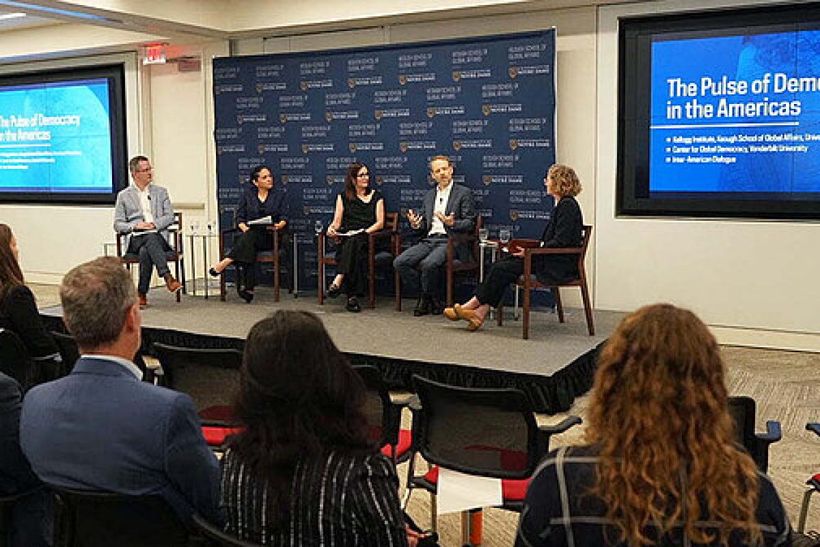
New AmericasBarometer report finds modest but widespread recovery in support for democracy across the Americas featured image

4 min

New AmericasBarometer report finds modest but widespread recovery in support for democracy across the Americas

After more than a decade of erosion, support for democracy has stopped falling and begun a modest but widespread recovery across the Americas. The findings are detailed in the 2026 Pulse of Democracy, released by Vanderbilt University’s Center for Global Democracy and the Kellogg Institute, part of the University of Notre Dame’s Keough School of Global Affairs. The 2026 AmericasBarometer includes 25,282 interviews across 21 nationally representative surveys in countries across the Americas. The survey examines how citizens perceive and experience democracy and governance, including their views on democratic legitimacy, trust in institutions, corruption, citizen security, migration, political participation and government performance. This year’s study again includes the United States and Canada alongside Latin America and, for the first time, Cuba. The report finds that support for democracy increased across nearly every country surveyed between 2023 and 2026, marking the first broad regional upturn in a generation. Although citizens across much of the region report improvements in economic and physical security, they remain far less convinced that governments are honest, capable and responsive to their needs, highlighting the need to strengthen trust in government and accountability. “The modest recovery in support for democracy is real and encouraging, but it is also fragile,” said Noam Lupu, director of Vanderbilt University’s Center for Global Democracy and the Gertrude Conaway Vanderbilt Professor of Political Science. “People are reporting improvements in their economic and physical security, but they still want governments that are honest, capable and responsive.” Among the report’s key findings: About two-thirds of Latin Americans express support for democracy in 2026, up 6 percentage points from 2023. Support increased in nearly every country and across age groups and educational levels rather than being driven by any single demographic group. Substantial differences remain across countries, however, and the recovery follows nearly a decade of comparatively low democratic support. In most countries, fewer people say their national economy has worsened compared with 2023, and household food insecurity has declined from its pandemic-era peak. Still, roughly one in four people across the region report experiencing food insecurity, and improvements are unevenly distributed. The share of people who feel unsafe in their own neighborhoods has been declining steadily for nearly a decade and fell again in 2026. Crime victimization has declined only modestly, however, and substantial differences remain across countries. Citizens who experience greater economic security, less food insecurity, lower exposure to crime and fewer experiences with corruption express higher support for democracy. On average, several of these conditions improved across the region between 2023 and 2026, coinciding with the broader increase in democratic support. Everyday corruption has changed little, satisfaction with local public services remains low, and citizens’ evaluations of political leaders vary widely. The findings suggest that improvements in material conditions can bolster democratic goodwill, but persistent failures of governance and representation continue to hold it back. The share of adults reporting an intention to emigrate fell from 31 percent in 2023 to 25 percent in 2026, returning roughly to pre-pandemic levels. Improving conditions in countries of origin coincide with the decline, while migration pressures remain substantial and vary considerably across countries. “The findings offer some encouraging signs, but they also underscore the work that remains,” said Ann Mische, acting director of the Kellogg Institute and associate professor of sociology and peace studies at the University of Notre Dame. “Improving people’s daily lives matters, but strengthening democracy also requires institutions that people trust.” New data and expanded public resources Alongside the Pulse of Democracy, Vanderbilt’s Center for Global Democracy and LAPOP Lab are releasing the 2026 AmericasBarometer data and updated Data Playground, along with questionnaires, technical documentation, and other resources, free of charge. About the AmericasBarometer The AmericasBarometer is the flagship survey project of Vanderbilt University’s Center for Global Democracy and its LAPOP Lab, a global leader in comparative public opinion research. Since 2004, it has collected more than 433,000 interviews across 35 countries, creating an extensive comparative record of how citizens across the hemisphere perceive and experience democracy and governance. The surveys use nationally representative samples of voting-age adults and cover topics including democratic legitimacy, trust in institutions, corruption, citizen security, migration, political participation and government performance. About Vanderbilt University’s Center for Global Democracy The Center for Global Democracy (CGD) is Vanderbilt University’s leading social science institute dedicated to research and innovation in democratic politics. Its research examines how citizens perceive, experience, and support democracy across countries and over time. Its research portfolio includes the LAPOP Lab, a global leader in international survey research and home to the AmericasBarometer. About the Kellogg Institute The Kellogg Institute, part of the Keough School of Global Affairs at the University of Notre Dame, is a leading center for interdisciplinary research dedicated to understanding, strengthening, and renewing democracy worldwide.

Vanderbilt Index Finds Sustainability Remains a Mainstream Consumer Priority featured image

4 min

Vanderbilt Index Finds Sustainability Remains a Mainstream Consumer Priority

As companies reconsider environmental commitments and sustainability receives less attention in corporate America, American consumers appear to be holding their ground. The inaugural Vanderbilt Consumer Sustainability Index (VCSI), released today by Vanderbilt University and consumer research company Switch 5, finds broad and consistent commitment to sustainability across the country. The national survey of 2,528 American adults found that 83% score above the midpoint on the new index, with surprisingly small differences across regions, gender and urban and rural communities. The findings establish the first baseline for the VCSI, a new quarterly measure designed to track how Americans’ attitudes toward sustainability change over time. Unlike existing measures focused primarily on climate policy or political attitudes, the VCSI looks at Americans as consumers — what they believe, what they expect from businesses and other institutions, and what they say they are willing to do themselves. The inaugural July 2026 reading places the VCSI at 69.2 out of 100, indicating a moderate-to-strong sustainability orientation among American consumers. The VCSI builds on more than two years of consumer research by Switch 5, which studies the attitudes and behaviors shaping consumer adoption of clean energy and sustainable products. That research has included more than 16 national surveys involving more than 50,000 Americans. The partnership with Vanderbilt brings that work into a recurring academic index designed to provide researchers, journalists, and businesses with a consistent measure of how consumer sustainability sentiment is changing over time. “Sustainability is often discussed through the lens of politics or corporate commitments, but consumer preferences are a critical part of the picture,” said Eric VanEpps, Associate Professor of Marketing at Vanderbilt Owen Graduate School of Management and coauthor of the study. “We created the VCSI to establish a consistent measure of what Americans believe and expect when it comes to sustainability, and to track how those attitudes change over time.” Key Findings from the Inaugural Wave 1. Consumer sustainability orientation is stronger than commonly recognized. 83% of Americans score above the midpoint of 50 on the index, suggesting broad popularity of sustainability. “People might read media coverage about how both public and private investments in sustainability initiatives have been reduced, and how large corporations have pulled back from the climate goals they set a few years ago. But the American public still cares about the environment, and these initial results create a baseline from which we can now measure trends in general sentiment,” said VanEpps. 2. Americans want businesses to lead on sustainability. Nearly nine in ten Americans (87%) want companies to help them be more environmentally friendly, and 85% say corporations bear responsibility for addressing climate change. Support for federal government action to address climate change is similarly high, at 84%, indicating broad public expectation that institutions — both public and private — should be part of the solution. “One thing to note is that most Americans work for either large corporations or the government. So when survey respondents say they want these organizations to address climate change, that is also a likely signal of how they want their employers to act,” said Vanderbilt Law School professor and study coauthor Michael Vandenbergh. 3. Concerns about future generations are widespread. More than four in five Americans (81%) believe climate change will harm future generations, including nearly half (47%) who say it will do a great deal of harm. Parents score meaningfully higher on the overall index than non-parents (72.9 vs. 67.3), suggesting the intergenerational frame is a significant motivator of sustainability commitment. 4. Americans say they are willing to act — including at some personal cost. Nearly three-quarters (74%) of Americans say they are willing to pay a little more for products that are better for the environment, and 72% say they are willing to sacrifice convenience to make environmentally friendly choices. These findings suggest meaningful room for consumer-facing sustainability initiatives that go beyond attitude measurement into behavioral change. 5. Sustainability commitment cuts across demographic lines. Perhaps the most noteworthy finding of the inaugural wave is how narrow the differences are across groups typically assumed to hold divergent views on the environment. Regional differences are minimal, with less than 2 points separating the highest and lowest of the four census regions. The gender gap is 1.5 points, and the urban-rural gap is 3 points. 6. Younger Americans lead, but sustainability commitment is broad across generations. Americans aged 18-34 score 72.2 on the index, compared to 65.1 among those 65 and older — a 7-point generational gap that reflects growing sustainability orientation among younger cohorts. Even the oldest segment sits well above the midpoint of the scale, however, indicating sustainability commitment has broad support across generations. Methodology The inaugural wave of the VCSI was fielded to a nationally representative sample of 2,528 American adults in July 2026, with data collection and analysis conducted by Switch 5 using PureSpectrum and Beacon Research. The 10-item composite index demonstrates strong internal reliability (Cronbach’s α = 0.87). Two sub-indices — Consumer Commitment (5 items) and Climate Concern & Responsibility (5 items) — correlate at r = 0.52, indicating that the two dimensions are meaningfully related but distinct. Full methodology and item-level results are available upon request, with a website currently in development. The next wave of the VCSI is expected to be fielded in October 2026 and released in late fall. Subsequent waves will report the current index level along with wave-over-wave and year-over-year changes.

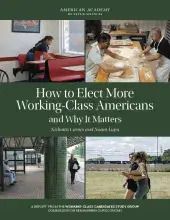
Absence and Opportunity: New Academy Report on Working Class Candidates featured image

3 min

Absence and Opportunity: New Academy Report on Working Class Candidates

A new report released by the American Academy of Arts & Sciences aims to explain the near-absence of elected politicians from working-class occupations at all levels of government in the in the U.S., despite making up more than half of the U.S. labor force, and highlights strategies that can give working-class Americans a seat at the table in our elected institutions. In How to Elect More Working-Class Americans and Why It Matters, authors Noam Lupu (Vanderbilt University) and Nicholas Carnes (Duke University) describe how the shortage of politicians from the working class harms trust in government, runs contrary to our national ideals, and makes it difficult for our political institutions to understand and respond to the needs of working people in a fast-changing economy. Carnes and Lupu sought input from the working group that convened to support a recommendation of the Academy’s Commission on Reimagining Our Economy to increase working-class candidates. A main focus of the report is understanding and addressing the barriers that keep working-class Americans from running for office. How to Elect More Working-Class Americans and Why It Matters includes detailed descriptions of how parties, unions, interest groups, funders, and policymakers can increase the number of working-class candidates and officeholders. “Our democracy and our economy will grow stronger when more Americans feel included and invested,” said Laurie Patton, president of the Academy. “To address declining trust and engagement in our government, we need workable evidence-backed solutions that are driven by good ideas and good will. Nick Carnes and Noam Lupu provide a blueprint for how a policymakers, leaders and citizens across the country can increase the number of working-class candidates and benefit all who care about strengthening America.” The report represents the culmination of a decade-and-a-half of research. “Working-class people almost never go on to hold elected office in the U.S.,” said Nick Carnes, Z. Smith Reynolds Distinguished Professor of Public Policy Studies at Duke’s Sanford School of Public Policy. “In this report, we look to the available research to dispel myths about the working class and highlight the real obstacles that prevent working-class Americans from holding office.” “At a time when both major parties are seeking to win over working-class Americans, we hope this document will provide clear and actionable advice for anyone hoping to support working-class people serving their communities as elected officeholders,” said Noam Lupu, Gertrude Conaway Vanderbilt Professor of Political Science at Vanderbilt University. The challenge is not that workers are unqualified or uninterested in public service; it’s that running for office in our nation is burdensome. Candidates have to spend an enormous amount of time, money, and personal resources to run for office, making it difficult for working-class Americans to take time away from work and devote the resources necessary to mount a successful campaign. The report builds on the Academy’s enduring commitment to strengthening democracy, beginning with the organization’s founding in 1780 and embodied most recently with the Our Common Purpose initiative, and the Commission on Reimagining Our Economy, which recognized the inextricable link between democracy and economy. Adam Bonica, Stanford University; Andrea Louise Campbell, Massachusetts Institute of Technology; Katherine J. Cramer, University of Wisconsin–Madison; Jake M. Grumbach, University of California, Berkeley; Alexandra Killewald, University of Michigan; Jane Mansbridge, Harvard University; Tali Mendelberg, Princeton University; Lara Putnam, University of Pittsburgh; and Kay Lehman Schlozman, Boston College served on the advisory group with Carnes and Lupu on this project.

View all posts