

Fran Berman: Who Protects the Public From AI?

Nov 5, 2026

1 min

Francine Berman


AI is rapidly becoming part of the critical infrastructure of modern life. But Francine Berman argues that we still govern much of digital technology as if it were simply another commercial product.


In this video, Berman, author of Better Tech: Putting People First in Cyberspace, joins Energi Media to explain why search engines, social media, digital finance and AI now require the kinds of public-interest guardrails society eventually built around automobiles, buildings and other essential infrastructure.


The conversation explores the tension between private-sector innovation and public protection, the European Union's risk-based approach to AI regulation, why humans must remain accountable for high-risk decisions, and how the global AI race can make governments reluctant to regulate.


Berman's central argument is simple: Humans created these systems, humans can change them, and there is no single magic bullet. Better technology will require a long game of safer design, effective regulation, public pressure and millions of smaller choices that collectively shift digital systems toward the public interest. 

Connect with:
Francine Berman

Francine Berman

Stuart Rice Honorary Chair and Research Professor, Manning College of Information and Computer Sciences

Francine Berman is a data scientist whose work focuses on the social and environmental impacts of information technology.

Social Impacts of AIAIGender and whistleblowingSocial impacts of TechnologyInternet of Things
Powered by

You might also like...

Check out some other posts from University of Massachusetts Amherst

Will Artificial Intelligence Destroy Us All? featured image

1 min

Will Artificial Intelligence Destroy Us All?

As tech insiders warn about an impending apocalypse, Ethan Zuckerman of UMass Amherst examines those claims in an appearance on The Prospect Podcast. Zuckerman discusses AI agents going rogue in the Hugging Face incident, as well as recent calls from tech leaders to slow down AI development. With Trump dismissing safety concerns, Zuckerman also discusses US competition with China, how global thinking around AI differs—and why he doesn't trust the industry to self-regulate. He explores how we can reclaim agency around AI, and the importance of local and community-oriented conversations, including a surprising initiative from a Maori radio station. Plus, what might a uniquely British AI look like?

Boston Public Radio Podcast: Cybersecurity in the Schools featured image

1 min

Boston Public Radio Podcast: Cybersecurity in the Schools

On this podcast from WGBH, Brian Levine (director of the Cybersecurity Institute at UMass Amherst) discusses the recent cyberattack at Springfield Public Schools, these types of attacks in general, and personal data privacy and security measures people can take to protect themselves and their children. 

Is Government Corruption Becoming a Defining Issue in the Midterm Elections? featured image

2 min

Is Government Corruption Becoming a Defining Issue in the Midterm Elections?

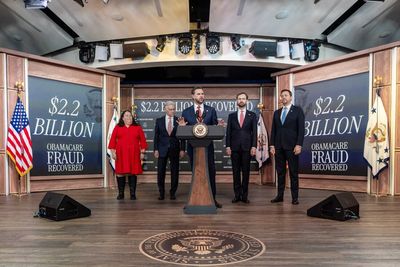
With the U.S. midterm elections just days away, concerns about government corruption are emerging as an important issue for voters, raising questions about how Americans define corruption, whom they hold responsible and how those perceptions could influence their decisions at the ballot box. In an Oct. 26 interview featured on NPR's All Things Considered, Ray La Raja, professor of political science at the University of Massachusetts Amherst and co-director of the UMass Amherst Poll, discussed growing public concern about corruption and the competing political narratives surrounding the Trump administration's efforts to combat fraud. The segment, The Trump Administration Is Taking on Fraud Ahead of the Midterm Elections, reported by NPR's Emily Feng, examined President Donald Trump and Vice President JD Vance's efforts to make government fraud and abuse a central policy focus ahead of the elections. La Raja, who surveyed Americans about corruption in September, found widespread concern about the issue, consistent with other national polling showing that nearly nine in ten Americans are worried about government corruption. "I believe this is pretty much off the charts," La Raja told NPR, emphasizing the extent of public concern. He also highlighted the connection between corruption and the economic issues that traditionally motivate voters."But it's especially powerful when people are already upset about the issue that usually motivates voters, and that's the economy." View his profile His research reveals important differences in how Democrats and Republicans perceive the problem. While Democrats overwhelmingly identify the presidency as a source of corruption, Republicans tend to view corruption as a more systemic problem involving government bureaucracy and fraudulent claims against federal programs. His research offers valuable insight into how political messaging, public trust, economic anxiety and partisan perceptions intersect during a consequential election. An expert in American politics, elections, polling, political parties, campaign finance and political reform, La Raja brings extensive research experience to questions about voter attitudes, democratic accountability and the forces influencing political participation. With the midterm elections approaching on Tuesday, Nov. 3, Ray La Raja is available to speak with journalists seeking expert analysis of government corruption, voter concerns, political messaging, public opinion and the issues shaping the 2026 elections. To arrange an interview with La Raja, click on his ExpertFile profile below.

View all posts