

Ungrading – is putting down the pen an A+ idea for post-secondary professors?

Apr 12, 2019

2 min

It’s a growing movement among professors – ungrading. There’s a popular trend out there that says teachers are spending too much time grading and evaluating as opposed to educating.


Some professors feel that students need to be engaged by what they learn and not necessarily fixated on the grades they earn.


In a recent blog post (see below) UMW’s Jesse Stommel showed how strongly he backs the concept.


 “There are a surprising number of faculty questioning grades in productive ways, and experimenting with alternative modes of assessment,” said Jesse Stommel, executive director of the Division of Teaching and Learning Technologies at University of Mary Washington, and an early evangelist of ungrading. “If, as teachers, we just ask students why, when and how they learn, what we can get back is way more valuable than any standardized assessment mechanism can reveal.” Ungrading “creates space for that kind of honest reflection and dialogue,” he said. - TaxProfBlog


The concept is novel and has support – but will it catch on? 


  • Will academia take a turn away from the traditional ways of grading?
  • What will students think and how will they measure progress?
  • And what about parents and potential employers who might rely on the old system when hiring or validating the costs of higher-education?


Jesse Stommel is the Executive Director of Teaching and Learning Technologies at the University of Mary Washington and is an expert in faculty development, digital education and modern learning. Jesses is available to speak with media regarding ungrading – simply click on his icon to arrange an interview.


Powered by

You might also like...

Check out some other posts from University of Mary Washington

As Congress Weighs the Future of Daylight Saving Time, a UMW Sleep Researcher Explains What Your Body Actually Goes Through featured image

2 min

As Congress Weighs the Future of Daylight Saving Time, a UMW Sleep Researcher Explains What Your Body Actually Goes Through

The House passed the Sunshine Protection Act on July 14, 2026, reviving the national debate over whether the U.S. should adopt permanent daylight saving time, return to permanent standard time, or keep the twice-yearly clock change altogether. The bill now heads to the Senate. At the University of Mary Washington, Dr. Hilary Stebbins, Associate Professor of Psychological Science, studies the chronobiology and sleep patterns of college students, research that can help inform exactly this debate: how does shifting the clock affect cognitive performance and behavior, no matter which system we land on? Dr. Hilary Stebbins is an Associate Professor in the Department of Psychological Science at the University of Mary Washington. She is an expert on sleep deprivation, circadian rhythms, and dopamine function, and how each affects cognitive performance and behavior. View her profile Stebbins doesn't take a side in the policy debate. Her focus is chronobiology, how sleep patterns and circadian rhythms affect college students' cognitive performance and behavior. But that science speaks directly to the choice lawmakers are weighing: any shift, whether it's permanent daylight saving time, permanent standard time, or sticking with the current system, creates a temporary mismatch between our internal clock and the outside world, and it takes the body time to catch up. "One of my past teams found that as people report higher levels of sleepiness, they show higher dopamine function and also have more difficulty controlling impulsive actions." — Dr. Hilary Stebbins, Associate Professor of Psychological Science, University of Mary Washington Stebbins leads a year-long undergraduate research team (PSYC 491/492) each year, and in 2018 a team of her students won the Virginia Association for Psychological Science's award for best undergraduate paper for their research on sleep deprivation. Interested in discussing chronobiology, sleep patterns, or the science behind the debate over permanent daylight saving time, permanent standard time, or dopamine and behavior? Connect with Dr. Hilary Stebbins, Associate Professor of Psychological Science at the University of Mary Washington, for expert insight into sleep research and its real-world stakes. Click on the link here.

What's in the Water? New Research Brings Weekly River Health Data to the Public featured image

2 min

What's in the Water? New Research Brings Weekly River Health Data to the Public

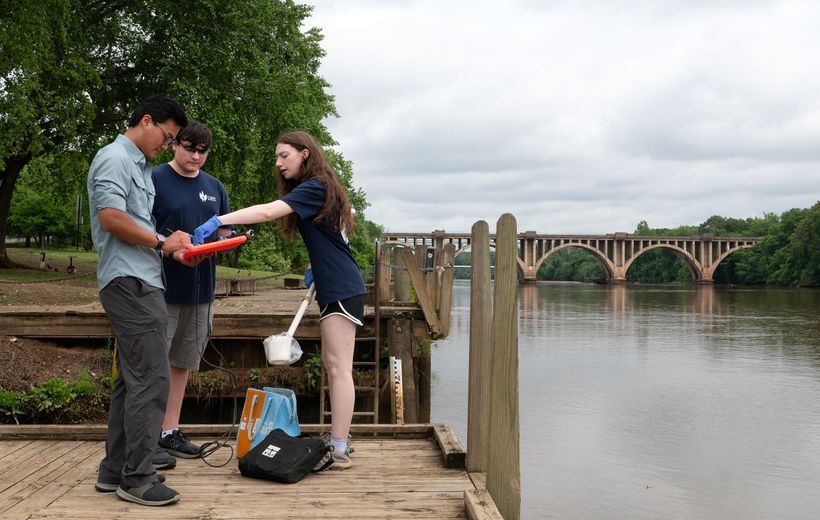
A recent article in the Fredericksburg Free Press highlighted a new University of Mary Washington initiative that is testing the Rappahannock River weekly for fecal coliform bacteria and sharing the results publicly. Led by Associate Professor of Earth and Environmental Science Tyler Frankel, the program aims to provide residents with accessible information before swimming, fishing, paddling, or otherwise enjoying one of the region's most important waterways. Dr. Tyler Frankel is an Assistant Professor in the Department of Earth and Environmental Sciences at the University of Mary Washington. He is an expert on ecotoxicology, specifically the impact of pharmaceutical, industrial waste products, & pesticides on aquatic wildlife. View his profile The project addresses a significant gap in environmental monitoring. While bacteria levels can change rapidly following rainfall and other environmental conditions, routine testing has historically been limited. Frankel and his student research team are collecting samples from five locations along the river and building a long-term database that can help identify contamination trends and potential pollution sources. The effort also provides valuable hands-on research opportunities for students while generating information with direct public health benefits. “There isn’t really a program that exists like that for the Rappahannock where the public can get access to weekly data sets.” — Tyler Frankel, Associate Professor of Earth and Environmental Science, University of Mary Washington The research focuses on fecal coliform bacteria, including E. coli, which can enter waterways through sewage, failing septic systems, agricultural runoff, pets, wildlife, and other sources. Elevated levels can pose health risks to people who come into contact with contaminated water, making timely and accessible monitoring an important tool for both recreation and environmental stewardship. Connect with an Expert Interested in discussing water quality monitoring, bacterial contamination in rivers, watershed management, citizen science, or environmental health risks? Connect with Tyler Frankel, Associate Professor of Earth and Environmental Science at the University of Mary Washington, for expert insight into water quality testing, pollution tracking, environmental monitoring, and the science behind protecting freshwater ecosystems.

Election Watch 2025: Farnsworth Breaks Down Virginia’s Political Landscape featured image

1 min

Election Watch 2025: Farnsworth Breaks Down Virginia’s Political Landscape

With early voting setting new records and national politics reshaping local elections, Professor Stephen Farnsworth is helping journalists and voters make sense of the noise. As director of the Center for Leadership and Media Studies at the University of Mary Washington, Farnsworth continues to be a go-to expert across major outlets. In just the past few weeks, he’s been featured in: • NBC Washington • WAMU • Yahoo News • Richmond Times-Dispatch • DC News Now • Virginia Mercury Farnsworth has weighed in on everything from Kamala Harris’ rising prospects to the effects of Trump’s policies on rural Virginia. Whether he’s speaking to the League of Women Voters or breaking down the numbers for DC news outlets, Farnsworth brings clarity to the chaos. For journalists covering Virginia politics and U.S. elections, Farnsworth is a key source of insight. Click on the icon below to connect with: Stephen Farnsworth, Professor of Political Science and International Affairs; Director, Center for Leadership and Media Studies Expertise: Virginia politics, media and messaging, U.S. elections, disinformation.

View all posts