You might also like...
Check out some other posts from Augusta University

This November marks the first time in over a generation that there are so many competitive statewide elections in Georgia. Voters in the state will have the opportunity to cast their ballot in multiple federal, state and local elections, including a competitive race for the governor’s mansion and a U.S. senate election.
Control of the Senate is key for most administrations, and with a razor-thin edge favoring the Republicans, any pickup to keep control of the Senate after the mid-term elections is a priority. But it appears so far that the incumbent Senator Jon Ossoff (D) has a lead in the polls over the challenger, U.S. House Representative Mike Collins (R). Still, the election will be a close one.
For the state’s gubernatorial election, what is turning out to be an even closer election, the Democrat Keisha Lance Bottoms is mounting a strong campaign against the Republican Rick Jackson. A Democrat has not won the Georgia’s governorship since 1998.
These competitive elections put Georgia firmly in the camp of states to watch in November. This has political watchers and media trying to cover and figure out as parties enter the final weeks of the 2026 campaigns.
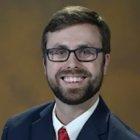
It's also why journalists and news outlets like Newsweek are connecting with experts like William Hatcher, PhD, for expert opinion and perspective.
An award-winning scholar, Hatcher is the chair of the Department of Social Sciences and a professor of political science. His research focuses on the connection between public administration and the development of local communities. Last year, Brian Kemp (R), the state’s popular governor, decided not to challenge Ossoff in the state's 2026 Senate race, which led to a competitive primary on the Republican side and most likely contributed to the election being more competitive. Polls suggested Kemp would have been the strongest candidate against Ossoff.
Recent polling from the Atlanta Journal-Constitution has Ossoff with a four-point lead over Collins.
When it comes to the state’s gubernatorial race, recent polling by Rasmussen shows Jackson with a three-point lead over Bottoms.
Election predicators, such as Nate Silver, have forecasted that the Democrats are likely to win the Senate election and are very competitive in the gubernatorial contest.
Hatcher said that “This November’s election marks the first time in over a generation that there are so many competitive statewide elections in Georgia." May 06 - Newsweek The races in Georgia will have significant impact on politics in the state and the nation. If you're a journalist looking to cover Georgia politics, let us help. William Hatcher, PhD, is available to speak with media – simply click on his icon now to arrange an interview today.
Science depends on a simple but critical principle: Research findings should be reliable enough that other researchers can reproduce them.
But what happens when they can't?
Biomedical research is confronting what has become known as the “reproducibility crisis,” with major scientific journals estimating that more than 80% of published biomedical research is negatively affected by defects that can make findings non-reproducible or unusable.
Now, researchers at Augusta University are taking a closer look at why research goes wrong – and, more importantly, whether those problems can be prevented before findings are published.
Backed by a new $2.5 million R01 grant from the National Institutes of Health, researchers in Augusta University's School of Public Health will identify common research defects and develop strategies to help scientists avoid them.
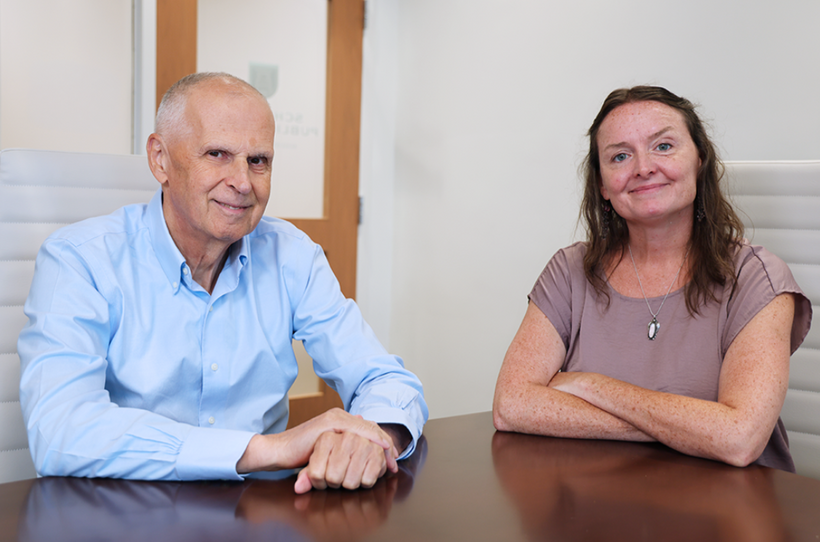
The project is led by E. Andrew Balas, MD, PhD, a professor in the Department of Health Management, Economics, and Policy who has spent more than a decade studying the research process itself.
“Research quality is not only a matter of detecting errors after they occur. The critical question is, how can we understand the conditions that produce research defects and develop effective ways to prevent them before they compromise scientific results?” E. Andrew Balas, MD, PhD The consequences extend well beyond the laboratory.
Unreliable findings can influence patient care, waste research funding and send other scientists down paths built on results that were never dependable. They can also contribute to something increasingly important for the scientific community: declining public trust.
The Augusta University team plans to create a database of common research defects and examine which stages of the research process are particularly vulnerable. Researchers also envision a tool that could eventually allow scientists to enter information about their methodology and identify potential problems before completing and publishing their work.
Wendy Burnett, PhD, an assistant professor in the School of Public Health and co-investigator on the study, summed up the stakes:
“Years of work and substantial funding may be invested in studies based on results that were never dependable.” Wendy Burnett, PhD The interdisciplinary project will also examine the human side of the problem, gathering perspectives from researchers, peer reviewers and journal editors to better understand why research defects happen and what may prevent people from recognizing or addressing them.
Ultimately, the research asks a question that goes to the heart of modern science: How can we make research more trustworthy before mistakes become part of the scientific record?
After the project is complete, Balas and his team hope the results will ultimately impact science and society in many significant ways.
“Research has made wonders in our lives – we have life-saving drugs, we have a lifestyle that is healthier than ever before and so forth. If research could produce more valuable, useful, trustworthy, reproducible results, then we will all be better, and it should also increase public trust in research.” For media covering scientific integrity, biomedical research, public trust in science, research funding, peer review or the reproducibility crisis, this work offers a timely look at how the scientific community can improve not only what it discovers, but how those discoveries are made.
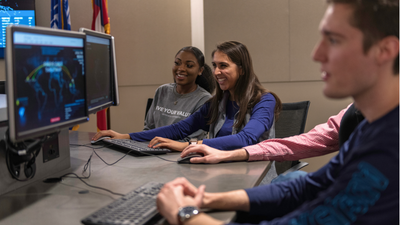
Cybersecurity and artificial intelligence are rapidly becoming interconnected – creating new opportunities, new vulnerabilities and a growing need for professionals who understand both.
At Augusta University, a new $2 million grant from the National Science Foundation will help prepare the next generation of professionals to work at that intersection.
The School of Computer and Cyber Sciences received the award through the NSF’s Artificial Intelligence and Cybersecurity Education Innovation and Scholarship for Service Program. The funding will support Augusta University Government-Ready Experts in Resilient CyberAI, or AUGER CyberAI.
Michael Nowatkowski, PhD, professor and director of Augusta University’s Cyber Institute and head of Cyber Programs of Study, is the project’s principal investigator.
The program reflects a fundamental shift in cybersecurity education. AI can be used as a tool to strengthen cybersecurity, but AI technologies themselves must also be secured. Augusta University is responding by integrating more AI into its cybersecurity curriculum, rather than treating the two disciplines as entirely separate fields.
Participating undergraduate, master’s and doctoral students will take at least four cybersecurity courses and two artificial intelligence courses. Students can receive up to three years of funding covering tuition and fees, along with annual stipends of $27,000 for undergraduate students and $37,000 for graduate students.
In return, graduates will put those skills to work in public service, with participants required to work for a federal executive branch agency for the same number of years they receive funding. If federal employment is unavailable, the obligation can be fulfilled through state or local government employment.
“As cybersecurity and artificial intelligence become more interconnected, we have a responsibility to prepare students with the knowledge and experience needed to meet the evolving needs of the workforce.” – Alex Schwarzmann, PhD Schwarzmann, dean of Augusta University’s School of Computer and Cyber Sciences, says AUGER CyberAI will allow the university to invest in students while mentoring a new generation of professionals prepared to serve the nation.
The first cohort will begin in fall 2026, with approximately seven students expected in the inaugural group and another seven anticipated in 2027.
Experts on Cybersecurity, AI and the Workforce Michael Nowatkowski is a leading cybersecurity expert whose areas of expertise include defensive cyber operations, cyber operations education, control system security, medical device security and information assurance. He can provide insight into how AI is changing cybersecurity, the skills future cyber professionals will require and how universities can prepare students for an evolving threat environment. View his profile Alex Schwarzmann is a nationally recognized expert in computer science, cybersecurity and distributed systems. His research has been supported by numerous grants from the National Science Foundation and other agencies, and he can provide perspective on computer science education, the changing technology workforce and the growing intersection between AI and cybersecurity. View his profile For journalists covering artificial intelligence, cybersecurity, cyber threats, technology education, workforce development, government cybersecurity or the future of the technology workforce, Nowatkowski and Schwarzmann can provide expert analysis and perspective.
If you’re interested in speaking with Michael Nowatkowski, PhD, or Alex Schwarzmann, PhD, about cybersecurity, artificial intelligence and preparing the next generation of cyber professionals, click on their profiles below.