You might also like...
Check out some other posts from Augusta University
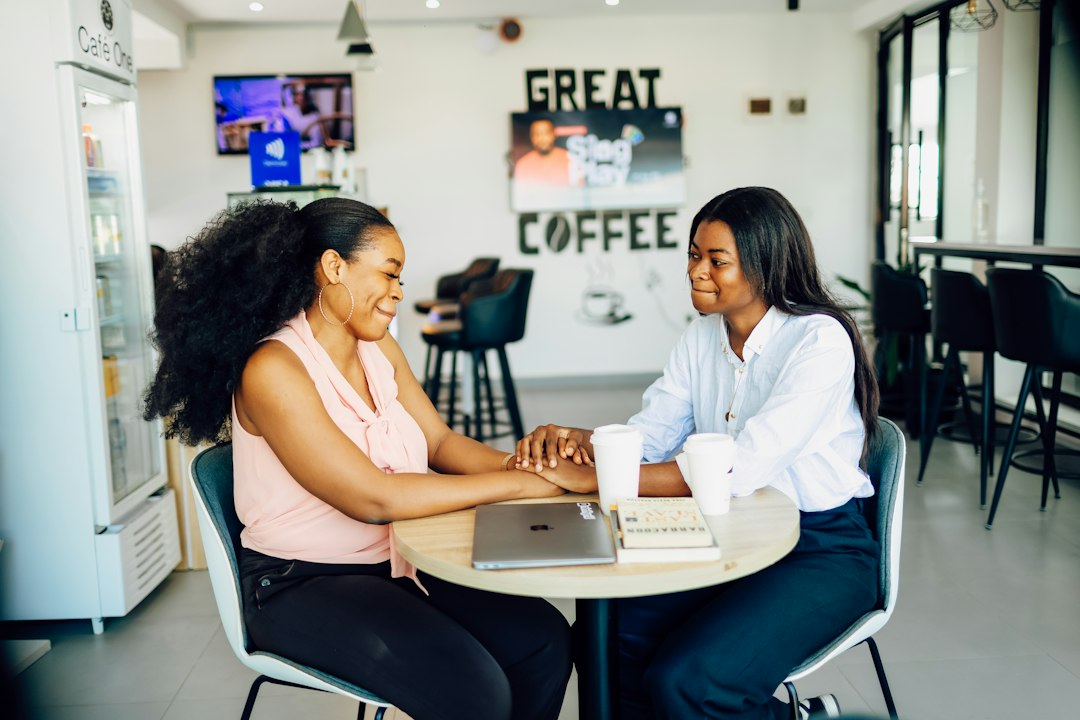
Every October, National Women's Small Business Month invites us to recognize the women who are building, hiring, mentoring and strengthening their communities through their businesses.
As a proud Augusta University alumna and now a senior lecturer at the James M. Hull College of Business, where I teach entrepreneurship, human resource management and leadership ethics, I have the privilege of watching students begin to imagine businesses of their own. Through the Women's Leadership Academy, which I facilitate, I also see how much potential is unlocked when young women are given mentors, self-awareness tools and real opportunities to lead. Also, as an entrepreneur and leader, I have learned that when women build businesses, they rarely build only a company. They build connection.
Stacy Roberts, DBA, is a Lecturer of Management at the Hull College of Business. She teaches courses related to salesmanship and sales marketing, principles of management, organizational behavior and human resources. View her profile Women business owners often create opportunities close to home. They hire neighbors, mentor younger professionals, sponsor youth programs and invest in the places where they feel connected. They truly leave a mark, and that impact does not come easily. Many women entrepreneurs are navigating limited access to capital, smaller professional networks and the challenge of wearing every hat in the business while also carrying responsibilities at home. Yet those same pressures often produce leaders who are resourceful, adaptable and deeply committed to the people they serve. They truly deserved to be valued and supported.
So how can our community get involved this month and beyond?
Buy with intention. Choose women-owned businesses for gifts, services, catering and professional needs. Every purchase matters.
Share and refer. Sponsor women by telling others about them. Leave a review, recommend a business to a colleague or share a post. Visibility is one of the most valuable things a small business can receive.
Open the door. Organizations can include women owned businesses in vendor lists and procurement opportunities. Access is a game changer.
Mentor and be mentored. Experienced leaders can offer guidance and emerging entrepreneurs can seek it out. No one builds alone.
Invest in the next generation. Students and others interested in entrepreneurship should explore coursework, leadership programs, and local small business resources. The ideas forming in classrooms and networks today will become the businesses that anchor our communities tomorrow.
To any woman considering starting a business, remember this. Get clear on your values before you get busy. Build a circle of people who will tell you the truth. Please know your numbers and remember that rest is not a reward for finishing the work. It is part of what allows you to keep doing it.

This November marks the first time in over a generation that there are so many competitive statewide elections in Georgia. Voters in the state will have the opportunity to cast their ballot in multiple federal, state and local elections, including a competitive race for the governor’s mansion and a U.S. senate election.
Control of the Senate is key for most administrations, and with a razor-thin edge favoring the Republicans, any pickup to keep control of the Senate after the mid-term elections is a priority. But it appears so far that the incumbent Senator Jon Ossoff (D) has a lead in the polls over the challenger, U.S. House Representative Mike Collins (R). Still, the election will be a close one.
For the state’s gubernatorial election, what is turning out to be an even closer election, the Democrat Keisha Lance Bottoms is mounting a strong campaign against the Republican Rick Jackson. A Democrat has not won the Georgia’s governorship since 1998.
These competitive elections put Georgia firmly in the camp of states to watch in November. This has political watchers and media trying to cover and figure out as parties enter the final weeks of the 2026 campaigns.
It's also why journalists and news outlets like Newsweek are connecting with experts like William Hatcher, PhD, for expert opinion and perspective.
An award-winning scholar, Hatcher is the chair of the Department of Social Sciences and a professor of political science. His research focuses on the connection between public administration and the development of local communities. Last year, Brian Kemp (R), the state’s popular governor, decided not to challenge Ossoff in the state's 2026 Senate race, which led to a competitive primary on the Republican side and most likely contributed to the election being more competitive. Polls suggested Kemp would have been the strongest candidate against Ossoff.
Recent polling from the Atlanta Journal-Constitution has Ossoff with a four-point lead over Collins.
When it comes to the state’s gubernatorial race, recent polling by Rasmussen shows Jackson with a three-point lead over Bottoms.
Election predicators, such as Nate Silver, have forecasted that the Democrats are likely to win the Senate election and are very competitive in the gubernatorial contest.
Hatcher said that “This November’s election marks the first time in over a generation that there are so many competitive statewide elections in Georgia." May 06 - Newsweek The races in Georgia will have significant impact on politics in the state and the nation. If you're a journalist looking to cover Georgia politics, let us help. William Hatcher, PhD, is available to speak with media – simply click on his icon now to arrange an interview today.
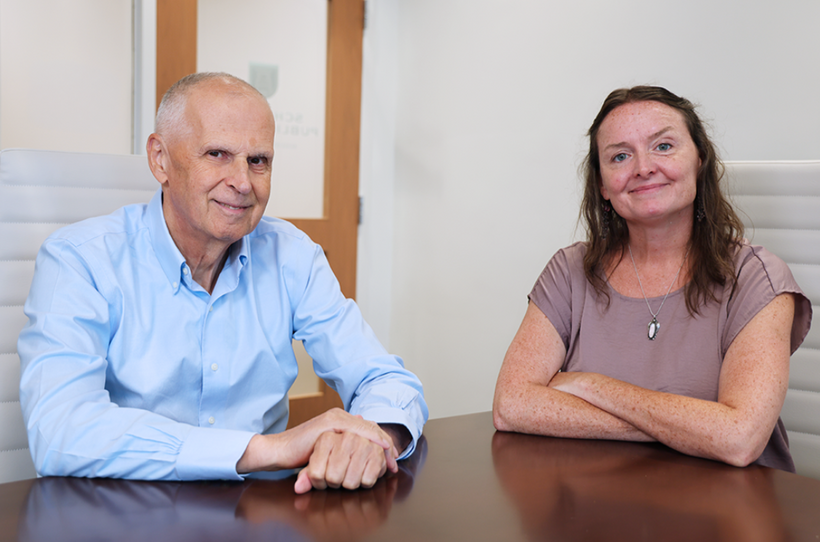
Science depends on a simple but critical principle: Research findings should be reliable enough that other researchers can reproduce them.
But what happens when they can't?
Biomedical research is confronting what has become known as the “reproducibility crisis,” with major scientific journals estimating that more than 80% of published biomedical research is negatively affected by defects that can make findings non-reproducible or unusable.
Now, researchers at Augusta University are taking a closer look at why research goes wrong – and, more importantly, whether those problems can be prevented before findings are published.
Backed by a new $2.5 million R01 grant from the National Institutes of Health, researchers in Augusta University's School of Public Health will identify common research defects and develop strategies to help scientists avoid them.
The project is led by E. Andrew Balas, MD, PhD, a professor in the Department of Health Management, Economics, and Policy who has spent more than a decade studying the research process itself.
“Research quality is not only a matter of detecting errors after they occur. The critical question is, how can we understand the conditions that produce research defects and develop effective ways to prevent them before they compromise scientific results?” E. Andrew Balas, MD, PhD The consequences extend well beyond the laboratory.
Unreliable findings can influence patient care, waste research funding and send other scientists down paths built on results that were never dependable. They can also contribute to something increasingly important for the scientific community: declining public trust.
The Augusta University team plans to create a database of common research defects and examine which stages of the research process are particularly vulnerable. Researchers also envision a tool that could eventually allow scientists to enter information about their methodology and identify potential problems before completing and publishing their work.
Wendy Burnett, PhD, an assistant professor in the School of Public Health and co-investigator on the study, summed up the stakes:
“Years of work and substantial funding may be invested in studies based on results that were never dependable.” Wendy Burnett, PhD The interdisciplinary project will also examine the human side of the problem, gathering perspectives from researchers, peer reviewers and journal editors to better understand why research defects happen and what may prevent people from recognizing or addressing them.
Ultimately, the research asks a question that goes to the heart of modern science: How can we make research more trustworthy before mistakes become part of the scientific record?
After the project is complete, Balas and his team hope the results will ultimately impact science and society in many significant ways.
“Research has made wonders in our lives – we have life-saving drugs, we have a lifestyle that is healthier than ever before and so forth. If research could produce more valuable, useful, trustworthy, reproducible results, then we will all be better, and it should also increase public trust in research.” For media covering scientific integrity, biomedical research, public trust in science, research funding, peer review or the reproducibility crisis, this work offers a timely look at how the scientific community can improve not only what it discovers, but how those discoveries are made.