Can Understanding the History of Drug Addiction Help Address the Opioid Epidemic?

Sep 17, 2019

2 min

Nancy D. Campbell

According to the National Institute on Drug Abuse, more than 130 people die every day after overdosing on opioids. Lives have been lost, families shattered, and billions spent as experts, elected leaders, health care professionals, and law enforcement officials try to address the country's opioid epidemic


A professor at Rensselaer Polytechnic Institute can help shed light on the forces at work in this crisis and its history.


Professor Nancy Campbell is an expert is in the history of science, technology, and medicine as it relates to drug policy and the social significance of drugs. She is a professor and head of the Department of Science and Technology Studies (STS) in the School of Humanities, Arts and Social Sciences at Rensselaer Polytechnic Institute.


"We found her to be one of the most knowledgeable people on the history of opioids and how that history fits into the context of today’s problem," reporters for CBS 6 News in Albany wrote of Campbell. In a recent interview with the station, Campbell discussed her extensive research on the history of drug addiction, as well as her approach to educating students about it.


“I actually want my students to go out of the class, knowing more about where our current opioid epidemic came from, the endemic that it built upon and also knowing more about drug markets and the social aspects,” Campbell said. 

August 15 – CBS 6 News


Are you a reporter covering the opioid crisis and need to know what’s being done and what more needs to be done? Let our experts help with your questions. Campbell is available to speak to media regarding the opioid crisis and the history of drug addiction – simply click on her icon to arrange an interview.


Connect with:
Nancy D. Campbell

Nancy D. Campbell

Professor and Graduate Program Director, Science and Technology Studies (STS)

Focuses on the history of science, technology, and medicine as it relates to drug policy and the social significance of drugs

Opioid CrisisHarm ReductionOpioid OverdoseHistory of Science & MedicineGender & Addiction

You might also like...

Check out some other posts from Rensselaer Polytechnic Institute

2 min

Gates Foundation to Fund RPI Research to Develop Low-Cost Monoclonal Antibody Treatments

Professor Todd Przybycien, Ph.D., head of RPI’s Department of Chemical and Biological Engineering, has been awarded a $3.1 million share of a Gates Foundation Global Grand Challenge grant to advance exceptionally low-cost monoclonal antibody (mAb) manufacturing. Monoclonal antibodies have proven effective at treating a wide range of conditions, including infectious diseases like COVID-19, autoimmune disorders, and certain types of cancer. But they are expensive to produce, and current market prices of $50 to $100 per gram put them effectively out-of-reach for millions of people around the world. The goal of the Gates Grand Challenge is to reduce the price of mAbs to just $10 per gram. Last month, the Gates Foundation announced $10.5 million in funding to a team led by the National Institute for Innovation in Manufacturing Biopharmaceuticals (NIIMBL) in order to achieve that goal. Professor Przybycien’s group is part of that team and will focus on improving the process of purifying monoclonal antibodies after they have been produced by engineered cells. “Optimization and intensification of the downstream purification process offer the exciting possibility of breaking through to the $10/g overall target,” Przybycien said. “We are excited to advance the precipitation-based process we have developed with our collaborator at Penn State as part of the manufacturing solution to sustainably meet the global need for monoclonal antibodies.” Przybycien is an internationally recognized researcher in biomanufacturing and applied biophysics, focusing on developing processes to manufacture recombinant proteins, mRNA, and viral vectors. He has won numerous awards including the NSF CAREER Award and the Camille Dreyfus Teacher-Scholar Award. He is also a fellow of the American Chemical Society, AIChE, and AIMBE. “This grant is a testament to the years of work Todd Przybycien and his team have done to optimize and improve biopharmaceutical manufacturing processes,” said Shekhar Garde, Ph.D., the Thomas R. Farino, Jr. ’67 and Patricia E. Farino Dean of the School of Engineering. “It will pave the way for affordable access to lifesaving medications for millions of people who desperately need them.” “We are excited by the opportunity to demonstrate that there are existing solutions developed by industry and academic partners that can significantly reduce cost of goods and accelerate timelines,” said Kelvin Lee, NIIMBL Institute Director. “We are honored to receive this grant from the Gates Foundation, which will enable this exceptional team to deliver meaningful advances to antibody production efficiency.” This Gates Grand Challenge was established in honor of Dr. Steve Hadley, who championed the reduction of mAbs costs to make them affordable in low- and middle-income countries. The team’s first target will be a monoclonal antibody to treat malaria, an infectious disease which kills more than half a million people each year, primarily in Africa.

2 min

Rensselaer Polytechnic Institute Launches New Quantum Computing Minor to Prepare Next Generation of Quantum Professionals

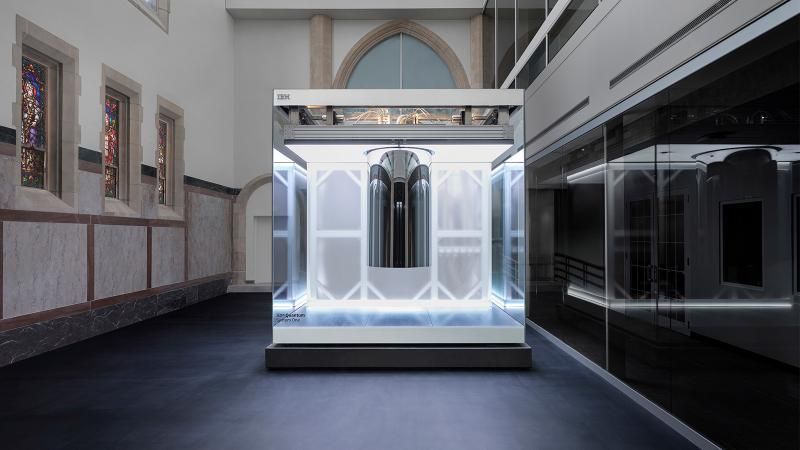
The School of Science at Rensselaer Polytechnic Institute (RPI) has launched a new minor in quantum computing, positioning students at the forefront of one of the most rapidly developing fields in technology. The minor leverages RPI's unique status as the first university in the world to house an IBM Quantum System One on campus, providing students with unprecedented access to utility-scale quantum computing technology. The minor, which is now available to all currently enrolled students, requires four courses drawn from physics, computer science, mathematics, and engineering. The curriculum provides both theoretical foundations and practical exposure to quantum hardware and software, and gives students a leg up in a field rapidly approaching quantum advantage — the point at which quantum systems outperform classical computing approaches on meaningful tasks. "The quantum computing minor will augment the training of RPI students with insight into an emerging technology that will reshape industries from pharmaceuticals to artificial intelligence," said Steven Tait, Ph.D., Dean of the School of Science. "With direct access to the IBM Quantum System One, our students will gain hands-on experience with cutting-edge tools that are not yet widely available. This minor equips them with the interdisciplinary foundation needed to understand and contribute to quantum-enabled innovation." The minor arrives at a pivotal moment in quantum computing's evolution. IBM's demonstration of quantum utility in 2023 marked the beginning of an era in which quantum systems serve as scientific tools to explore complex problems in chemistry, physics, and materials science — areas where quantum advantage offers transformative potential. Hannah Xiuying Fried, graduating this December, is one of the first students to declare the minor. “I'm not a physics or computer science major, so it allows me an accredited way to prove a relevant background to future employers,” she said. “It prepares me for graduate school where I plan to continue pursuing quantum hardware research.” Currently enrolled students may declare the minor now and pursue it alongside their established degree programs. Interested students should contact Chad Christensen at sciencehub@rpi.edu.

2 min

RPI to Host Holiday Concert and Troy Victorian Stroll Kickoff December 6

RPI President Martin A. Schmidt ’81, and his wife, Lyn, invite the Capital Region to join them for the RPI Holiday Concert and Troy Victorian Stroll Kickoff, which will take place on Saturday, December 6, at 7 p.m. in the Concert Hall of the Curtis R. Priem Experimental Media and Performing Arts Center (EMPAC) on RPI’s campus. This event is free and open to the public, and a reception with refreshments will follow. The concert, titled “Light in Winter,” will include performances from the RPI Wind Symphony, Concert Choir, and Orchestra, all under the direction of Robert Whalen, RPI lecturer in music and conducting. For the second year in a row, the concert will also serve as the kickoff for the 43rd annual Troy Victorian Stroll, made possible through RPI’s partnership with the Rensselaer County Regional Chamber of Commerce. “This concert is a wonderful opportunity for our students, who work so hard all year, to share their passion for music and create something meaningful for the entire community,” said Whalen. The program, following a “Light in Winter” theme, celebrates the various ways we bring light and joy to the darker winter season. “There is a common connection across cultures of lighting up the darkness in the late fall and winter, said Whalen. “Consider Diwali, Hannukah, Christmas, Alban Arthan, and others. Music and the arts, as well as education, each represent a way of sharing our inner creative light to illuminate the darkness.” During the concert, students will perform music by Smetana, Tchaikovsky, Gershwin, Lauridsen, and Saint-Saens, all following the “Light in Winter” theme. The program will feature two winners of the 2025 RPI Concerto Competition, Reese Bush '27 in Saint-Saens' "Introduction and Rondo capriccioso" for Violin and Orchestra, and Avery Roach '25 singing Gershwin's gorgeous and evocative "Summertime". Performers across the three groups represent 160 students from 34 different majors and all 5 schools, a reminder of just how curious and well-rounded RPI students are, and that art and science don’t just coexist, they actually enhance each other. The opportunity to continue growing as a musician while pursuing an engineering degree is something that connects many of us and inspires the music we create,” said Bush. “We’re excited to share our hard work and passion with the community.” The Holiday Concert is an annual tradition that celebrates peace and unity, the creativity and hard work of RPI students, and the confluence of science, engineering, and art. Combining the concert with the Troy Victorian Stroll has been a great opportunity for RPI to partner with its home city and further engage with the community. RSVP here: Media are welcome to attend.

View all posts