
Leaping lizards! Let our experts tell you about the latest invasive species to be found in Georgia

May 18, 2020

2 min

Steve Hein


What’s four feet long, weighs ten pounds and is eating its way across two Georgia counties? If you guessed the Argentine black and white tegu – you’d be right.


"It has become established as an exotic invasive species in several sites in South Florida and we now believe in the Toombs and Tattnall counties of Georgia," said Georgia Department of Natural Resources biologist John Jenson.


"We're trying to remove them from the wild, because they can have a negative impact on our native species."


The Argentine black and white tegu can grow to be up to 4 feet long and weigh 10 pounds or more. The species can be identified by its mottled black-and-white coloring, which is arranged in a banded pattern across its back and tail. Hatchlings also display a bright green color on their heads. This tends to disappear around the time they reach a month old.


While the species is known to lash out if threatened, it is not considered aggressive toward people. The biggest problem it presents is towards existing wildlife. The species is notorious for stealing burrows. Tegus also possess an indiscriminate and edacious appetite that can include the eggs and young of other species.


"They eat just about anything they want, plant and animal matter, and one of their favorite foods are eggs from ground-nesting animals such as gopher tortoises—our protected state reptile—birds, including turkeys and quails," said Jenson.   May 14 - Newsweek


Invasive species are not new to Georgia or the southern states, but there are a lot of questions still to be asked:


  • What endangered species are threatened by the presence of these lizards?
  • What can be done to remove them?
  • How quickly will they breed and spread?
  • And are there any natural predators that can assist DNR authorities naturally?


If you are a journalist covering this subject – then let our experts help. 


Steve Hein is the director of the Center for Wildlife Education at Georgia Southern University. He’s an expert in Georgia wildlife and is available to speak with media about invasive species in the state – simply click on his icon to arrange an interview.

Connect with:
Steve Hein

Steve Hein

Executive Director of Center for Wildlife Education

Steve Hein utilizes his artistic talent, business skills and a tremendous sense of fun to his work at the Center for Wildlife Education.

Wildlife ArtFalconryGeorgia Wildlife
Powered by

You might also like...

Check out some other posts from Georgia Southern University

Georgia Southern collection curator works with Yale University on uncovering the rich story behind a rare American artifact featured image

4 min

Georgia Southern collection curator works with Yale University on uncovering the rich story behind a rare American artifact

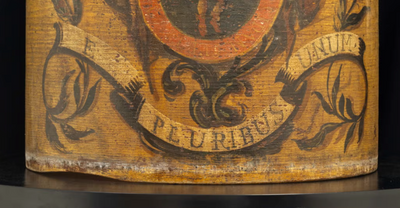
Gretsch Collection Curator Matthew Hill, Ph.D., is accustomed to handling, researching and presenting iconic guitars and drums from the Fred and Dinah Gretsch Collection of Musical Instruments, offering insight into musical artifacts that have shaped contemporary culture. However, discovering a lost story of American Revolutionary history is a new development in his career at Georgia Southern University. Hill had taken on a complex project, collecting and presenting information on the history of the American drumset through the analysis of French and American drums, when his friend and fellow curator, Christina Linsenmeyer, Ph.D., at Yale University’s Morris Steinert Collection of Musical Instruments brought to his attention an American Revolutionary War drum in Yale’s collection. Together, they discussed what might be learned through closer study of the instrument to better understand its place in American history. “I removed the tensioning ropes and we saw that the inscription read ‘Benjamin Clark. Royalton, Mass. 1781’ and that immediately started ringing bells with me,” Hill said. “1781 was a super important year in the American Revolution as it was essentially the time the hostilities began to wind down before it officially ended in 1783.” The drum originally came from the Belle Skinner collection of musical instruments in Massachusetts. Skinner, a wealthy heiress and philanthropist, acquired her extensive collection of instruments in the 1920s and 1930s and displayed them in a specially constructed arcaded gallery at her mansion, Wistariahurst. Yale would later obtain her collection in 1960, more than two decades after her death. Until now, the true rarity and unusual nature of the drum had not yet been fully realized. “There are very few authenticated American Revolutionary War drums,” Hill said. “Aaron Philips, our special collections curator, photographed the instrument, and Dr. Brent Tharp aided in the historical research of Benjamin Clark. And we found evidence of the person behind the name inscribed on the drum.” Hill says Clark is the most noteworthy musician of the American Revolution. He can be placed at the major battles of Trenton and Saratoga and also likely participated in the Battle of Bunker Hill. However, Clark’s involvement in historic American combat isn’t the only fascinating aspect of the man’s life. He’s also important because he was one of two musicians who wrote down what the drumbeat cadences of the Revolutionary War sounded like. “Clark’s drum book of 1797 is probably the most important,” Hill explained. “By way of writing his manuscript, Clark is one of the main sources for our understanding of Revolutionary War drumming. He is a significant figure, just on his own.” American drum sets during this period focused heavily on practicality, according to Hill. However, Clark’s drum was highly decorated, which was very unusual and included a notable, highly recognizable American adage. “‘E Pluribus Unum’ is written on the drum. It was an official American motto very early on,” Hill said. “But in 1781, it wasn’t that common and would not become more common until later. So this is a noteworthy prominent early use of ‘E Pluribus Unum.’” Hill, alongside other curators at higher education institutions, is working to share this unique discovery with public audiences. In order to best preserve and honor the legacy of the instrument and the drummer who carried it throughout America’s battle for independence, Hill reached out to the Massachusetts Historical Society so that Georgia Southern and Yale Universities can collaborate on a joint publication reproducing Clark’s manuscript, the drum itself and the music that would have carried soldiers across the battlefield. The first and only edition of Clark’s manuscript was privately produced in the 1970s. More recently, Hill and Tharp also presented an essay on this drum at the American Musical Instrument Society’s conference in Vermillion, South Dakota, “A Different Drummer (and His Drum): Benjamin Clark’s Revolutionary War Drum of 1781 and His Drum Book of 1797.” For Hill and fellow historians, this new discovery is not only interesting but also remarkable. “It was like Howard Carter finding the tomb of King Tut, for me. I understood his excitement when I realized what an incredible artifact I had come across that had been so well-preserved from the American Revolution,” Hill said. “But what’s most exciting to me is what will come from all of this work and what we will contribute to the greater body of knowledge surrounding the development, implementation and history of the American drum.” As the United States of America celebrates its 250th anniversary, scholars like Hill continue to unearth hidden artifacts that illuminate the origins of an enduring nation. Want to talk to Dr. Hill about this discovery? Contact Georgia Southern's Chief Communications Officer Jennifer Wise at jwise@georgiasouthern.edu to arrange an interview.

World Cup 2026: Georgia Southern University Experts on the Game Behind the Game featured image

2 min

World Cup 2026: Georgia Southern University Experts on the Game Behind the Game

Atlanta is one of the World Cup's biggest host cities. Georgia Southern faculty across economics, health sciences and international studies are ready to speak to the stories behind the tournament. Featured Topic The Atlanta Advantage: Regional Economics of Hosting the World Cup What it means for local businesses, tourism, and the long-term economic legacy of a host city Atlanta's World Cup moment is as much an economic story as a sporting one. Georgia Southern University economics professors Michael Toma, Ph.D., and Anthony Barilla, Ph.D., can speak to tourism revenue, infrastructure investment and what host cities actually gain — and manage —- when the world comes to town. Experts Michael Toma, Ph.D. - Regional Economics and Development Anthony Barilla, Ph.D. - Economics and Public Policy Featured Topic Playing Across a Continent: The Physical Demands of a 48-Team Tournament What elite athletes face competing across climates, time zones and a month-long schedule 48 teams. Multiple cities. Almost no recovery time. Georgia Southern health sciences and kinesiology professor Samuel Wilson, Ph.D., and sports psychologist Brandonn Harris, Ph.D., can explain how a World Cup schedule affects the human body and how elite teams prepare for it. Experts Samuel Wilson, Ph.D. - Health Sciences and Athletic Performance Brandonn Harris, Ph.D. - Kinesiology and Exercise Science Featured Topic More Than a Match: The World Cup as Cultural and Political Exchange How the world's biggest sporting event becomes a stage for diplomacy, identity, and soft power When 48 nations converge on American soil, the game is only part of the story. Political science and international studies expert Christopher M. Brown, Ph.D., can speak to the geopolitical dimensions — national identity, soft power and what it means for the U.S. to host global soccer for the first time in a generation. Experts Christopher M. Brown, Ph.D. - Political Science and International Studies

National Tick Collection Provides Front-Line Defense Against Emerging Health Threats featured image

2 min

National Tick Collection Provides Front-Line Defense Against Emerging Health Threats

A recently published article in Grice Connect highlighted the national importance of the U.S. National Tick Collection, housed at Georgia Southern University's Statesboro Campus. Home to more than one million specimens representing nearly every known tick species, the collection serves as a critical resource for researchers, public health agencies, and disease surveillance efforts studying the spread of tick-borne illnesses. The collection, owned by the Smithsonian Institution and curated at Georgia Southern University, is one of the largest and most comprehensive tick collections in the world. Researchers use it to identify emerging threats, track changes in tick populations, and better understand the diseases these parasites can carry. As concerns about Lyme disease and other tick-borne illnesses continue to grow, the collection provides scientists with an invaluable resource for monitoring species distribution, studying disease vectors, and supporting public health preparedness. It also plays an important role in training future researchers in a field where specialized expertise is increasingly needed. Lorenza Beati, Ph.D., is curator of the U.S. National Tick Collection and associate professor at Georgia Southern University.  Her research focuses on tick taxonomy, genetics, evolutionary relationships, and the role ticks play in transmitting diseases that affect both humans and animals. View her profile The article underscores the collection's growing importance as researchers work to better understand the complex relationships between ticks, pathogens, wildlife, and human health. As environmental conditions change and tick populations expand into new regions, resources like the U.S. National Tick Collection are helping scientists stay ahead of emerging public health challenges. The collection has been entrusted to Georgia Southern since 1990 and includes more than 1 million specimens and more than 125,000 accessioned lots. Beati said the collection is probably the largest curated tick collection in the world. While she said there may be a larger collection elsewhere, she said Georgia Southern’s collection remains especially important because it is active, used for research, and supported by curatorial work. “By having two curators here, we really keep the collection very active,” Beati said. “We publish a lot, we do a lot of research on our samples. We have visitors coming from all over the world to work with us.”  June 13 - Grice Connect Covering? We can help! Lorenza Beati is available to speak with media about tick-borne diseases, tick identification, vector ecology, disease surveillance and the critical role scientific collections play in protecting public health. Her expertise can help audiences better understand the growing impact of ticks on human and animal health, as well as the research efforts underway to address these challenges.

View all posts