MEDIA RELEASE: Drivers asked to stay alert and slow down as students prepare to return to school

Sep 3, 2020

3 min


COVID-19 has changed the way we do many things and, the return to school is no different. This year, children are being encouraged to walk and bike to school to support social distancing. In some parts of Ontario, the start of school is even being staggered, and some children may be doing a combination of in-person and distance learning. In addition, many children will be using masks that may obstruct their line of sight.


For these reasons, CAA South Central Ontario (CAA SCO) is reminding everyone to take extra caution this year while travelling through school zones.


“As students prepare to reunite with friends and classmates after a six-month hiatus, many might forget to take the extra precautions needed to stay safe. This means there is an even bigger responsibility to watch for children travelling to and from school,” says Raymond Chan, manager of government relations for CAA SCO.


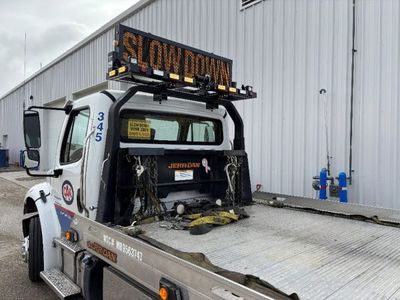
Keeping our kids and neighbourhoods safe is a shared responsibility. That’s why this year, we are providing FREE “Slow Down Please” lawn signs to anyone living in South Central Ontario. When well-placed, these signs aim to make roads safer for children and those living in the community. Remember to check local bylaws before installing signs on private property. Anyone can pick up a maximum of two signs at any CAA Store, while quantities last.


Drivers can also use the following CAA tips to ensure they are staying safe in school zones.

  1. Make eye contact with children: With the excitement of back to school, anticipate that children may not easily see or hear your moving vehicle. Make eye contact with passing pedestrians and cyclists.
  2. Reduce traffic by walking: Incorporate a short walk into your commute to school. CAA encourages parents to park a block away and walk to school, if possible, to reduce congestion and make school zones safer.
  3. Slow down: Know the speed limit in your neighbourhood’s school zones and respect them.
  4. Watch for more school buses: Always stop for the buses’ flashing lights and wait for children to get safely on or off. Stay alert and watch for children or parents crossing the road when the bus moves on.
  5. Choose a safe spot to drop off and pick up your children from school: Follow your school’s rules and don’t park illegally, it can put your child’s safety at risk. Instead, use the designated drop off areas or consider a spot a bit farther away from school that is easily accessible and safe.


The above tips are crucial in maintaining a safe school zone. According to a CAA poll, nearly 25 per cent of drivers reported witnessing a near miss or collision in a school zone, more than half of which involved a child. The poll also revealed 70 per cent of Canadians said they have witnessed someone speeding in a school zone.


CAA also supports safety in school zones through the CAA School Safety Patrol program. CAA designed this program to protect, educate, and empower elementary school children on safe road-crossing practices. Our Ontario Road Safety Resource is a toolkit for teachers to educate Ontario youth about road safety.


Powered by

You might also like...

Check out some other posts from CAA Club Group

MEDIA RELEASE: 2026 CAA EV Circuit: EVs go the distance, but charging, efficiency and costs vary featured image

4 min

MEDIA RELEASE: 2026 CAA EV Circuit: EVs go the distance, but charging, efficiency and costs vary

The question for Canadians considering an EV may no longer be how far it can go, but how efficiently it uses energy, how quickly it charges and how much it costs to recharge. Results from the 2026 CAA EV Circuit found significant differences across vehicles in all three areas. “Range anxiety has long dominated the conversation about electric vehicles, but these results suggest the discussion can shift to more personalized considerations for drivers,” says Kaitlynn Furse, director, corporate communications, CAA Manitoba. “For many of today’s EVs, the question is becoming less about whether you can complete a trip and more about how efficiently you can make it, where you will charge, how long charging will take, and what it will cost.” All 22 electric vehicles participating in the CAA EV Circuit completed the same 230-kilometre route without needing to charge, including the vehicle with the shortest advertised range. A 15-minute charging test was completed at the end to capture further data. The route started in Blue Mountain, ON and ended in Vaughan, ON. On average, the vehicles used only 40 per cent of their battery charge over the route. EVs demonstrate a significant energy-efficiency advantage over traditional gasoline-powered vehicles The electric vehicles in the Circuit used the energy equivalent of approximately two litres of gasoline per 100 kilometres. By comparison, the average Canadian passenger vehicle consumes roughly eight to 10 litres of gasoline per 100 kilometres. Energy consumption among the participating EVs ranged from 11.43 kilowatt-hours per 100 kilometres to 28.91 kilowatt-hours per 100 kilometres, illustrating the variation among vehicle sizes, weights and designs. A more efficient EV generally requires less electricity to travel the same distance, which can contribute to lower charging costs and less time spent charging. A notable finding was that the vehicles in the September 2026 CAA EV Circuit consumed approximately 40 per cent less energy, on average, than the vehicles evaluated during the February 2025 CAA EV Winter Test. While the tests were conducted under different conditions and with different vehicles, the difference highlights the significant impact that temperature can have on EV efficiency. A short charging stop can meaningfully extend a trip When it comes to charging experience, during the standardized 15-minute charging session, participating vehicles added an average of 110 kilometres of displayed range. Almost two-thirds of the vehicles added at least 100 kilometres, demonstrating that a brief charging stop can provide a meaningful boost during a longer journey. Results differed significantly among vehicles. The displayed driving range added during the 15-minute session varied from 58 kilometres to 178 kilometres. Charging performance can be affected by the vehicle, charger, battery temperature, battery state of charge and conditions at the time of charging. These results also highlight the effect of Canadian climate variations. Vehicles tested in the September 2026 CAA EV Circuit added approximately 15 per cent more displayed range during the charging session than the group evaluated during CAA’s 2025 EV Winter Test. “For Canadians planning longer drives, knowing a vehicle’s total range is only part of the equation,” continues Furse. “Drivers should also understand how their vehicle charges and recognize that the number of kilometres added during a stop can change depending on the vehicle and the charging conditions.” Public fast-charging costs are not the same for every EV The Circuit found that the average cost of a 15-minute charging session at the public fast chargers used in the test was $13.45, but individual vehicle results ranged from $7.28 to $24.39. All vehicles were charged at Tesla charging stations to ensure a consistent charging experience, so it is important to note that Teslas receive preferred pricing at Tesla charging stations. The test was designed to reflect a higher-cost road-trip charging scenario, using premium public fast chargers operating at full capacity. It does not represent the typical cost of powering an EV. CAA’s National EV Driver Survey found that public fast charging accounts for only eight to 18 per cent of charging, meaning most EV drivers generally charge under lower-cost circumstances like at home or work. “Just as Canadians compare fuel economy when buying a gasoline-powered vehicle, they should compare energy efficiency and charging performance when considering an EV,” says Furse. “Where and how often someone expects to charge can make a substantial difference to their experience and road-trip costs.” Complete vehicle findings and additional information about the 2026 CAA EV Circuit are available at 2026 CAA EV Circuit: Complete Vehicle Findings -30- About the CAA EV Circuit The CAA EV Circuit was conducted on September 16, 2026, with 22 electric vehicles travelling the same 230-kilometre route from Blue Mountain to Vaughan, Ontario, across city streets, rural roads and highways. Using a neutral data-driven methodology, all vehicles followed the same route, operated under consistent settings and participated in a standardized charging session. Performance data was collected throughout the drive and validated by CAA’s business intelligence and automotive experts. Data Snapshot Most kilometres gained in a 15-minute charging session Lucid Gravity, 178 km Hyundai IONIQ 5, 136 km Mercedes-Benz CLA with EQ Technology, 135 km Cadillac LYRIQ, 131 km Nissan LEAF, 126 km Least kilometres gained in a 15-minute charging session Lucid Air, 58 km Chevrolet Equinox EV, 71 km Chevrolet Silverado EV, 80 km GMC HUMMER EV SUV, 90 km Tesla Model Y, 97 km Lowest cost per 100 kms of charge added Tesla Model 3, $7.28 Tesla Model Y, $8.23 Nissan LEAF, $10.13 Kia EV4, $10.25 Hyundai IONIQ 5, $10.68 Highest cost per 100 kms of charge added GMC HUMMER EV SUV, $24.39 Chevrolet Silverado EV, $19.05 Rivian R1T, $17.85 Tesla Cybertruck, $15.61 Volkswagen ID. Buzz, $15.48 Lowest energy consumption (kWh/100 km) Toyota bZ 11.43 kWh Tesla Model Y 11.81 kWh Tesla Model 3 11.85 kWh Kia EV4 11.89 kWh Nissan LEAF 12.48 kWh Highest energy consumption (kWh/100 km) Lucid Gravity 28.91 kWh GMC HUMMER EV SUV 23.55 kWh Tesla Cybertruck 23.41 kWh Rivian R1T 19.96 kWh Cadillac LYRIQ 19.1 kWh

MEDIA RELEASE: 2026 CAA EV Circuit: EVs go the distance, but charging, efficiency and costs vary featured image

4 min

MEDIA RELEASE: 2026 CAA EV Circuit: EVs go the distance, but charging, efficiency and costs vary

The question for Canadians considering an EV may no longer be how far it can go, but how efficiently it uses energy, how quickly it charges and how much it costs to recharge. Results from the 2026 CAA EV Circuit found significant differences across vehicles in all three areas. “Range anxiety has long dominated the conversation about electric vehicles, but these results suggest the discussion can shift to more personalized considerations for drivers,” says Kaitlynn Furse, director, corporate communications, CAA South Central Ontario. “For many of today’s EVs, the question is becoming less about whether you can complete a trip and more about how efficiently you can make it, where you will charge, how long charging will take, and what it will cost.” All 22 electric vehicles participating in the CAA EV Circuit completed the same 230-kilometre route without needing to charge, including the vehicle with the shortest advertised range. A 15-minute charging test was completed at the end to capture further data. The route started in Blue Mountain, ON and ended in Vaughan, ON. On average, the vehicles used only 40 per cent of their battery charge over the route. EVs demonstrate a significant energy-efficiency advantage over traditional gasoline-powered vehicles The electric vehicles in the Circuit used the energy equivalent of approximately two litres of gasoline per 100 kilometres. By comparison, the average Canadian passenger vehicle consumes roughly eight to 10 litres of gasoline per 100 kilometres. Energy consumption among the participating EVs ranged from 11.43 kilowatt-hours per 100 kilometres to 28.91 kilowatt-hours per 100 kilometres, illustrating the variation among vehicle sizes, weights and designs. A more efficient EV generally requires less electricity to travel the same distance, which can contribute to lower charging costs and less time spent charging. A notable finding was that the vehicles in the September 2026 CAA EV Circuit consumed approximately 40 per cent less energy, on average, than the vehicles evaluated during the February 2025 CAA EV Winter Test. While the tests were conducted under different conditions and with different vehicles, the difference highlights the significant impact that temperature can have on EV efficiency. A short charging stop can meaningfully extend a trip When it comes to charging experience, during the standardized 15-minute charging session, participating vehicles added an average of 110 kilometres of displayed range. Almost two-thirds of the vehicles added at least 100 kilometres, demonstrating that a brief charging stop can provide a meaningful boost during a longer journey. Results differed significantly among vehicles. The displayed driving range added during the 15-minute session varied from 58 kilometres to 178 kilometres. Charging performance can be affected by the vehicle, charger, battery temperature, battery state of charge and conditions at the time of charging. These results also highlight the effect of Canadian climate variations. Vehicles tested in the September 2026 CAA EV Circuit added approximately 15 per cent more displayed range during the charging session than the group evaluated during CAA’s 2025 EV Winter Test. “For Canadians planning longer drives, knowing a vehicle’s total range is only part of the equation,” continues Furse. “Drivers should also understand how their vehicle charges and recognize that the number of kilometres added during a stop can change depending on the vehicle and the charging conditions.” Public fast-charging costs are not the same for every EV The Circuit found that the average cost of a 15-minute charging session at the public fast chargers used in the test was $13.45, but individual vehicle results ranged from $7.28 to $24.39. All vehicles were charged at Tesla charging stations to ensure a consistent charging experience, so it is important to note that Teslas receive preferred pricing at Tesla charging stations. The test was designed to reflect a higher-cost road-trip charging scenario, using premium public fast chargers operating at full capacity. It does not represent the typical cost of powering an EV. CAA’s National EV Driver Survey found that public fast charging accounts for only eight to 18 per cent of charging, meaning most EV drivers generally charge under lower-cost circumstances like at home or work. “Just as Canadians compare fuel economy when buying a gasoline-powered vehicle, they should compare energy efficiency and charging performance when considering an EV,” says Furse. “Where and how often someone expects to charge can make a substantial difference to their experience and road-trip costs.” Complete vehicle findings and additional information about the 2026 CAA EV Circuit are available at 2026 CAA EV Circuit: Complete Vehicle Findings -30- About the CAA EV Circuit The CAA EV Circuit was conducted on September 16, 2026, with 22 electric vehicles travelling the same 230-kilometre route from Blue Mountain to Vaughan, Ontario, across city streets, rural roads and highways. Using a neutral data-driven methodology, all vehicles followed the same route, operated under consistent settings and participated in a standardized charging session. Performance data was collected throughout the drive and validated by CAA’s business intelligence and automotive experts. Data Snapshot Most kilometres gained in a 15-minute charging session Lucid Gravity, 178 km Hyundai IONIQ 5, 136 km Mercedes-Benz CLA with EQ Technology, 135 km Cadillac LYRIQ, 131 km Nissan LEAF, 126 km Least kilometres gained in a 15-minute charging session Lucid Air, 58 km Chevrolet Equinox EV, 71 km Chevrolet Silverado EV, 80 km GMC HUMMER EV SUV, 90 km Tesla Model Y, 97 km Lowest cost per 100 kms of charge added Tesla Model 3, $7.28 Tesla Model Y, $8.23 Nissan LEAF, $10.13 Kia EV4, $10.25 Hyundai IONIQ 5, $10.68 Highest cost per 100 kms of charge added GMC HUMMER EV SUV, $24.39 Chevrolet Silverado EV, $19.05 Rivian R1T, $17.85 Tesla Cybertruck, $15.61 Volkswagen ID. Buzz, $15.48 Lowest energy consumption (kWh/100 km) Toyota bZ 11.43 kWh Tesla Model Y 11.81 kWh Tesla Model 3 11.85 kWh Kia EV4 11.89 kWh Nissan LEAF 12.48 kWh Highest energy consumption (kWh/100 km) Lucid Gravity 28.91 kWh GMC HUMMER EV SUV 23.55 kWh Tesla Cybertruck 23.41 kWh Rivian R1T 19.96 kWh Cadillac LYRIQ 19.1 kWh

MEDIA RELEASE: CAA Manitoba encourages families to make a School Year Resolution for safer school zones featured image

3 min

MEDIA RELEASE: CAA Manitoba encourages families to make a School Year Resolution for safer school zones

As Manitoba students head back to school, CAA Manitoba is encouraging families to make one simple school year resolution: help create safer school zones for everyone. With students, parents, school buses, adult crossing guards and pedestrians returning to daily routines, school zones become significantly busier during the back-to-school season. CAA Manitoba is reminding all road users that school zone safety is a shared responsibility and that small actions can make a big difference in helping children get to and from school safely every day. "Back-to-school season is an exciting time for families, but it also brings increased traffic and activity around schools," says Ewald Friesen, manager of government and community relations, CAA Manitoba. "Whether you're driving, walking, cycling or taking the bus, everyone has a role to play in creating safer school communities by slowing down, staying focused and looking out for one another." Reduced school zone speed limits are back in effect As of Sept. 1, reduced school zone speed limits are back in effect across Manitoba. Between 7 a.m. and 5:30 p.m., Monday through Friday, drivers are required to reduce their speed to 30 km/h when travelling through school zones. To help reduce congestion and improve safety, CAA Manitoba is encouraging families to set a few "school year resolutions" this fall: Give yourself a few extra minutes: We know mornings don't always go according to plan. When possible, build in a little extra time for the school run. A less rushed arrival can help reduce behaviours like double parking, stopping in undesignated areas or dropping children off from unsafe locations. Follow your school's drop-off routine: Every school has procedures designed to move students safely and efficiently. Following designated pick-up and drop-off practices, even when the line is long, helps improve traffic flow and creates a safer experience for children, families, and school staff. Consider a "park and walk": If it's practical for your family, parking a short distance from the school and walking the last block can help ease congestion near entrances while giving children an opportunity to build road safety awareness. Help reduce traffic with active school travel: If possible, incorporate active school travel into your family's routine, even one or two days per week. Encouraging your kids to walk or wheel to school helps to ease traffic congestion, among other benefits. Reinforce road safety rules: Proactively chat with children about how to safely walk, bike or scooter based on their age and neighbourhood. Simple reminders like looking "left, right, left" before crossing, paying attention to crossing guards and staying alert around driveways, back lanes and parking lots can make a big difference. CAA Manitoba is also reminding drivers to stay alert in school zones, particularly during arrival and dismissal periods. Motorists should watch for adult crossing guards, school safety patrollers, pedestrians, and school buses, and be prepared to stop at marked crossings. Drivers must stop at least five metres away from a school bus with flashing red lights and an extended stop arm and remain stopped until the signals are no longer activated. Now in its 90th year, the CAA School Safety Patrol program has helped keep Manitoba students safe as they travel to and from school. Student Patrollers help classmates cross roadways safely while promoting good road safety habits and demonstrating leadership within their communities. "Creating safer school zones starts with all of us making thoughtful choices every day," said Friesen. "When drivers slow down, families follow safe drop-off practices and children understand how to navigate their neighbourhood safely, we can help ensure every student has a safer journey to and from school." For more information, visit: www.caamanitoba.com/advocacy/school-safety/school-zones.

View all posts