You might also like...
Check out some other posts from Villanova University
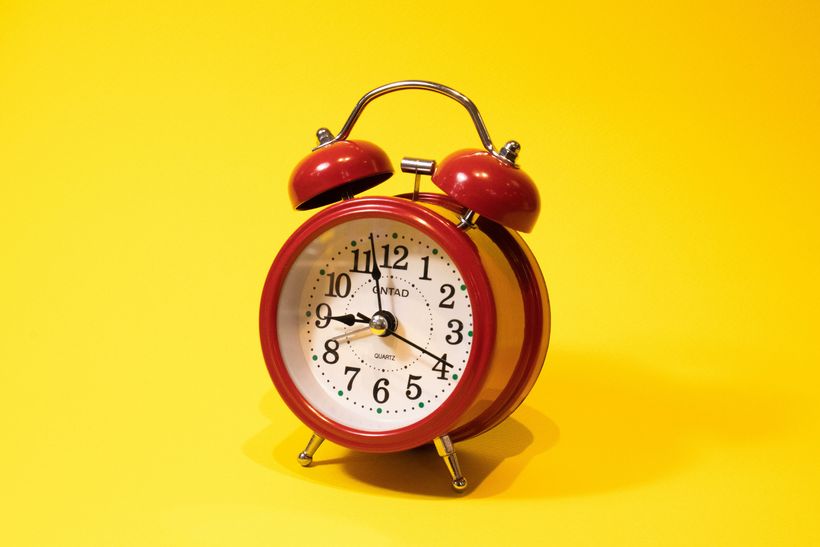
Twice a year, Americans are made to gain or lose one hour of sleep to accommodate an age-old custom of dubious origins. But that may soon change.
On July 14, 2026, Democrats and Republicans in the U.S. House of Representatives joined together to approve the Sunshine Protection Act, a bill that would effectively eliminate seasonal clock adjustments and institute permanent daylight saving time.
Currently, this legislation is stalled in the Senate, but pressure is steadily mounting for the act’s passage before clocks once again “fall back” at the beginning of November. Amid the push, many researchers who specialize in sleep science and medicine hope Congressional lawmakers continue biding their time—and time in general—and weigh a different approach to the nation’s wakeup call conundrum.
“Both the general public and the medical and scientific communities seem to largely support eliminating the practice of changing the clocks twice a year,” says Elizabeth Pantesco, PhD, assistant professor of Psychological and Brain Sciences and head of the Sleep and Heart Health Lab at Villanova University. “However, while political and public opinion often seem to slightly favor permanent daylight saving time, the sleep medicine and circadian science communities generally support permanent standard time.”
As Dr. Pantesco explains, this support largely stems from experts’ understanding of circadian health. Permanent standard time would produce earlier morning light and earlier evening darkness, which is generally considered more favorable for optimizing the body’s 24-hour internal rhythms, than permanent daylight saving time.
“Under permanent daylight saving time, reduced morning light and increased evening light exposure could shift the circadian clock later, while work, school and other social schedules remain fixed,” says Dr. Pantesco. “This can result in more difficulty falling asleep at night while still needing to get up at the same time in the morning, increasing the likelihood of circadian misalignment, poorer-quality sleep and shorter sleep.”
Based on research and historical evidence, the consequences of this restlessness could extend far beyond bleary eyes and midday yawns. While permanent daylight saving time has never been analyzed in controlled trials, the existing literature on sleep restriction and circadian misalignment indicates that the policy change could have significant health and safety ramifications over an extended period.
“Circadian misalignment and insufficient sleep have been associated with increased risks for cardiovascular and metabolic disease, as well as depression and other psychiatric outcomes. Long-term circadian disruption, particularly in research on shift work, has also been linked with certain cancers. More immediate consequences can include daytime sleepiness, impaired attention, reduced productivity and an increased risk of errors and motor vehicle crashes.”
Dr. Pantesco also notes the possibility of some drawbacks with permanent standard time, which would shift an hour of daylight from evening to morning during the months currently on daylight saving time. Among the resultant pitfalls are that it could limit “opportunities for outdoor and social activities after work, affect businesses that benefit from evening activity and potentially increase risks for certain types of crime and for evening pedestrian or cyclist accidents.”
Still, while the communal and societal effects of a permanent standard time have yet to be fully understood, the health benefits are strongly supported by circadian biology. As the American Academy of Sleep Medicine (AASM) contends, its institution could eliminate the chronic sleep disruption caused by seasonal clock changes while creating a “natural synchrony [optimal] for health, mood, performance and safety.”
Among U.S. lawmakers, there is a contingent that wholeheartedly agrees, working to enshrine permanent standard time through a Sunshine Protection Act alternative—the Sunshine for Our Kids Act. Whether they will be able to convince their Congressional cohorts of the benefits of permanently “springing forward” over permanently “falling back” remains to be seen, however. As with most things, only time will tell.
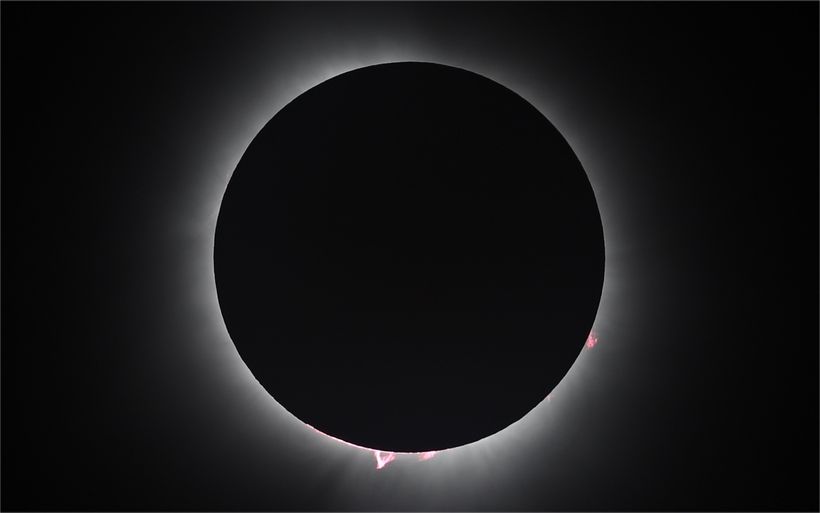
As the moon passes in front of the sun on August 12, 2026, viewers along the eclipse’s path of totality in Iceland, Greenland and Northern Spain will be treated to more than two minutes of daytime darkness.
For many, it will be their first experience in totality. For the eclipse itself, it’s just another slightly different chapter in a millennium-long rinse and repeat.
That’s because every eclipse belongs to what is called a saros series—a “family” of eclipses that follow a predictable schedule. A saros series begins and ends with partial eclipses near opposite poles of the Earth, and in between may feature annular, hybrid or total eclipses—like the kind occurring this August—across the world.
“Then the series will end,” said Frank Maloney, PhD, associate professor of Astrophysics and Planetary Science at Villanova University. “New saros series are always coming into being, and old ones fading from existence. While they are here, they usually have between 70-73 eclipses over a span of 1,200-1,300 years.”
Within the series is what is known as a saros cycle. It’s a period of roughly 18 years, 11 days and eight hours, when a natural synchronization of the moon’s three lunar phases arises. That synchronization can predict both lunar and solar eclipses, which follow very similar geometrics to the ones that precede and follow in their series.
But why, then, aren’t all eclipses in a series over the same viewing area? The answer lies more with the movement of the Earth than with the eclipse.
Within each series, the biggest cause of change from eclipse to eclipse comes from that last eight hours. It’s only the length of a workday, but each cycle, the Earth has rotated an additional 120 degrees from the previous. While the eclipse itself remains very similar to its predecessor and successor in the series, the viewing area does not.
“Every fourth eclipse, or roughly every 54 years, you are back to where you began,” said Dr. Maloney. “That fourth eclipse in a saros is referred to as an exeligmos. But even that eclipse won’t follow the exact same path for a few reasons, including slight variations in the moon’s orbital node and distance from Earth.”
Same region, but different track.
The August 2026 eclipse will pass over Greenland, Iceland and Northern Spain, but its exeligmos from July 10, 1972 passed over parts of Russia, Alaska and Northeast Canada. Ed Guinan, PhD, ’64 CLAS, professor of Astrophysics and Planetary Science, witnessed that one with a Villanova contingent on the Gulf of St. Lawrence in Nova Scotia. Fifty-four years from now, this eclipse will be only a partial one, as the saros series begins to wane.
The upcoming August event, in fact, is the penultimate of 10 total solar eclipses in Saros 126. The 10th will be in August 2044—the next one visible in the contiguous United States, seen in totality in parts of Montana, North Dakota and South Dakota.
Saros 126 began with a partial eclipse on March 10, 1179, and will end with another partial on May 3, 2459.
Humans understood these patterns long before this one began. In the first millennium BCE, the Chaldeans discovered the saros cycle by “carefully keeping record of observations” of eclipses over time, explained Dr. Maloney.
“Our lives are linked with the sun. To the ancients, having the sun disappear was believed to be a really bad thing, like a demon devouring it. That goes for lunar eclipses too, which caused the moon to turn red and really bother people. When they could begin to predict them, total eclipses ceased to be the powerfully bad omens that ancients believed they were. It was still a mystery as to why it happened, but at least it was predictable, which reduced people's anxieties.”
Now, the anxiety stemming from eclipse viewing is saved for the fierce competition for hotels along the path of totality and threats of cloudy weather.
“But don’t worry,” Dr. Maloney said. "If you miss one, you might be able to see it ‘nearby’ in another 54 years.”
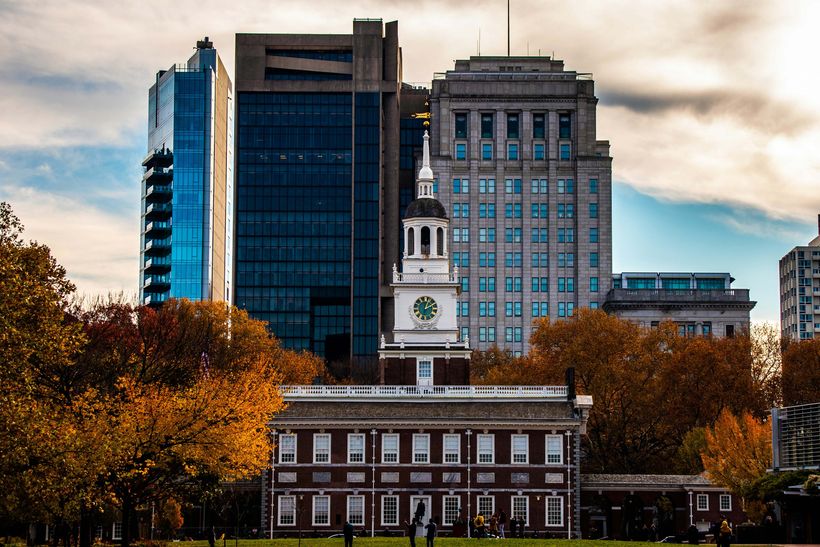
Philadelphia’s Independence Hall has long occupied an outsized place in the American imagination. The space where the Continental Army was established, the Declaration of Independence adopted and the United States Constitution ratified, the site was once described by President Abraham Lincoln as the source “where were collected together the wisdom, the patriotism, the devotion to principle, from which sprang the institutions under which we live.”
In July, these hallowed grounds will yet again take center stage, as the country observes its semiquincentennial, or America250, celebration. In due course, House lawmakers will gather at the landmark for a special commemorative event, mayors from across the U.S. will march to the gates in a show of civic pride and solidarity, and thousands of visitors will flock to the site daily in appreciation for its significance to the cause of “Life, Liberty and the pursuit of Happiness.”
However, while Independence Hall’s role in the national saga will go widely remarked and recognized, the building itself has a story that remains largely unknown. According to Whitney Martinko, PhD, associate professor of History and director of the Albert Lepage Center for History in the Public Interest at Villanova University, the “cradle of American democracy” almost never survived the country’s infancy.
“Early on, the challenge was about two things,” says Dr. Martinko, who specializes in public history, historic preservation and the early U.S. “One was about ownership of what was called the ‘Old State House,’ because it was the former statehouse in the colony of Pennsylvania. And the second was about the development of the city around it.”
As Dr. Martinko explains, in the early 19th century, Independence Hall—then the Old State House—was under the control of the Commonwealth of Pennsylvania, which had shifted its governmental seat from Philadelphia to Harrisburg by 1812. To fund the construction of a new capitol building in the wake of the move, Pennsylvania legislators seriously contemplated selling the site to private enterprise, with the surrounding area undergoing a development boom.
“Today’s Independence Mall was built up entirely,” says Dr. Martinko. “In the 18th century, it was full of buildings, shops and houses, and by the 19th century, it had become a huge furniture district and a heart of commerce in many ways.”
As plans were drawn up to deliver the hall to the highest bidder, local resistance quickly emerged. Opposed to the landmark’s loss, citizens of Philadelphia and municipal leaders rushed to the defense of the building and its lawn, arguing that their preservation entailed a necessary public good.
“Everyone looked to this site as the heart of the new nation. It’s a historic site. It’s an important building. People thought of it as one of the great pieces of Georgian architecture at the time,” says Dr. Martinko.
“It was also seen as a civic space, as people gathered there on Election Day. And its lawn was highly valued, with green, open space considered important even then, for air circulation. So, it was really seen as a political space, a civic space and a green space that was important for the well-being of Philadelphians and the health of Philadelphia.”
Deliberations over the fate of Independence Hall would continue for a period of five years, up until 1818. After a spirited public campaign, a settlement was finally reached when the City of Philadelphia purchased the plot from the Commonwealth of Pennsylvania for $70,000 (roughly $1.85 million in today’s currency).
In essence, the deal would forevermore secure Independence Hall’s place within the pantheon of great American shrines, parks and monuments. However, in a terrific irony, it would also eventually lead to the loss of a different piece of history: Between 1950 and 1967, the 19th-century development projects that once threatened Independence Hall became a casualty of the city’s efforts to make the “birthplace of America” an urban focal point, with the creation of Independence Mall.
“Those buildings were all torn down in the mid-20th century, when Ed Bacon and the City Planning Commission decided to make Independence Hall a major attraction,” says Dr. Martinko. “There were debates surrounding this issue as well. The Jayne Building was one of the 19th-century buildings that was demolished and that is most well-known. So, there’s this sense of preserving 18th-century history through the demolition of 19th-century architecture.”
As the nation approaches its 250th anniversary, the near loss of Independence Hall and the removal of its 19th-century neighbors stand as striking examples of the ways in which what we value, and how much we value it, evolves over time. What’s more, the historic threats to Philadelphia’s most famous site serve as a poignant reminder of the delicate nature of public memory and preservation—and the fact that the places we treasure today may not always be with us tomorrow.
“Even though it seems absurd to us now, we’re still seeing debates over the line between redevelopment and connection with the past,” concludes Dr. Martinko. “It’s not that no one saw the value of Independence Hall, or that they didn’t see it as historic. It was just this debate that a lot of very reasonable people continue to have today: Is this what really needs to be preserved? And how should it be preserved?”





