
Hitting all the right notes - Georgia Southern music industry degree ready to launch

Jan 29, 2021

2 min


Georgia Southern University’s Department of Music earned national accreditation for a new music industry degree, the final step for an innovative program that combines music, technology and entrepreneurship. Launching in the fall of 2021, the new music industry program will prepare musicians for evolving careers in music. The program curriculum combines a traditional degree with 21st-century technology and performance opportunities.


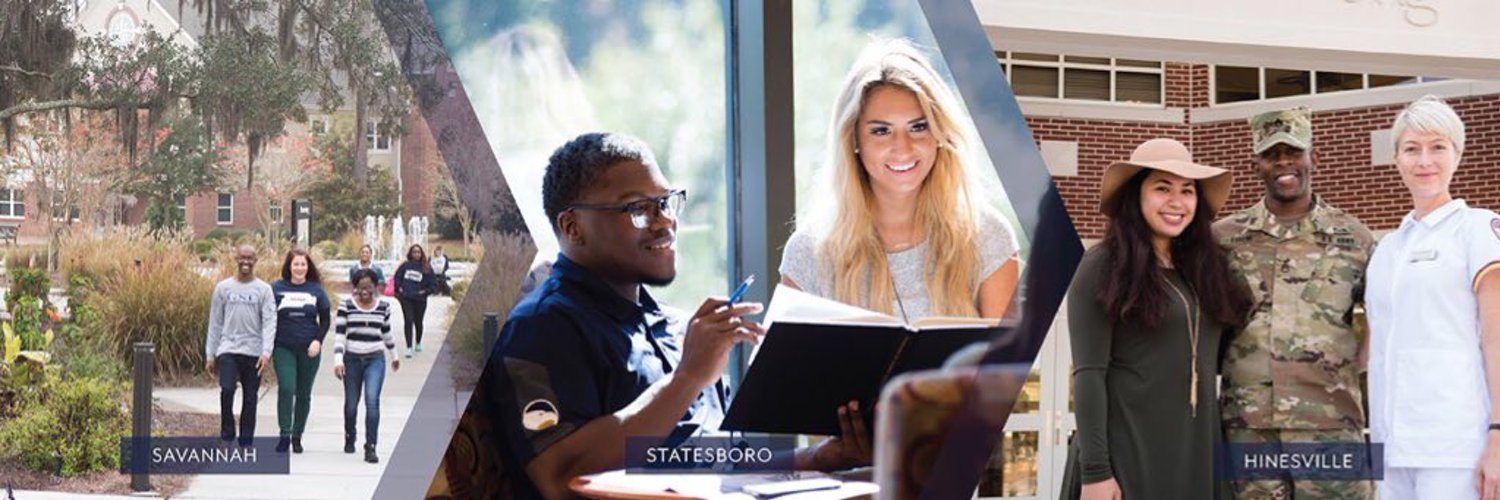
Accreditation from the National Association of Schools of Music (NASM) allows the new program, Bachelor of Arts in Music with a concentration in music industry, to be offered at the Armstrong Campus in Savannah. Students will have the option of declaring an emphasis area in music technology or music business.


“We could not be more excited about this program,” said Steven A. Harper, Ph.D., chair of the Department of Music. “For many years, the music program has been itching to expand its reach and regional impact. Savannah is perfectly suited for a degree of this type and we couldn’t be more pleased to have this degree come to fruition.”


The music industry program includes courses in music management, live sound, recording studio techniques, digital audio workstations and music entrepreneurship.


“The numerous music industries in Savannah include music manufacturers, performing organizations/venues and major music festivals. These industries can provide ample internship possibilities for hands-on experience in a chosen area,” Harper said. “We are able to reach a student body we’ve never been able to serve before. We can prepare students for a whole different set of in-demand careers and we can create ties with the music industry in Savannah in a way that’s never been possible for us until now. It’s going to be a huge boon for the department, the college, the university and the Armstrong Campus.”


One professor key to the program will be Stephen Primatic, DMA, who teaches percussion, theory, jazz and music technology. His versatility is evidenced by the books he has written: two on percussion pedagogy and another on instrument maintenance and repair.


“This program will be beneficial to our students, the University and the community of Savannah, offering education and training for music careers in the 21st century,” said Primatic.


If you are a journalist looking to know more about the Bachelor of Arts in Music with a concentration in music industry or would like to interview Steven A. Harper, Ph.D., chair of the Department of Music or Professor Stephen Primatic -- simply reach out to Georgia Southern Director of Communications Jennifer Wise at jwise@georgiasouthern.edu to set and time and date.


You might also like...

Check out some other posts from Georgia Southern University

3 min

Georgia Southern University computer science professor awarded NSF grant to advance protein imaging research

Proteins, often called the building blocks of life, play a central role in drug development. When scientists develop new treatments, they must understand how drugs interact with proteins involved in disease mechanisms and with proteins in the human body that influence drug response. Scientists commonly use cryo-electron microscopy (cryo-EM) 3D imaging data to study proteins. While recent advances have enabled higher-resolution images that are easier to analyze, medium-resolution images—which are more difficult to interpret—are still the most common for larger protein complexes. Salim Sazzed, Ph.D., an assistant professor in the computer science department of Georgia Southern University’s Allen E. Paulson College of Engineering and Computing, has been awarded a two-year National Science Foundation grant of about $175,000 to lead a groundbreaking project to develop novel Artificial Intelligence (AI) techniques for determining protein secondary structures from medium-resolution cryo-electron microscopy (cryo-EM) images. Improved modeling from medium-resolution images will help researchers study more proteins efficiently, giving new insights into diseases and potentially guiding the development of new treatments and future drugs. At its core, this research will combine biology and machine learning to study protein structures. The multidisciplinary approach and potential impacts on public health are what most excite Sazzed. “The impetus behind this research is the positive impact on public health and possibly contributing to the biomedical workforce,” he said. “Seeing biology and computer science combine for that kind of impact is incredibly moving.” As the Principal Investigator (PI) for the project, Sazzed will use his expertise in deep learning computer models to focus on a major challenge in structural biology: identifying the two main secondary structures of proteins—the alpha helix and the beta sheet. These structures are critical for a protein’s overall shape and function, but in medium-resolution cryo-EM images they often appear indistinct or lack clear detail, making them particularly difficult to analyze. Sazzed’s research will focus on two main goals. First, he will quantify the variability of alpha helices and beta sheets in medium-resolution images, comparing them to idealized structures. Second, by integrating this structural variability with the image data in a deep learning model, he will aim to generate more precise and accurate representations of protein secondary structures. “When we feed this information into a deep learning model along with the image data, the model should be able to determine protein secondary structures more precisely,” Sazzed elaborated. Sazzed believes students will greatly benefit from this multi-disciplinary approach. In addition to a Ph.D. student, several undergraduate students will be directly engaged in the research. A full-day workshop will also be organized, allowing Georgia Southern students from diverse disciplines to participate. This initiative will build on Georgia Southern’s strong tradition of involving undergraduates in research and will support the University’s recent focus on biomedical and health sciences. “There are many different knowledge areas coming together in this work,” Sazzed said. “It involves computer science, biology, chemistry, and even public health. I look forward to students following the research and exploring these different fields themselves.” Allen E. Paulson College of Engineering & Computing Interim Associate Dean of Research, Masoud Davari, Ph.D., echoes this sentiment and emphasizes its importance to the University’s research profile. “Sazzed’s interdisciplinary research, which bridges the gap between biology and computer science, will foster multidisciplinary research in our college—as it is cutting-edge and potentially groundbreaking in drug development to impact people’s lives nationally and globally,” Davari said. “It’s also well aligned with the college’s strategic research plan—as we make the move to R1 status to be aligned with ‘Soaring to R1,’ which is among the transformational initiatives for the University.” Looking to know more about Georgia Southern University or connect with Salim Sazzed — simply contact Georgia Southern's Director of Communications Jennifer Wise at jwise@georgiasouthern.edu to arrange an interview today.

3 min

Georgia Southern psychology faculty receives $195,000 federal grant renewal to expand behavioral health services in rural Georgia

“See a gap, fill a gap.” That’s how Jeffrey Klibert, Ph.D., associate director of clinical training in Georgia Southern University’s Doctor of Psychology (PsyD), described the inspiration behind a project designed to extend behavioral health services in rural areas. Filling gaps is something Klibert said has always been a challenge in behavioral health care. This challenge became steeper in the aftermath of the COVID-19 pandemic. “When COVID hit, we saw some really alarming rates of people seeking services, and there just weren’t enough providers to meet that need,” Klibert said. “We saw waitlists that were six months, eight months, sometimes a year long.” Waitlists of this length are a common occurrence in Georgia’s rural areas, where resources are scarce and reported health outcomes are among the worst in the state. Klibert, along with colleagues Lindsey Stone, Ph.D., and Thresha Yancey, Ph.D., and students, is working to improve the situation across 14 rural counties in Georgia, thanks to the renewal of a research and training grant from the Health Resources and Services Administration. Stone and Yancey will supervise the trainees, while Klibert will oversee the entire program. The grant enables quantitative and qualitative research to increase access to behavioral health care in rural areas, while also providing Georgia Southern’s fourth-year PsyD students with hands-on training through local care providers. The ultimate goal is to develop more efficient and effective models for interprofessional, team-based care in areas of the state where it is most needed. “Everybody sees the need. We just need the glue to link everybody together,” Klibert said. “That’s what the program is trying to be. It’s trying to build those bridges to create a more comprehensive system of care.” Students will provide a range of services in collaboration with local care providers, including psychological assessments and therapy for individuals and families. Alex Cudd, a fourth-year PsyD student who joined the program in August, calls the experience “invaluable” and hopes to join the 94% of program alumni who currently provide care in rural settings. “In just a few months, I’ve learned so much about providing well-rounded care,” Cudd said. “I know I’ll carry this training into my career.” CarePartners of Georgia (CPGA), a resiliency- and recovery-based behavioral health agency serving Bulloch, Candler and Emanuel counties, is among the local providers partnering with Georgia Southern. “All the interns we’ve had from Georgia Southern understand the concept of recovery, are trauma-informed and very effective at delivering services,” said CPGA CEO David Crooke. “It’s been mutually beneficial. We are helping them further their education, and they quickly become important members of our team due to the breadth and depth of their knowledge.” Klibert notes that the grant’s initial four-year term brought significant improvements in local healthcare networks and enhanced communication between providers, something he sees as an investment in lasting success. “We’re doing some exciting stuff, but at the end of the day, we are very aware of making sure what we’re doing sticks and that we have the resources to continue care after the grant ends,” Klibert said. Looking to know more about Georgia Southern University's Doctor of Psychology Program or arrange an interview with Jeffrey Klibert — simply contact Georgia Southern's Director of Communications Jennifer Wise at jwise@georgiasouthern.edu to arrange an interview today.

1 min

Georgia Southern electrical and computing engineering faculty member recognized with IEEE Outstanding Engineer Award, granted honor society membership

Masoud Davari, an associate professor in Electrical and Computer Engineering at Georgia Southern University, has been awarded the 2024 IEEE Region 3 Outstanding Engineer Award, making him the first faculty member in the university’s 55-year history to receive this honor. Davari was recognized for his contributions to reinforcement-learning optimal controls for power-electronic converters, his work on integrating power-electronic systems with cyber-attack considerations in modern power grids, and for his leadership in hardware-in-the-loop testing and standards development, including service on the IEEE P2004 standards working group. In addition to the award, Davari was inducted into the IEEE-Eta Kappa Nu (HKN) honor society. His research program at Georgia Southern has earned significant support, including more than $1.17 million in National Science Foundation funding, a 2024 Gulfstream Aerospace Research Fellowship, inclusion in the Stanford/Elsevier Top 2% Scientists list, and selection as a finalist for the 2024 Curtis W. McGraw Research Award. You can find out more about Davari's research by visiting his Georgia Southern Scholars profile below: To arrange an interview or to learn more about this award - Looking to know more about Georgia — simply contact Georgia Southern's Director of Communications Jennifer Wise at jwise@georgiasouthern.edu to arrange an interview today.

View all posts