You might also like...
Check out some other posts from University of Connecticut

Earlier this week, UConn's Jennifer Dineen co-authored an opinion piece in Vital City where she shared a very candid expert perspective on gun violence and how too often it is only portrayed or explained from the point of view and experience of a male observer.
She shares how topics like intimate partner violence, a lack of data on gun ownership by women, and the risks that pregnant women face are at best overlooked and too often simply ignored.
Jennifer Dineen is a survey methodologist who focuses on stakeholder attitudes as mechanism for intervention uptake and policy change. She is an associate professor in-residence on fellowship in the Institute for Collaboration on Health, Intervention, and Policy (InCHIP) at the University of Connecticut and associate director of UConn’s Center for Advancing Research, Methods, and Scholarship (ARMS) in Gun Violence Prevention. View her profile Men are more likely victims and perpetrators of firearm injury, and men are most likely firearm owners. And so we often consider gun violence a mostly male problem. Mostly, but not only — and the way guns shape women’s lives often falls away from the conversation altogether. This issue of Vital City attempts to serve as a corrective. We ask readers to consider the unique impact and ways that women interact with or are harmed by firearms and to then consider solutions. Though American women’s firearm injury and death rates are lower than American men’s, they are much higher than women’s in other countries. And women are increasingly owners of guns, at rates that would’ve been highly surprising a generation ago. When we start to see guns through women’s eyes, the policy conversation changes. It changes the strategy considerations for preventing violence and for educating gun owners. The articles in this issue try to explain what we know about women and firearms and the knowledge gaps that still hinder our understanding. Our goal is to spark future research and data collection and to highlight what policymakers can do now as well as ultimately, finding well-tailored interventions that reduce adverse outcomes (like fear, injury and death) and promote positive outcomes (like safer firearm ownership, health and well-being). Women’s relationship with firearms is distinct from men’s Let’s begin with how women are harmed by weapons. If the classic picture of a male homicide or injury victim is a young man, shot by a stranger, what’s a female gun homicide or injury victim? Far too often, it’s someone targeted by her intimate partner. And, far too often, it’s someone pregnant. In a surprising number of cases, victims are older women. Which is not to say that women don’t get involved in street violence, both on the receiving and the giving end; they do. How women are harmed by guns Women most commonly are injured or killed by guns used by an intimate partner in the context of domestic violence. The presence of a firearm in an abusive household increases the risk of intimate partner homicide fivefold. While homicide is the worst outcome, firearms may also be used in an abusive relationship to exert coercive control; thus their presence changes the threat calculus even when never fired. Further, when women are harmed, it’s often in their own homes, which, as Erdal Tekin and Michael Ulrich detail in their articles, has implications for the interpretation of legal doctrine — a doctrine built on threats outside of the home. Homicide — primarily by firearm — leads to more maternal death (defined as the death of those who are pregnant or have recently given birth) in the U.S. than hemorrhage, hypertension and infection. Stated differently, expectant and new mothers are in greater danger from bullets than biology. Lynn Addington points out that, while there is an age gradient, women over the age of 50 are still at risk of intimate partner homicide (which may also involve the shooter dying by suicide). Finally, women may suffer from firearms due to their caregiver roles. Nelba Márquez-Greene and Zirui Song document that when children and other family members are shot, it is disproportionately women — mothers, sisters, daughters — who absorb the psychological and economic fallout. The full piece is attached above and is a must-read article for anyone interested in this important topic.
And, if you're a journalist looking to know more about violence prevention, gun violence, and how it impacts women in America, then we can help.
Jennifer Dineen is available to speak with media about this topic, simply click on her profile now to arrange an interview today.

As scientists investigate whether an entire Arctic ecosystem can evolve in response to a rapidly warming climate, UConn’s Mark Urban brings leading expertise on the intersection of evolution, biodiversity, and climate change.
Climate change is transforming the Arctic faster than almost anywhere else on Earth. Earlier snowmelt, warmer temperatures, and changing waterways are altering habitats and putting new pressures on the plants and animals that depend on them.
But what if nature can evolve in response, not simply one species at a time, but as an interconnected ecosystem?
That is the ambitious question behind a six-year, $15-million National Science Foundation-funded research project recently featured in The Guardian. Scientists working on Alaska’s North Slope are studying five interconnected species — white-crowned sparrows, feltleaf willow, Arctic grayling, aquatic mayflies, and ground beetles — to understand whether ecological relationships themselves can evolve as the climate changes.
It is a question that sits squarely within the expertise of Mark C. Urban, Ph.D., Professor and Arden Chair of Ecology and Evolutionary Biology at the University of Connecticut.
Urban is a global expert on the impact of climate change on biodiversity, eco-evolution, and extinction risk. His research integrates ecology, evolution, and genetics to better understand how species and ecological communities respond to environmental change. He has also conducted extensive field research in Alaska, including research involving Arctic grayling and their ability to respond to a rapidly changing climate.
Recently, his work was featured in an in-depth piece by The Guardian. “Across hundreds of experiments, we have seen this happening,” says Mark Urban, an evolutionary biologist at the University of Connecticut working on the project. “There is this incredible buffer ability of adaptive evolution.” How the evolution of one species can help the holistic ecosystems depends on how an adaptive trait ultimately translates into ecological properties. For example, if a fish species can quickly evolve, it means that not only is the population maintained, but so is the stream’s productivity. “Any ecological properties that depend on those populations are maintained as well,” Urban says. To get a better idea of whether the Arctic’s stream and tundra habitats will continue to prosper, scientists are mapping the genetic diversity of each of the five study species to see if there is enough to allow for adaptation – influencing the ecosystems’ resilience potential. “We can get so far with ecology, but at some point we want to get down to the basics of why organisms do the things they do, and can they change the things they do,” says Urban. “That’s something only genetics can explain.” Certain genes control the traits associated with succeeding in different environments. “The holy grail in genomics is to find that one gene that affects everything. The gene that rules them all,” he says. “I think that’s optimistic. Most of the traits are going to be determined by hundreds of thousands of genes.” The Guardian - September 2026 Studies reveal that many plants and animals have been able to persist through evolutionary rescue – the process by which a population on the brink of extinction survives and rebounds through rapid genetic adaptation. Scarlet monkeyflowers in Oregon and California, for example, rapidly evolved during the 2010s to survive a four-year drought.
The implications extend far beyond the Arctic.
Scientists have traditionally examined how individual species might migrate, acclimatize, or evolve as their environments change. But ecosystems are networks. Fish depend on insects, insects depend on vegetation and water conditions, and predators depend on prey. If those relationships change at different speeds, the consequences can ripple throughout an ecosystem.
Urban's work examines precisely these kinds of connections — how ecological and evolutionary processes interact and ultimately influence biodiversity and the resilience of natural systems. His recent research has also examined the growing risk of species extinction as global temperatures rise.
The emerging science raises some fascinating questions: How quickly can evolution occur? Can genetic diversity give ecosystems a natural buffer against climate change? What happens when one species adapts faster than another? And are there limits to how much change an ecosystem can absorb before it begins to unravel?
As scientists attempt to understand whether nature can keep pace with a rapidly changing planet, Urban can provide valuable perspective on what evolution can — and cannot — do, and what the findings could mean for biodiversity and conservation around the world.
If you're interested in speaking with Mark Urban about climate change, evolution, biodiversity, Arctic ecosystems, or extinction risk, click on his profile below.
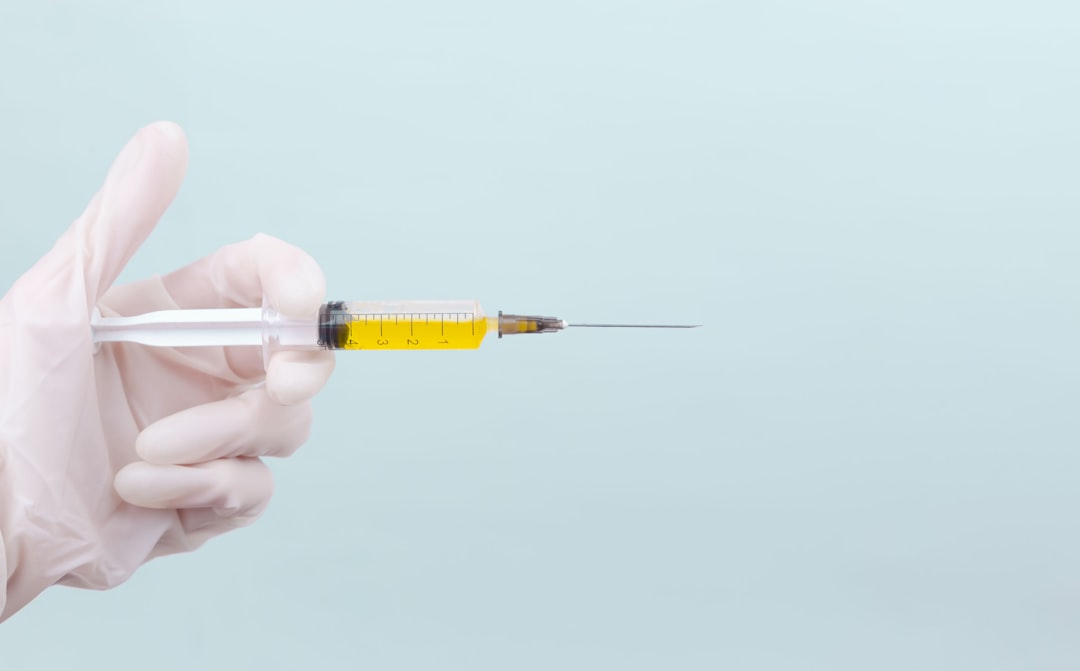
Peptides are having a moment. People injecting them at home are chasing everything from weight loss and muscle recovery to sharper thinking and better sex drive. But according to UConn pharmacist and clinical pharmacologist C. Michael White, the bigger danger isn't just what's in the vial. It's what happens when untrained people try to draw up and inject these products themselves.
White has been researching the gray markets for peptides, where companies sidestep FDA oversight by selling products labeled "for research purposes only." Because that labeling is a legal workaround, the companies can't legally tell buyers how to actually use what they're selling.
"This means consumers must purchase any supplies they need and figure out the proper technique on their own," White writes. So he decided to test just how well people manage on their own. In a new study published in Public Health Reports, White and his colleagues recruited 20 people, 10 college students and 10 adults in their 60s, and asked each to reconstitute a semaglutide peptide product, draw it into a syringe, and inject a mannequin. They were allowed to research the process online or with AI beforehand.
The results were rough. On average, both age groups got fewer than half the steps right. Some picked expired or cloudy dissolving liquid. Many miscalculated doses, couldn't clear air bubbles from the syringe, or injected into muscle instead of fat. Roughly half didn't know how to safely engage the needle's safety mechanism or dispose of it afterward.
"These errors were serious and could increase the risk of infection, bleeding, over- or under-dosing, and needle sticks," White notes. What stood out most: Confidence didn't track with competence. After doing their homework, most participants in both groups felt "somewhat confident" they could do the injection correctly. Younger participants stayed confident even after fumbling through the process. Older adults, by contrast, adjusted their confidence downward once they saw how it actually went, which tracks with prior research showing older adults tend to be more accurate judges of their own ability on complex tasks.
White's piece also digs into a potential fix on the table: In late July 2026, an FDA advisory panel recommended adding six widely used peptides, including BPC-157, TB-500, and Semax, to the list of substances compounding pharmacies can legally prepare. The panel's argument is that compounded versions would be safer than gray-market ones, since compounding pharmacies follow rules on sourcing and sterile production that the gray market doesn't.
White isn't fully sold. Even if the FDA adopts the recommendation, he points out it would only apply to a handful of products, and it wouldn't change the fact that none of them have actually been tested for safety or effectiveness as finished drugs. The bulk of the gray-market risk stays exactly where it is.
For more on the peptide boom and what the FDA is weighing, NBC News broke down the basics here: What are peptides and why is the FDA considering easing limits? Read the full article:
Dr. White is Head and Distinguished Professor of the Department of Pharmacy Practice at the University of Connecticut, and co-director of the university's Health Outcomes, Policy, and Evidence Synthesis (HOPES) research group. His research focuses on drug, dietary supplement, and illicit drug safety, quality, and cost, with a specific throughline into adverse events tied to drugs, devices, herbal products, and substances of abuse.
View complete profile He's a recurring voice on drug and supplement safety specifically, most recently quoted in Health magazine's "4 Major Risks of Unregulated Peptides" (Aug. 18, 2026) and on KCBS Los Angeles radio discussing GLP-1 drugs and youth mental health (Aug. 10, 2026).
Dr. White is available for interviews on peptide safety, the gray-market supplement industry, GLP-1 and weight-loss drug trends, and drug/dietary supplement safety more broadly. Media can reach out by clicking this profile icon below.