

UMW professor discusses challenges of delivering vaccines through the ages on 'With Good Reason' Radio

Jul 26, 2021

2 min


If you thought today’s walk-up and drive-thru clinics to get vaccinated for COVID-19 were a lot of work, imagine how vaccines were safely transported across the Atlantic, without deep freezers or jets?


Recently, UMW Professor of History and American Studies Allyson Poska was asked by 'With Good Reason' Radio - and the Centers for Disease Control and Prevention - to lend her expert opinion on the history of vaccines and the challenges the world has had trying to keep the public healthy and inoculated.


Over two centuries ago, as the Spanish Empire embarked on the first-ever vaccination campaign against smallpox, "getting shots into arms" had an entirely different meaning. And government authorities back then faced as many challenges with promoting vaccinations as they do today. 


The First Vaccine

Allyson Poska (University of Mary Washington)
There’s been a lot of coverage about the challenges of distributing the Covid-19 vaccine. How do we get it to distant areas? How do we use a whole vial before it expires? What about the special refrigerators needed to keep it cold enough? But these problems seem minor compared to the very first vaccine distribution in the early 1800s. Historian Allyson Poska shares the story of 29 orphan boys who crossed the Atlantic Ocean as live incubators for the smallpox vaccine and what lessons we can learn from this early campaign.  July 21 - With Good Reason


This is a fascinating topic, and if you are a journalist looking to cover this topic, then let us help. Dr. Allyson Poska is available to speak with media regarding this subject - simply click on her icon now to arrange an interview today.


Powered by

You might also like...

Check out some other posts from University of Mary Washington

What's in the Water? New Research Brings Weekly River Health Data to the Public featured image

2 min

What's in the Water? New Research Brings Weekly River Health Data to the Public

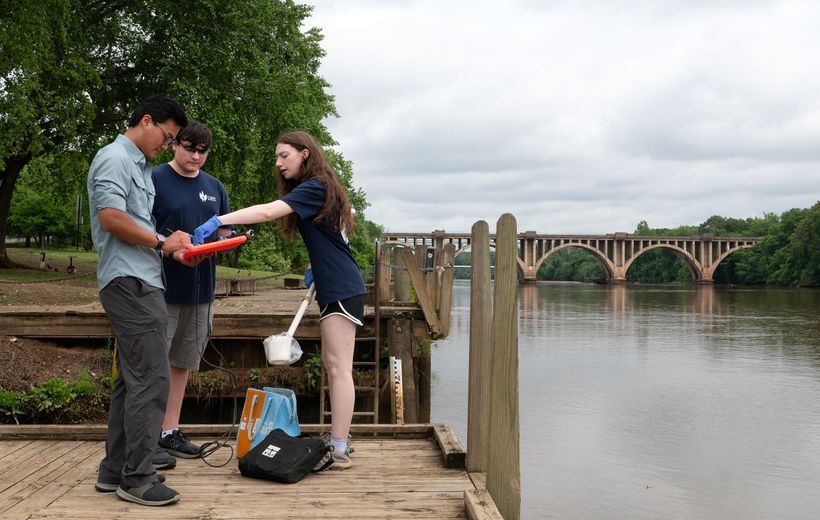
A recent article in the Fredericksburg Free Press highlighted a new University of Mary Washington initiative that is testing the Rappahannock River weekly for fecal coliform bacteria and sharing the results publicly. Led by Associate Professor of Earth and Environmental Science Tyler Frankel, the program aims to provide residents with accessible information before swimming, fishing, paddling, or otherwise enjoying one of the region's most important waterways. Dr. Tyler Frankel is an Assistant Professor in the Department of Earth and Environmental Sciences at the University of Mary Washington. He is an expert on ecotoxicology, specifically the impact of pharmaceutical, industrial waste products, & pesticides on aquatic wildlife. View his profile The project addresses a significant gap in environmental monitoring. While bacteria levels can change rapidly following rainfall and other environmental conditions, routine testing has historically been limited. Frankel and his student research team are collecting samples from five locations along the river and building a long-term database that can help identify contamination trends and potential pollution sources. The effort also provides valuable hands-on research opportunities for students while generating information with direct public health benefits. “There isn’t really a program that exists like that for the Rappahannock where the public can get access to weekly data sets.” — Tyler Frankel, Associate Professor of Earth and Environmental Science, University of Mary Washington The research focuses on fecal coliform bacteria, including E. coli, which can enter waterways through sewage, failing septic systems, agricultural runoff, pets, wildlife, and other sources. Elevated levels can pose health risks to people who come into contact with contaminated water, making timely and accessible monitoring an important tool for both recreation and environmental stewardship. Connect with an Expert Interested in discussing water quality monitoring, bacterial contamination in rivers, watershed management, citizen science, or environmental health risks? Connect with Tyler Frankel, Associate Professor of Earth and Environmental Science at the University of Mary Washington, for expert insight into water quality testing, pollution tracking, environmental monitoring, and the science behind protecting freshwater ecosystems.

Election Watch 2025: Farnsworth Breaks Down Virginia’s Political Landscape featured image

1 min

Election Watch 2025: Farnsworth Breaks Down Virginia’s Political Landscape

With early voting setting new records and national politics reshaping local elections, Professor Stephen Farnsworth is helping journalists and voters make sense of the noise. As director of the Center for Leadership and Media Studies at the University of Mary Washington, Farnsworth continues to be a go-to expert across major outlets. In just the past few weeks, he’s been featured in: • NBC Washington • WAMU • Yahoo News • Richmond Times-Dispatch • DC News Now • Virginia Mercury Farnsworth has weighed in on everything from Kamala Harris’ rising prospects to the effects of Trump’s policies on rural Virginia. Whether he’s speaking to the League of Women Voters or breaking down the numbers for DC news outlets, Farnsworth brings clarity to the chaos. For journalists covering Virginia politics and U.S. elections, Farnsworth is a key source of insight. Click on the icon below to connect with: Stephen Farnsworth, Professor of Political Science and International Affairs; Director, Center for Leadership and Media Studies Expertise: Virginia politics, media and messaging, U.S. elections, disinformation.

From Johnny Carson to Campaign Debates – Farnsworth Brings Politics to the Public featured image

1 min

From Johnny Carson to Campaign Debates – Farnsworth Brings Politics to the Public

Professor Stephen Farnsworth isn’t just analyzing politics, he’s shaping the conversation. Whether moderating congressional debates or exploring the political power of humor, he brings sharp insight and historical context to national audiences. As a professor of political science and director of the Center for Leadership and Media Studies at the University of Mary Washington, Farnsworth recently moderated two high-profile congressional debates in Virginia’s 7th and 10th districts — both aired on C-SPAN (2024 7th District Debate; 2022 10th District Forum). He’s also delivered public lectures for UMW’s Great Lives series, using figures like Johnny Carson and Charlie Chaplin to trace the role of humor in shaping American political identity. Watch the full talks: Johnny Carson and Political Humor, and Charlie Chaplin. These public-facing programs reflect his broader mission: helping voters, students, and media audiences understand how politics works — and why it matters. Click the icon below to connect with: Stephen Farnsworth, Professor of Political Science and International Affairs; Director, Center for Leadership and Media Studies. Expertise: Political communication, presidential humor, Virginia elections, public engagement.

View all posts