You might also like...
Check out some other posts from Florida Atlantic University
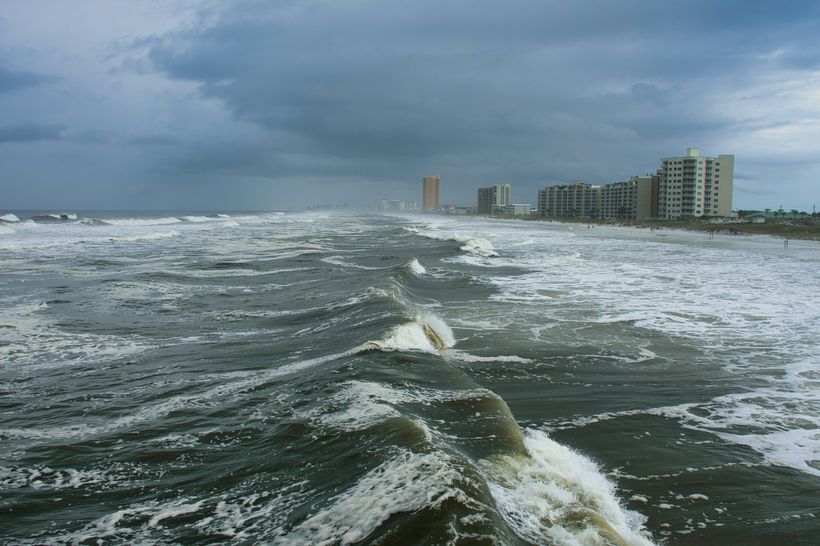
South Florida's king tide season begins this week, giving residents and communities a predictable chance to see how high tides interact with streets, stormwater systems and other infrastructure.
King tides, also known as high-tide flooding, are amplified by sea levels rising globally combined with local conditions such as wind and changing coastlines. High-tide flooding already occurs multiple times a year in South Florida and is predicted to increase in frequency and severity as seas continue to rise.
The South Florida Water Management District expects six periods of elevated tides in 2026:
Aug. 11–14, Sept. 8–15, Sept. 24–Oct. 15, Oct. 22–Nov. 12, Nov. 22–29 and Dec. 22–27.
The highest predicted flooding days of the year could occur near the Oct. 27 full moon, although the amount of flooding will depend on conditions at the time, including rainfall, wind and local drainage.
“King tides are a predictable natural event, but they also provide a preview of the challenges Florida’s coastal communities may face during extreme weather events as seas continue to rise,” said Serena Hoermann, Ph.D., director of Florida Atlantic University’s Center for Urban and Environmental Solutions and assistant research professor in the School of Environmental, Coastal, and Ocean Sustainability. “They give communities an opportunity to plan for resilient infrastructure as these conditions become more frequent.” Hoermann said there are four things Floridians should be aware of during king tides:
1. Where water collects King tides can reveal flood vulnerabilities that may not be obvious under normal conditions. Residents can pay attention to where water collects along roads, near storm drains, in yards and in low-lying areas, as well as how long it remains, and how it affects everyday activities such as commuting, going to school and running errands. Because king tide flooding involves repetitive contact with saltwater, its corrosive effects can damage roads, vehicles, landscaping and other property and infrastructure. Those observations can help identify vulnerabilities and places where flooding could become more disruptive during heavier rainfall or tropical weather.
2. What happens when high tides meet heavy rain An elevated tide can become more consequential when it coincides with heavy rainfall — more than 3 inches in a day — which can occur during tropical storms, hurricanes or even strong daily showers typical during the summer months. When water levels are already high, stormwater systems may have more difficulty moving additional water away from streets and neighborhoods, potentially leaving flooded areas underwater longer. The same is true when winds push water toward the coast. Local wind conditions can make the difference between relatively minor water accumulation and more significant flooding.
3. How infrastructure responds King tides highlight the importance of decisions made long before flooding occurs.
Hoermann said communities should account for future flood risk when deciding where to build housing and roads, how to design stormwater systems and how to protect wetlands and other natural buffers. Building codes can also help ensure new development is designed with future conditions in mind. That kind of long-term planning can be difficult to visualize, particularly when future conditions may look very different from what residents see today.
4. The cost of flooding A single flooding event may cost less than a typical insurance deductible, but repeated events add up. Hoermann said the cumulative costs can include lost business for shops, reduced mobility for seniors, delays for first responders and health risks from standing water. Planning for higher water now, she said, is generally less costly than retrofitting neighborhoods or addressing damage after chronic flooding sets in.
In the meantime, Hoermann said residents can help by maintaining green space that gives water somewhere to drain, checking city and county websites for information on local flooding, and supporting development and building codes that account for future flood risk.
Dr. Serena Hoermann and FAU's Center for Urban and Environmental Solutions are tracking how king tides signal Florida's flooding future, research that's shaping smarter, more resilient infrastructure planning. If you're a member of the media covering this story, connect with her by clicking her icon below.
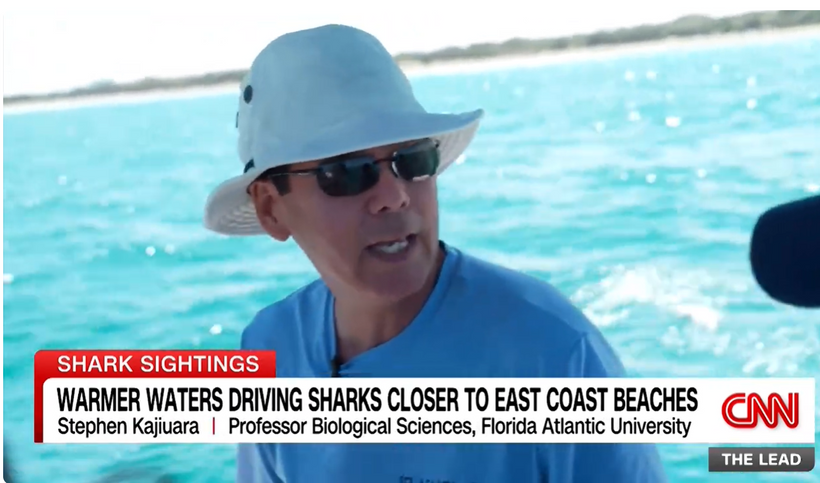
As ocean temperatures continue to rise, researchers are seeing major changes in the migration patterns of blacktip sharks, and that could mean more encounters between sharks and humans along North America’s east coast.
A recent CNN feature highlighted groundbreaking research led by Stephen Kajiura of Florida Atlantic University, whose team is tracking blacktip sharks using GPS tags and onboard cameras to better understand how warming waters are reshaping marine ecosystems.
According to Kajiura, average winter water temperatures have risen by roughly 1°C over the past decade, causing blacktip sharks to shorten their traditional southern migration and remain farther north for longer periods. That shift is increasing shark activity near heavily populated beaches, including Florida’s New Smyrna Beach — often referred to as the “shark bite capital of the world” — and even farther north into areas like Long Island, where shark encounters have historically been rare.
Stephen Kajiura is a Professor of Biological Sciences at FAU. He studies the sensory biology and behavior of sharks and their relatives as well as their seasonal migrations in southeast Florida. View his profile The research is helping scientists better predict when and where sharks are likely to gather near shorelines. Kajiura notes that blacktip sharks often hunt in the same shallow waters used by surfers and swimmers, where reflective movement from hands or feet can sometimes resemble bait fish. While shark bites remain uncommon, understanding migration behavior is becoming increasingly important for public safety, beach management, and climate research.
Journalists covering climate change, marine biology, shark migration, or beach safety can connect with Stephen Kajiura to discuss how warming oceans are changing shark behavior and what coastal communities should expect in the years ahead.

As tensions surrounding Operation Epic Fury in the Middle East intensifies and the risk of regional escalation grows, Robert G. Rabil, Ph.D., professor of political science at Florida Atlantic University, stands out as one of the most authoritative voices journalists can turn to for clear, strategic analysis.
A nationally recognized scholar of Middle Eastern politics, political Islam, terrorism and U.S. foreign policy, Rabil brings decades of research, regional expertise and media experience to breaking developments. He does not simply react to headline, he explains the historical forces, ideological movements and geopolitical calculations driving them.
At a time when the conflict’s implications stretch far beyond Iran’s borders, affecting Israel, Gulf states, global energy markets and U.S. national security, Rabil provides critical context on both state and non-state actors shaping events on the ground.
Robert Rabil, Ph.D., professor of political science at Florida Atlantic University, is a leading authority on Middle Eastern politics, security, and U.S.–Middle East relations. View his profile Recent media coverage: WINK: Dr. Robert Rabil, a political science professor at Florida Atlantic University, said the attack marks one of the most significant escalations in regional conflict in years. "I would say now the joint attack today is one of the very few, if not the only, as a matter of fact, attack on a country in the Middle East," said Rabil. "And today, as we have seen, I believe that the President has taken the final decision, and he said, Listen, it's about time, mainly, either to change the regime or produce a change within the regime.” ABC News: “What the president has done recently, what he did with Maduro, and the assassination of Soleimani — all of that changes the regime’s behavior,” Rabil said. Rabil said if Iran’s government were to collapse or dramatically change, cooperation with Western nations, including the United States, could resume, especially if Iranians pursue a democratic alternative. The Jerusalem Post Op-Ed - The writer is a professor of political science at Florida Atlantic University. He served as chief of emergency of the Red Cross in East Beirut during Lebanon’s civil war. CNN Robert G. Rabil, Special to CNN Rabil offers measured, informed analysis rooted in decades of scholarship and policy study and can help with key story angles such as:
• Iran’s Regime Stability and Internal Pressures How domestic dissent, economic strain and political factions inside Iran influence wartime decision-making.
• U.S.–Iran Strategic Calculus What options Washington realistically has, historical precedents shaping current policy, and risks of escalation or miscalculation.
• Israel and Regional Security Dynamics How Israel, Saudi Arabia and Gulf states are responding — and whether a broader regional war is possible.
• Proxy Warfare and Militant Networks The role of Hezbollah, Hamas and other non-state actors in expanding or containing the conflict.
• Iran’s Nuclear Program How the conflict affects nuclear negotiations, deterrence strategy and global security concerns.
• Energy Markets and Global Economic Fallout Implications for oil prices, shipping lanes and international economic stability.
• Long-Term Regional Realignment Whether this conflict accelerates a reshaping of alliances in the Middle East.