
What does back to school look like this year? Augusta University expert talks challenges

Jul 21, 2022

2 min

Students will be back at the bus stop with school starting soon, but what can parents expect as their children return to the classroom after the effects of the pandemic years?


Dr. Stacie Pettit, associate professor in the College of Education and Human Development at Augusta University, said not being in the classroom full-time has had an impact.


Pettit said it’s documented that reading scores are down and many students were unaccounted for during at-home learning. But students also developed other skills during this period of time.


“On one hand, you can’t completely make up for learning loss,” said Pettit. “Teachers just need to assess where students are and both students and teachers do the best you can from this point. On the other hand, students didn’t just stop learning altogether. There are important life and family skills that were gained during quarantine and the months after. I believe we should look at students from 'funds of knowledge' perspective rather than a deficit lens in order to recognize the cultural resources that a student’s household contains.”


She added some students did become isolated and will need to relearn social skills, but many found a lively community online through social media during the pandemic.


Pettit also pointed out students are resilient, as well as teachers. They didn’t stop teaching, but rather found new skills in instruction to make learning accessible in the new reality.


There are some challenges going back to in-person instruction after the last couple of years.


“Overcoming fear they’ve picked up through other people and the news,” she added. “”Feeling uncomfortable with their faces exposed after getting used to hiding behind a mask and dealing with germ phobia. Students also have the additional challenge of another recent school shooting in Uvalde, so not only are they getting used to being back in school full-time, but they also have safety concerns.”


Pettit added there are still a few groups of students who could struggle being back in the classroom full-time.


“Certainly kids who missed kindergarten. Students from foster care. Students in special education who didn’t have the support they needed during at home learning.”


If you're a journalist covering education or are looking to line up your back-to-school stories this year, then let us help.


Pettit is a respected leader in middle level teacher education and meeting the needs of marginalized young adolescents. She's available to speak with media - simply click on her icon now to arrange an interview today.

Powered by

You might also like...

Check out some other posts from Augusta University

Can a Mother's ZIP Code Shape a Baby's Future? featured image

2 min

Can a Mother's ZIP Code Shape a Baby's Future?

Where an expectant mother lives might reveal important clues about her baby's health before birth. According to a recent Augusta University Jagwire article, researchers at the Medical College of Georgia have found that mapping birth outcomes by ZIP code can help identify communities where mothers and newborns face greater health risks, providing valuable information for healthcare providers and public health officials. The two-part study out of the Department of Anesthesiology and Perioperative Medicine at the Medical College of Georgia at Augusta University, led by Mary Arthur, MD, explored the relationship between neighborhood characteristics and neonatal outcomes. By combining geographic mapping with maternal and infant health data, the researchers identified areas with higher rates of adverse birth outcomes and examined how factors such as access to prenatal care and other social determinants of health might contribute to those disparities. The findings suggest that geographic data can become a valuable tool for improving maternal and infant health. By identifying communities at greater risk, healthcare systems and policymakers can better target prenatal education, outreach programs and healthcare resources to support expectant mothers before complications arise. For journalists covering maternal health, healthcare disparities and public policy, Arthur offers valuable insight into how community-level data can help guide interventions that improve pregnancy outcomes and give more babies a healthier start in life. "The maps make it very easy to visualize those ZIP codes that link to poor neonatal outcomes. They're also helpful for planning strategic interventions to help the people who live in those particular areas in terms of making sure there are outreach programs for mothers in those areas to have access to prenatal care." Mary Arthur, MD To learn more about this important research and connect with Mary Arthur, contact AU's External Communications Team mediarelations@augusta.edu to arrange an interview today.


Can One Gene Change the Future of Heart Disease? featured image

2 min

Can One Gene Change the Future of Heart Disease?

Heart disease remains the world's leading cause of death, but researchers are continuing to uncover the genetic mechanisms that drive it. According to a recent Augusta University Jagwire article highlighting new research, scientists are investigating how a little-studied gene might influence the development of cardiovascular disease and whether it could become a future target for treatment. At the center of the research is Kunzhe Dong, PhD, an investigator at Augusta University's Immunology Center of Georgia, who is examining the role of the SH3BGRL2 gene in cardiovascular cells. While the gene has previously been associated with cancer biology, early findings suggest it might also play an important role in regulating how blood vessels respond to stress and injury. Understanding that relationship could reveal new biological pathways involved in heart disease and identify novel opportunities for precision medicine. The research aims to determine how changes in gene expression affect the function of cardiovascular cells and contribute to disease progression. By better understanding these molecular mechanisms, scientists hope to identify new therapeutic targets and improve the ability to prevent or treat cardiovascular disease before irreversible damage occurs. The work also reflects a broader shift toward precision medicine, where treatments are tailored to the underlying biology of each patient rather than relying solely on traditional risk factors. "This gene is well known in one field, but now we're seeing it's also important in cardiovascular cells." Kunzhe Dong, PhD To learn more about this research and connect with Kunzhe Dong, contact AU's External Communications Team mediarelations@augusta.edu to arrange an interview today.
Heart Disease's Hidden Immune Players Come Into Focus featured image

2 min

Heart Disease's Hidden Immune Players Come Into Focus

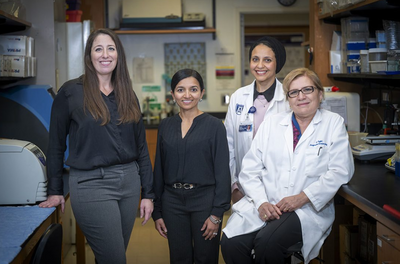
Heart disease has long been linked to familiar risk factors such as high cholesterol, high blood pressure and lifestyle choices. But according to a recent Augusta University Jagwire article highlighting research published in Nature Reviews Cardiology, the immune system might also play a critical role in determining how cardiovascular disease develops and progresses. The review, led by Ishita Tandon, PhD, Hossam Abdelsamed, PhD, and Alaa M. Khalifa, PhD, examines the emerging role of CD8+ T cells, specialized immune cells best known for fighting infections, in atherosclerosis, the chronic inflammatory disease responsible for most heart attacks and strokes. By synthesizing the latest evidence, the researchers show how different populations of these immune cells can either fuel inflammation or help regulate it, revealing new opportunities to better understand, diagnose and eventually treat cardiovascular disease. The review also identifies important gaps in current knowledge and outlines promising directions for future research. As scientists continue to better understand how these immune cells behave within arterial plaques, their discoveries could lead to more precise diagnostic tools and a new generation of immune-targeted therapies for cardiovascular disease. Together, the researchers' work offers journalists valuable insight into one of the fastest-evolving areas of cardiovascular research, where immunology and heart health are converging to reshape how cardiovascular disease is understood and treated. "This study highlights the major role of CD8+ T cells in atherosclerosis and their potential impact on cardiovascular diseases."  Hossam Abdelsamed, PhD To learn more about this amazing research and connect with Ishita Tandon, Hossam Abdelsamed or Alaa M. Khalifa, contact AU's External Communications Team mediarelations@augusta.edu to arrange an interview today.

View all posts