4 min
AU designated APLU Innovation and Economic Prosperity Institution
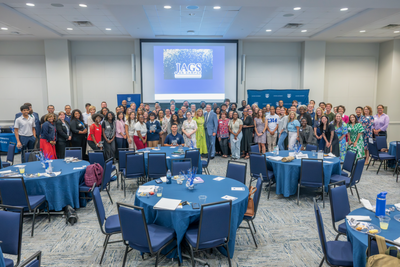
Augusta University has earned national recognition for work that has been taking shape across the university and the region for years: connecting education, research, innovation and workforce development to the needs of the community. After more than three years of collaboration with campus and community partners, AU has been designated an Innovation and Economic Prosperity (IEP) institution by the Association of Public and Land-Grant Universities. This national designation recognizes public research universities that work with public and private sector partners to advance and support economic development in their states and regions. For AU, the IEP designation is both a celebration and a commitment. It recognizes significant work already underway while challenging the university to become even more connected, accessible, measurable and strategic in its economic and community engagement. It also marks an important milestone in its evolution as a public research university, workforce partner, innovation catalyst and community anchor. More than a recognition of programs already underway, the IEP process offered AU an opportunity to examine in depth how many areas of work intersect and how those connections can generate greater impact for students, partners and communities. “I am grateful to our steering committee and the entire team of campus and community partners whose resolve and determination made this achievement possible,” said Augusta University President Russell T. Keen. “Their efforts truly epitomize our ‘It can be done’ mindset. At its heart, economic prosperity is about people. It means helping students build meaningful careers, preparing the workforce our state needs, turning discoveries into solutions and working alongside our neighbours to build healthier, stronger communities.” AU‘s IEP journey began in early 2023 with an expansive group of CSRA community partners. A steering committee and subcommittees brought together 42 participants representing the university and partners across economic development, K-12 education, local government, community foundations, health systems, the University System of Georgia, the Technical College System of Georgia, the Department of Energy, the Department of Defense, entrepreneurs and other regional stakeholders. This collaborative work continued through significant transitions, including the local impact of Hurricane Helene. The group explored a broad definition of economic prosperity – one that goes beyond traditional measures to include talent development, experiential learning, applied research, entrepreneurship, healthcare access, innovation and mutually beneficial partnerships. “Augusta University has a unique opportunity, and responsibility, to help drive economic prosperity across the communities we serve,” said Tina Baggott, vice president of Corporate and Community Engagement. “Our work brings together innovation, workforce development and meaningful community partnerships to address the needs of today while helping to prepare our communities for the challenges of tomorrow. The APLU Innovation and Economic Prosperity designation affirms our commitment to working alongside industry, government and community partners to turn ideas into impact, talent into opportunity, and partnerships into lasting economic and community growth.” Using APLU’s Commission on Economic and Community Engagement assessment tools, peer benchmarking, institutional data, surveys and more than 38 focus groups and individual conversations, the outcome represents the collective work of many in the region, with AU at the helm. “Receiving the IEP designation is a tremendous recognition of what is possible when we bring people together around a shared purpose,” said Lynsey Steinberg, director of Academic Entrepreneurship at AU. “Augusta University has incredible talent, innovative ideas, and strong community partners, and when we connect those strengths, we can make a real difference in supporting regional prosperity. Over the past three years, we have seen what can happen when people collaborate, elevate one another and work toward something bigger than themselves. This designation celebrates that work, but more importantly to keep building relationships, creating connections, and finding new ways to make a meaningful impact together.” AU’s public mission is equally central to economic prosperity. The university extends healthcare, education, research and community engagement throughout Georgia, including rural and underserved communities. Through its health sciences enterprise, telehealth, clinical education, community partnerships and expansion of programs and campuses, AU is strengthening both access and the talent pipeline required to meet critical workforce needs. “Augusta University has a unique opportunity, and responsibility, to help drive economic prosperity across the communities we serve.” Tina Baggott, vice president of Corporate and Community Engagement. The IEP process reinforced the importance of innovation infrastructure – the systems and connections that help move ideas from discovery to real-world impact. From translational research and commercialization to makerspaces, entrepreneurship programming, interdisciplinary collaboration and the Regional Innovation Advisory Committee – which is focused on advancing AU’s strategic goals of community engagement, student success and research excellence by fostering cross-sector collaborations – AU is building pathways for innovation to move beyond campus into communities, industries and the economy. “Augusta University’s APLU Innovation and Economic Prosperity designation underscores the university’s important role in strengthening the Augusta region as a place to live, work, invest, and visit,” said Jennifer Bowen, Chief Strategy Officer and Senior Vice President & Film Commissioner at Destination Augusta. “Through innovation, workforce development, research, and community partnerships, AU helps build the talent, opportunities, and economic vitality that make our community more competitive and enhance the region’s appeal as a destination.” The work does not end with this designation. Findings from the IEP self-study have been incorporated into AU’s Growth and Improvement Plan, with priorities focused on stronger coordination, clearer access for partners, improved measurement, increased visibility, workforce alignment and a more intentionally connected regional innovation economy. Economic engagement is also helping shape the university’s next long-term strategic plan, ensuring decisions about academic programs, research, partnerships, infrastructure and investment remain connected to the needs of the communities AU serves. Augusta University will be recognized for this achievement during the APLU Annual Meeting in November in San Antonio, Texas.