
Electric vehicles are hitting the streets, but there are potholes to avoid

Jul 11, 2023

2 min

Richard Franza, PhD

No doubt about it, electric vehicles are coming and coming fast. Production of EVs has ramped up in the last couple of years but there are many issues that need to be addressed before they become the everyday choice for consumers.


Richard Franza, PhD, professor of management at the Hull College of Business at Augusta University said the timing of EVs is contingent on a few things.


“It’s not a question of if they’re coming, but how fast will they be here,” said Franza. “One is the speed at which there is infrastructure built for them. There are still not a lot of places to charge a car. We need more charging stations. Eventually, EVs will be predominant.”


Franza added a second hurdle is how fast the federal government moves on emissions requirements that will cause consumers to phase out fossil fuel vehicles.


Georgia has become one of the leaders in luring EV manufacturers to call the state home. Not just that, but the state is also drawing in companies that supply batteries and other components.


“Any time you build a manufacturing or assembly facility, you automatically get the suppliers around them. Even before Georgia got the vehicle manufacturers, we already had a battery manufacturer, so Georgia already has a good network for the automobile industry,” said Franza.


Amazon has already made a major investment in EVs and Franza expects other companies like FedEx and UPS, companies that have a fleet of vehicles, to make the switch to EVs as well, since they have more ability to set up charging networks.


The biggest question remains: how long it will take before EVs become more prevalent on the streets? Franza said the answer could depend on who you listen to, but other factors come into play.


“Right now, electric vehicles account for less than 1% of the vehicles on the road. So I see two leading indicators – the number of gas stations vs. the number of charging stations, and the production of combustion engines vs. electric vehicles. Look for when the ratios of those really start to change, but it’s not black and white. There are several factors that will go into that and it could take longer than people are saying,” Franza said.


Covering EVs and the auto industry? Then let us help.


Richard Franza, PhD, is available to speak with media about trending issues like inflation, small business and the economy – simply click on his icon now to arrange an interview today.

Connect with:
Richard Franza, PhD

Richard Franza, PhD

Faculty, James M. Hull College of Business

Dr. Richard M. Franza is a professor and former dean of the James M. Hull College of Business.

ManagementOperations ResearchEntreprenuershipIntentional LeadershipHigher Education Leadership
Powered by

You might also like...

Check out some other posts from Augusta University

Can a Mother's ZIP Code Shape a Baby's Future? featured image

2 min

Can a Mother's ZIP Code Shape a Baby's Future?

Where an expectant mother lives might reveal important clues about her baby's health before birth. According to a recent Augusta University Jagwire article, researchers at the Medical College of Georgia have found that mapping birth outcomes by ZIP code can help identify communities where mothers and newborns face greater health risks, providing valuable information for healthcare providers and public health officials. The two-part study out of the Department of Anesthesiology and Perioperative Medicine at the Medical College of Georgia at Augusta University, led by Mary Arthur, MD, explored the relationship between neighborhood characteristics and neonatal outcomes. By combining geographic mapping with maternal and infant health data, the researchers identified areas with higher rates of adverse birth outcomes and examined how factors such as access to prenatal care and other social determinants of health might contribute to those disparities. The findings suggest that geographic data can become a valuable tool for improving maternal and infant health. By identifying communities at greater risk, healthcare systems and policymakers can better target prenatal education, outreach programs and healthcare resources to support expectant mothers before complications arise. For journalists covering maternal health, healthcare disparities and public policy, Arthur offers valuable insight into how community-level data can help guide interventions that improve pregnancy outcomes and give more babies a healthier start in life. "The maps make it very easy to visualize those ZIP codes that link to poor neonatal outcomes. They're also helpful for planning strategic interventions to help the people who live in those particular areas in terms of making sure there are outreach programs for mothers in those areas to have access to prenatal care." Mary Arthur, MD To learn more about this important research and connect with Mary Arthur, contact AU's External Communications Team mediarelations@augusta.edu to arrange an interview today.


Can One Gene Change the Future of Heart Disease? featured image

2 min

Can One Gene Change the Future of Heart Disease?

Heart disease remains the world's leading cause of death, but researchers are continuing to uncover the genetic mechanisms that drive it. According to a recent Augusta University Jagwire article highlighting new research, scientists are investigating how a little-studied gene might influence the development of cardiovascular disease and whether it could become a future target for treatment. At the center of the research is Kunzhe Dong, PhD, an investigator at Augusta University's Immunology Center of Georgia, who is examining the role of the SH3BGRL2 gene in cardiovascular cells. While the gene has previously been associated with cancer biology, early findings suggest it might also play an important role in regulating how blood vessels respond to stress and injury. Understanding that relationship could reveal new biological pathways involved in heart disease and identify novel opportunities for precision medicine. The research aims to determine how changes in gene expression affect the function of cardiovascular cells and contribute to disease progression. By better understanding these molecular mechanisms, scientists hope to identify new therapeutic targets and improve the ability to prevent or treat cardiovascular disease before irreversible damage occurs. The work also reflects a broader shift toward precision medicine, where treatments are tailored to the underlying biology of each patient rather than relying solely on traditional risk factors. "This gene is well known in one field, but now we're seeing it's also important in cardiovascular cells." Kunzhe Dong, PhD To learn more about this research and connect with Kunzhe Dong, contact AU's External Communications Team mediarelations@augusta.edu to arrange an interview today.
Heart Disease's Hidden Immune Players Come Into Focus featured image

2 min

Heart Disease's Hidden Immune Players Come Into Focus

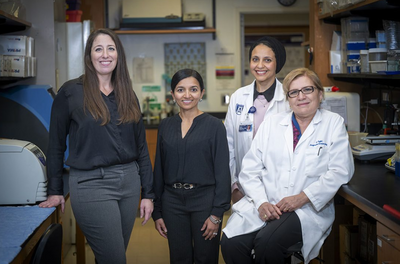
Heart disease has long been linked to familiar risk factors such as high cholesterol, high blood pressure and lifestyle choices. But according to a recent Augusta University Jagwire article highlighting research published in Nature Reviews Cardiology, the immune system might also play a critical role in determining how cardiovascular disease develops and progresses. The review, led by Ishita Tandon, PhD, Hossam Abdelsamed, PhD, and Alaa M. Khalifa, PhD, examines the emerging role of CD8+ T cells, specialized immune cells best known for fighting infections, in atherosclerosis, the chronic inflammatory disease responsible for most heart attacks and strokes. By synthesizing the latest evidence, the researchers show how different populations of these immune cells can either fuel inflammation or help regulate it, revealing new opportunities to better understand, diagnose and eventually treat cardiovascular disease. The review also identifies important gaps in current knowledge and outlines promising directions for future research. As scientists continue to better understand how these immune cells behave within arterial plaques, their discoveries could lead to more precise diagnostic tools and a new generation of immune-targeted therapies for cardiovascular disease. Together, the researchers' work offers journalists valuable insight into one of the fastest-evolving areas of cardiovascular research, where immunology and heart health are converging to reshape how cardiovascular disease is understood and treated. "This study highlights the major role of CD8+ T cells in atherosclerosis and their potential impact on cardiovascular diseases."  Hossam Abdelsamed, PhD To learn more about this amazing research and connect with Ishita Tandon, Hossam Abdelsamed or Alaa M. Khalifa, contact AU's External Communications Team mediarelations@augusta.edu to arrange an interview today.

View all posts