
Exploring the role of social media in fomenting hatred and prejudice in society

Sep 1, 2023

1 min

Kassra Oskooii


Each day, it feels like there's a new social media platform to join, the latest one being Threads. While social media like Threads, Instagram, Twitter, TikTok and Facebook can be a space to bring people from different corners of the world together, it has also become a way to spread hatred and prejudice.


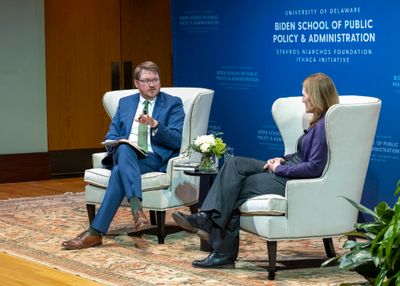
Kassra Oskooii, associate professor of political science and international relations at the University of Delaware, studies the interplay between contextual and psychological determinants of political opinions on minority groups. He recently published work examining at how social media news consumption over the last two presidential cycles has heightened anti-Muslim views.


He noted that social media works by creating information bubbles that echo and amplify views, and when political information is left unregulated, individuals can be exposed to false and prejudicial content that can shape their views toward marginalized groups.


Oskooii's research was recently cited in the 2023 Economic Report of the President. He can speak about the role that social media continues to play on politics and everyday society.


To arrange an interview, simply click on Professor Oskooii's profile and press the contact button.

Connect with:
Kassra Oskooii

Kassra Oskooii

Associate Professor, American Politics, Political Psychology and Race and Ethnic Politics; Director of Internships

Prof. Oskooii's research expertise include political psychology, public opinion, voting rights and redistricting.

Race and Ethnic PoliticsPolitical PsychologyPublic OpinionVoting RightsRedistricting
Powered by

You might also like...

Check out some other posts from University of Delaware

Decoding epilepsy, one brainwave at a time featured image

3 min

Decoding epilepsy, one brainwave at a time

Epilepsy isn’t always easy to diagnose. Seizures often don't occur during routine brain-wave recordings, leaving doctors without the direct observation they need to make a clear diagnosis. In a proof-of-concept study in mice, University of Delaware researchers and collaborators showed that using artificial intelligence to detect early warning signs hidden in the brain's electrical rhythms can identify subtle EEG differences linked to a genetic form of epilepsy, even when no visible seizures occurred. The findings, published in the Journal of Neural Engineering, set the stage for the next phase of the research, which will test the method on EEGs from children being evaluated for epilepsy at Nemours Children's Health. A dictionary of brain waves Neurologists often use EEGs to help diagnose epilepsy, but routine recordings offer only about a 20-minute snapshot of brain activity. Without a seizure captured during that window, clinicians must look for far subtler clues that can be difficult to detect visually. That's where AI comes in. “Our machine-learning approach lets the algorithm learn the brain’s ‘language’ of waveforms, spotting subtle patterns humans might miss during manual review,” said Austin Brockmeier, assistant professor in electrical and computer engineering and computer and information sciences. Starting small with a mouse model When Brockmeier presented his computational neuroscience research at a seminar, he caught the attention of Amanda Hernan, an affiliated associate professor of psychological and brain sciences and biomedical engineering at UD and senior research scientist at Nemours Children’s Health. Hernan studies how variations in brain activity affect thinking and learning in children with epilepsy. The two decided to put machine learning to the test using EEGs from mice with epilepsy-causing variations in the TSC1 gene. The researchers used a panel of more than 40 mice, including animals with and without the gene variation, across three different genetic backgrounds, or strains. They extracted EEG segments from five days of recordings from each mouse for analysis. Because the EEG segments contained no seizure activity, the algorithm had to detect differences in the brain's baseline activity alone. It was able to distinguish between the mouse strains and to detect the TSC1 gene variation with high accuracy in two of the three strains. “These results show that EEG patterns contain measurable signals of neurological differences, even without visible seizures,” Hernan said. Taking it to the clinic Now, Brockmeier and Hernan will next apply their approach to EEG recordings from children being evaluated for epilepsy at Nemours Children's Health. Pediatric EEGs are shorter than the multi-day recordings used in the mouse study, and children present with many different types of epilepsy. But the researchers are optimistic. “The goal is to identify biomarkers that flag underlying changes in the brain’s electrical activity before seizures occur,” Hernan said. Earlier detection could lead to earlier treatment and less uncertainty for families. That uncertainty, Hernan said, takes a toll. “Seizures follow natural cycles, but without a way to know where you are in that cycle, the anticipation can be incredibly anxiety-provoking,” she explained. Better pattern recognition could also improve treatment decisions. For example, if a new medication is introduced during a natural lull in seizure activity, its benefits could be overestimated. Looking further ahead, the researchers envision a future where wearable EEG devices allow continuous, real-time monitoring for those with high risk of seizures. Similar approaches could eventually be applied to other neurological conditions, including autism and ADHD. "This is a step toward precision medicine," Brockmeier said. "Brain-wave typing could help identify which interventions will work best for a given patient." For families navigating the daily uncertainty of epilepsy, that kind of precision could make a huge difference. To speak with Brockmeier and Hernan, please reach out to mediarelations@udel.edu.

UD’s happiness expert appears on NPR's Hidden Brain to explain importance of a helping hand in a stressed-out America featured image

1 min

UD’s happiness expert appears on NPR's Hidden Brain to explain importance of a helping hand in a stressed-out America

Happiness isn’t just about chasing big, exciting moments. A lot of the science points to the smaller, everyday things that help people feel connected, calm and grounded. Simple habits like helping others when we see them struggling create a bigger impact than we often expect. University of Delaware's resident "happiness expert" Amit Kumar, a psychologist and assistant professor of marketing in UD's Lerner College of Business & Economics, appeared on NPR's Hidden Brain to discuss that very topic.  Kumar discusses why sometimes it feels like we can't help others and how we can surmount those fears to build strong connections and also feel a greater sense of happiness.  To speak with Kumar about this topic, click his profile. 

Concussions in soccer featured featured image

1 min

Concussions in soccer featured

University of Delaware professor Tom Kaminski leads FIFA’s research on header safety and avoiding concussions. NBC10 Delaware Bureau reporter Tim Furlong tells us more about his findings.

View all posts