
Analysis of evacuations and preparedness as deadly wildfires continue to rage in Hawaii

Aug 10, 2023

1 min

Tricia WachtendorfJames KendraJennifer TrivediSarah DeYoung


The University of Delaware's Disaster Research Center boasts several experts who can provide insight into preparedness, evacuation efforts and recovery in regards to the deadly wildfires that are ravaging Hawaii.


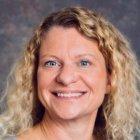
Tricia Wachtendorf: Evacuation decision-making, disaster response and coordination, disaster relief (donations) and logistics, volunteer and emergent efforts, social vulnerability.


James Kendra: Disaster response, nursing homes and hospitals, volunteers, response coordination.


Sarah DeYoung: Pets in emergencies, infant feeding in disasters and decision-making in evacuation. Specifically related to Hawaii: "Hawaii is really unique with animals because they have more progressive policies than many mainland states but of course, limited space."


Jennifer Trivedi: Challenges for people with disabilities during disaster, cultural issues and long-term recovery.


If you'd like to set up an interview with any of these experts, simply click on their profile.

Connect with:
Tricia Wachtendorf

Tricia Wachtendorf

Director / Professor, Disaster Research Center / Department of Sociology & Criminal Justice

Prof. Wachtendorf expertise lies in the social, organizational, and decision-making aspects of disasters.

evacuationsMulti-organizational coordination and responses in disastersTransnational crisesImprovisation and adaptationCommunity-based approaches to preparedness, response, recovery, and mitigation
James Kendra

James Kendra

Director, Disaster Research Center; Professor, Biden School of Public Policy and Administration

Prof. Kendra researches emergency planning and crisis management.

Organizational Improvisation and ResilienceEmergency Management TechnologyDisaster PlanningCrisis ManagementEmergency Planning
Jennifer Trivedi

Jennifer Trivedi

Assistant Professor, Anthropology; Core Faculty Member, Disaster Research Center

Prof. Trivedi's research explores disaster vulnerability, response, recovery, resilience and decision-making.

Disaster Resilience‎Disaster ResponseDisaster VulnerabilityDisaster RecoveryHurricanes
Sarah DeYoung

Sarah DeYoung

Associate Professor, Sociology & Criminal Justice

Prof. DeYoung's expertise is in maternal and child health in crisis and disaster settings, with a focus on infant feeding in emergencies.

Evacuation Decision-makingCompanion Animals in DisastersMaternal & Infant Health in DisastersRefugee & Immigrant Well-beingPsychological Sense of Community
Powered by

You might also like...

Check out some other posts from University of Delaware

Artemis II and why repeated missions are essential to lunar success featured image

1 min

Artemis II and why repeated missions are essential to lunar success

Getting to the moon wasn’t a one-and-done kind of effort. It took repeated missions, each one teaching scientists and engineers something new, and each one making the next attempt a little smarter and a lot safer. That’s a big reason lunar success eventually became possible: people kept going back, gathering more data, fixing problems, and building confidence step by step. With all eyes on the Artemis II mission's final hours, University of Delaware space professor Bennett Maruca can talk all things space exploration and the race to the moon.  Have you ever wondered why Apollo 11 was named Apollo 11? It's because Apollo 1-10 were already taken! And mostly were fact-finding missions, with many barely leaving the ground, says Maruca.  Space program launches can cost billions of dollars. In order to ensure that they are successful, trial runs need to take place. Space travel leaves very little room for guesswork, and even small mistakes can have serious consequences. By launching multiple missions, experts could spot weaknesses, improve hardware, and make sure astronauts were better protected before taking on even bigger risks. In a way, each mission was like a rehearsal that made the final performances much more reliable. Maruca can reveal facts like this and more. He has been featured in multiple publications. Click his profile to learn more. 

Inside the Italian art heist: Experts explain the global fight to protect cultural heritage featured image

2 min

Inside the Italian art heist: Experts explain the global fight to protect cultural heritage

A lightning-fast art heist in Italy has reignited global concerns about museum security and the protection of cultural heritage. As investigators search for stolen works by some of history’s most celebrated artists, University of Delaware experts are available to help journalists unpack the broader implications. Earlier this month, thieves executed a highly coordinated robbery at the Magnani-Rocca Foundation, stealing paintings by Pierre-Auguste Renoir, Paul Cézanne and Henri Matisse in a matter of minutes. Authorities say the operation was swift, targeted and likely premeditated – highlighting the evolving sophistication of art crime. The theft adds to a growing pattern of high-value art crimes across Europe, raising urgent questions about how institutions safeguard collections and what happens when culturally significant works disappear into illicit markets. UD experts are available to provide context, analysis and on-the-record commentary: Debra Hess Norris Chair, Department of Art Conservation A globally recognized leader in art conservation, Norris specializes in the protection, preservation and recovery of cultural heritage. She can speak to: How museums assess and mitigate security risks What happens after a major art theft The challenges of recovering stolen works in international markets How conservation science supports authentication and repatriation Jessica Horton Associate Professor of Art History Horton’s research examines global art histories and the movement of cultural objects across borders. She can discuss: Why stolen artworks matter beyond their monetary value Cultural ownership, repatriation and ethical considerations How art theft disrupts historical narratives and public access The broader cultural consequences of illicit art trafficking While headlines focus on the dramatic nature of art heists, the deeper story is about the fragility of cultural heritage – and the global effort required to protect it. To speak with Norris or Horton, email mediarelations@udel.edu.

Robotics help solve deep Sea Mysteries featured image

1 min

Robotics help solve deep Sea Mysteries

UD's College of Earth, Ocean and Environment uses robotics currently operated by the National Deep Submergence Facility (NDSF) to study the depths of the ocean. These expeditions ranged from the East Pacific Rise to the Mid-Atlantic Ridge. The vehicles include the Human Occupied Vehicle (HOV) Alvin, the Remotely Operated Vehicle (ROV) Jason and the Autonomous Underwater Vehicle (AUV) Sentry. What it is: A CTD (Conductivity, Temperature, Depth) instrument is a key oceanography tool that collects deep-water samples using remotely triggered Niskin bottles at specific depths. How it helps: These measurements help scientists understand ocean processes, including carbon cycling and life systems, which are essential to understanding Earth’s overall functioning. To find out more or to speak with speak associate professor Andrew Wozniak about this deep-sea technology, reach out to MediaRelations@udel.edu.

View all posts