
Georgia Southern University’s annual economic impact soars to record of more than $1.1 billion

Aug 22, 2023

2 min

New reports from the University System of Georgia (USG) show that Georgia Southern continues to have a remarkable economic impact on the region it serves and on the students it graduates.


The USG recorded a $20.1 billion total economic impact from July 1, 2021 until June 30, 2022, while Georgia Southern’s annual economic impact has soared to more than $1.107 billion for FY 2022, a 7.3% increase over the previous year and a new recorded impact total.


Conducted on behalf of USG by Jeffrey M. Humphreys, Ph.D., director of the Selig Center for Economic Growth in the University of Georgia’s Terry College of Business, the study showed USG generated 159,034 full- and part-time jobs across Georgia last year.


In a companion study, Humphreys found that USG bachelor’s graduates from the Class of 2022 will earn over $1 million more during their lifetimes than they would have without their college degree.


“Work-life earnings increase dramatically with education level,” the report said, noting that “work-life earnings estimates for Georgia show that the Class of 2022 can expect to realize work-life earnings of $183 billion.”


For the 5,502 degree recipients from Georgia Southern University in FY 2022, they can expect their work in Georgia to total lifetime earnings of $14.4 billion. The report also broke down total Georgia lifetime earning predictions by degree and said:


  • The 99 GS graduates with doctoral degrees will earn a total of $340 million.
  • The 1,207 GS graduates with master’s degrees will earn a total of $3.3 billion.
  • The 4,134 GS Graduates with bachelor’s degrees will earn a total of $10.5 billion.


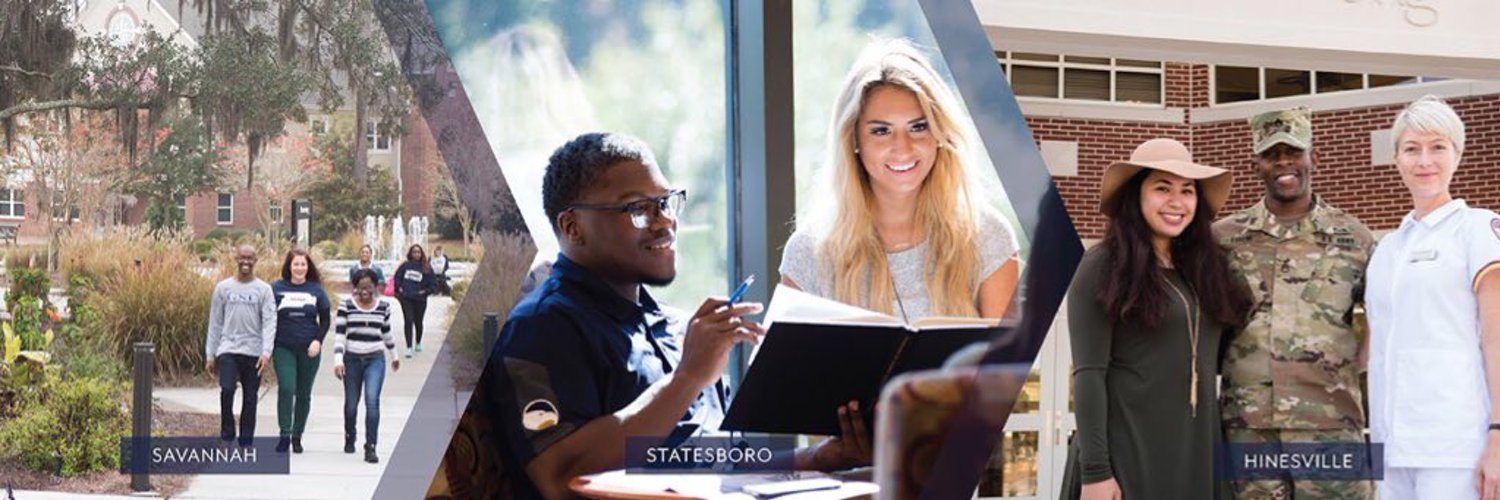
In terms of economic impact, there are 3,250 jobs on Georgia Southern’s campuses in Statesboro, Savannah and Hinesville. Because of institution-related spending, 6,795 jobs exist off-campus, meaning that a total of 10,045 jobs exist due to institution-related spending in fiscal year 2022. The report also noted that Georgia Southern students spent $430,509,422 in the region in fiscal year 2022.


“Georgia Southern’s record annual regional economic impact illuminates the university’s profound significance throughout this region,” said Georgia Southern President Kyle Marrero. “We are meeting the needs of Southeast Georgia – now and in the future – developing talent, solving regional needs through our public impact research agenda and serving as the catalyst for economic development and vibrant communities.”


“These economic impacts demonstrate that continued emphasis on colleges and universities as pillars of the state’s economy translates into jobs, higher incomes, and greater production of goods and services,” the report said.


Interested in knowing more?  Simply connect with Georgia Southern's Director of Communications Jennifer Wise at jwise@georgiasouthern.edu to arrange an interview today.

You might also like...

Check out some other posts from Georgia Southern University

3 min

Georgia Southern University computer science professor awarded NSF grant to advance protein imaging research

Proteins, often called the building blocks of life, play a central role in drug development. When scientists develop new treatments, they must understand how drugs interact with proteins involved in disease mechanisms and with proteins in the human body that influence drug response. Scientists commonly use cryo-electron microscopy (cryo-EM) 3D imaging data to study proteins. While recent advances have enabled higher-resolution images that are easier to analyze, medium-resolution images—which are more difficult to interpret—are still the most common for larger protein complexes. Salim Sazzed, Ph.D., an assistant professor in the computer science department of Georgia Southern University’s Allen E. Paulson College of Engineering and Computing, has been awarded a two-year National Science Foundation grant of about $175,000 to lead a groundbreaking project to develop novel Artificial Intelligence (AI) techniques for determining protein secondary structures from medium-resolution cryo-electron microscopy (cryo-EM) images. Improved modeling from medium-resolution images will help researchers study more proteins efficiently, giving new insights into diseases and potentially guiding the development of new treatments and future drugs. At its core, this research will combine biology and machine learning to study protein structures. The multidisciplinary approach and potential impacts on public health are what most excite Sazzed. “The impetus behind this research is the positive impact on public health and possibly contributing to the biomedical workforce,” he said. “Seeing biology and computer science combine for that kind of impact is incredibly moving.” As the Principal Investigator (PI) for the project, Sazzed will use his expertise in deep learning computer models to focus on a major challenge in structural biology: identifying the two main secondary structures of proteins—the alpha helix and the beta sheet. These structures are critical for a protein’s overall shape and function, but in medium-resolution cryo-EM images they often appear indistinct or lack clear detail, making them particularly difficult to analyze. Sazzed’s research will focus on two main goals. First, he will quantify the variability of alpha helices and beta sheets in medium-resolution images, comparing them to idealized structures. Second, by integrating this structural variability with the image data in a deep learning model, he will aim to generate more precise and accurate representations of protein secondary structures. “When we feed this information into a deep learning model along with the image data, the model should be able to determine protein secondary structures more precisely,” Sazzed elaborated. Sazzed believes students will greatly benefit from this multi-disciplinary approach. In addition to a Ph.D. student, several undergraduate students will be directly engaged in the research. A full-day workshop will also be organized, allowing Georgia Southern students from diverse disciplines to participate. This initiative will build on Georgia Southern’s strong tradition of involving undergraduates in research and will support the University’s recent focus on biomedical and health sciences. “There are many different knowledge areas coming together in this work,” Sazzed said. “It involves computer science, biology, chemistry, and even public health. I look forward to students following the research and exploring these different fields themselves.” Allen E. Paulson College of Engineering & Computing Interim Associate Dean of Research, Masoud Davari, Ph.D., echoes this sentiment and emphasizes its importance to the University’s research profile. “Sazzed’s interdisciplinary research, which bridges the gap between biology and computer science, will foster multidisciplinary research in our college—as it is cutting-edge and potentially groundbreaking in drug development to impact people’s lives nationally and globally,” Davari said. “It’s also well aligned with the college’s strategic research plan—as we make the move to R1 status to be aligned with ‘Soaring to R1,’ which is among the transformational initiatives for the University.” Looking to know more about Georgia Southern University or connect with Salim Sazzed — simply contact Georgia Southern's Director of Communications Jennifer Wise at jwise@georgiasouthern.edu to arrange an interview today.

2 min

Georgia Southern Associate Dean Nandi A. Marshall, DrPH, named president of the American Public Health Association

Nandi A. Marshall, DrPH, professor and associate dean for Georgia Southern University’s Jiann-Ping Hsu College of Public Health, has been named president of the American Public Health Association (APHA), the nation’s oldest and largest organization of public health professionals. Marshall began her presidential term on Nov. 5, following a year as president-elect. She will serve a three-year term on APHA’s executive board, including her current presidential year and a subsequent year as immediate past president. With more than two decades of experience in community-engaged public health, Marshall is widely recognized for her leadership in advancing maternal and child health equity, and for her dedication to preparing the next generation of the public health workforce. She holds a bachelor’s in religious studies from Spelman College, a master’s in public health from East Stroudsburg University and a Doctor of Public Health from Georgia Southern. “Dr. Marshall’s appointment to lead APHA is a tremendous national recognition of her contribution to public health — and a reflection of Georgia Southern’s growing impact on the global public health landscape,” said Avinandan Mukherjee, Ph.D., provost and executive vice president for Academic Affairs. “Her commitment to community partnership, workforce development and health equity exemplifies the values we strive to instill in every graduate of our distinctive public health college.” Marshall’s work has centered on bridging lived experience and scientific research to drive equitable health outcomes. “I’m deeply honored to serve as APHA president,” Marshall said. “Public health calls us to listen to communities, honor their wisdom and work together to build the equitable systems that recognize health as a human right. Equity is not an outcome — it’s a commitment. And I’m grateful to continue this work with purpose, courage and love alongside partners across the country.” Founded in 1872, APHA represents more than 25,000 members nationwide, serving as a convener, catalyst and advocate for equitable health and well-being for all. The association connects practitioners, researchers, educators and policymakers to advance evidence-based public health initiatives. Looking to know more about Georgia Southern University or connect with Dr. Marshall — simply contact Georgia Southern's Director of Communications Jennifer Wise at jwise@georgiasouthern.edu to arrange an interview today.

3 min

Georgia Southern psychology faculty receives $195,000 federal grant renewal to expand behavioral health services in rural Georgia

“See a gap, fill a gap.” That’s how Jeffrey Klibert, Ph.D., associate director of clinical training in Georgia Southern University’s Doctor of Psychology (PsyD), described the inspiration behind a project designed to extend behavioral health services in rural areas. Filling gaps is something Klibert said has always been a challenge in behavioral health care. This challenge became steeper in the aftermath of the COVID-19 pandemic. “When COVID hit, we saw some really alarming rates of people seeking services, and there just weren’t enough providers to meet that need,” Klibert said. “We saw waitlists that were six months, eight months, sometimes a year long.” Waitlists of this length are a common occurrence in Georgia’s rural areas, where resources are scarce and reported health outcomes are among the worst in the state. Klibert, along with colleagues Lindsey Stone, Ph.D., and Thresha Yancey, Ph.D., and students, is working to improve the situation across 14 rural counties in Georgia, thanks to the renewal of a research and training grant from the Health Resources and Services Administration. Stone and Yancey will supervise the trainees, while Klibert will oversee the entire program. The grant enables quantitative and qualitative research to increase access to behavioral health care in rural areas, while also providing Georgia Southern’s fourth-year PsyD students with hands-on training through local care providers. The ultimate goal is to develop more efficient and effective models for interprofessional, team-based care in areas of the state where it is most needed. “Everybody sees the need. We just need the glue to link everybody together,” Klibert said. “That’s what the program is trying to be. It’s trying to build those bridges to create a more comprehensive system of care.” Students will provide a range of services in collaboration with local care providers, including psychological assessments and therapy for individuals and families. Alex Cudd, a fourth-year PsyD student who joined the program in August, calls the experience “invaluable” and hopes to join the 94% of program alumni who currently provide care in rural settings. “In just a few months, I’ve learned so much about providing well-rounded care,” Cudd said. “I know I’ll carry this training into my career.” CarePartners of Georgia (CPGA), a resiliency- and recovery-based behavioral health agency serving Bulloch, Candler and Emanuel counties, is among the local providers partnering with Georgia Southern. “All the interns we’ve had from Georgia Southern understand the concept of recovery, are trauma-informed and very effective at delivering services,” said CPGA CEO David Crooke. “It’s been mutually beneficial. We are helping them further their education, and they quickly become important members of our team due to the breadth and depth of their knowledge.” Klibert notes that the grant’s initial four-year term brought significant improvements in local healthcare networks and enhanced communication between providers, something he sees as an investment in lasting success. “We’re doing some exciting stuff, but at the end of the day, we are very aware of making sure what we’re doing sticks and that we have the resources to continue care after the grant ends,” Klibert said. Looking to know more about Georgia Southern University's Doctor of Psychology Program or arrange an interview with Jeffrey Klibert — simply contact Georgia Southern's Director of Communications Jennifer Wise at jwise@georgiasouthern.edu to arrange an interview today.

View all posts