
Georgia Southern education professors awarded nearly $400K from National Science Foundation, part of collaborative $3M initiative to improve math problem solving through innovation

Aug 23, 2023

2 min

Almost 30% of adults in the U.S. lack basic numeracy skills, meaning they don’t understand simple processes like counting, arithmetic and calculating percentages.


Two professors from Georgia Southern University’s College of Education (COE) are part of a collaborative effort, funded by a $3 million National Science Foundation (NSF) grant, aimed at improving that number for upcoming generations.


Sam Rhodes, Ph.D., assistant professor of elementary mathematics education, and Antonio Gutierrez de Blume, Ph.D., professor in curriculum, foundations and reading, were awarded almost $400,000 of the overall sum.


In collaboration with researchers from the University of Minnesota and the University of Pennsylvania and CueThink, an online application focused on improving math problem-solving and collaboration skills, they will help middle school students better understand numerical and mathematical concepts.


“The grant is important to me because I am passionate about helping students improve their abilities to engage in mathematical problem solving,” said Rhodes. “Collaborating with peers to tackle challenging problems is one of the most exciting parts of learning and doing mathematics. I want to work to bring these experiences to all students in ways that are engaging and that effectively support their learning of mathematics.”


The four-year grant is part of NSF’s Discovery Research preK-12 program.


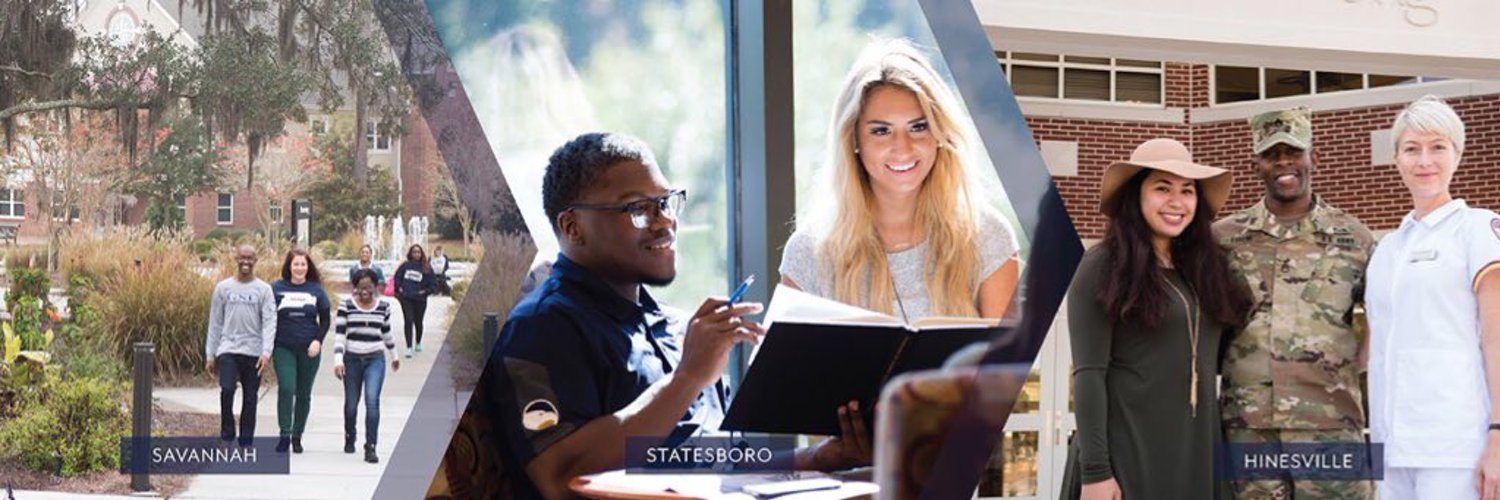
Georgia Southern’s COE offers students multiple program opportunities, including undergraduate and more than 30 graduate program options that span campus locations in Savannah, Statesboro and Hinesville, and online. Programs offered by the COE prepare future teachers, school psychologists, counselors, school library media specialists, instructional technologists, researchers and leaders through intensive field experiences, cutting-edge technology and research-based instruction.


Interested in knowing more? To arrange an interview with Sam Rhodes or Antonio Gutierrez de Blume simply connect with Georgia Southern's Director of Communications Jennifer Wise at jwise@georgiasouthern.edu to arrange an interview today.


Powered by

You might also like...

Check out some other posts from Georgia Southern University

World Cup 2026: Georgia Southern University Experts on the Game Behind the Game featured image

2 min

World Cup 2026: Georgia Southern University Experts on the Game Behind the Game

Atlanta is one of the World Cup's biggest host cities. Georgia Southern faculty across economics, health sciences and international studies are ready to speak to the stories behind the tournament. Featured Topic The Atlanta Advantage: Regional Economics of Hosting the World Cup What it means for local businesses, tourism, and the long-term economic legacy of a host city Atlanta's World Cup moment is as much an economic story as a sporting one. Georgia Southern University economics professors Michael Toma, Ph.D., and Anthony Barilla, Ph.D., can speak to tourism revenue, infrastructure investment and what host cities actually gain — and manage —- when the world comes to town. Experts Michael Toma, Ph.D. - Regional Economics and Development Anthony Barilla, Ph.D. - Economics and Public Policy Featured Topic Playing Across a Continent: The Physical Demands of a 48-Team Tournament What elite athletes face competing across climates, time zones and a month-long schedule 48 teams. Multiple cities. Almost no recovery time. Georgia Southern health sciences and kinesiology professor Samuel Wilson, Ph.D., and sports psychologist Brandonn Harris, Ph.D., can explain how a World Cup schedule affects the human body and how elite teams prepare for it. Experts Samuel Wilson, Ph.D. - Health Sciences and Athletic Performance Brandonn Harris, Ph.D. - Kinesiology and Exercise Science Featured Topic More Than a Match: The World Cup as Cultural and Political Exchange How the world's biggest sporting event becomes a stage for diplomacy, identity, and soft power When 48 nations converge on American soil, the game is only part of the story. Political science and international studies expert Christopher M. Brown, Ph.D., can speak to the geopolitical dimensions — national identity, soft power and what it means for the U.S. to host global soccer for the first time in a generation. Experts Christopher M. Brown, Ph.D. - Political Science and International Studies

Georgia Southern University expert available for interviews about Marilyn Monroe’s 100th birthday and her enduring legacy featured image

1 min

Georgia Southern University expert available for interviews about Marilyn Monroe’s 100th birthday and her enduring legacy

June 1 marks Marilyn Monroe’s 100th birthday. Despite her death in 1962, Monroe remains an icon of American pop culture. Amanda Konkle, Ph.D., researches film history, stardom and celebrity prominence. Konkle is an expert in Monroe’s rise to fame and her lasting relevance in modern style. She published the book “Some Kind of Mirror: Creating Marilyn Monroe,” along with several research papers detailing Monroe’s unique status in American history. Konkle can speak to how Monroe connected with audiences during her life by creating a new ideal of feminine power that defined an era. She can explore how Monroe’s acting methods mirrored society’s anxieties and desires, and why they still resonate today. Konkle is available virtually or for in-person interviews at the Armstrong Campus. Simply contact Georgia Southern's Director of Communications Jennifer Wise at jwise@georgiasouthern.edu to arrange an interview today.

Approximately 4,400 degrees conferred during Georgia Southern’s 2026 Spring Commencement ceremonies featured image

4 min

Approximately 4,400 degrees conferred during Georgia Southern’s 2026 Spring Commencement ceremonies

Last week, approximately 4,400 graduates from Georgia Southern University’s Statesboro, Armstrong, Liberty and Swainsboro campuses received associate, baccalaureate, masters, specialist and doctoral degrees in five Spring 2026 Commencement ceremonies. Georgia Southern President Kyle Marrero welcomed the graduates and their guests to the ceremonies, held at the Allen E. Paulson Stadium and Jack and Ruth Ann Hill Convocation Center in Statesboro, Enmarket Arena in Savannah and East Georgia Campus in Swainsboro on May 11, 13 and 14. “To our graduates, congratulations,” Marrero welcomed the crowds. “Today we recognize and honor your hard work, perseverance and personal growth throughout your academic journey. The road to this moment has not been without its challenges, and your presence here is a reflection of your dedication, resilience and strength. You have every reason to be proud. This commencement is a meaningful milestone not only for each of you personally, but for the entire Georgia Southern community.” The Commencement speakers included: Bob Somers (’83) Nick Westbrook (’20) Berry Aldridge (’15) Kim Hartsock (’20, ’21) Rep. Butch Parrish Somers opened the ceremonies at Paulson Stadium with words of encouragement for the new graduates. “While this day marks your formal education coming to a close, the truth is your education and life is just now beginning,” he said. “When I look out at you, I don’t look at graduates. I see future leaders. And our future is bright because of what you’re going to bring to this world. “Georgia Southern gave me structure, opportunity and people who believed in me. One of my proudest moments was graduating from this incredible institution. Find your north star. What kind of person are you? What are your values? Be genuine with yourself and others. If you’re authentic, people will trust you and they will follow you. Be comfortable being uncomfortable. Real leadership requires vulnerability.” Westbrook relayed the importance of service and character alongside leadership. “You will have the opportunity to influence people, organizations, companies and industries,” he said. “Use that influence for good. Your opportunity will not only be for a better job, more income or a higher position. The highest calling of your opportunity will be what you can do for the people who are affected by your influence. In a world that is becoming increasingly transactional, be the leader that goes the extra mile to make your world a little more relational, more kind, more human.” Aldridge enthusiastically challenged graduates to consistently recalibrate the way they think, and to consciously surround themselves with support. “Class of 2026, you’ve accomplished something incredible, but you’ve done it during a very strange and chaotic time in history,” he said. “I’m not breaking any news when I say that we are standing on the edge of a massive change to our jobs, our technology, our society. “I don’t know how AI is going to change the way we work or influence the job market. I challenge you to be skeptical even in your own most passionately held beliefs. That’s the only way to keep ourselves in check, and it’s the only way to keep ourselves growing. Nurture three types of relationships — one who lifts you up, another who tells you the truth, and one who will always show up — in order to succeed, he continued. And then be that person for others. Hartsock reflected on the generational impact of earning a degree. “For some of you, this is not just a personal achievement, it’s a historic one,” she shared. “You may be the first in your family to earn a college degree, and that accomplishment carries special significance. You are changing the trajectory of your family and setting an example for generations to come.” She asked them to be intentional about who they learn from. “Seek out people who can teach you things that books never will,” she said. “It’s important to look for leaders whose lives are marked not only by achievement, but also by joy and purpose. “Invest in this university. Join the alumni association. Help recruit future Eagles. Create a scholarship. Create opportunities for students to learn from you and work with you. Stay involved,” she said. “You never know, 25 years from now, you might be standing right here where I am. Congratulations, class of 2026 and Hail Southern!” In the closing ceremony in Swainsboro, Parrish encouraged graduates to continue learning. “Today is by no means an end,” he said. “It’s just the beginning. Your education has prepared you for what lies ahead. Your education allows you to create your own path forward. You have a unique opportunity to define your own path. You don’t have to follow anymore. Education is like insurance for whatever you’ll be facing in the future. “Education comes in many forms. There’s formal and informal, traditional, nontraditional and learned education, just to name a few. So, I encourage you to pursue a career in something that you really have a passion for and something that you really want to do. Whatever you decide to do is up to you, and your future is bright and it’s unlimited.” Video and Photo Links Spring 2026 Commencement ceremony 9 a.m. video on May 11 in Statesboro Spring 2026 Commencement ceremony 6 p.m. video on May 11 in Statesboro Spring 2026 Commencement ceremony video on May 13 in Savannah Spring 2026 Commencement ceremony video on May 14 in Statesboro Spring 2026 Commencement photos here Credit: Courtesy of Georgia Southern University Georgia Southern University, a public Carnegie Doctoral/R2 with a Carnegie Community Engagement classification, offers approximately 149 different degree programs serving nearly 31,600 students through 11 colleges on four campuses in Savannah, Hinesville, Statesboro, Swainsboro and online instruction. Founded in 1906, Georgia Southern is a leader in higher education in southeast Georgia with expert faculty and a focus on public impact research and engaging learning opportunities through knowledge and know-how that prepare our students to soar beyond and take ownership of their lives, careers and communities. Visit GeorgiaSouthern.edu.

View all posts