Dr Emily Christopher

Lecturer, Sociology and Policy Aston University

  • Birmingham

Dr Christopher's research has explored the ways in which UK state policy is mediated through workplace policies and cultures.

Contact

Aston University

View more experts managed by Aston University

Spotlight

3 min

New book from Aston University academic shows that Christmas tasks mostly fall on women

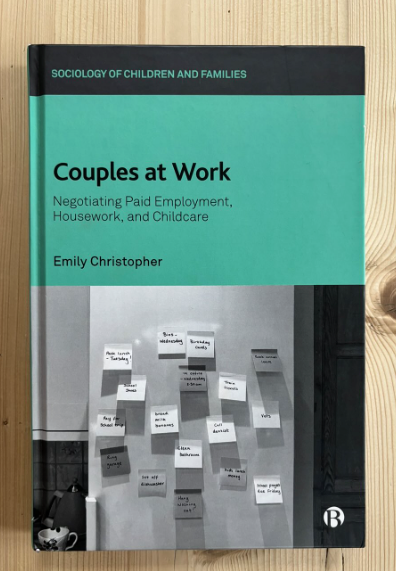
New book by Dr Emily Christopher shows differences in how household tasks are divided by men and women Book highlights that women tend to buy the Christmas presents and send cards Men often see women as being more thoughtful or having better knowledge of what people would like. A new book from Aston University’s Dr Emily Christopher reveals that when it comes to sending Christmas cards and buying Christmas presents, women are still mostly doing the work as they are perceived to have better knowledge of what people would like. Dr Emily Christopher, a lecturer in sociology and policy at Aston School of Law and Social Sciences, has recently published her book Couples at Work: Negotiating Paid Employment, Housework and Childcare, which look at how household tasks are divided by men and women and the reasons behind these divisions. The data for the book has been collated over an eight-year period with couples being interviewed twice to provide a robust set of results. It looks at how different sex parent couples combined paid work, housework and childcare. The research revealed how gender norms continue to shape how certain daily household jobs are divided. Women were more likely than men to clean the house, especially bathrooms, wash clothes and put clothes away. Men still tend to do tasks like mowing the lawn and DIY but now are also more likely to do the cooking and the grocery shopping. The research shows that the key to understanding how household tasks are divided lies in the meaning they hold for partners. With the festive season upon us, the book reveals that woman are largely responsible for the Christmas present buying and sending cards with 100% of those taking part in the research saying that women mostly carried out these tasks. This also included buying for the male partner's relatives. In instances where men had a 'helping' role in these tasks, this included being involved in the discussion or consulting on choice of presents, especially for children, with only a small minority buying presents for their own family. The data revealed that where women didn't choose and buy presents for their partners family, they were still involved in reminding their partners that this needed to be done or advising on choice of gifts, showing that women were still taking on the mental load of planning for the festive season. The book reveals that when men were questioned about why they didn't get involved in present buying, they drew on gender norms. Women were often described, by the men, as being more thoughtful or having better knowledge of what people would like. Men often described how family members wouldn’t receive presents at all if it relied on them. Although much of the gift giving and organising represented love and affection for the women, which many found enjoyable, many still saw it as work and expressed that they would like their partners' to be more involved. Dr Christopher said: “This book takes an in-depth look at the way in which everyday roles around the household are divided between men and women. “The research shows that over a period of eight years fathers increased their role in childcare tasks but this did not always extend to housework. “The pandemic was an opportunity to change how couples share housework but women were still more likely to carry out tasks like cleaning, washing clothes and putting clothes away and overwhelmingly remained responsible for the mental orchestration of family work.”

Dr Emily Christopher

4 min

Podcast: Research into household chores reveals fascinating home truths

The notion of ‘women’s work’ still deeply embedded in today’s society Men’s choice of housework centred around machinery and perceived physical strength Some household tasks have ‘shifted’ over the years A fascinating study by an academic at Aston University has revealed that women still do certain traditional tasks within the home. The research by Dr Emily Christopher, a lecturer in sociology and policy, found that ‘woman-type’ tasks often involve multi-tasking while men’s roles often include solo duties such as mowing the lawn. Dr Christopher, whose research focuses on the reproduction of gender inequalities in paid and unpaid work, spoke about her study in the latest episode of the 'Society matters' podcast series, presented by journalist Steve Dyson. The episode is sub-titled 'Did you iron my shirt? Why household work, and who does it, matters'. Dr Christopher explained that men are doing much more household work than they did 50 years ago, and that there was “general agreement” among the couples she interviewed that household work should be shared. The lecturer, who invited couples to assign ‘task cards’ during interviews in their homes, said past research found that women still perform the ‘lion’s share’ of household work. This, she said, followed on from the “age old idea” of women being more caring and nurturing which was “deeply embedded in the way society thinks”. While some tasks were still more likely to be done by women, some had shifted over time. Tasks still “overwhelmingly gendered” today include women remembering birthdays, organising presents, and remembering whether a child needs PE kit or money for a cake sale, all the cognitive labour of household management. She said: “The problem is it’s invisible, so it isn’t recognised as work.” Dr Christopher said that men tend to do the ironing if they find it “enjoyable”, often while listening to football or music, or if they have “particular standards”, such as creases in their sleeves. However, some women choose ironing as a “form of protest”, doing their own and their children’s clothes but refusing to iron men’s shirts. Dr Christopher pointed out that some other tasks traditionally seen as women’s, which had ‘shifted’, included cooking. She said: “Men are more likely to do this now, arguably this might be because they are less likely to be seen as less masculine for doing so, this helped by the rise of celebrity chefs like Gordon Ramsay, Rick Stein and Jamie Oliver.” Her research also revealed that men are more likely to wash up and stack the dishwasher but, like ironing, men doing these tasks was often driven by standards such as liking them stacked a particular way. They are also more likely to hoover than to clean, which fell mostly to women, with Dr Christopher suggesting: “I wonder whether sometimes this is something to do with the fact that hoovering involves technology and machinery, so it conceptualises more as a masculine form of housework.” Similarly, Dr Christopher said men are more likely to do outside jobs such as DIY, washing the car and mowing the lawn, with the emphasis again on physical strength. Significantly, tasks which men are more likely to be responsible for, such as DIY, are less likely to “interfere” with paid work, whereas those done by women often involve a reduction in their hours with “very wide implications” such as a gender pay gap, restrictions in career progression, and restricted access to pensions in later life. As a result, she said the state needs to do more, particularly around parental leave and the lack of affordable childcare provision. Dr Christopher said: “If you take maternity leave, it’s 12 months maximum in comparison to one or two weeks’ paternity leave, so straight away we are sending a message about who’s the natural carer. Parental leave needs to change to challenge this reinforcing of gender roles.” She added that childcare provision needs to be seen as integral to the way society and the economy works, so needs funding. Increasingly, Dr Christopher said couples are relying on their parents for help with childcare, and “interestingly, it tends to be the grandmothers who take on this work”. Individuals wanting to put a monetary value on household work can complete the Office for National Statistics’ domestic labour calculator, although she said it was a crude measure and only gives a rough idea. “Using this measure, my household work, on top of a full-time job at Aston University, is worth £18,000 a year,” she said. Listen to all episodes of the 'Society matters' podcast

Dr Emily Christopher

Media

Social

Biography

Dr Christopher joined Aston University in January 2020.

Her research primarily focuses on the reproduction of gendered inequalities in paid and unpaid work, with a particular interest in developing innovative methods which take account of how domestic labour is conceptualised and measured.

Her research has explored the ways in which UK state policy is mediated through workplace policies and cultures across public and private sectors and the ways in which these influence couples’ negotiation of domestic divisions of labour and the reproduction of gendered inequalities.

Emily is currently working on a project which explores how involvement in different housework and childcare tasks may affect the likelihood of relationship dissolution between co-resident partners.

Emily is also developing a research project, in collaboration with Dr Katy Pilcher, which examines the impact of ageing on divisions of housework and childcare, focusing on intersections of ageing with gender, class, ethnicity, sexuality and place/space.

Industry Expertise

Childcare
Women

Areas of Expertise

Gender Divisions and the Relation Between Paid and Unpaid Work
Sociologies of the Family, Relationality and Kinship
Men and Masculinities
Visual Methodologies

Education

University of Warwick

PhD

Media Appearances

Who is doing the household work and why does it matter?

Aston University  online

2022-09-29

In this talk Dr Emily Christopher discusses the value of this unpaid work and the wider consequences of how it is divided. She'll show that exploring the reasons men and women give for why they do different household tasks lies at the heart of tackling gender inequality within and outside the home.

View More

Articles

Capturing Conflicting Accounts of Domestic Labour: The Household Portrait as a Methodology

Sociological Research Online

2020

Drawing on data from a UK study conducted in 2014/2015, based on qualitative interviews with 25 working parent, heterosexual couples on their domestic division of labour, I argue that the interactive methodology of the ‘Household Portrait’ not only provides data on the distribution of household labour but also reveals gender differences in how domestic labour is conceptualised and measured. Disagreements and inconsistencies between couples over who ‘mostly’ does various tasks embody gendered perceptions of the meaning of doing domestic tasks and the appropriate temporal frame for evaluating individual contributions. Partners’ joking competition over their respective contributions highlight not just the normative expectations guiding what women and men feel they should do but also the criteria that they think should be used to measure their contributions.

View more
